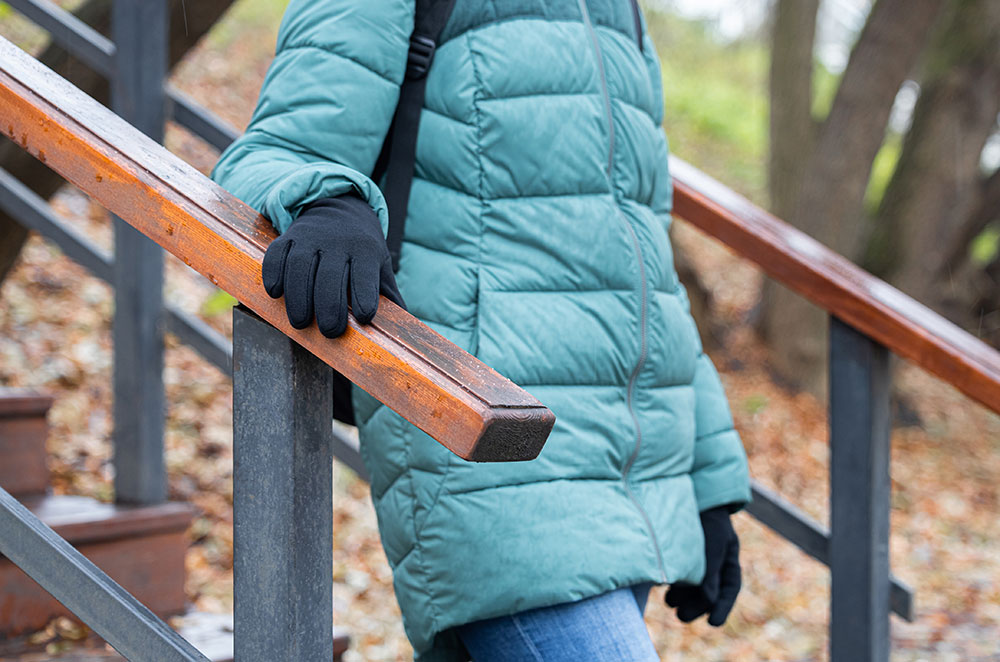
When the brisk fall air gives way to winter’s chill, snow may often follow, transforming the landscape into a sparkling silver tapestry. But the beauty of the season could be misleading— underneath this idyllic scenery may lie hidden risks for slips and falls due to slick ice or packed-down snow. And while those over the age of sixty-five may be more prone to injury as a result, these incidents can be potentially dangerous for anyone. Take these preventative actions to help reduce the likelihood of such events and keep your mind at ease all season long.

Invest in proper footwear
Take the first stepping stone on the route to a safer winter by tending to your feet. Primarily, you should always wear shoes with deep treads and rubber soles, which will provide better grip and stability on icy terrain. If you live somewhere particularly prone to inclement weather, consider investing in a strong pair of boots that feature cleated bottoms, waterproof fabrics, and ankle support. Whatever footwear you opt for, make sure it fits tightly to prevent your feet from sliding around inside. And as soon as your shoes or boots show signs of significant wear and tear or the traction on the bottoms begins to deteriorate, you’ll want to replace them so they don’t become a liability.
Utilize assistive tools
For people with mobility and balance concerns, such as seniors and those with previous knee or ankle injuries, using walkers or canes can help you stay steady and lower your risk of falling; the former can provide better weight distribution compared to other walking aids, while the latter offers extra support when navigating stairs. For either variety, select an option with an adjustable height for ideal posture and balance as well as robust rubber feet for enhanced snow and ice traction. You could even get separate spiked tips to attach to the feet when transitioning outside. And remember to always hold on to any railings when available, especially if you do not have your walker or cane handy.

Shovel and salt
Take charge of your house’s surroundings to help you, your family, and any guests avoid danger. Thoroughly shovel your driveway and walking paths after each snowfall, paying extra attention to stairs and other uneven surfaces. Since steps may be especially hazardous, make sure they are framed with strong handrails on both sides, and consider adding anti-slip tape for extra traction. In addition, regularly apply salt or melting agents to prevent ice from forming and creating a treacherous surface. Just take care to follow the manufacturer’s instructions for proper application to avoid damaging your walkways or vegetation.
Secure the perimeter of your house
To counter the gloomy darkness that winter brings, make sure your walkways, stairs, and doors are brightly illuminated; better visibility will let you navigate uneven surfaces or icy sections safely. This could involve merely leaving your outside lights on during late evenings if you plan to go in and out of your home, or you could install motion-sensor or solar-powered lights for greater simplicity and energy efficiency.
You should also periodically check your house for hazards, such as icicles dangling from eaves or a leaky gutter dripping water over a path, forming an ice patch. Clear the first with the help of a roof rake, and patch the second with gutter sealant as soon as you spot it. And, of course, there’s always the option of hiring a professional to take care of any issues and better guarantee your safety when it comes to outdoor winter risks.

Stay active
Regular exercise is crucial for maintaining good balance, a key factor in avoiding falls during wintertime. Focus on building strength, especially in your legs, to help you stay stable and supported when walking on icy ground. Aim for thirty minutes of moderate-intensity exercise daily, perhaps taking advantage of the beauty the season brings by adopting a new winter hobby. Snowshoeing, cross-country skiing, and ice skating are all low-impact options that can strengthen legs and ankles to improve coordination and agility. Not feeling all that adventurous? Don’t underestimate the power of daily walks!
Prioritize your health and well-being
In addition to exercising, attending to your personal health can fortify your strength to keep your fall and injury risk low. To start, make sure you are getting enough sleep; if you are tired, your coordination and reaction time will slow, making you less able to catch yourself if you do slip. Also, eat plenty of fruits, veggies, and nutrient-dense meals to help energize your body and support your bone health, which worsens with age. And don’t forget to drink water, an oftentimes ignored factor. Staying hydrated combats dizziness and lightheadedness that can impair balance and judgment.
Take more control of your safety this winter by making these easy but impactful changes to your everyday routine. Through such proactive measures against slips and falls, you can better set yourself up to enjoy the cozy months the way you are meant to: with health and happiness.
Thanksgiving dinner may traditionally be all about the turkey, but it’s the sumptuous sides that truly round out the meal. If you’re looking to add unique flavors to your typical table favorites, try these tempting recipes from the Very Good Salads cookbook. Proof that vegan food can be just as indulgent, their zesty Mediterranean flavors are sure to spice up the season.
Rethink salad with this flavor-packed recipe that features crisp, barbecued veggies.
Ripe and sweet figs take on aromatic spices for a tantalizing table offering.

Recipes from Very Good Salads by Shuki Rosenboim and Louisa Allan. Smith Street Books, 2022. Photography © Madz Rehorek.
Mashwi means grill, and if you love your barbecue do it a favour and cook this salad on it.
Hailing from Tunisia, this dish pays homage to tomatoes and capsicums by cooking them over fire. If you don’t want to light the barbecue, the veggies can also be cooked on a gas stovetop or even in the oven.

Serves 6



Figs are very easy to hollow out with a teaspoon, but don’t remove too much because you still want that juicy fig flavour. Save whatever you do take out and if you didn’t give it away already, just scatter it around the stuffed figs.

Makes 12


When you think of cardiovascular exercise, chances are you imagine working out at a crowded gym or running endless laps around a track. If these scenarios don’t appeal to you, the good news is there’s another answer: Cozy Cardio, a type of exercise program you can complete from the comfort of your own home.

Started by social media influencer Hope Zuckerbrow, the Cozy Cardio trend is just like it sounds—a way to make exercise seem less intimidating or like a chore. Rather than high-intensity workouts requiring all sorts of machinery, you simply engage in a gentle, low-impact movement that feels comfortable to you in an environment that is equally soothing.
Zuckerbrow first came up with the concept in 2022 in an effort to reclaim her own relationship with exercise after it started to become a source of stress. An early riser, she began doing easy sessions on her walking pad first thing in the morning while still in her pajamas and fuzzy socks. These days, she’s upped the cozy quotient even further by lighting a scented candle, turning on colorful mood lighting, and pouring herself a travel mug of iced coffee—a mix of caramel protein shake, almond milk, and half-caff coffee. She then puts on a favorite TV show and hops on her pad for a breezy walk just fast enough to raise her heart rate.
Being so low-key, such a routine may not seem all that beneficial. But adding even just a little extra exercise to your life can help you live longer, ease your stress, and reduce your risk for conditions like heart disease, diabetes, and high blood pressure. And walking in particular is an excellent form of aerobic exercise that can strengthen your heart, lungs, and muscles and also improve your mental health—especially when you add elements meant to help relax you.
However, if walking on a treadmill isn’t your thing, no problem! You can personalize your Cozy Cardio routine to include whatever types of movement are most appealing to you. Further, don’t feel required to copy Zuckerbrow’s setup if that’s not what feels most “cozy” to you. For instance, instead of walking in a low-lit room in the early morning with a cup of coffee and the TV on, you could prepare yourself a tumbler of cucumber-infused water and enjoy the afternoon sunshine while practicing tai chi. Or jump rope in the living room with the windows open while listening to an audiobook, taking a moment now and then to enjoy a little fresh-squeezed orange juice. As long as it works for you, it counts as Cozy Cardio.

You don’t need to spend a fortune on exercise equipment to add healthy movement to your day. You could purchase a brand-new walking pad, stationary bicycle, or elliptical machine for less than $200; you might even be able to pick up a good pre-owned one on eBay or Facebook Marketplace for much less. Alternatively, you could use inexpensive multipurpose gear like a yoga mat, exercise ball, or resistance bands, depending on your preferred movement.
You can also forgo fancy workout clothes if you like, wearing whatever you feel most comfortable in instead. Just make sure your choices won’t restrict your movements or put you at risk for injury—the last thing you want is to add a face-plant to your exercise agenda.

A big part of the Cozy Cardio approach is creating a relaxing, nonstressful environment to exercise in, so think carefully about your optimal fitness space. As noted earlier, there’s no one right way to be cozy; you could work out indoors or outdoors, with entertainment or without, and with any kind of delicious drink (or none!). The key factors to consider are lighting, sound, and smell. Do you prefer dimmed or bright lighting? Stimulating distractions like a podcast or music or more ambient noise like birds chirping? The smell of cut grass or the rich scent of a candle? It may take a little trial and error, but over time, you’ll be able to craft the best atmosphere for making your exercise enjoyable.

A Cozy Cardio program is ideal if you’re new to exercise or struggling to get into it since it can gradually condition your muscles and help you get used to a regular fitness program. Whether you’re walking, dancing, or doing step jacks, start small, then slowly increase the intensity of your workouts. For instance, Zuckerbrow began with fifteen- to twenty-minute walks at a moderate pace before progressing to forty- to sixty-minute ones at a faster clip. You could also incorporate ankle or hand weights or add in more complex moves that get your blood pumping.
As your comfort with exercising increases, you may even find yourself interested in taking on more intensive workouts outside of Cozy Cardio. Perhaps you decide to play a pickup game of basketball with friends here or there or join an aerobics class. Doing so may be a bigger step, but it can provide greater benefits for your overall well-being.
If the idea of working out isn’t something that gets you excited, consider giving Cozy Cardio a try. By pairing exercise with a recreational activity you enjoy, you may find it easier—and more enjoyable—to be more active and improve your health.
*Always consult with your doctor before starting a new exercise program.
It’s a simple fact that your needs change as you age, necessitating adjustments in everything from your fitness routine to your home’s layout. And one such area that may need to be revisited is your insurance. While Medicare and traditional health insurance often help with acute medical expenses and short-term care for certain conditions, they don’t generally cover the price of the ongoing, long-term care you may one day require for daily living.
That’s where long-term care insurance comes in. It’s never too soon to start thinking about what you may need later in life, and this guide can help you better understand the ins and outs of these policies along with some of the upsides of getting one.

According to the Administration for Community Living, people sixty-five and older have a 70 percent chance of requiring long-term care at some point due to a chronic condition, a disability, or simply the natural aging process. Such care involves assistance with daily tasks like bathing, dressing, eating, and getting in and out of bed. On average, women need 3.7 years of long-term care because of their higher life expectancy, whereas men typically need 2.2 years.
Naturally, this level of aid comes with additional expenses, which long-term care insurance is designed to help cover. With it, policyholders can receive the support they need in various settings, including at home, in an assisted living facility, in a nursing home, or at an adult day care facility.
One important thing to note is that while Medicaid and Medicare provide coverage for a wide variety of medical expenses, long-term care won’t necessarily fall under that umbrella. In fact, Medicare does not generally pay for any long-term care since it’s often not considered medical care. Medicaid, meanwhile, may cover associated costs, but you have to meet certain income and asset requirements; you may also only be able to select a facility that takes Medicaid. With long-term care insurance, however, you can pick whatever option works best for you and your needs, making it a valuable asset to help safeguard your future health.

Generally speaking, you’re eligible to start receiving benefits from your long-term care insurance when you’re unable to perform two or more activities of daily living (ADLs), such as eating and bathing, on your own. First, though, you’ll have to get through the elimination period, during which you must pay for your care out of pocket; this can last thirty, sixty, or ninety days depending on your policy.
Your insurance will then cover either a set daily or monthly amount until you reach your lifetime maximum, the most common being $165,000. This means you may still pay for some of your care yourself if the costs are more than your selected coverage. The parameters may also vary from policy to policy, with some having a set duration instead of a lifetime maximum and others offering a preset daily cash amount regardless of whether you receive care that day.
As with other insurance policies, you’ll pay more for certain benefits, including a shorter elimination period or cost-of-living adjustments, which can provide valuable inflation protection for the future. Additionally, your age and health at the time of purchase can impact your premium rates—making it all the more important to look into this option sooner rather than later.

While it’s not a guarantee that you’ll require long-term care, it’s worth considering how the out-of-pocket price of this level of assistance compares to that of an insurance policy. Take a private room in a nursing home. The average monthly cost in 2023 was $9,733—that’s $116,796 a year! Even if you have a solid amount saved in retirement and other assets, that expense can quickly drain your funds, putting an excess burden on yourself and your loved ones.
In comparison, according to data from the American Association for Long-Term Care Insurance, a fifty-five-year-old man paid an average of $900 total in 2023 for long-term care insurance, with a woman of the same age paying $1,500. While that certainty isn’t cheap, it’s by far less expensive than the care itself. In this way, insurance can save you a considerable amount each year, which may better protect your assets and help ensure that you still have enough to provide for your other needs as well as for anyone else who may depend on you.
Beyond the financial benefit, having a policy in place can provide significant peace of mind for you and your loved ones should your health worsen down the road. For one, it enables you to better prepare for the future without the constant worry of how you will pay for your care. Even more, it can help guarantee that professional assistance will be available, should it be necessary, allowing your family to focus on supporting you rather than needing to act as primary caregivers.
Long-term care insurance is a critical component of financial planning. By understanding what it is and recognizing its importance, you can make an informed decision that can help protect your future and provide additional care options for whatever may come. As always, it’s important to connect with a qualified insurance professional to discuss your options and determine if this type of coverage is right for you.