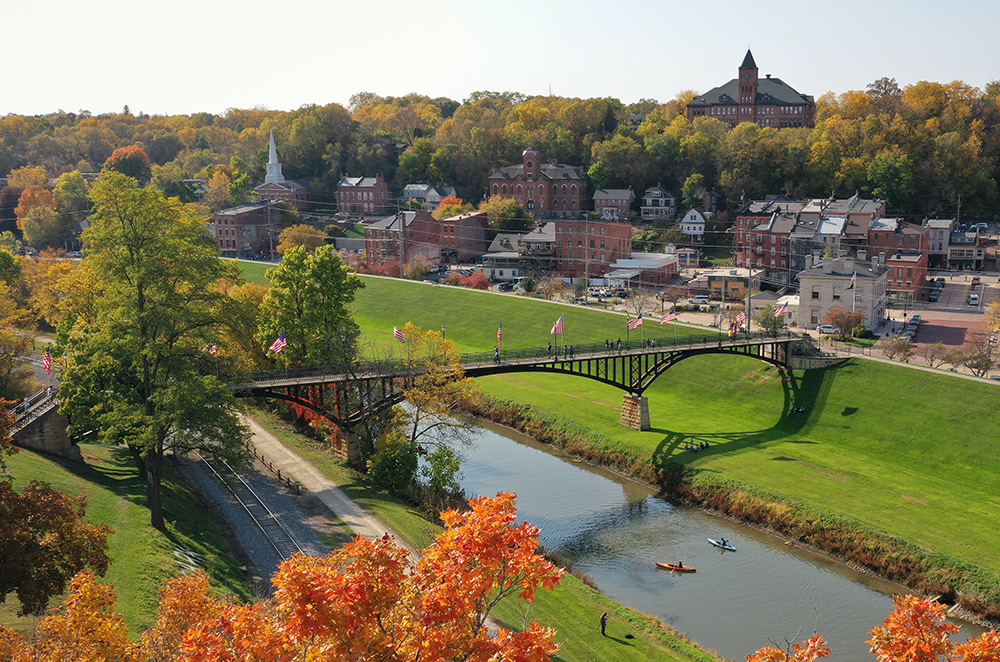
When people consider Illinois travel, Chicago might immediately spring to mind. This is understandable considering the Windy City is the nation’s third-largest city. But the state also boasts plenty of smaller cities and towns worth the detour.
One such place is Galena, an acclaimed city (population: 3,200) that sits among rolling hills in the Driftless Region, approximately three hours from Chicago. Its location is part of its allure: It is less than fifteen minutes from Wisconsin and thirty minutes from Iowa. Combine that with its charm, history, and activities, and you’ve got a must-see destination that’s affectionately known as Galena Country.

Galena thrives on its history while also being remarkably modern. More than 85 percent of Galena’s buildings are listed on the National Register of Historic Places, so the town carries a strong sense of continuity with its past. As you enter the downtown area, red brick facades and narrow streets highlight the city’s nineteenth-century architecture, so your first walk feels like stepping back in time. In winter, snow settles along rooftops and window ledges, highlighting those architectural details even more and drawing your attention upward as you move.
Start on Main Street because it packs so much into a few blocks. The district features more than 125 independent shops, galleries, restaurants, and specialty stores, allowing you to shop to your heart’s content without experiencing long stretches in the cold.
Look for goods such as small-batch foods, handmade items, and regional products along the way, which will allow you to bring the Galena feel back home with you. You may initially plan to browse quickly, but the slower pace encourages you to stay longer to enjoy the ambience and offerings in each shop. Seasonal lights and window displays remain in place through winter, so the street looks like a Hallmark card even on shorter days.

During cold Midwest weather, you’ll also want to enjoy warm, hearty meals, and Galena certainly delivers. Many menus lean toward comfort foods, including roasted meats, fresh bread, and seasonal vegetables. For Italian, Fried Green Tomatoes and Cucina Bella provide fine dining in a welcoming atmosphere, while Charlie’s Place is a popular casual stop for breakfast.
You also have hundreds of places to choose from when it comes to settling in. But consider lodging in the historic district, if possible, since proximity reduces planning while on vacation, making so much of it walkable. Inns and bed-and-breakfasts are popular here, as are historic places like the 1855 DeSoto House Hotel, the oldest continuously operating hotel in the state.

Galena celebrated its two-hundredth anniversary in 2026, a milestone worth noting as you explore. So be sure to set aside part of your day to visit Galena’s historic sites, landmarks that cement its place in U.S. history. Begin at the Ulysses S. Grant Home State Historic Site, where you can walk through the former president’s home and grounds. And visit the Galena & U.S. Grant Museum at its new, beautiful location adjacent to the Grant site for the ultimate deep dive into the life and impact of our eighteenth president.
Other must-see places are the Belvedere Mansion and Gardens, a circa-1857 mansion and property, and the nearby Dowling House, the oldest home in Galena. Stroll by the latter on Diagonal Street to take in the architecture, which contrasts nicely with the larger buildings nearby, and take a guided tour of the Belvedere buildings and grounds (available starting in May) on Park Avenue, which are a mere fifteen-minute walk away.
Balance indoor stops with short outdoor visits, because the surrounding landscape defines Galena as much as its buildings. For example, you can head to Casper Bluff Land & Water Reserve, where open land and historical markers (including protected American Indian mound sites) reside, adding another layer to the setting, including views of the Mississippi River. These stops do not require long hikes, so you can spend time outside without overextending in the cold.

For a more active outing, drive to Chestnut Mountain Resort. Located just minutes from downtown, this skiing and snowboarding mecca sits above the Mississippi River, giving you a wide view of the valley while you move. Even if you do not ski, ride the lift or spend time near the overlook; the scenery alone justifies the stop. For a less adventurous option, take advantage of one of the nearby trails suitable for snowshoeing or winter walking.
If you intend to wait until spring to visit, adjust your pace rather than your plan because the town changes gradually. By late March, the snow begins to recede, and patches of green appear along the hills, which makes outdoor time more comfortable. Keep Main Street as your base, but spend more time outside as temperatures rise. Drive to Horseshoe Mound Preserve for a clear overlook of the hills; its awe-inspiring elevation gives you a broad perspective in a short amount of time.
Both there and at Casper Bluff, the trails become easier to navigate and colorful views come alive with the season. Take a scenic drive through the surrounding countryside to enjoy rolling terrain that reveals early wildflower growth. In addition, Chestnut Mountain Resort transforms into a warm-weather adventure zone starting in late May with a zip line over the Mississippi River Valley, an alpine slide, Mississippi River cruises, and more.

Galena’s compact layout supports a flexible itinerary because most of its destinations sit within a short distance of one another. Winter provides a mix of indoor exploration and brief outdoor stops, creating a wonderful balance, whereas spring’s temperate conditions allow for more time outdoors, including extended nature visits and scenic drives. The variety of experiences will likely beckon you to stay beyond a single night.
Centrally located and historically significant, Galena is the perfect day or weekend trip for a range of travelers, especially those visiting larger neighboring Midwest cities. Whether you take the two-hour trek from Madison or even the five-hour journey from St. Louis, one thing’s for certain: a getaway to Galena Country is well worth it.
For more info, go to visitgalena.org
Calcium tends to be one of those overlooked “healthy nutrients.” We might overlook it because we assume that it’s easy to get. And though the consequences of unhealthy levels may not be obvious, over time the effects can be serious. Take a closer look at what makes this mineral so vital and what a healthy intake looks like.

The element functions as both a structural component and a signal. About 99 percent of it resides in your bones and teeth, where a continuous process called remodeling breaks bone tissue down and rebuilds it. The remaining fraction circulates in the blood and tissues to perform a more immediate role.
Every day, the body shifts calcium between bones and the bloodstream, flowing from there to support basic functions. Your muscles depend on it to contract and release, while the heart uses it to keep a steady rhythm. Nerves also rely on it to transmit signals, shaping your coordination and reflexes.
Because the body pulls calcium from bone to keep blood levels steady, low intake rarely causes symptoms at first. But over time, your risk rises for osteoporosis and fractures.

Your calcium requirements depend on your age, sex, and any hormonal changes. Here is what current NIH guidance suggests:

For many people, calcium readily brings to mind dairy products—single servings can provide over 25 percent of your daily needs. Options like calcium-rich tofu and collard greens can offer comparable or greater amounts per serving. Fortified cereals and juices are also useful sources, though their broader nutritional value varies widely.
What matters is consistency, not any single food. Spreading calcium intake across your day (yogurt at breakfast, greens at dinner, and fortified milk in coffee, for instance) can help you meet your needs without much effort.

While you might assume that more calcium is always better, eating too much can actually lead to issues like digestive maladies, muscle weakness, and even abnormal heart rhythms. Moreover, high-dose consumption of calcium supplements without medical guidance has been linked to additional cardiovascular risks in some studies. But for those with diagnosed deficiencies, restricted diets, or other medical conditions, adjusting diet alone may not be enough and certain supplements like calcium carbonate or calcium citrate may be needed.
Be sure to talk to your doctor about your calcium needs and develop a balanced plan for greater overall health.
One of the best ways to eat healthier is to cook your own meals at home, where you control the portions and ingredients and the dishes cost a fraction of restaurant versions. But that doesn’t mean you have to lose out on flavor. These two recipes from culinary creator Davon Moseley’s cookbook Let’s Get Into It show you how to craft a steakhouse-quality dinner in no time.
Asian sauces and fragrant spices elevate the flavors in a budget-friendly sirloin cut.
A zesty butter mix is the secret to making this comforting steak companion.

Recipes from Let’s Get Into It: 130+ Comfort Food Recipes for Novice Cooks by Davon Moseley. DK Publishing, 2025. Photography by Stephen Buchanan.
If I’m not in a chicken mood, then I am definitely ordering the steak. Tender steak bites tossed in a flavorful sweet and savory sauce are a home run. With a few different recipes, my goal is for you to have hibachi nights at home to treat yourself and your loved ones. Maybe you can even have your family sit at the counter while you cook!

Serves 4



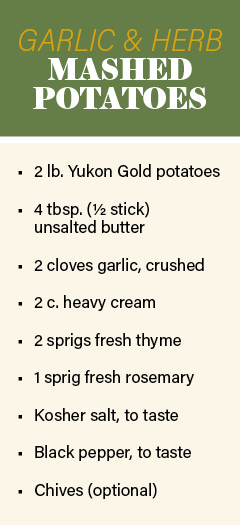
There are a lot of dishes that people can debate over whether they’re good or not. However, I’ve never heard anyone say they didn’t like mashed potatoes. This is my favorite way to make mashed potatoes because they’re buttery, rich, and sure do satiate. I like to serve these with almost every entrée in this book—they all work!

Serves 6

According to the Physical Activity Guidelines for Americans, all adults should engage in at least two-and-a-half hours of moderate-intensity aerobic exercise per week and perform muscle-strengthening exercises on at least two days a week. It can be tough to picture what that means in practice.
If you’re seeking a routine as engaging as it is wholesome or want to find a more appropriate program for your health needs and personal goals, this simple flow chart can help you find your “fit.”
*Talk to your doctor before starting a new exercise program.

Aerobic exercise
Cardio workouts that increase your breathing and heart rate over an extended period
Examples: Jogging, bicycling, swimming
Balance exercise
Movements that focus on maintaining the body’s stability
Examples: Tai chi, single-leg exercises, heel-to-toe walking
Strengthening exercise
Activities that work muscles against resistance, such as weights or body weight
Examples: Weight lifting, calisthenics like push-ups or lunges
Balance and strengthening
Examples: Yoga, surfing
Strengthening and aerobic
Examples: Dancing, Zumba
Aerobic and balance
Examples: Hiking, step aerobics