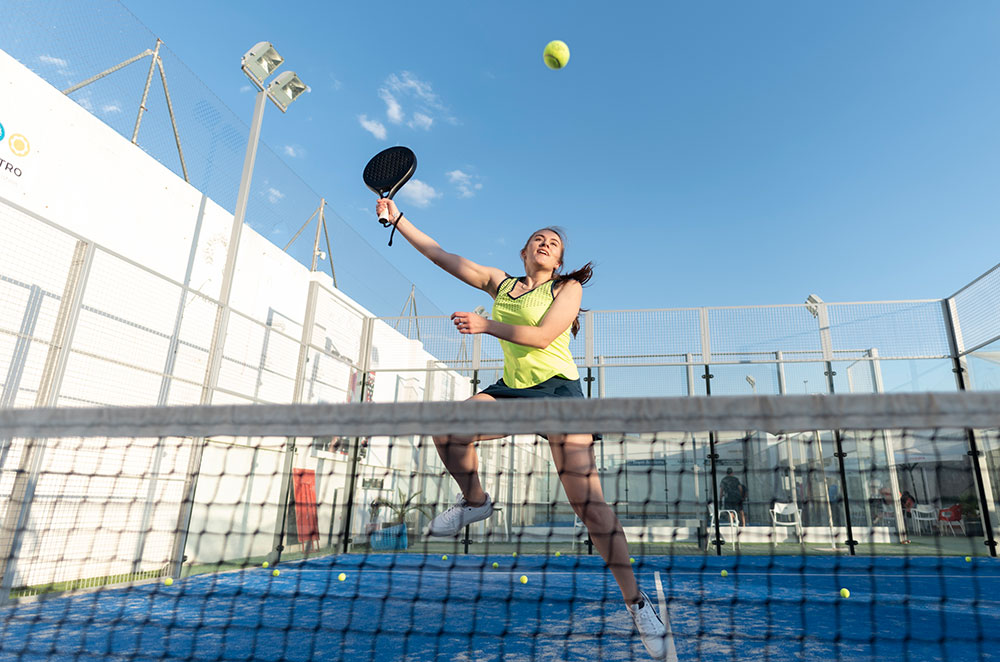
The ball swooshes past you, rebounds off the wall, bounces, and is within your reach. Now is your chance to strike it back to the opposing team!
Welcome to a dynamic, fast-paced, and increasingly popular racket sport called padel. In many ways, padel closely resembles others like tennis, pickleball, and racquetball, and its scoring system is even similar to the former. However, other elements make this game an appealing standout, particularly for those who want to experience a thrilling, intense workout.

Padel’s origins trace back to Acapulco. In 1969, Mexican businessman Enrique Corcuera developed the sport in his home’s backyard. Because he and his wife, Viviana, lacked the space for a full-sized tennis court, he constructed a smaller one with walls that would help prevent balls from flying into their neighbor’s yard. Corcuera then adapted this intimate game with more appropriate equipment, including a wooden paddle and a softer ball, and it quickly became a hit among their social circle.
Among that circle was his friend Prince Alfonso de Hohenlohe of Spain, who played the game on a trip to the city in 1974. He helped popularize the game in his homeland, and it trickled into other nations. Padel is now one of the fastest-growing sports globally, even being monitored by the IOC, which determines new sports for the Olympics.
However, its mainstream popularity here in the United States is much more recent. Just two years ago, it was largely unknown outside niche communities. But the United States Padel Association (USPA), the national governing body for the sport in the US, has reported a surge in court construction, new club openings, and tournament participation across the country. In fact, the USPA sanctioned over 120 tournaments in 2025 alone, and interest is continuing to rise. This means that if the game itself or a desire to get fit doesn’t inspire you to play, simple fear of missing out could very well be the clincher.

Just what does playing padel entail? As with other racket sports, it requires making skilled strikes across the net in the hope that your opponents can’t return them. But several twists make the game distinct and perhaps easier to take up.
For one, it is typically played in pairs, and the more compact padel court has high glass walls or fences that enable the ball to bounce off them. The close proximity of players and multiple routes for the ball to travel add a unique, strategic dimension to the game. “The walls allow you to have a very varied way of playing, including using them to make tricky, effective shots,” says Joseph P. from London, a dedicated player who discovered the sport a few years ago while vacationing in Spain.
Unlike tennis, where powerful strikes dominate, padel places more emphasis on ball placement, quick reflexes, and continual teamwork. In addition, the game is played with a whole new kind of racket—a perforated and stringless composite one—and an innovative, less pressurized tennis ball. Such equipment helps padel achieve its distinct, addictively fast-paced physics with more three-dimensional play throughout the court. The result is a sport that’s both physically engaging and easy for even beginners to enjoy.
While padel is engaging and highly stimulating, one of its noteworthy features is its easy learning curve. In fact, the USPA suggests that this may be behind the sport’s spiking popularity.
But make no mistake: while the game is simple to take up and its rules seem straightforward, it takes consistent practice to master. However, just about anyone can excel with enough practice; Joseph P. notes that as he’s played regularly with friends, he’s noticed himself become more adept at hitting accurate shots, understanding the unique footwork involved, and having good rallies.

The only question that remains, then, is whether this game is right for you. Like many vigorous sports, playing padel may introduce numerous wellness benefits into your lifestyle, such as improved heart health. Additionally, it’s an excellent potential boon for socializing, an important component of mental health. Joseph P. confirms that the two-on-two format encourages this. “You can definitely start playing easygoing games with mates and get better together,” he says.
If you’re curious about trying your hand at this sport, the best way to begin is to find a padel facility near you. (Padel courts are currently available in thirty-one states nationwide.) From there, book an introductory match or clinic. The USPA advises visiting one of the many clubs that offer rental equipment, beginner classes, and sessions for beginners—a cautious choice if you’d like to test your mettle before purchasing gear. It also notes that people can visit its website to find sanctioned clubs, tournaments, and events in their region, and its social media pages display exciting highlights and details for those who wish to learn more about the game.
Once you do partake, expect to get an excellent, thrilling workout that is sure to hook you. “I’m not too sure why, but for some reason I am ten times sweatier after a padel game than I am after my weekly five-a-side football [soccer] match,” Joseph P. recalls. “Maybe it’s because of the specific movements, but it’s a good workout for sure!”
For more info, visit padelusa.org
Summer calls for a host of outdoor activities. But whether you’re swimming in an ocean or lake or running through a park, prolonged heat exposure can quickly impact your body, zapping you of both energy and hydration. That’s because when you sweat, your body loses fluid as well as vital minerals called electrolytes. Knowing how to preserve these essential nutrients can help ensure that you enjoy summer to its fullest without feeling drained.

Electrolytes are minerals, including sodium, potassium, calcium, magnesium, bicarbonate, chloride, and phosphate, that work together to support your hydration, muscle function, and even mood. They carry a positive or negative electrical charge when dissolved in water, which allows them to send signals throughout your body and keep it working optimally. For instance, among other purposes, sodium helps regulate your body’s fluid balance, and magnesium plays a role in energy production.
If you lose too many of these substances when you sweat, you may experience fatigue, cramps, headaches, dizziness, numbness, muscle weakness, and, in extreme cases, heatstroke. So if you’re active for an extended period, the key to avoiding these effects is to stay hydrated and replenish your electrolytes.
The best place to start is to drink plenty of water since some types naturally contain electrolytes. Coconut water may be a wise choice since it provides a healthy dose of electrolytes such as sodium, magnesium, and potassium to help rehydrate your body.
You should also support your body with a balanced diet. Many foods are rich in these essential minerals, including the following:

All that said, sometimes after an intense workout or long hike, a store-bought electrolyte drink or powder can be an easy way to quickly rehydrate. However, before you grab one, make sure to check the label; some varieties contain more sugar than your body needs, often between half and two-thirds of that found in soda, which can quickly outweigh the benefits.
Instead, look for options with a balanced blend of sodium, potassium, calcium, and magnesium, along with a moderate amount of sugar, with the goal of consuming no more than 36 grams of added sugar per day for men and 25 grams for women in an everyday diet. And always try to steer clear of artificial colors and unnecessary additives by choosing low-calorie mixes or powders that let you control the serving size. Finally, as a rule of thumb, make sure you don’t consume too many electrolytes, which could create a harmful imbalance on the other extreme.
By combining steady water intake with mineral-rich foods or the occasional electrolyte drink, you can maintain your energy, stay cool, and enjoy every sunny moment the season brings.
When you picture the rich culture of Greece, certain iconic imagery may come to mind, including white marble ruins, crystal-blue seas, and fields of olive trees. But if you really want to get to know this nation with ancient roots, experience its food. These recipes courtesy of Opa! Recipes inspired by Greek Tavernas perfectly spotlight the flavors that truly make this culture special.
Rich, smoky, and vibrant veggies combine to make an unforgettable dish best served with toasty bread.
Freshly sourced shellfish and ripe citrus make this delectable entrée an absolute winner.

Recipes from Opa! Recipes inspired by Greek Tavernas by Helena and Vikki Moursellas. Smith Street Books, 2025. Photography © Bonnie Coume.
Spiked with garlic, fresh parsley, lemon juice and extra virgin olive oil, melitzanosalata is a lovely mezze to serve with warm pita bread. Cooking eggplant over an open flame will give your melitzanosalata a smoky flavour and creamy interior.
If cooking on an open flame isn’t an option, you can achieve a similar flavour by baking the eggplants in a 400°F oven. Coat in some olive oil, sprinkle with salt and roast for 1 hour, or until the skin is slightly darkened.

Makes 2½ cups



A note on prep
To enhance the smoky flavor, make the melitzanosalata the day before; it will keep covered in the fridge for up to 1 week.
It was on a holiday to the island of Skopelos that we first ate clams with rice. It was a warm summer’s afternoon; we were sitting with friends. The rice was lemony, spiked with fresh dill, the clams were the freshest ones we had ever eaten, and we remember thinking we just had to share this recipe in our next book. The best part is when the rice sticks to the clams, and you get to suck all the delicious juices from the shells.
Mussels are a great substitute here if you prefer them to clams.

Feeds 4


A note on prep
This dish is best enjoyed the day it’s made. It’s worth making a pit stop at your local fish market to purchase the clams.
For many people, a truly nostalgic part of childhood is the ice-cream truck merrily driving down the street. Just one verse of a song like “Pop Goes the Weasel,” “Camptown Races,” or “The Entertainer” in the distance would set off a frenzy of kids pleading with their parents for money, running out the door, and eagerly waiting for the treat deliverer on wheels.
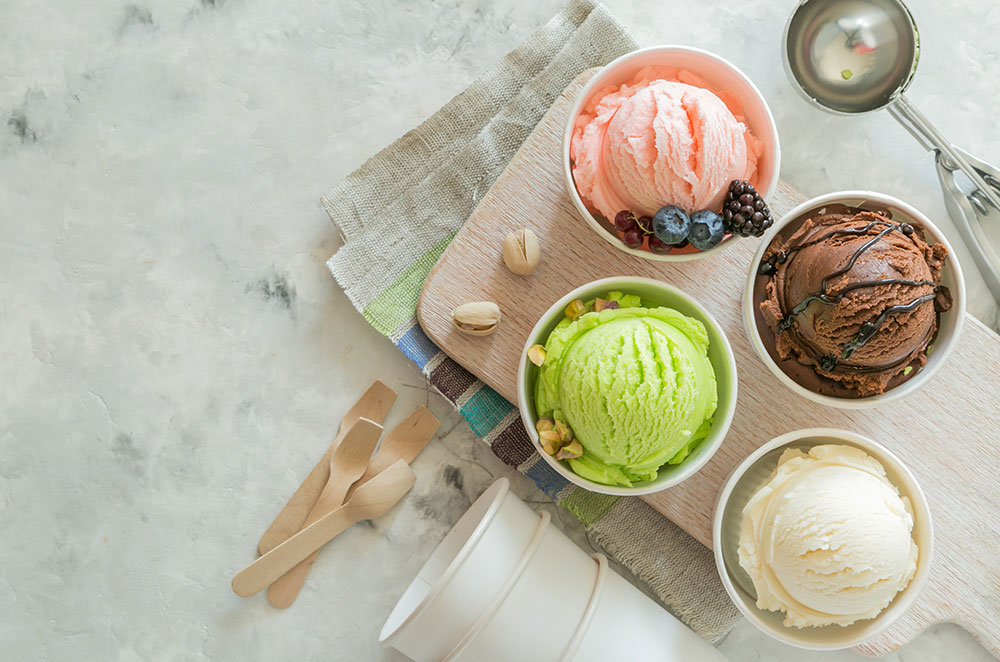
Of course, times change. Today, in addition to these trucks, we have a plethora of frozen desserts available at both grocery stores and seasonal shops alike—not only ice cream, but also items such as water ice, gelato, and sorbet. But what makes each so distinctly refreshing on a hot summer day? And perhaps more importantly, are any of them healthy? This guide to some of the most common varieties can help you sort through your options so you can make informed decisions and indulge more wisely.

Ice cream
If you want a dash of vitamin D and calcium in your dessert, ice cream stands out in this category since it’s usually made with both milk and cream, hence the name. In fact, the FDA says that for a food to be called ice cream, it must be made of at least 10 percent milkfat and 20 percent total milk solids (among other requirements). The tradeoff? This classic dessert tends to be loaded with fat and sugar; and if it’s not, it may contain extra additives.
Gelato
Gelato, on the other hand, tilts the ingredient percentages more toward milk than cream for a smoother, denser dairy dessert. An added bonus: less cream usually means less fat. But less fat also often means less flavor, which may be compensated for in this treat with more sugar, so buyer beware.

Frozen yogurt
Arguably the healthiest version of cold confections, frozen yogurt earns its reputation for a few reasons. First and foremost, it often contains less fat and has fewer calories than traditional ice cream despite its dairy content. Also, because it’s derived from yogurt, it may have the added benefit of gut-friendly probiotics. The primary downside is that the flavor may be enhanced by added sugar.
Sorbet
Now we delve into the dairy-free category. Sorbet doesn’t contain milk or cream, making it palatable for people who are lactose intolerant as well as vegans. Just as important is what it does usually contain: some sort of fruit, whether it’s juice, puree, sweetener, or even the real stuff. (Though fruit itself is a much healthier option, of course.) And because it’s free of heavy dairy ingredients, it often has a lighter texture.
Sherbet
Consider this similarly named treat to be sorbet with just a touch of dairy. However, it’s certainly not the middle ground between ice cream and sorbet, as it contains significantly less fat than the former. In addition, as anyone who has had rainbow sherbet can attest to, sherbet flavors tend to be tangy.

Iced treats
Finally, there are the ubiquitous treats made primarily of ice, which are available in various varieties and under different names:
When considering a warm-weather treat, the key is to keep it as such: a treat, something that should be enjoyed infrequently and in moderation. So be sure to read the fat and sugar content in your options and opt for the smallest serving available.
But perhaps the wisest choice is to make your own frozen treat with fruit so you can control the ingredients, or simply opt for a cold, ice-filled glass of water with a dash of lemon. Making such smart choices can better ensure that you don’t put your health on ice this summer.