We’ve all heard them before: widely believed health truisms that have been passed down from our parents or grandparents. But just because they’re age-old doesn’t mean they’ve aged well. Here are ten common medical misconceptions you should reconsider.

Will a particular behavior cause you harm?
Myth: Cracking your knuckles will lead to joint issues such as arthritis.
Fact: A satisfying habit for some, an annoying one to others—yet it’s not arthritis causing.
Myth: Going outside with a wet head causes a cold.
Fact: Doing so may make you feel colder, but it won’t make you sick; viruses will.
Myth: Reading in dim light will ruin your eyesight.
Fact: At most, this may merely cause eye strain and headaches.
Myth: You need to wait thirty minutes between eating and swimming or risk drowning.
Fact: A waiting period of any length isn’t necessary. Focus on staying hydrated instead.

What should you consume or not consume, and when?
Myth: Your goal should be eight 8-ounce glasses of water per day.
Fact: Your ideal water intake depends on factors like your body weight, gender, and health.
Myth: Fresh fruit is better than its frozen counterpart.
Fact: Frozen fruit may actually have more nutrients since it is preserved at peak ripeness.

Myth: Sugar causes hyperactivity in kids.
Fact: Sucrose can certainly cause health problems; however, a sugar rush isn’t one.
Myth: If food drops to the floor, you can safely eat it if you retrieve it within five seconds.
Fact: The item gets contaminated almost immediately, so proceed at your own peril.
Myth: Swallowed chewing gum will remain in your gut for seven years.
Fact: Although the sticky substance isn’t digestible, it should pass like any other food.

Myth: Eating before bedtime is bad for you.
Fact: It’s more about what you eat, how much, and how close to bed rather than the act itself.
Call them what you will: myths, rumors, superstitions, or old wives’ tales. The common denominator is that they started as beliefs and then transformed over the years into generally accepted facts. However, don’t hold on to half-truths when it comes to your health—always ask your doctor if you are unsure about whether something from the medical rumor mill is actually authentic.
Ask just about anyone what their beloved comfort foods are, and vegetable-based dishes may not be mentioned very often. But this pair of recipes from The 5-Minute 5-Ingredient Lunchbox proves that healthy eating not only is beneficial but can be flavorful with the right approach. Just follow their simple steps, and you’ll be enjoying delicious produce-packed meals in mere minutes!
This isn’t your typical chicken salad—its tantalizing mix of nontraditional flavors and textures takes the dish to a whole new level.
Wraps may be deli staples, but this healthy homemade version will become your go-to for a simple yet satisfying lunch.
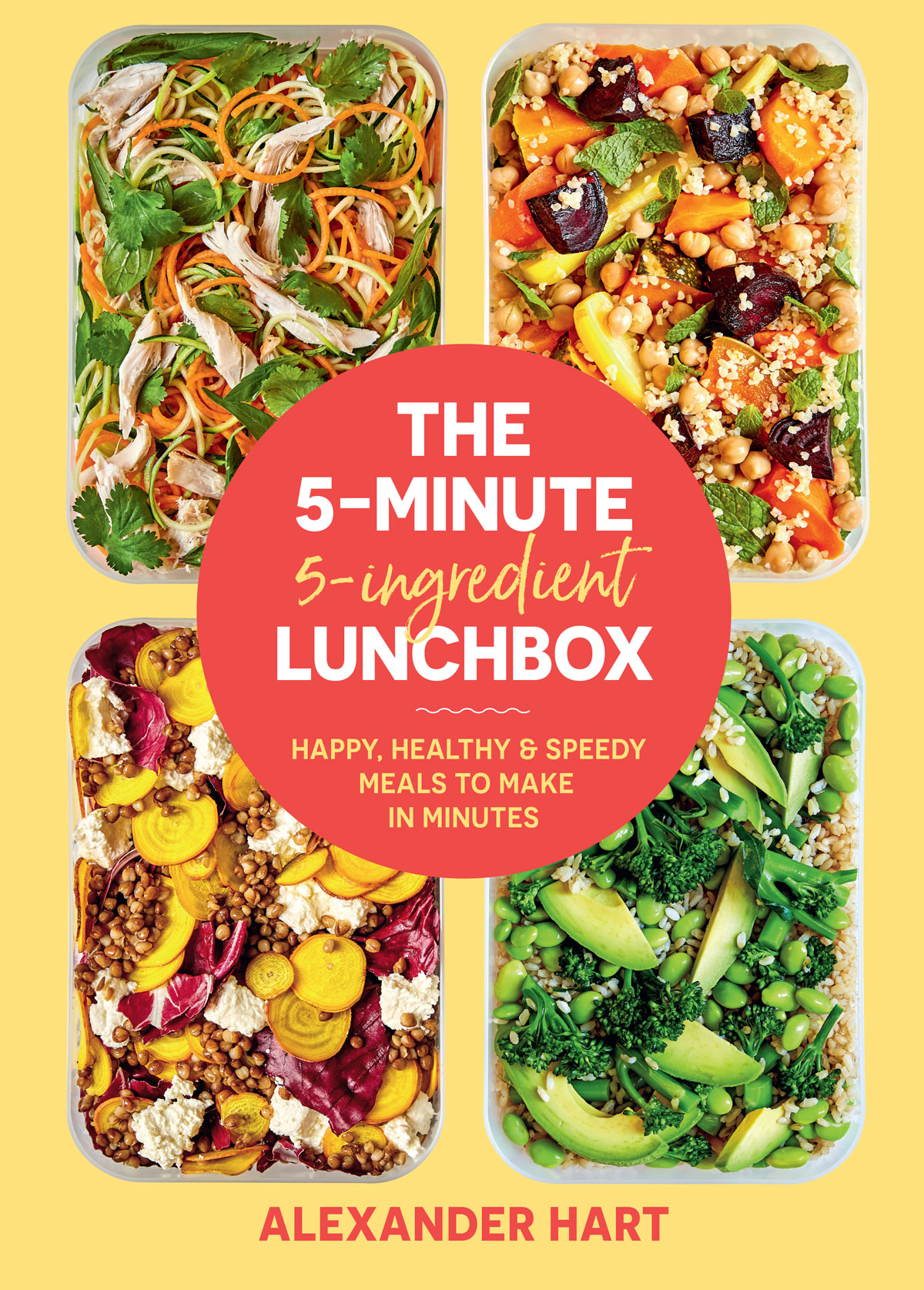
The 5-Minute 5-Ingredient Lunchbox by Alexander Hart, published in 2021 by Smith Street Books. Photography © Chris Middleton.
If you wanted to add a few more ingredients to this 5-ingredient salad, you could always throw in a few different types of herbs. Parsley or basil would be good additions, or you could add coriander (cilantro) instead.

Combine the dressing ingredients with salt and pepper to taste in a small jar or container with a tight-fitting lid.



Take a trip back to 1970s California, where the green goddess dressing was ubiquitous. A nutritious, delicious wrap in every bite.

Combine the dressing ingredients with salt and pepper to taste in a small jar or container with a tight-fitting lid.


We all hope to live to the fullest, embracing precious time with loved ones and taking in everything life has to offer. But to do so for as long as possible, you’ll need to invest in your five senses. While these abilities decline with age, there are some proactive steps you can take to maintain them no matter how old you are—and the sooner you begin, the better.

The sense that makes indulging in a slice of cake or pizza oh-so enjoyable can sadly diminish. “As we age, our taste buds shrink and decrease in number,” registered dietitian Ruth Franklin writes for Henry Ford Health. While you can’t necessarily stop this decline, you could help moderate it. For instance, stay on top of daily brushing and flossing as well as annual professional cleanings to better prevent gum disease, which may damage your taste receptors. If you do develop it, seek treatment right away; do the same with other potentially taste-tapering conditions, including infections.
Saliva production is also key, so request an alternative if you’re taking any medicine that lists dry mouth as a side effect, including some for treating pain or depression. And if you need another reason to avoid smoking, this may be it.

This sense is so closely tied with taste that many people confuse the loss of one with the loss of the other. Like our taste buds, our nasal nerves gradually weaken, affecting our ability to smell and even detect flavors.
For protection, be sure to get enough zinc from foods like potatoes, leafy greens, and beans; this mineral is essential to a well-functioning sense of smell. Further, if you notice a sudden change, talk to your doctor. You may be experiencing a problem like an infection or polyps, both of which can impact your nasal passages but are treatable.

Almost nothing is as heartwarming as giving a loved one a hug, so take care of your skin and its various nerves to safeguard your sense of touch. One of your top priorities should be preventing paresthesia, a common and potentially chronic condition whose symptoms include numbness and tingling. Since pinched nerves are a leading cause, aim to practice good posture, minimize repetitive movements like typing, and exercise caution when lifting heavy weight.
Additionally, say no to skin-damaging activities, including sunbathing, excessive alcohol consumption, and—you guessed it—smoking. And to defend your long-term skin sensitivity, limit exposure to extreme temperatures by bundling up in cold weather and avoiding spending long sessions in hot environments such as saunas. Though you may notice a natural decline in sensation over time, especially on hairless points like your palms, you don’t have to lose your touch in your senior years with these precautions.

Sadly, our favorite music, our loved ones’ voices, and vital cues such as car honks could eventually fall silent to us. According to the NIH, one in three adults between ages sixty-five and seventy-four experiences some degree of hearing loss. Your own likelihood of it can depend on factors beyond your influence, such as a family history of this issue, alongside some that you can control, including your habits and lifestyle.
First, take steps to prevent noise-induced hearing loss: avoid exposure to damaging sounds such as fireworks and loud music (or wear protection) and set volume limits on your devices when wearing headphones. Second, talk to your doctor about alternatives for medications that have been known to cause hearing problems. While there is no cure for this type of loss, it’s not all negative; this is one of the easiest senses to bolster thanks to hearing aids, which are more advanced than ever.

People of any age—even children—can experience vision impairment, and everyone can expect their sight to decline over time and their risk for eye diseases such as cataracts and glaucoma to increase. To mitigate such loss, adopt preventative practices as early as possible. For one, be sure to see an eye doctor annually, especially if you have a family history of eye-related medical issues. Professionals can spot and treat health concerns before you begin developing symptoms.
Surprisingly, another way to preserve your vision is to stay active; exercise can help reduce the risk of type 2 diabetes and lower blood pressure, conditions that may contribute to vision decline. Eat plenty of eye-healthy foods, too, including leafy-green vegetables and omega-3-rich fish like salmon and tuna. Just as crucially, wear eye protection in the sun and while driving to reduce the impact of sunlight’s damaging UV rays. And, once more, there’s reason to stay away from smoking: this habit has been known to cause macular degeneration and cataracts, which both damage your vision.
If you’re concerned about unusual symptoms regarding any of your senses, talk to your doctor or a specialist. Working together, you can formulate a health plan to better protect these faculties for the years ahead.
If you’re considering moving to a new financial institution, you may debate which type is best for safeguarding your hard-earned money: a bank or a credit union. The former has been trusted for ages for its security and reliability, while the latter offers distinct perks to its members. Keep the following key points in mind before deciding to open an account with either.

Often the first choice given their prevalence and familiar marketing, banks are for-profit organizations owned by shareholders and investors. This means that their main goal is to maximize profits, a priority that can affect their consumers in various ways—namely, you may see higher interest rates on loans and more service fees on products.
However, banks still present several benefits. For instance, traditional ones like Wells Fargo, Chase, and Bank of America have hundreds of brick-and-mortar locations, providing easy access to face-to-face customer service, cash withdrawals, check depositing, and more. They also tend to have ATMs in convenient places such as grocery stores and gas stations so you can utilize cash services on the go. What’s more, the vast size of such financial institutions equips them to extend a wide range of offerings beyond typical checking and savings accounts, such as financial advisory services. They also tend to stay on the cutting edge of technological advancements, developing mobile apps that make banking simpler for users.
That said, big banks are not your only option. Especially if you live in a small town or rural area, you may have more convenient access to community banks. Although these smaller organizations tend to have fewer resources, they may offer more personalized customer service due to being rooted in the communities they serve.
Perhaps of chief importance, most banks are insured by the FDIC, an agency that gives compensation of up to $250,000 per account should the bank go under. But note that certain products, including stocks, annuities, and cryptocurrency, are excluded from FDIC policies.

These institutions have two core distinctions from major banks: they are owned by their members and are not-for-profit. While this sounds appealing, membership may be limited, meaning that you must live in a specific city, work for a given company, or belong to a certain group—be a veteran, for example—to qualify. Credit unions are also generally smaller organizations with fewer brick-and-mortar locations, so if you move out of state, you may lose convenient access or even membership to yours. Further, some such establishments may offer a more limited library of services than a big bank; however, many still provide investment accounts like IRAs, credit cards, and other financial products on top of traditional checking and savings.
Credit unions are small but mighty, often promoting perks such as higher interest rates on their savings accounts than banks, which could greatly increase your deposit returns. They may also feature lower loan rates and fewer transaction and service fees, helping personal and business account holders alike save significantly.
And while they aren’t protected under the FDIC umbrella, many credit unions are insured by the National Credit Union Administration (NCUA), a similar form of protection that compensates members up to $250,000 should the credit union close. Just note that not all qualify, so you’ll want to check if any you’re considering are insured before opening an account.

If you’re eager to deposit your funds somewhere new, assess your financial goals to plan a path forward; for assistance doing so, consider reaching out to a financial advisor. From there, research or even visit multiple banks and credit unions to better ensure that you invest your money somewhere appropriate for you: an institution that aligns with your priorities and satisfies your ongoing needs.