Best known for its ski slopes, Stowe, Vermont, is just as inviting in warmer months, offering something for everyone—from quaint shops and restaurants to breathtaking views at every turn. Travel to this idyllic destination nestled in the Green Mountains, and you might never want to leave.

Stowe’s downtown is so picturesque that it could easily be mistaken for a film set. The white steeple of Stowe Community Church on Main Street rises gracefully against a backdrop of lush forests and towering mountain peaks, while historic nineteenth-century buildings and tree-lined streets create a postcard-worthy scene. Whether you visit in spring or summer as myriad blooms dot the landscape or during fall when the trees are dappled with vibrant reds, golds, and oranges, you’re sure to experience a Hallmark-quality getaway no matter the season.
Contributing to this cinematic feeling are the many enchanting activities and eateries you’ll find here. Take, for example, Main Street’s Black Cap Coffee & Bakery, which offers enticing refreshments like lattes and fresh pastries as well as a cozy front porch for mingling with locals and fellow vacationers. And just two blocks west, you’ll find Stowe Mercantile, a country store containing an abundance of Vermont-inspired souvenirs, including maple syrup, candy, clothing, and housewares. Art lovers, meanwhile, can browse the works of local, national, and international artists at the Current, a free gallery situated in an old schoolhouse, and history buffs can delve into the area’s past at the Stowe Historical Society’s museum.
For dinner, you could head to the Avocado Pit for delicious tacos and burritos or grab yourself a seat on the waterfront deck at MC’s Penalty Box for classic options like burgers and wings. And to put a perfect bow on the day, consider taking the short hike from town to Sunset Rock, where you will be treated to a bird’s-eye view of Main Street peeking through the treetops as twilight settles in.

Apart from its downtown offerings, a big part of Stowe’s appeal is its surrounding natural beauty. For a good introduction to the countryside, lace up your sneakers to traverse the 5.3-mile Stowe Recreation Path, which begins behind the church and can also be accessed at several other points. Take in spectacular sights as you weave along and over the West Branch Little River and past fields dotted with grazing cows, blooming wildflowers, and swimming holes—you may even want to take a dip during hotter days! Are you interested in a wooded adventure? Among your many options include the 3.2-mile Lake Mansfield Trail, a moderate trip past valley, water, and cliff scenery, and the short path to Moss Glen Falls, Vermont’s tallest waterfall at 85 feet.
Of course, some of Stowe’s best views are atop Mount Mansfield. At Stowe Mountain Resort, you can ascend 750 feet of it via the Gondola SkyRide, a twenty-minute climb that glides high above the resort’s lake-studded grounds. Once at the top, you can visit the gift shop, enjoy a five-star lunch at the Cliff House (reservations required), or grab a treat from the Waffle. Alternatively, consider driving the 4.5-mile Auto Toll Road that zigzags up the mountain. Either way, you’ll find plenty of opportunities to survey the landscape below—you can even see Lake Champlain on a clear day.
If you’re seeking an easier driving excursion, take Smugglers’ Notch Scenic Highway, a portion of Route 108 in Smugglers’ Notch State Park. This curvy, 3.5-mile stretch winds past waterfalls, dramatic rock formations, and pristine forests, providing pull-offs where you can stop to snap photos, roam on foot, or dip your toes in a bubbling mountain stream.

Make sure to set aside at least one day of your trip for exploring more of the area’s must-see spots. For instance, just a few miles west of downtown, you’ll find the von Trapp Family Lodge & Resort, established (and still run by!) the famous family that inspired The Sound of Music. Even without a booking, you can stroll through its scenic grounds and visit the Main Lodge, whose walls are adorned with photographs and other memorabilia. Or opt for the guided history tour to learn how the von Trapps fled Austria and settled in Vermont. If you’re lucky, you might even meet a descendant of the Captain and Maria and visit the cemetery where they are buried.
Cold Hollow Cider Mill, just under fifteen minutes away in nearby Waterbury Center, is another popular destination worth a stop. There, you can indulge in treats like apple cider and fresh donuts on its sunny deck or, if you’re inclined, a bit of wine or hard cider in the tasting room. While you’re nearby, don’t miss the Cabot Creamery store, where you can sample savory cheeses and unique pairings like cheddar topped with fruity jam. Be prepared to bring many delicious foods home with you!
Whichever direction your adventures take you, Stowe, Vermont, provides a certain kind of magic you won’t experience anywhere else. Spend a just few days in the town, and you’ll understand why so many visitors return again and again.
For more info, visit stowe.com
It has been famously said that golf is a good walk spoiled. Yet despite this sentiment (often misattributed to Mark Twain), the sport is anything but, especially when you consider the many health benefits it provides. Just as important, you can experience these perks at virtually any age, making it a true lifetime activity.

According to the National Golf Foundation (NGF), a record 47.2 million Americans ages six and up participated in the sport in 2024, with over 28 million doing so on courses. In addition, first-time interest is at an unprecedented high: the links welcomed 3.3 million rookies that same year. And although golf may be considered a pastime geared toward middle-aged individuals, the largest group in this report—at nearly 7 million—was actually in the eighteen to thirty-four range; an estimated 3.7 million juniors joined the fun as well.
These players are likely driven primarily by a simple desire for a fun outing. At the same time, however, they are getting much more from the experience than they might have imagined.

When you play a round of golf, there’s a surprising amount of thinking involved, requiring you to have steely concentration and decision-making chops for hours. For example, based on every hole’s length, design, and wind conditions, you need to determine which club to use, how hard to swing it, and where to aim your shot. Then once you’re putting on the greens, you must consider factors like distance to the hole and ground slope to estimate where and how hard to tap your ball. And don’t forget about tracking your strokes and calculating your overall score!
Additionally, perhaps more than any other sport, golf offers major social perks. Though it’s not technically a team game, it’s almost always played in foursomes, allowing for friendly conversations and laughter. It is also a great way to bond generations—golfers often teach their kids the ropes, and parent-child or sibling rounds of golf are commonplace.
Such pluses are great for anyone, particularly in today’s screen-focused culture. But they’re arguably even more important for older folks to help with cognitive decline and isolation. In fact, one UK company, Golf in Society, specifically uses golf as a tool to support the well-being of those in the senior population who have a condition like dementia, Parkinson’s disease, or depression.

As a moderate-level activity, golf gives you a healthy workout while also being low-impact—no jumping or running required—which is helpful for your joints as you get older. This a big reason why people can golf well into their golden years; “shooting your age” (getting a final score lower than your age) is actually a common holy grail type of quest for older players. Here are the primary ways the sport can aid your well-being.
Getting outdoors
No matter how long you’re on a course, how you traverse it, or how old you are, you are out: in nature, on grass, and surrounded by trees. As a result, you’re spending hours breathing in fresh air and taking in vitamin D. Well-known benefits of the former include improved lungs and a strengthened immune system, while the latter may help fortify your bones.
Walking
Walking is one of the most popular ways for people to stay active, and golf encourages it in spades. It’s estimated that players trek between four and six miles (or more!), take over 10,000 steps, and burn upward of 2,000 calories on an 18-hole course. And the workout is even greater if you carry your clubs or use a pull cart for them while walking.
Are you concerned about being able to physically handle it? Ride around in a readily available golf cart to take control of the amount of walking you do and gain an easy way to transport your golf bag.
Swinging a club
A golf swing in itself, especially the first shot at each hole, is a full-body workout, utilizing the shoulders, arms, legs, back, and core. Research shows that swinging a club can also be more beneficial for older adults since it can help improve their strength, stability, and balance, common challenges associated with the aging process.
Overall, science indicates that partaking in golf can have quite a positive impact on one’s long-term health in many ways, including preventing type 2 diabetes, lowering cholesterol, and aiding heart health. Maybe of the best perk of all? Longevity. A ten-year study published in 2020 suggested that playing the sport can lower an individual’s risk of death; another widely reported one indicated that people who golf may live longer—as much as five years—than nongolfers.

Even if golfing nine or eighteen holes outdoors isn’t your ideal day out, there are more ways than ever to experience the sport, allowing you to still get some solid exercise.
Topgolf
The well-known entertainment phenomenon offers a driving range complete with music, food, and screens that track your shots like a video game—think of it like a bowling experience with a golf club.
Golf simulators
These high-tech options, which allow you to play virtually while they analyze your swing, have skyrocketed in popularity; the NGF estimates that there are over 1,600 such systems at facilities nationwide.
Miniature golf
Of course, you could simply head to one of the over nine hundred miniature golf courses across the country for a day of putting with friends or family. At many of these places, you can also get your hacks in at a driving range.
Often considered a distant cousin of high-intensity, calorie-burning sports like basketball, hockey, and football, golf is gaining recognition for being an effective, slower-burn way to improve one’s health, regardless of age. So join the throngs of young and old alike who are hitting the links for not only a good walk but also a good time and a good workout.
Images that are not what they seem on second glance, static objects that appear to shift suddenly, and visual cues that are not there at all—surely these must be the work of some strange, unseen force. And, in fact, it is: it’s called your sense of vision.
Despite being one of the most basic ways in which we interpret the world, the system is by no means foolproof. Certain stimuli can fool the brain to the point of sending it into a delightfully entertaining tizzy, ranging from centuries-old paintings intending to deceive to inexplicable images such as “the dress” from 2015, which sparked endless debate after showing as different colors to different people. Explore the science behind optical illusions along with some top examples of them in action.

There is no single, straightforward answer to this query. Even scientists are perplexed by how exactly we fall for visual tricks and why their effects are so universal. In general, though, experts believe that this phenomenon occurs when the brain tries to interpret certain images and winds up misreading or altering them.
After all, vision isn’t quite as simple as just looking around. You could almost say that it’s like a game of telephone: at some point in the communication between your eyes and your mind, signals are bound to get crossed. That’s because your eyes don’t actually process images but merely absorb data from your surroundings. When light hits the retina in the back of each one, photoreceptors convert it into electric signals, which then travel through your optic nerve to your primary visual cortex. Here, your brain decodes these separate signals and shapes them into a single image, or what you see.
There are various ways in which this sense may make mistakes, leading to an optical illusion:
To experience these effects for yourself, take a look at some popular illusions in action.

What do you see in the image above: an old woman or a young one? Are you able to toggle between them based on which part of the image you focus on? (If not, try to imagine the young maiden’s chin as a large nose or vice versa.) This late-1800s artwork is an example of a classic illusion type that has been popular for centuries due to its unusual effect on the viewer—though the image does not change, your interpretation of it does. Such pictures play with your brain’s ability to take static visual cues and refocus on certain details, prioritizing some over others to help you make sense of what you see.
There’s even an entire visual-arts movement known as trompe l’oeil (French for “to fool the eye”) that involves manipulating perspective to create images with believable three-dimensionality or startling imagery. For instance, an 1874 painting by Pere Borrell del Caso features a boy who looks to be climbing out of the frame. The renowned Salvador Dali also frequently leveraged this technique, including in his aptly titled Overture in Trompe l’Oeil.

Some illusions can perturb your sense of sight altogether, such as the one above. While the graphic may seem to be moving, it’s actually a still image. You can attribute this disorienting experience to the moiré effect, which causes you to interpret repeated patterns that converge to a point as one moving object rather than several still shapes. However, you can take some control over the illusion by focusing on just a small spot. The lines, at least in that area, should appear to hold still.
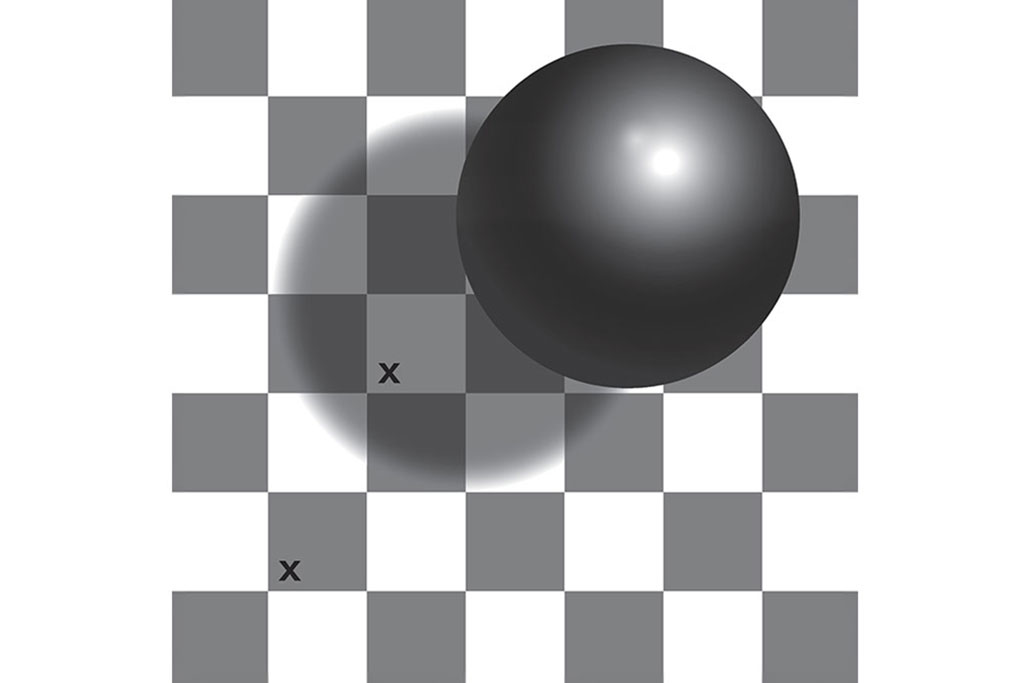
Now consider an illusion known to fool some people but not others. The image above may seem fairly direct—the large black sphere casts its shadow onto a checkered surface, which features two squares labeled “X” that are different shades. But, believe it or not, both squares are the exact same color! Your mind could have trouble perceiving this because the supposedly lighter one is surrounded by darker squares and the image’s color pattern suggests a shadow.
This is a powerful example of an optical illusion that can utterly convince the brain that the contrasting shades are authentic—to the point that it practically resists seeing the image for what it really is. If you’re struggling to see both X squares as the same color, try covering part of the image with your hands to obscure the other information that leads to confusion.

In your school days, you or a classmate may have entertained fellow students with this widely known trick of the eye. Loosely hold a pencil near one end, and shake it rapidly up and down. Does it seem to wave as if it’s a soft object rather than a hard, straight one? There is a simple explanation for why this works: your brain just can’t keep up with how quickly the pencil moves as your eyes try to capture it in motion. As Patrick Pester, a trending news writer at Live Science, notes in an article on the topic, “Humans can only process 50 to 1,000 individual frames each second, so we only get a summary of what’s happening.”
When you look around the room you’re in, it’s easy to accept that every image makes perfect sense, even if you’re wearing glasses or contact lenses. In reality, though, the brain is an imperfect machine, and optical illusions are clear examples that, on occasion, certain objects warrant a second look.
Warm weather calls for easy meals that you can enjoy anywhere. Whether you’re eating alfresco, prepping for a picnic, or just looking for a no-fuss option, these handheld recipes from The Sandwich Shop make summer dining effortless yet delicious. Each features fresh vegetables dressed with a homemade sauce for a flavor combination that’s sure to hit all the right notes.
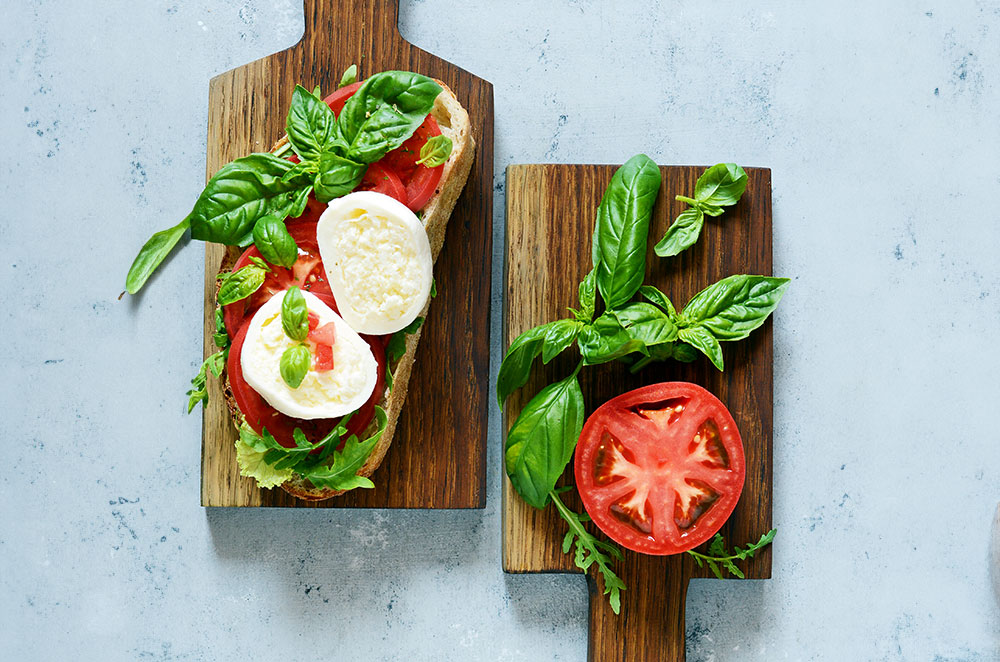
This classic Italian sandwich gets an upgrade with crusty grilled ciabatta and a rich, tangy balsamic glaze—ideal for a light and satisfying meal.
Indulge in a mix of tastes and textures with this vegan wrap, which features crunchy veggies, creamy avocado, and zesty tahini.
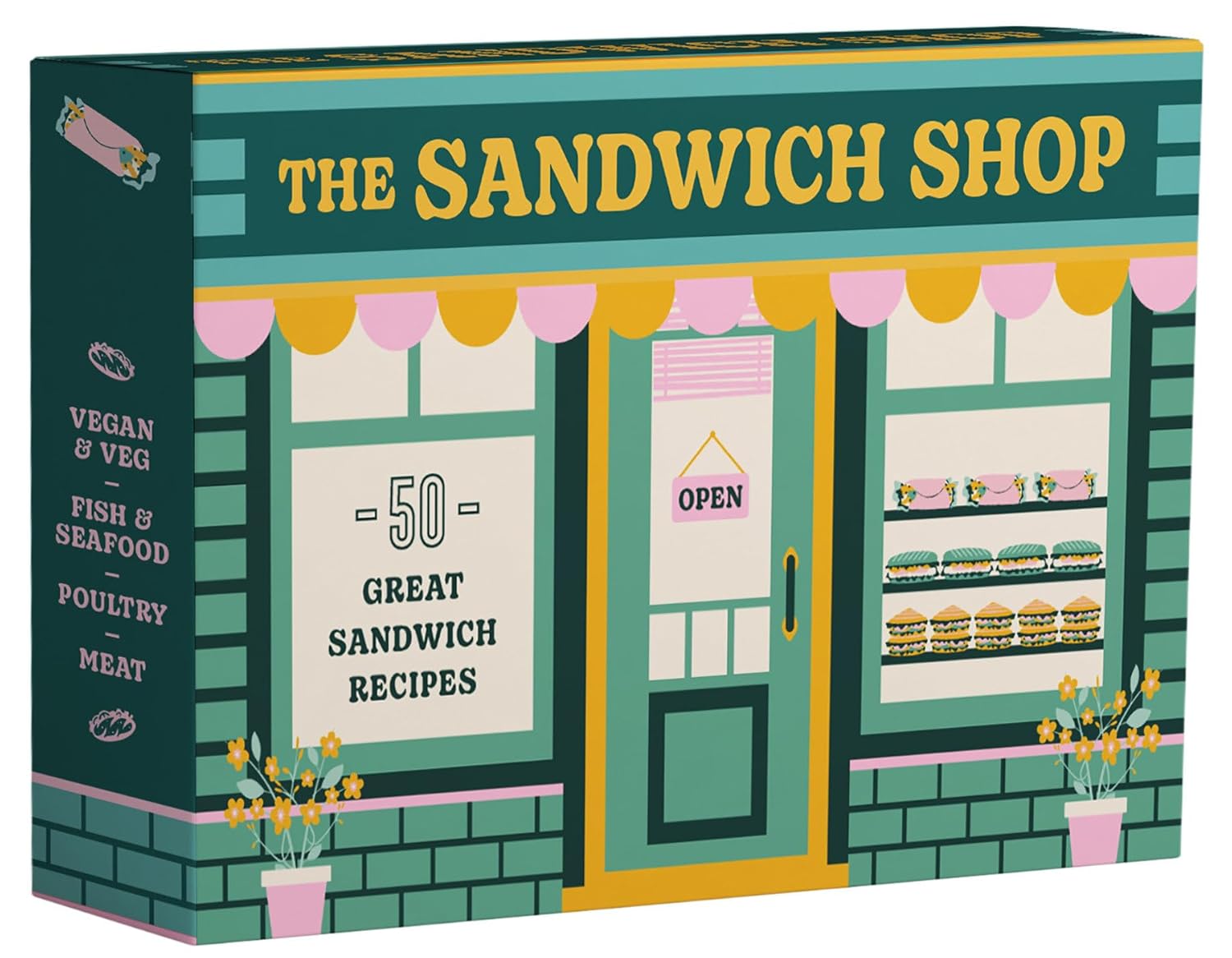
Recipes excerpted from The Sandwich Shop: 50 Great Sandwich Recipes by Lucy Heaver and Aisling Coughlan. Smith Street Gift, 2023. Photography © Chris Middleton

Serves 2




Serves 2