Veteran home builder and real estate coach Dennis Walsh, co-owner of the online training program yourhome.academy, shares some key thoughts about collaborating with contractors and tradespeople who may work on your home—so you not only end up with the home of your dreams but also do so without stress.

Whether it’s with a specialty contractor or the general contractor, there should be an established line of communication. Too often, a homeowner jumps in and sends a message through anyone they can find on the job—and too often that message either gets lost in the shuffle or gets misinterpreted and shared incorrectly with someone in charge.
So the lesson here is to establish right up-front how communication is to be properly handled and with whom—and make sure that’s exactly how it happens. Further, I would suggest that all key communications are recorded somehow in writing, whether it be in the form of an email or text or some other agreed-upon system.
An approach used by many professional contractors is to not only establish a consistent point of contact but also schedule a weekly appointment for a call or meeting to review questions, selections, and the progress of the project. I found this highly effective in my custom building and remodeling business. Unless there was something that appeared to be an emergency, our customers would keep notes of questions to review during their weekly update call or job-site meeting.

Even when you know the correct point of contact, it’s important to establish the process and paperwork that will be used to quote any pricing details and how and when any additional costs will be paid; you should also give us a permanent record of this.
The same thing applies to selections. When and how do we choose colors, finishes, and details of things like roofing, siding, cabinets, flooring, fixtures, and more? Are all selections finalized prior to the start of the project? Or is there a timetable set up to finalize these selections at different points as the project moves forward? These are important concerns and need to be established right from the start.
As a custom builder, I lived through far too many situations where my customers kept procrastinating and caused delay after delay by not finalizing selections on time. In some cases, there were significant lead times for items like cabinets, specialty flooring, tile, appliances, and such. Delays to the project not only are frustrating for the customer but also become very expensive for the contractors.
What happens is many people freeze in their tracks with so many options to choose from, so they experience decision-making burnout. What I would tell them at some point early on is that there’s no such thing as one best overall choice; there are any number of great choices that will work fine.

I can tell you as a contractor that a lot of well-meaning clients love to visit, stand around, and even help out by holding the ends of boards we’re cutting—they just generally find ways to be part of the fun.
Unfortunately, we really don’t need their help! More often than not, they’re just getting in the way, slowing the project down, and creating safety issues. In spite of their best intentions, all they’re doing is making it more difficult for us to get our work done.
So if you don’t have anything better to do at home, please just get the heck out of the house and come back later.
This is a common affliction that strikes some people whenever they have construction workers around.
Here’s how it happens: An electrician is working on some wiring, and the homeowner comes up and says, “Hey, while you’re at it, could you run some wiring over to the other side of the room and add another receptacle there by the window?” Or the plumber is running a gas line to the fireplace and they ask, “While you’re at it, would you take another gas line out to the back corner of the house for a barbecue grill?” And the special requests go on.
Unfortunately, what these homeowners are actually saying is “Since you’re already here doing this, could you also do this extra work for free?” The appropriate question is “How much will it cost if you were to add this extra work while you’re already here on the project?” Contractors will appreciate it when you don’t make them feel as if you’re trying to take money out of their pockets.
I hope you find this list of suggestions helpful as you prepare to jump into the swirling waters of home remodeling!
No matter the size of your home, it can sometimes feel like there’s never enough storage. Closets can quickly fill up, countertops disappear under clutter, and you’re left wondering where everything is supposed to go. However, chances are your home has more potential than meets the eye. With a bit of creative thinking and intentional planning, you can uncover the hidden opportunities in every room, making your space not only more organized but also more functional and enjoyable to live in.
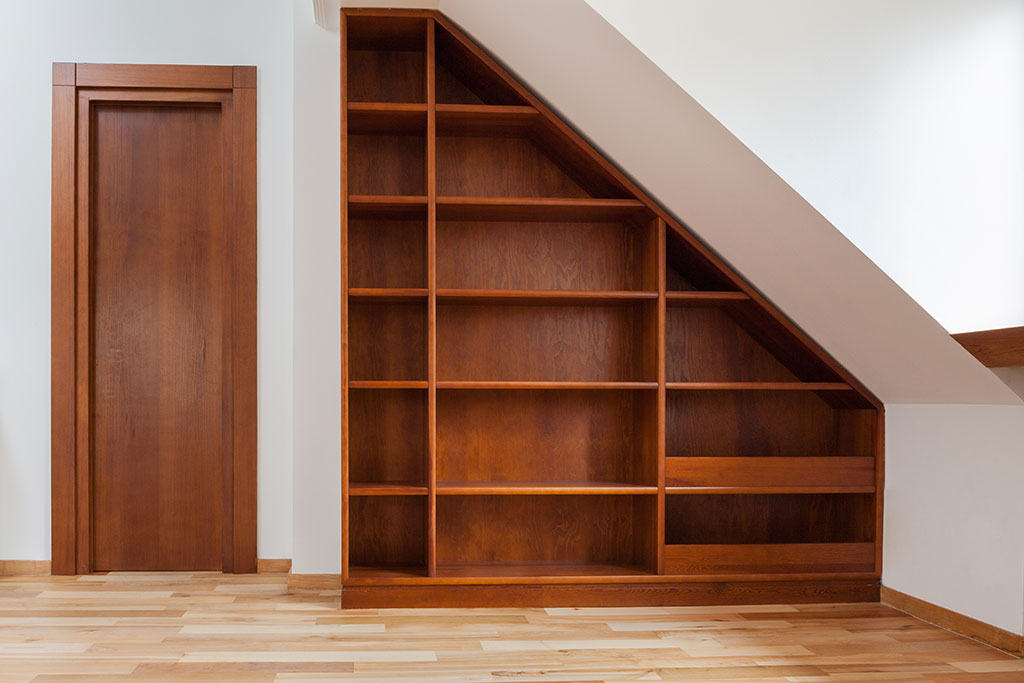
These sloped surfaces are generally difficult to design around since they’re often too short to fit standard furniture in or impossible to hang artwork on. But they may just be the perfect spot for some much-needed storage. Consider transforming such an area with a custom shelving unit that matches the slant of the wall or even stacking IKEA shelves to follow the angle closely. You could also use it as a compact workstation by installing a wall-mounted desk on the flat part of the wall. (Just be sure you have an adjustable chair so you avoid hitting your head.) Whichever route you choose, it’s important that you lean into the angle rather than fight it.
You may have one or two over-the-door hooks throughout your house, but there’s so much more you can do with this vertical space. Depending on what’s behind the door, it could be the perfect spot to mount slim shelves to store small odds and ends that might otherwise clutter your dresser or vanity. In the pantry or laundry room, install larger racks to hold cans, cereal boxes, or cleaning supplies, which can help to maximize every inch of usable space.
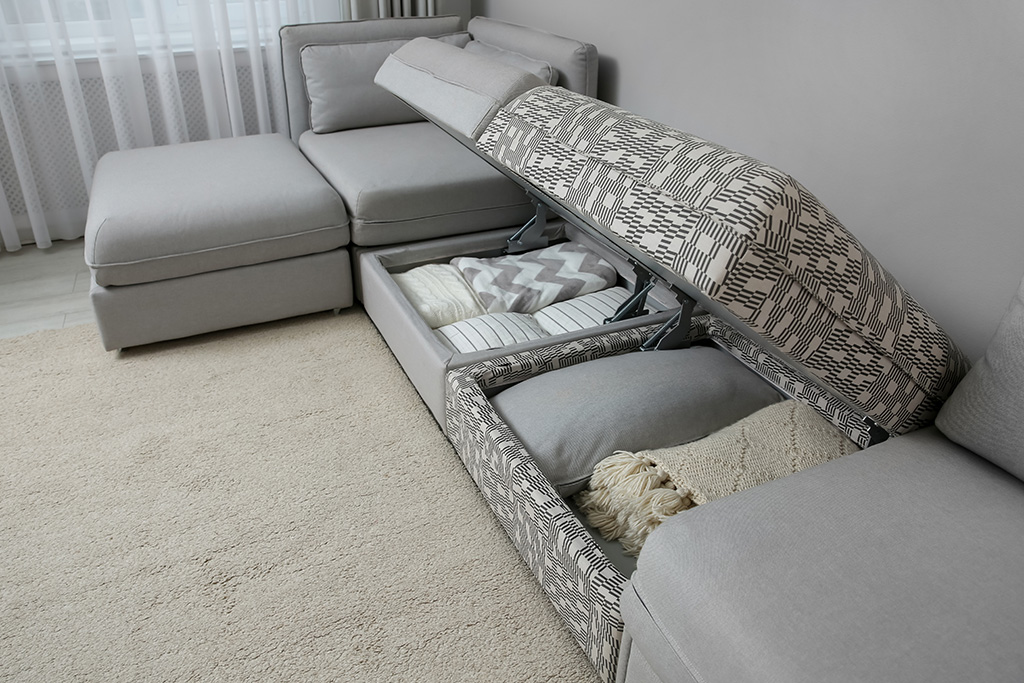
These pieces can do more than look good. They could actually be used to store items you need regular access to but don’t want to always keep visible. Consider investing in pieces with built-in storage space, including coffee tables, ottomans, and even couches, which are perfect spots to tuck away things like blankets and extra pillows. Even more, a storage bench at the end of your bed or in an entryway offers both seating and a place to hide shoes or seasonal decor. For small bedrooms, beds with drawers or lift-up storage underneath can make a world of difference, helping you stay organized without sacrificing comfort or style.
This area may seem too narrow to be useful, but with a little creativity, it can become surprisingly practical. Try adding floating shelves for books, plants, or art to make the space feel intentional rather than just transitional. A slim console table can provide a convenient landing spot for keys and mail. And if your hallway is on the wider side, consider installing built-in cabinetry or a bench with cubbies for extra storage that doesn’t disrupt traffic flow.
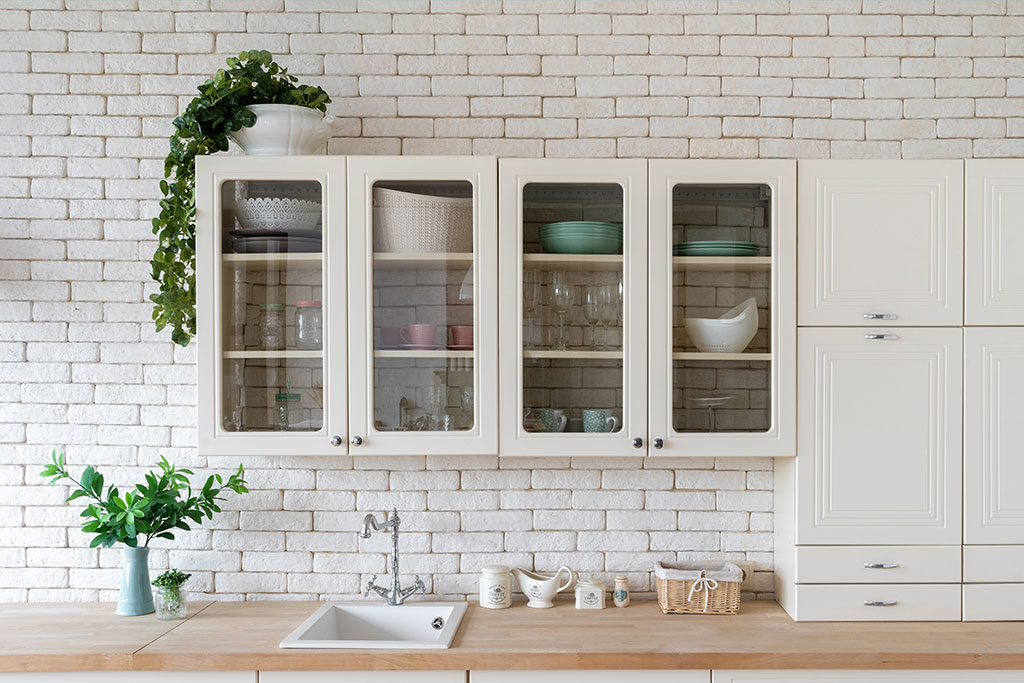
If these built-ins don’t reach the ceiling, that unused space is actually a hidden storage gem. Use decorative baskets or bins to store rarely used items like holiday dishes or serving platters; for a more styled look, display plants, cookbooks, or ceramic pieces that tie in to your kitchen’s color scheme. Just be sure to keep it minimal since too many items can make the space look cluttered. And since it’s high up, keep a folding step stool nearby so you can easily access whatever you store up there.
More than other places in this list, an attic certainly qualifies as “out of sight, out of mind,” an area usually dedicated to collecting old boxes (and dust) rather than making memories. However, a finished attic can serve as a guest suite, a home office, or even a playroom for kids. The key is to focus on insulation, lighting, and ventilation so it’s comfortable year-round. In addition, built-in storage along low walls or under eaves will allow you to continue storing your belongings. As a bonus, finishing your attic may also increase the value of your home, which can help offset the upfront costs of renovating it.
When it comes to creating a more functional home, you don’t always need more square footage—just a fresh perspective. By reimagining the areas you already have, you can uncover space and purpose in the most unexpected places. Even the smallest adjustments can add up to a home that feels more efficient, intentional, and uniquely yours.
As we welcome fall’s return, you’ll feel a shift in the air. The days are growing cooler, gentle breezes are blowing in, and the seasonal palette is changing. These recipes can help you tastefully transition between the seasons and embrace the crisp autumn days to come.
Unique bursts of tang from berries and herbs give this brunch staple a vibrant flavor profile.
A rich and nutty Swedish treat, this unique version of the brownie makes for the perfect meal closer.

Recipes from Brunch Season: A Year of Delicious Mornings from the Buttermilk Kitchen by Suzanne Vizethann. Gibbs Smith, 2025. Photography by Kelly Berry.
Summer tomatoes are just the best, and these toasts are a perfect way to celebrate them. We don’t often think of tomatoes as a fruit, but they are, and the acidity and sweetness of the marinated berries play beautifully with them.

Serves 4



This is a version of the Swedish sticky cake called kladdkaka, which is very similar to a brownie. The key here is to not cook it too long.

Makes 6 to 8 slices


Kitchen Note:
This also pairs well with the Brunch Season cookbook’s homemade Whipped Cream.
Shannon Malone, director of operations for the Sunshine Kids Foundation, discusses how the nonprofit brightens the lives of thousands of kids across the country.

Tell us about the Sunshine Kids Foundation:
The Sunshine Kids Foundation was founded by Rhoda Tomasco in 1982. At the time, she was serving as a volunteer in the pediatric cancer unit of a Houston hospital and wanted to help kids feel like they were not in a hospital. Our organization exists to widen that world. Through trips, events, and other shared experiences, it helps children and teens step outside the role of patient and simply be. At the heart of our work is a clear belief: Joy is not a reward after hardship. It is part of how they endure it.
How do you see the relationship between joy and resilience?
Joy is absolutely a strategy for resilience. When you go through cancer treatment, so much of your identity becomes wrapped up in being a patient. These moments of fun, even if it’s just being around others like them, can completely shift their mindset. We’ve seen kids who were ready to give up on treatment come back with a renewed desire to fight after one of our trips. That doesn’t happen because we told them to be strong. It happens because they felt connected, understood, and hopeful.
How does your foundation support the whole family?
While our national trips focus on the child, our regional and local activities are about the entire family. Cancer impacts everyone in that household, after all. Among other things, we host sporting events, holiday parties, Disney on Ice, and Monster Jam, activities that bring families together with others who understand what they’re going through, which is incredibly healing. Parents meet parents. Siblings meet siblings.

Would you share an example of how a child experienced something deeper than fun?
There are so many moments, but one that really stays with me is a child who was nearing hospice care. He had already been on a few Sunshine Kids trips. When it came time for his Make-A-Wish experience, his wish was to go on another Sunshine Kids trip. That was incredibly emotional for us. It showed that what we offer isn’t just an experience; it’s a sense of belonging. He didn’t want something flashy or material. He wanted to be back with kids who understood him.
How do you prepare for the emotional complexities that can surface for the kids?
We rely heavily on our nurses and medical partners. They know these kids deeply and help us prepare for what each child might need emotionally and physically. We also focus on staying positive. We never label our kids as terminal, even though some outcomes are very hard. Treatments have come a long way, and we choose to center on hope while still acknowledging sadness.
In fact, on our national trips, they travel without their parents and just with their nurses. Without parents, kids bond more with each other. They open up. They talk about their ports, their treatments, and their fears, but they also laugh, play, and just exist as kids. By the end of the week, walls come down, wigs come off, and shy ones are suddenly confident.
How do you preserve the close-knit bonds that exist?
Even as we grow, we keep our programs personal. Our trips are intentionally small, and our staff and volunteers build real relationships with these kids. We also create souvenir videos and photo collections so families can relive those memories together. Parents often tell us how much those videos mean, especially after a child has passed.

Do you hear from former Sunshine Kids years later?
Yes, and it’s one of the most inspiring parts of this work. Several former Sunshine Kids are now pediatric oncology nurses, doctors, and advocates. Some even met their future spouses through the program. What stays with them is that sense of connection and resilience. Many want to give back because they remember what it meant to feel supported.
What one thing would you want the public to understand that doesn’t show up in Sunshine Kids photos?
I wish they could feel the emotional weight of it, the joy and the heartbreak together. Giving back isn’t just about funding programs; it’s about showing up for kids fighting something incredibly unfair. When you meet these children, it changes you. You just want to help them smile, even for a moment. And sometimes, that moment means everything.
For more info, visit sunshinekids.org