In the 1950s, the American dream neighborhood was a suburban paradise of tract houses featuring matching lawns, attached garages, and lots of elbow room. But over seventy years have passed since the suburbs boomed, and growing populations, traffic congestion, environmental challenges, and cultural changes are sparking a different trend nationwide: communities that eliminate cars and other motorized vehicles, favoring walkability instead. Check out this fascinating alternative-living environment that seeks to offer a healthier, more collective way of life.

It would be inaccurate to call the car-free community a totally brand-new concept. Dense urban living existed for many centuries before the single-passenger vehicle, and many of America’s current cities support transportation on foot, train, and bicycle, including New York City and San Francisco. However, modern developers and would-be occupants are pushing the envelope further, opting for neighborhoods that minimize or even eliminate the need for any kind of personal motorized vehicle. Such living could untether individuals from the confines and challenges of automotive-designed infrastructure and grant them access to a more walkable, cohesive, and nurturing environment.

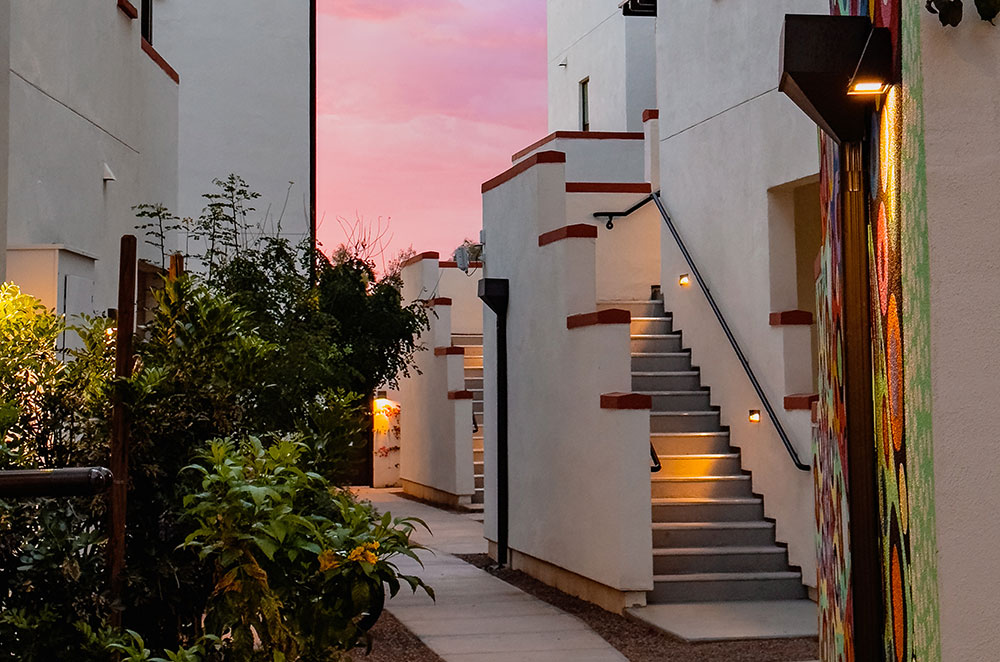
Although this movement is still in its early stages in the United States, several prominent projects are spearheading the shift. For example, a community in progress in Tempe, Arizona, designed by real estate developer Culdesac is set to house over 1,000 residents, all of whom will rely on walking, biking, and public transportation to get around. The development orients its architecture toward green spaces and includes local shops and coworking offices, making it possible for residents to fulfill most of their daily needs within the neighborhood itself. The creators describe living here as being “connected with those around you—your neighbors, local businesses, and the broader city.”
Additionally, the charming coastal community of Seaside, Florida, boasts its own car-free elements, having been built with walkability in mind. Although it does feature roads, it was designed with narrower streets, pedestrian-friendly promenades, and centralized commercial spaces.
Such aspects elevate foot and shuttle transportation, working to reduce residents’ dependence on private-vehicle travel. But small towns aren’t the only ones getting in on the trend—Portland, Oregon’s BIKETOWN service, for one, gives locals and tourists easy access to e-bikes to encourage them to get around the city sustainably.

As cities grow denser, air pollution and traffic congestion have become increasingly common issues, with the latter contributing to greater stress and exhaustion for drivers. But car-free communities help alleviate these problems in several ways. To start, fewer cars on the road naturally means less exhaust being released into the air, promoting a healthier environment. And without private vehicles, residents are motivated to walk or cycle more, leading to more active lifestyles that can boost their moods along with their physical well-being.
At the same time, implementing these neighborhoods can reduce traffic accidents and save lives. According to the National Highway Traffic Safety Administration, an estimated 39,345 people were killed in motor vehicle crashes in 2024 alone. Eliminating cars can create safer spaces for pedestrians and cyclists, especially higher-risk individuals like children, the elderly, and those living with disabilities.
Furthermore, such communities generally offer a singular area where residents can live, shop, and play, which could reduce the need for long drives. These conveniences may seem particularly appealing to individuals working from home, who aren’t bound by a commute. On top of that, living without a vehicle could be budget friendly. Gen Z young adults specifically are increasingly opting out of car ownership to avoid the high costs associated with buying, insuring, and maintaining one.

As exciting as car-free communities may seem, integrating them across the country isn’t necessarily seamless. Ones separated from rail lines or other public transportation may limit residents’ access to essential services like retail and health care. But even if a neighborhood provides sufficient travel within its nearby metro area, long-distance visits to out-of-town family members, especially those in more isolated rural areas, can still prove difficult and frustrating.
Perhaps most concerning of all, though, is the lack of emergency vehicle access. This can be extra worrisome for elderly folks who may be more likely to need health assistance. However, some communities have factored in these necessities: car-free Fire Island, New York, has pathways in place to allow for emergency and state vehicle travel, while Culdesac’s residences are each ambulance accessible.

While the transition to car-free living may still be in its early stages, the bourgeoning interest in this trend could be reflecting a broader shift in how Americans view urban residences. Public health concerns, quality-of-life challenges, and the reframing of the average workday may be pushing citizens to pursue a new type of living experience. And though limited examples of these lifestyle developments currently exist in the United States, innovators continue to rethink real estate, paving the way for a pedestrian-focused future.
The best kitchen products fully encapsulate the essence of this room: everyday practicality combining with lavish style to make you feel right at home. If you’re looking to add a touch of luxury to your meal prep or hosting duties, explore five items that marry function and form so seamlessly, they may each be well worth the high-end investment.

Your daily cup of joe will ascend to a professional level with the help of this stellar brewing machine, which measures only about five and a half inches wide and features a one-cup carafe. Rather than concealing it alongside your other small appliances, though, you might actually enjoy featuring its smart design on your countertop. A sleek steel and matte-black device with an elegantly fluted silhouette, The Brew can fit seamlessly into any kitchen aesthetic.
But perhaps even more striking than its appearance is its coffee-conjuring method, a pour-over process you can adjust to your preferred serving size and intensity with the touch of a button. While it retails at $699, those who consider coffee an indulgent hobby, not just a daily necessity, will find this a valuable appliance that produces delectable results.

Rather than stoic and antique, this festive dishware set by Felt+Fat—which includes an everyday plate, snack plate, and soup bowl—helps you serve up refreshments and hearty meals alike in stunningly modern style. Its well-crafted products each display a slew of scintillating colors across a neutral, off-white surface; the vibe screams “party” while the traditional shape keeps occasions refined and formal.
Even better, these pieces are as durable in form as they are delicate in appearance. In addition to being suitable for both the microwave and dishwasher, they’re made of food-safe ceramic rather than heat-intolerant plastic or fragile glass. And, on top of that, Felt+Fat’s artisans painstakingly handmake the dishware to order, well earning the set’s $140 price tag.

While a basic value-brand cutting board can get the job done, a premium piece by Fifth & Cherry may become a point of pride for your kitchen. Each one is exceedingly sturdy, helps prevent food contamination, and adds a touch of art to meal preparation. Attribute these many perks to the brand’s craftspeople as well as its sourcing: it uses only responsibly harvested American black cherry tree wood, which offers elegant grain, wonderful coloring, and years of utility.
Fifth & Cherry sells a variety of premium boards in a range of dimensions and styles on its website, but ordering a custom one grants you the freedom to tailor it perfectly to your countertops’ dimensions, your cooking needs, and more. (Prices vary, though you can receive a free quote online.) In addition to promising excellent results, all boards come with a complimentary refinishing service for the lifetime of the product.

Toast to the weekend, a special celebration, or quality time alongside treasured company with this sophisticated set of crystal glasses, which serve up classic elegance with a twist thanks to their distinct rainbow-like sheens, beautifully beveled stems, and art deco and midcentury modern profiles inspired by the architecture of Los Angeles, the company’s home. The stemware is 100 percent unique as well thanks to its handblown artistry, making each piece a veritable collector’s item for showcasing on your bar, tea cart, or buffet table.
Note the six varieties of glasses in this set, retailing for $212. They range from a lean champagne flute to a broader burgundy glass, equipping you to serve an array of beverages. But if you’d prefer a matching collection, you can also select the one you like best and order as many as you want. Then prepare to astound your guests with one-of-a-kind pieces that show off Noon & Moon’s sculptor-like craftsmanship and expert attention to color.

Elevate your home cooking with a professional-grade tool: this “workhorse” general-purpose knife by Town Cutler that is equally stunning in appearance. Taking inspiration from desert moonlit mountains and starry skies, it features a perfectly beveled and matte Nitro-V stainless-steel blade sitting within a buckeye-burl wood handle marbled with black resin. Sheathe it in the wooden saya, or protective covering, and it transforms into a fashionable piece of decor that you could very well display on its own shelf.
But don’t leave it idle for long. Utilize this everyday knife for everything from dicing vegetables to butchering meats to witness how its ultrathin, ultrasharp, and lightweight blade improves your daily food prep to top-chef quality. The Desert Dawn chef knife starts at $230 (plus $44 for the saya), which is an exceptional value for not only its breathtaking look but also its ability to replace just about any other knife in your drawer.
Fall is a time for enjoying great scenery, great friends, and great food—and when it comes to the latter, these delectable recipes from the Tastemaker cookbook have got you covered. Whether you’re in need of an appetizer or a meal, they’re sure to help you satisfy everyone’s taste buds.
Inspired by the classic takeout favorite, this creamy and cheesy dip can be easily whipped up in under twenty minutes and is perfect for sharing.
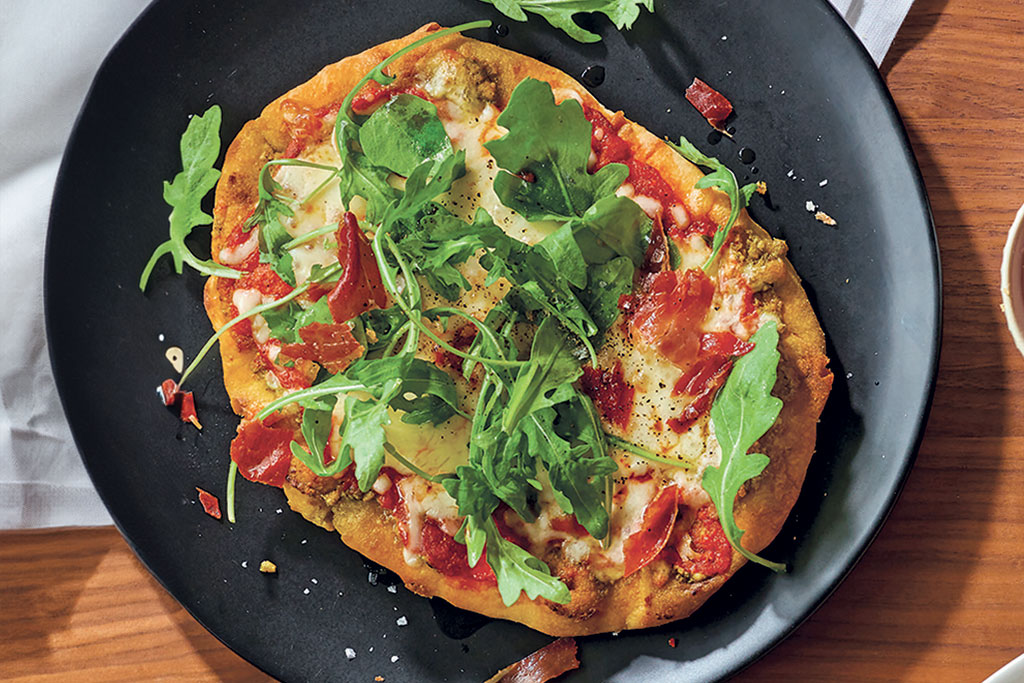
This recipe ups the wow factor on the traditional pie thanks to its distinctive ingredients, which include luscious layers of sauce, delicate arugula, zesty meat, and an airy flatbread crust.

Recipes from Tastemaker: Cooking with Spice, Style & Soul by Scot Louie. Weldon Owen, 2024. Photography by Biz Jones. Text © 2024 Scot Louie and Photography © Weldon Owen.
With Chinese takeout being a New York staple, I adore a classic, crispy Crab Rangoon. As someone who loves to entertain and loves to save time even more, making this dip was the perfect balance of both. This dip is the ideal shareable appetizer and much more convenient than preparing twenty-five individual Crab Rangoons.

Makes 4–6 servings



Between the light and fluffy naan, the crispy prosciutto, and the tangy marinara, it’s hard to decide what makes these naan pizzas so delicious. Each ingredient here is really working together to achieve the cheesy, flavorful greatness. My favorite part, aside from eating it, is topping it off with that final sprinkle of salt and pepper and a smooth drizzle of olive oil.
Makes 2–4 servings; 2 naan pizzas


Shelagh Conway, founder and CEO of Triple Heart Design in Austin, Texas, discusses how she transformed a couple’s primary bathroom into a more luxurious and functional space.

Tell us about yourself:
I have been doing interior design for a better part of my life, but it took a while to realize I had a knack for it, and I certainly never thought about doing it as a career. Before, I actually worked a corporate job and would simply renovate houses on my own. Then I ended up renovating houses for my boss; I was working a full-time job while traveling and managing remodeling projects remotely. After about the fifth home, I found that I not only enjoyed it but was also good at it. So I quit my corporate career and opened Triple Heart Design in 2016.
Would you share your design philosophy?
Many times when clients come to me, they want the beauty of a renovation but don’t have a clear understanding of the functional aspects of planning one. In contrast, I’m looking at form, function, and flow before I even get into the aesthetics. I always start with the floor plan, using my 80/20 philosophy—80 percent of the time, a space will work in one particular way for the client, but for the other 20 percent, it has to be flexible and grow with them.
I consider how the room will accommodate specific circumstances, whether it’s entertaining guests, hosting family members, or holding playdates. I also believe that natural materials emit a palpable energy, and I take extra care when picking them to ensure that they match each project I’m working on. For example, when you walk into a room that has marble or granite versus one that is filled with plastic or laminate, it has a significantly different feel. I want to design spaces that have a zen-like quality to them, so I gravitate more toward such materials.

Tell us about this bathroom remodel. What were the clients’ goals?
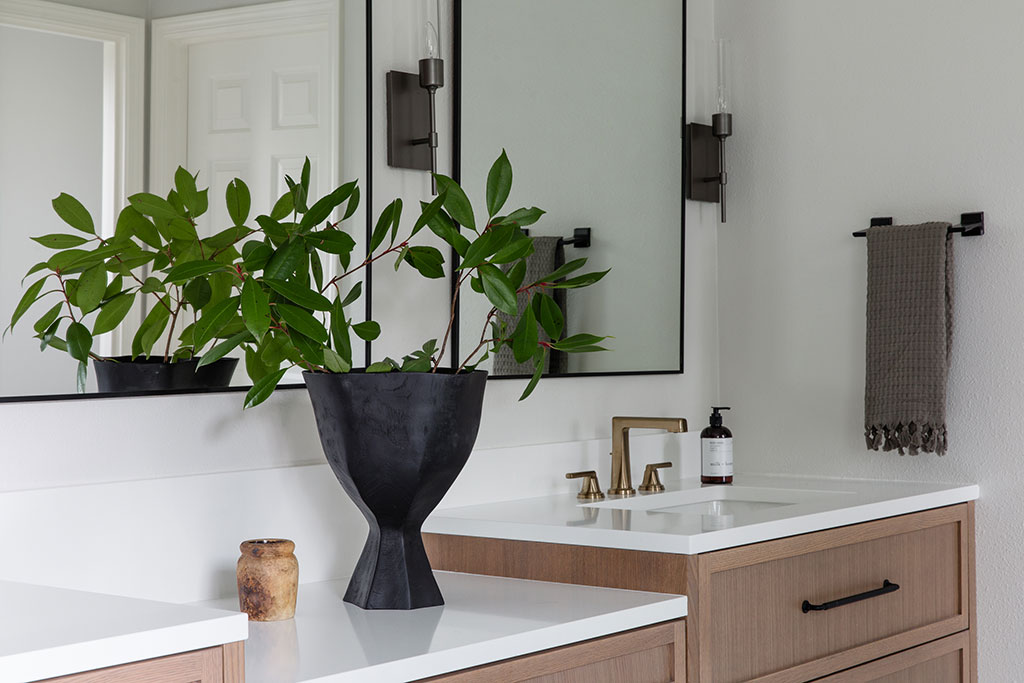
We actually ended up redoing the three upstairs bathrooms. For the primary bathroom renovation, the clients wanted a luxurious, naturally energetic space with nice finishes, fixtures, and tiles. The main issues with the existing layout were the split vanities, which disrupted the flow of the room, and the underutilized window, so we focused on reconfiguring the space to open it up while also adding more storage. We turned the tub away from the window, created a large walk-in shower and a much longer double vanity with a makeup area for the wife to use, and added a massive cabinet with drawers and doors to provide ample linen storage.
When reworking the layout, did you borrow space from another area in the home?
Yes, there was a little alcove at the end of the hall between their bathroom and primary closet. It was a weird niche that was probably designed as some sort of art accent, but it was perfectly located for me to close it off to the hallway and open it into the bathroom.

How did you pick the materials for this project?
I like to use visual and textural interest in the spaces I design more so than I do a bold accent that automatically draws attention. I chose herringbone tiles for the floor, ran them up the wall in the shower, and mixed them with large-format marble tiles in a similar color palette. It created incredible visual interest in the room but still provided a calming essence, which you can feel when you enter.
I also like to introduce different metals, so as you scan the room, you’ll notice pops of two types—black and champagne bronze—that come out in different areas and help balance the overall theme. I was conscious of the trends at the time, and though brass was very popular, I opted for the champagne bronze instead to bring in a warm ambience. It satisfied the trendy desire for brass while introducing a classic appeal that will remain relevant over time. As a result, the space feels both current and enduring.

Do you have a favorite part of the remodel?
I absolutely love the separation of space between the tub/shower area and the rest of the room. We also put a half wall beside the tub so the clients would have somewhere to set candles to create extra coziness while bathing. And the window behind the tub, to which we later added a soft Roman shade, produces even more warmth at night. It’s those elements that resonate deeply, creating a calming space that addresses the clients’ desires and needs.
For more info, visit tripleheartdesign.com