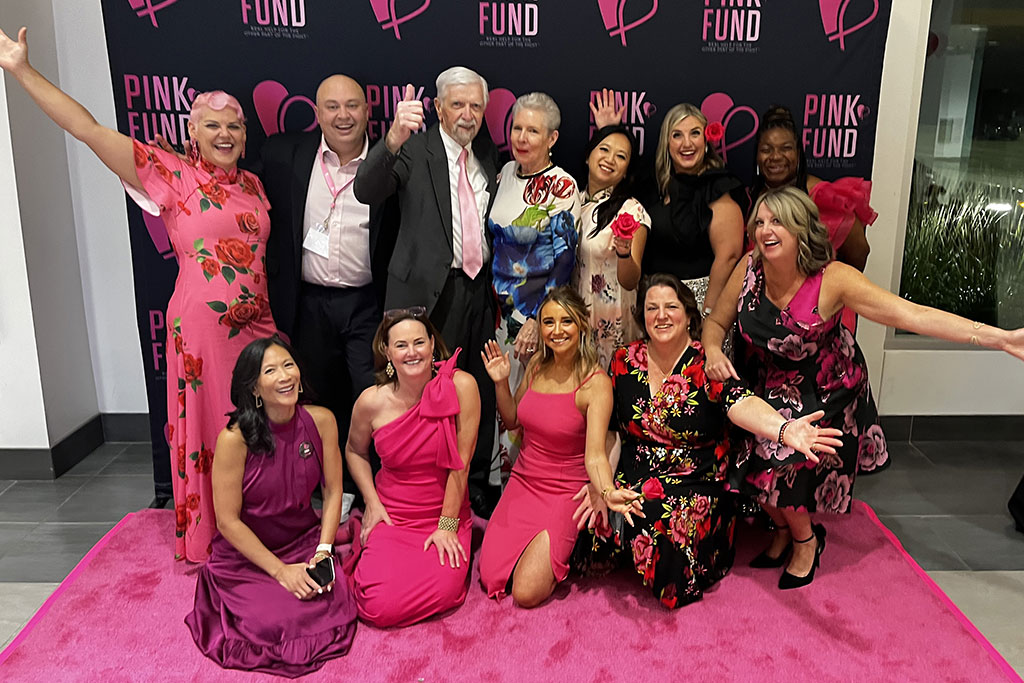
Molly MacDonald, cofounder and CEO of Pink Fund, explains how her organization provides crucial funds for breast cancer patients and the incredible effect such support can have on them.

Tell us how your organization came to be:
Pink Fund was born as a result of my early-stage breast cancer diagnosis in 2005. I was left with an insurance responsibility of $1,350 a month to cover my treatment, had no savings, and had no child support or alimony after a previous divorce. Our home went into foreclosure, and creditors threatened to repossess my car.
I ultimately experienced a side effect of cancer known as financial toxicity. Between the digestive issues, limb numbness, cognitive impairment, and other symptoms of cancer treatment, patients often can’t work. And someone who doesn’t have access to benefits like federal medical leave might find themselves struggling to pay their basic living expenses, much less treatment. They may be unable to stick to their protocol as prescribed because they can’t afford to miss a paycheck, and some even decide to stop it altogether and go back to work just to avoid leaving their families financially bereft.
I spent a lot of time sitting in treatment waiting rooms talking to other working women like me who were on unpaid leave and making life-altering financial decisions. I thought, “Why isn’t anybody doing something about this? Maybe someone should start an organization to help pay these bills and provide patients with a financial bridge.” To pursue this vision, my husband and I bootstrapped our cause, made the Pink Fund logo, and created a website. A medical writer at the Detroit Free Press then agreed to do a front-page story about our efforts, and we officially launched on October 2, 2006.

How did you achieve nationwide influence?
Pink Fund was an all-volunteer organization until 2012, when it hired a part-time program manager and me as CEO. I knew that the problem we were addressing wasn’t relegated to the state of Michigan, where we’re physically located, but we needed a major partner to take our efforts further. The Ford Motor Company learned about our mission and was very intrigued; it ended up making a significant investment in a national ad campaign for us. It also funded a national TV launch and manufactured 6,000 T-shirts to sell on its Warriors in Pink website, which provided additional revenue for our cause.
Over a decade later, we now have an incredible board that includes a breast oncologist at the University of Texas and the general counsel of Trinity Health, a national health provider. And to help serve more patients, we created an online application program; as of December 2024, there were 1,400 applications in process for assistance.
How do people qualify for assistance?
We support everybody who qualifies. They must be in active treatment for breast cancer, meaning they are undergoing chemotherapy, radiation, a mastectomy, or a lumpectomy. They also need to prove loss of income for them or their partner and live at 500 percent or less of the federal poverty level.

What impact has Pink Fund had?
We have delivered over $9 million total in support to patients, paying their creditors for housing, transportation, utilities, and insurance for up to 90 days. In just one month, Pink Fund might cover about $150,000 of such bills, an amount we would love to be able to double or triple based on the increase in requests we’ve experienced.
We also have a Pink Fund program for women with metastatic cancer. They may be in treatment for the rest of their lives, and many have to go on Social Security Disability Insurance. We will help support them with up to $6,000 for up to six months.
Pink Fund assists men as well—we’ve served about 1,800 of these patients. The greatest challenge for men is that there’s not enough education about male breast cancer, so when they’re finally diagnosed, they may be at a later stage and can have a higher mortality rate.
Why is your particular organization so crucial?
Breast cancer charities is a saturated space. What you might see most is awareness or research funding, which are incredibly important efforts. But what makes Pink Fund different is that we offer more direct, concrete help to families.
The power of that can’t be overstated. When you find out you have cancer, the tears come, you’re scared, and you don’t know what’s going to happen. But people reach out to us all the time saying we saved them from losing their homes. We get a lot of comments like “Thanks to your support, I’m crying happy tears for the first time in a long time.”
For more info, visit pinkfund.org or donate here
A sparkling and comfortable house isn’t just about aesthetics—it can also dramatically improve how you feel. The way you furnish and maintain it can refresh and rejuvenate you or make you feel tired and worn down. Here are some tips to help you create the healthy home setting you deserve.

Did you know that, according to the EPA, the air inside a home can be up to five times dirtier than it is outside? While this statistic might be concerning, there are simple ways you can mitigate airborne pollutants in yours. For example, be mindful when buying new furnishings, which may off-gas chemicals used to manufacture them, such as formaldehyde. To prevent these from getting into your home’s air, you could allow your furniture to sit in a garage or well-ventilated room for at least a week or leave the windows open for a few hours. (In fact, you may want to leave your windows ajar for at least a few minutes daily to let in fresh air.)
Another alternative is to opt for goods made from natural materials like organic cotton and solid wood, although they may cost you more. Or you can avoid releasing additional chemicals into your home and save money by shopping secondhand since these items will likely have already off-gassed much of their VOCs (volatile organic compounds).

Having your home’s HVAC system serviced once or twice a year is also an effective way to ensure clean air since it can prevent rust and other contaminants from being circulated. Replace your furnace filter at least once every three months as well. And for extra filtration, consider running a portable air purifier, especially after activities that may increase indoor air pollutants, such as cooking and working with VOC-containing craft supplies like glues and markers.
Two highly dangerous pollutants to be on alert for are carbon monoxide, which can be emitted from your gas oven and other sources, and radon, a naturally occurring radioactive gas that can seep into your home through your foundation. Install carbon monoxide monitors on every floor of your residence so you can be alerted promptly to the gas’s presence and take steps to protect your family. Additionally, it’s a good idea to test for radon when buying a home, after renovations, or if you use your basement frequently. If an unhealthy level of it is found to be in your home, hire a licensed professional to mitigate it.

Some cleaning products, such as bleach and ammonia, can contain VOCs, so choose ones that are friendly to your lungs instead. You could buy an all-natural cleanser like Aunt Fannie’s All-Purpose Cleaner or Bon Ami or make your own by mixing two cups of distilled water, two tablespoons of lemon juice, a half teaspoon of dishwashing liquid, and one tablespoon of baking soda.
Besides posing a tripping hazard, clutter can attract dust, dander, and other irritants and make it hard for you to effectively remove them. So, first and foremost, aim to keep your spaces tidy by picking up stray items daily and getting rid of or donating no-longer-needed possessions. Then dust regularly and fit your vacuum with a HEPA filter, which can trap dust and irritants, going over your floors at least once a week. Just be sure to protect your hardwood floors by setting your vacuum to the hard-surface setting.
Furthermore, disinfect surfaces you touch frequently, including doorknobs, cabinet pulls, and TV remotes, especially if someone in your household has a contagious illness like a cold. As for your bathroom, you can prevent mold from forming by running its exhaust fan or keeping a nearby window ajar and wiping its walls clean of any moisture after using the shower.

Converting your bedroom into a sleep sanctuary can also boost your health. A good way to start is by minimizing notifications on your mobile device, hanging room-darkening curtains, or using a white-noise machine while you sleep. Further, aim to keep your bedroom cool, between approximately 65 and 68 degrees, so you can blissfully drift off to sleep.
By taking control of your home environment through mindful maintenance and product selection, you can significantly boost your well-being.
There’s nothing like a fresh, warm dish to satisfy at the end of a long day, especially as the weather grows cool. For simple recipes that won’t leave you feeling like you’re spending hours in the kitchen, try these options from the Tastemaker cookbook. The zucchini fritters are the perfect guilt-free snack, while the s’mores dip makes it easy to indulge in the classic treat without the hassle of a campfire.
Not everything fried has to be bad for you—take it from this recipe, which uses more egg than flour to bind the vegetables and avocado oil for a light fry.
You won’t believe how fast you can whip this dessert up in the oven, allowing you to enjoy maximum gooey goodness in no time.

Recipes from Tastemaker: Cooking with Spice, Style & Soul by Scot Louie. Weldon Owen, 2024. Photography by Biz Jones. Text © 2024 Scot Louie and Photography © Weldon Owen.
The trick to making these fritters good and guilt-free is using more eggs and less flour to bind them together. They are light and crispy on the outside and soft on the inside. They’re just incredible and taste delicious with a sprinkle of flaky salt and dill, or [the cookbook’s] Sun Dried Tomato Aioli.

Makes 3 servings



I’m always looking for something good and easy when it comes to desserts. Hand to God—I’m not the best baker, but I’m working on it. However, this S’mores Dip is an easy and delicious dessert for anyone to make. Minimal prep time, minimal ingredients, and maximum flavor.

Makes 8–10 servings


For thousands of years, timber frame construction and its principles have been utilized across the world. And it’s no wonder why, considering the material’s quality, immense strength, durability, and beauty. One leading entity that has mastered this method in the twenty-first century is the DC family of companies: DC Builders, which primarily crafts heavy-timber homes, barns, and other facilities, and its sister company, DC Structures, which specializes in pre-engineered barn and home building kits.
Taking his years of hands-on construction experience, president and CEO Dustin Gruetter, with the help of vice president Cole Hansen, founded the former in 2002 and the latter in 2015, turning what was originally a local Oregon endeavor into nationwide enterprises. Learn about each company, their amazing projects, and the overall mission behind it all to get a glimpse of the possibilities and impact of this time-honored craft.
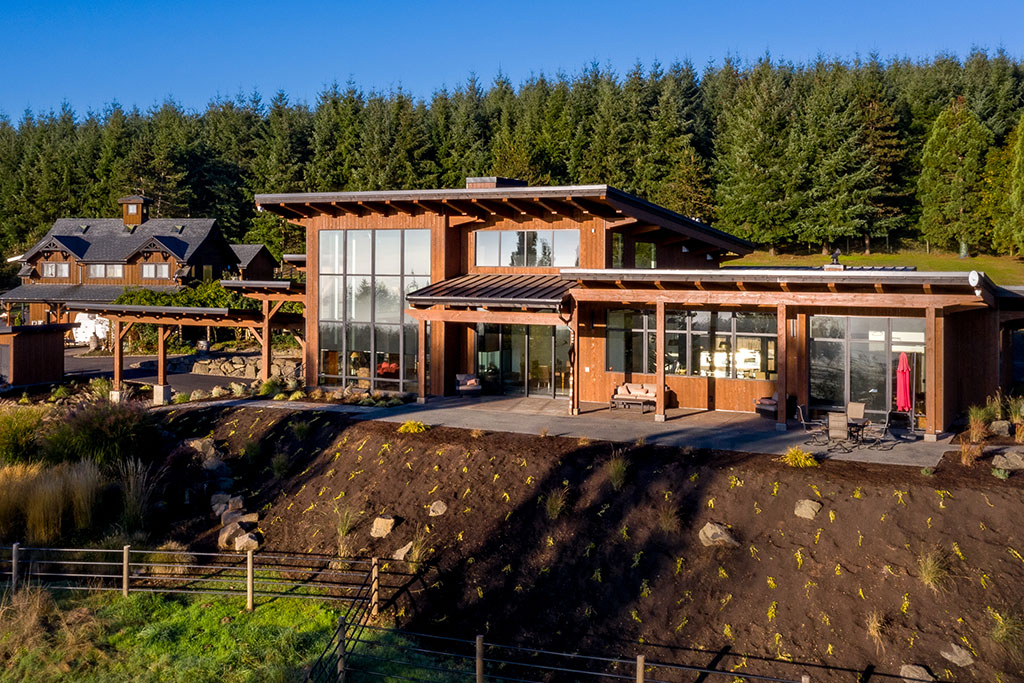
The DC Builders arm of this duo does design and construction work with an emphasis on creating high-end timber frame and post-and-beam structures, both for people and horses as well as for residential and commercial purposes. The company’s primary focus is on quality craftsmanship—one look at its hundreds of completed projects makes that quite evident—but it also prides itself on its innovation and passion for the trade. It’s the go-to of the pair if you want your home to be planned and built from the ground up. Its other service offerings include framing, installation, and general contracting.
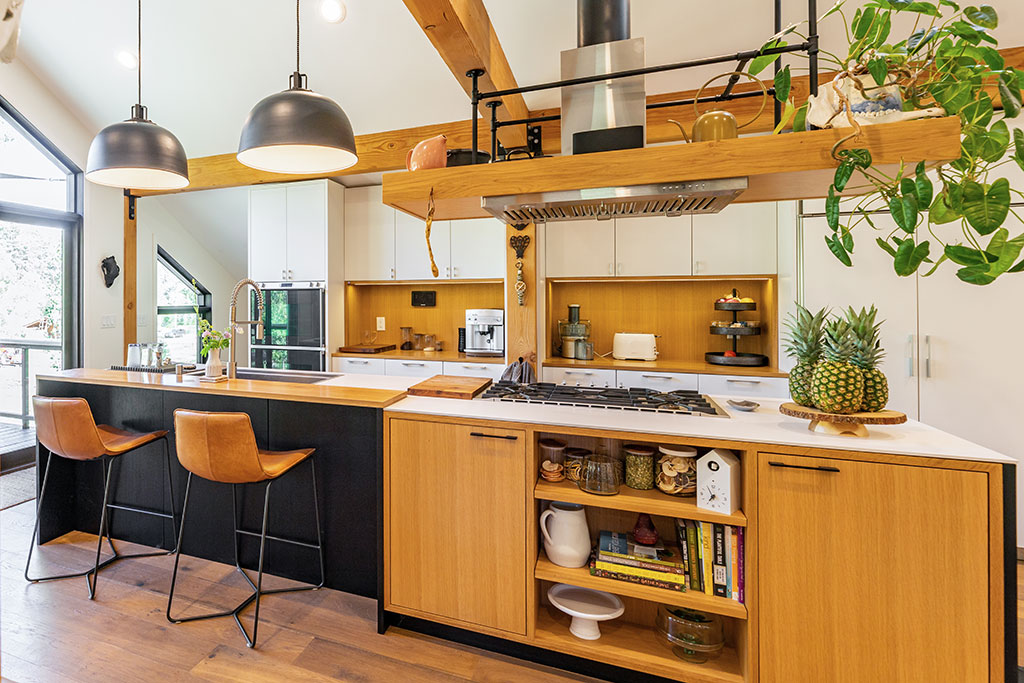
If you’d prefer to go with a predesigned building rather than starting from scratch, DC Structures has you covered. Its line of pre-engineered heavy timber packages offers customers a huge range of building models, from barns and cabins to homes and garages, making the choices feel virtually endless. After getting through that difficult but fun selection process, you can customize your kit any way you like; there’s even the option of bringing on DC Builders to do it for you. The materials, including windows and doors, are then procured and every piece of lumber for the project is precisely cut before being packed and shipped to your property for your general contractor or one in DC Structures’ own network to assemble.

As touched on earlier, the sheer array of projects completed by these companies is breathtaking—not only because of the quality, craftsmanship, and beauty but also because of just how much each one was fine-tuned to suit the client’s every whim.
As an example, consider a barn-style home DC Structures made for a client living in Durango, Colorado. Beginning with an open-concept building model, the company worked closely with the homeowner to reshape it with personalized touches and turn it into something uniquely dazzling. Some of the more notable changes included making post-and-beam design the focal point of the main floor, staining the siding, and adding a drive-through garage bay and a huge deck.

Then there’s the impressive equestrian-focused project in Carmel-by-the-Sea, California, where DC Builders constructed not one but four timber frame buildings for the residential community, including a riding arena that’s almost 13,000 square feet. And a few hours north in Bethel Island, California, lies a DC Structures–DC Builders masterpiece: the Delta Coves Community Center. For this project, the former provided six pre-engineered kits as the starting point and then the latter took care of the custom alterations and construction. The end result includes a jaw-dropping main building complete with a club room, gym, and open-air picnic pavilion.
Perhaps the best example of what can emerge when these two companies join forces, though, is the largest structure the DC team has built to date: a 36,290-square-foot totally customized, painstakingly detailed home and equestrian facility in Oregon City, Oregon. Among its unique features is the overall layout. The whole bottom floor is the equestrian facility and contains every imaginable need for horse owners, and the 5,000-square-foot-plus house sits atop it. The home even has a balcony that overlooks the riding arena.

The final piece of the DC puzzle is its focus on family, one of the duo’s core values. Many people on both teams have worked together for several years while also building lasting client relationships, creating strong bonds within and outside the companies’ shared walls in Damascus, a town just outside Portland. As the DC Builders website puts it, being part of the DC family means “cultivating meaningful relationships to create a deeper sense of purpose and community within our company.” Proving that “family” and “community” extend to the surrounding area, DC Builders also gives back to Portland by helping Habitat for Humanity build homes, partnering with the child-focused Maurice Lucas Foundation, and hosting an annual holiday toy drive.
What once started as a humble means to help others has, much like the majestic buildings they offer and create, become a symbol of quality and durability across the nation. In this way, DC Builders and DC Structures carry on a centuries-old craft that’s custom-made for life in the twenty-first century and beyond.
For more info, visit dcbuilding.com and dcstructures.com