The invigorating energy of spring is here, offering the perfect opportunity to refresh your home and embrace the season ahead. This issue of American Lifestyle helps you take advantage of it with tips for revitalizing a vital room in your home, an inside look at stunning guest-suite transformations, three timeless French recipes, and a guide to a picturesque American town with a rich Dutch heritage.
Your kitchen is likely one of the places most in need of a deep clean after winter, making now the ideal time to do so. The enclosed article covers everything from the often neglected cabinet tops and inner shelves to backsplash grout to help ensure that your space is clean for the season ahead.
Bring a bit of French sophistication to your table with the classic recipes featured in this issue. From a savory breakfast to a decadent fruit-filled dessert, these delectable meals showcase the beauty of effortless elegance.
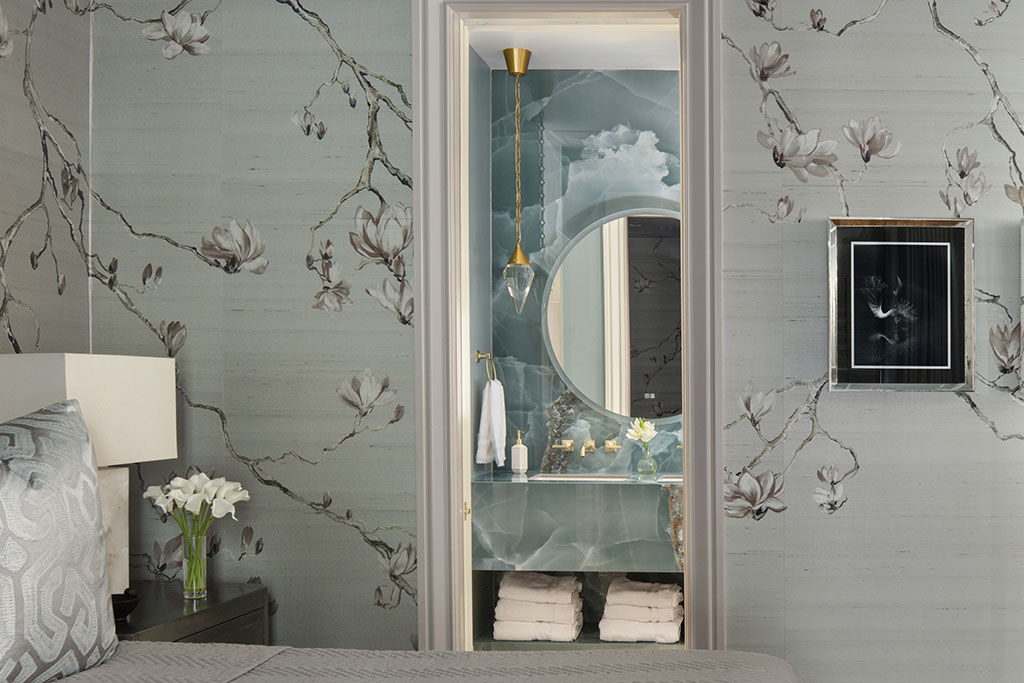
For home design inspiration, get a closer look at how one expert transformed a home’s four second-story bedrooms into eclectic yet stylish guest suites. Dana Schwartz shares her process for giving each room its own unique personality, including how she tackled construction challenges and created a central coffee bar and custom bunk beds.
If you’re craving adventure, Pella, Iowa, could be the ideal destination for your next getaway. Inside, learn more about its historic village, various outdoor offerings, European-inspired architecture, and delicious baked goods. This charming destination provides a delightful glimpse at old-world culture in the heart of the Midwest.
Here's to a month of fresh starts and new discoveries! As always, it’s a pleasure to send you this magazine.
Spring-cleaning season is upon us! Though not always the most fun activity, engaging in this tradition to eliminate dust and cast off clutter could spell more sanitary spaces, healthier air quality, and satisfyingly sorted storage. And your kitchen may be the best place to start since it gets some of the most grueling treatment. So set aside a weekend and strap on your dish gloves: here is your guide to giving this room a thorough refresh.
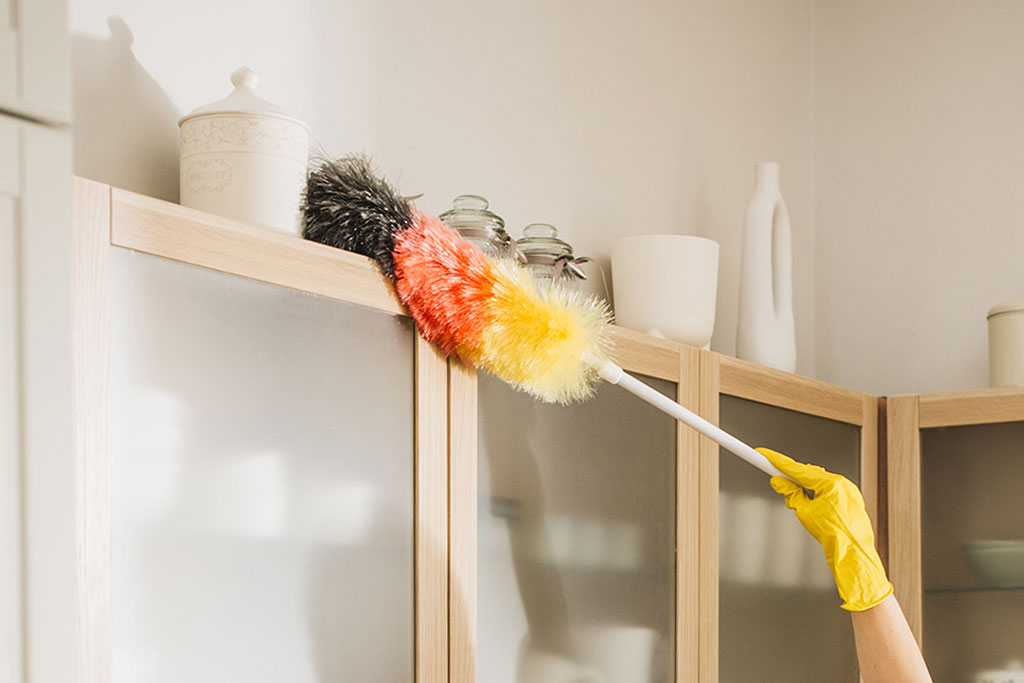
These neglected spaces likely don’t get much attention, giving you all the more reason to foray into here—the buildup of dust, cobwebs, and other messes may be substantial. First, clear your counters and stovetop in case dust drifts down onto them, then carefully access your cabinet tops with the help of an extendable duster. Use this heavy-duty duster to swipe them clean, paying special attention to corners and cabinet seams.
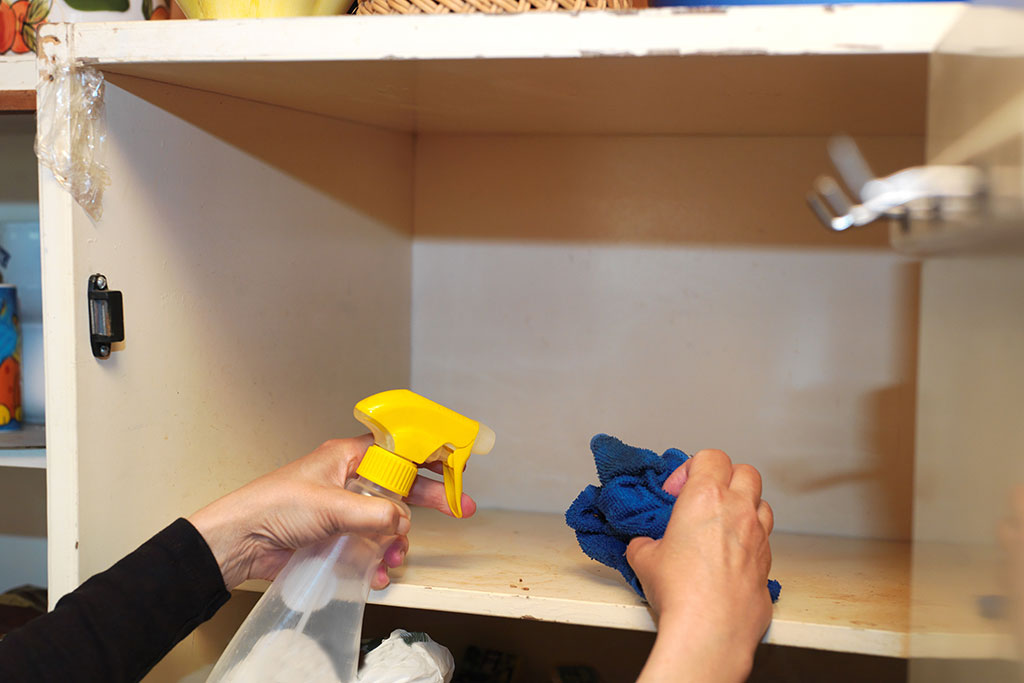
Now it’s time to clean the inside of your storage areas. Working top to bottom, unload each cabinet, dust the shelves and walls thoroughly, and wash them using a damp, soapy microfiber cloth, getting into every small groove. Wash the exterior doors and hardware, too, using a delicate scrub pad to cut through grease and other grime. Let them dry before rubbing on a layer of wooden cabinet cleaner, if appropriate, for polish and ongoing protection.
So ends this process, but before you reload your cabinets, pause and reflect: Do you really need all these items? Over time, you may have accumulated a few too many food-storage containers and even some what-the-heck cooking gadgets. Donate or recycle what you don’t need, and throw away anything that’s in poor condition, including damaged dishware.
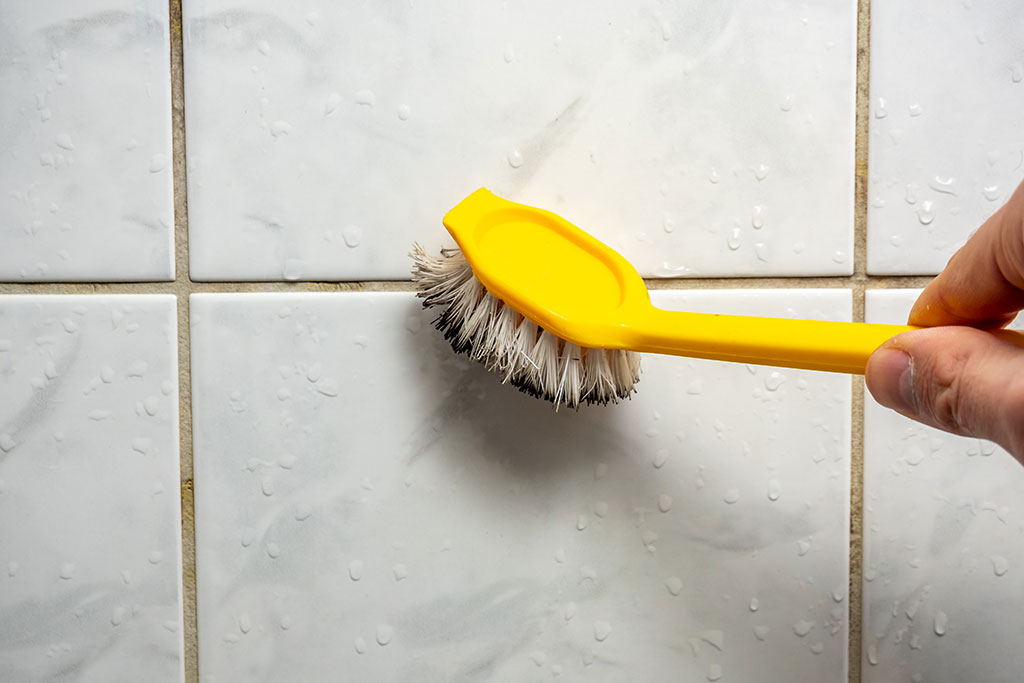
Give these areas an equally rigorous wash, starting with any grout. Using a stiff-bristled brush, simply scrub to remove extra buildup such as grease. To eliminate tougher stains, combine two parts baking soda, one part hydrogen peroxide, and a squirt of liquid dish soap in a spray bottle and apply it to your grout, letting the cleaner sit for five minutes. Wipe it away with a paper towel, and rinse with a wet sponge. Then give the rest of your backsplash and countertops a thorough cleanse; just as with your cabinets, a microfiber cloth with warm water and dish soap will do.
If these surfaces have a sealed material such as marble, consider scheduling a resealing treatment to prevent stains and preserve its beauty. Timing recommendations vary (e.g., every one to three years for granite), so reach out to a countertop-maintenance service for guidance.
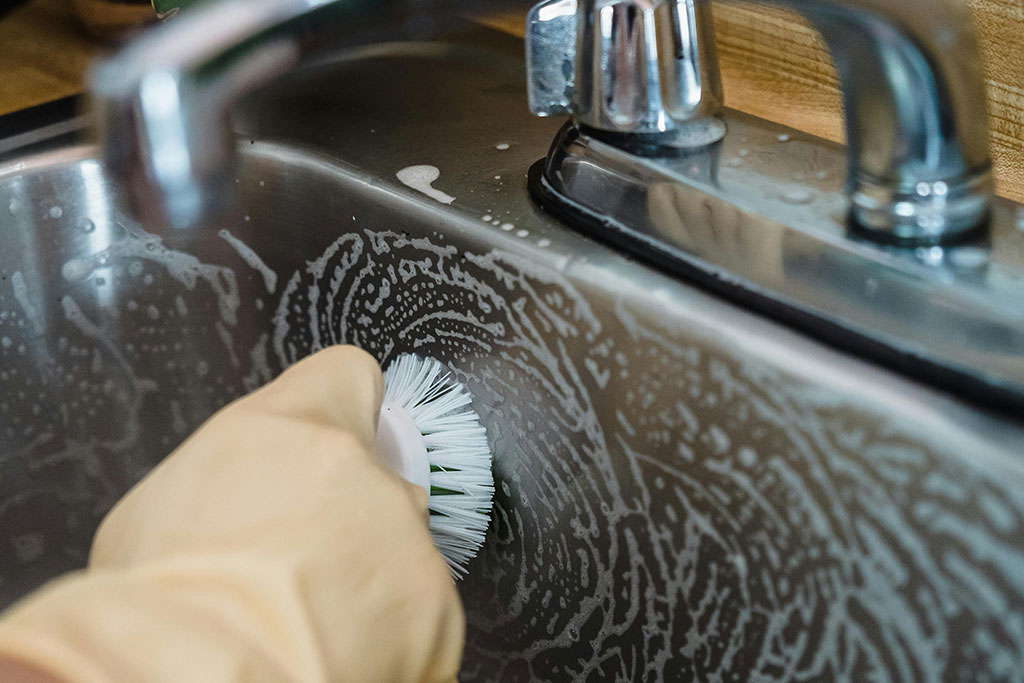
To erase the abuse these functional features take, give them a simple soap-and-water scrub, utilizing a soft-bristled brush to work into grime or mineral buildup. For your stovetop, a sprinkle of vinegar and baking soda can help loosen residue, especially under grates. Once finished, wipe dry with a microfiber cloth.
Polishing recommendations for fixtures like your oven exterior and sink depend on the makeup—for example, you can find stainless steel cleaner at your local grocer, but chrome is best polished with a vinegar-based solution. Similarly, brass and nickel have distinct cleaning and polishing guidelines. Research the ideal method for each material to avoid damaging it.
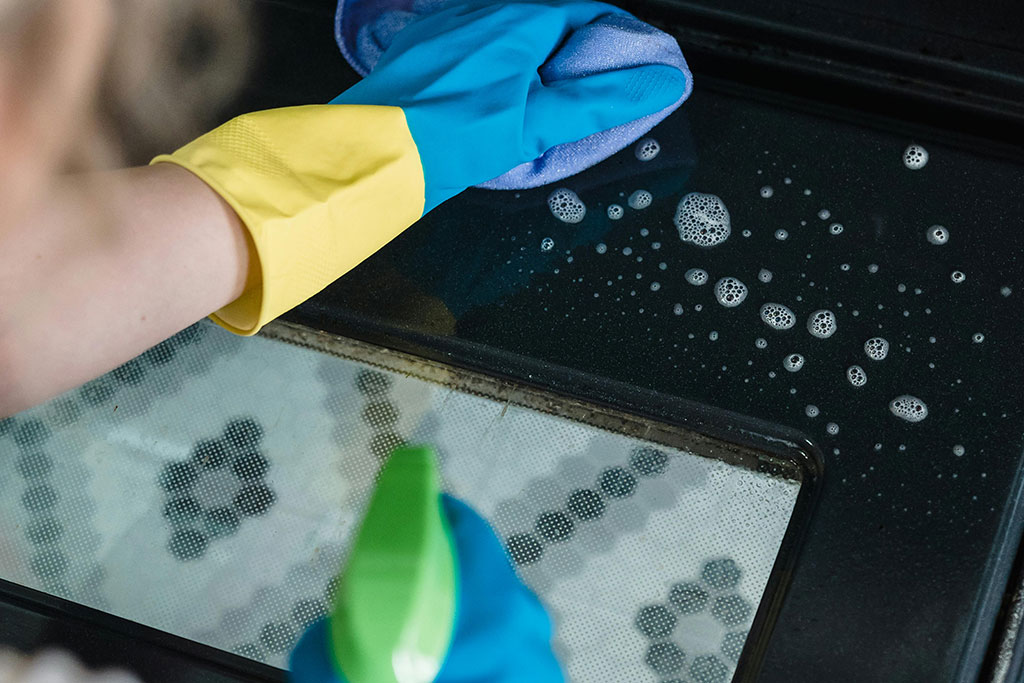
Mysteries may await you inside the oven and microwave, so venture in with your trusty soap and water, also scrubbing interior surfaces with a baking soda/water solution to eliminate stuck-on messes. For extra tough areas, let this cleanser sit for twenty minutes, then spray on a vinegar/water mix and wipe it away. (Note: Your oven may include a self-cleaning feature, but this extreme-heat cycle operates using a ton of energy. Plus, handwashing is often more effective anyway.)
You may want to take this time to tackle your refrigerator as well, emptying out old food and giving its surfaces, drawers, and walls a thorough wash with a soapy sponge. On top of these areas looking cleaner and more organized, you may find that it even smells better as a result.
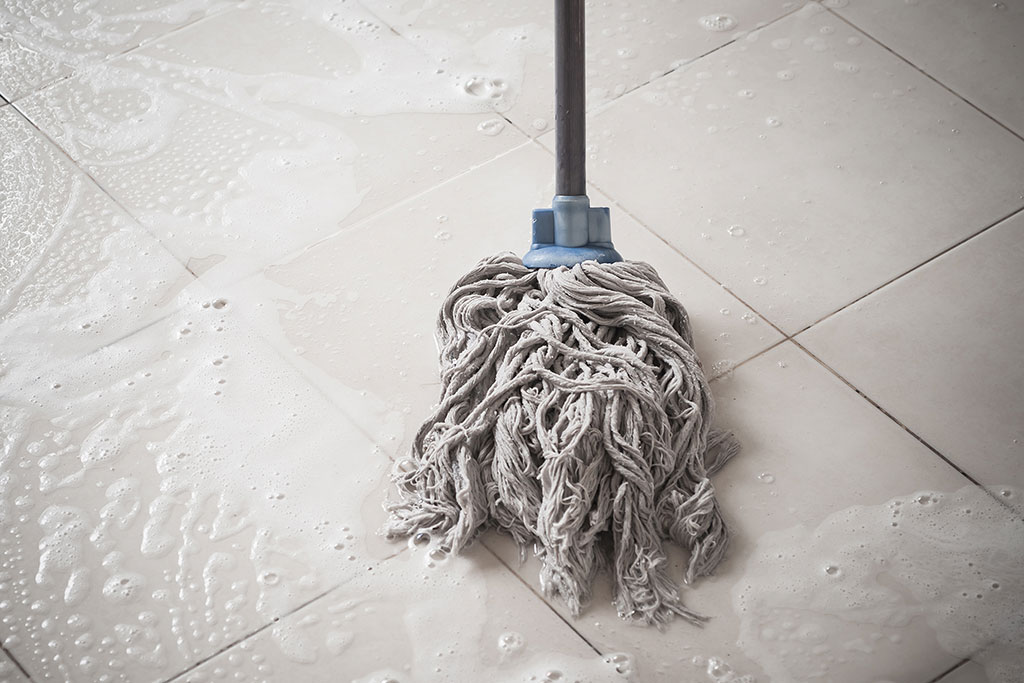
Finally, don’t forget about your floors. Adhere to typical weekly recommendations for sweeping and mopping based on their material, being sure to work into corners and dusty gaps under appliances like your stove and refrigerator. If you have flooring with grout, such as ceramic tile, follow the aforementioned process to give it a decent cleanse.
And just like that, you’re finished! Take a look around you: you’re now in the presence of a healthier, cleaner kitchen that sets the backdrop for making cozy weekend morning meals, hosting memory-making celebrations with your loved ones, and everything in between.
Transform your kitchen into a Parisian bistro with these three irresistible recipes from The Complete Book of French Cooking. Each dish celebrates the simple joy of creating culinary delights using fresh ingredients, so you’ll create memorable dishes that feel both elegant and effortless.
Filled with savory mushrooms and topped with chives, this delicate, fluffy breakfast staple is perfect for a weekend brunch or a light dinner.
Juicy white meat and tender veggies come together in a light, refined meal that’s beautiful to look at and even better to eat.
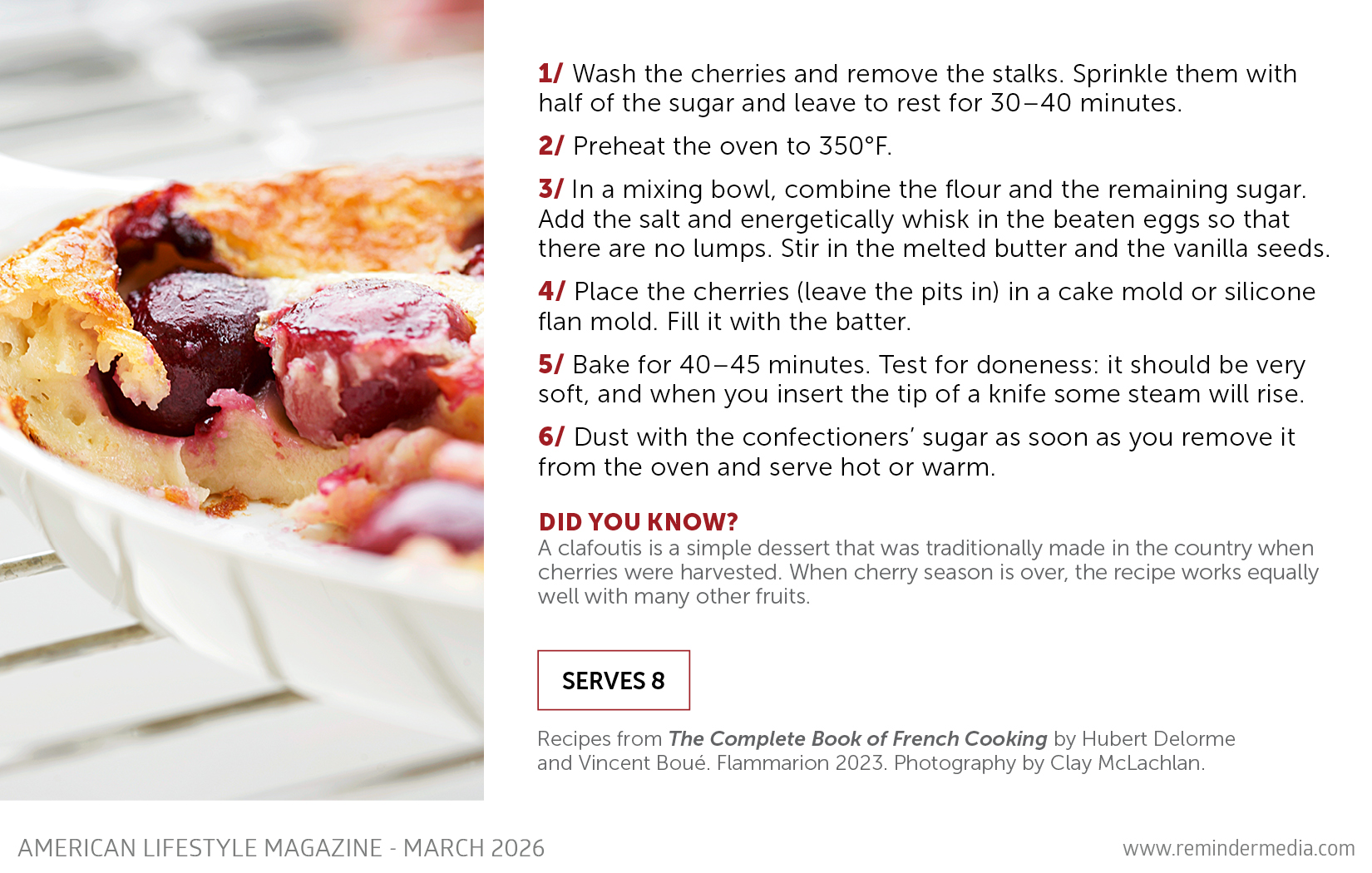
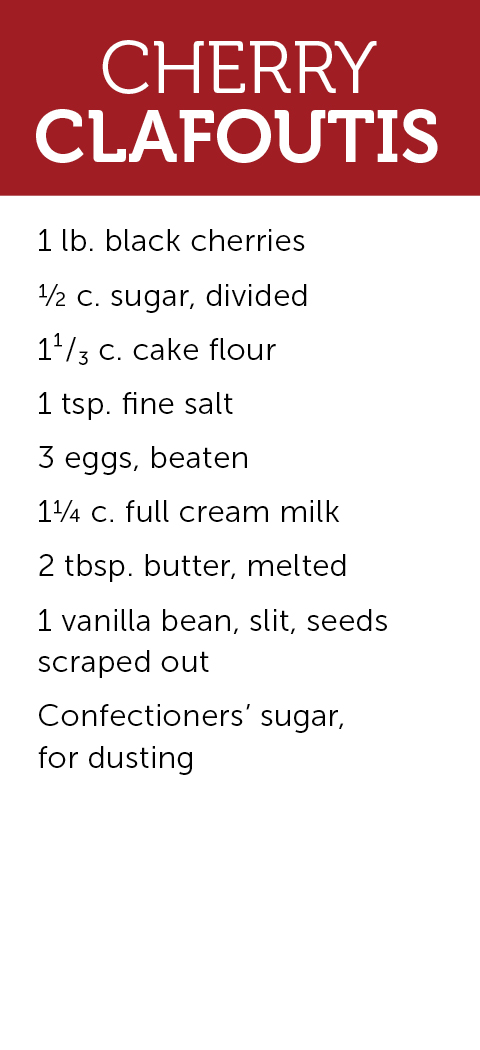
This take on the quintessential French dessert has a scrumptious, custardy texture that is both tasty and comforting.

Recipes from The Complete Book of French Cooking by Hubert Delorme and Vincent Boué. Flammarion 2023. Photography by Clay McLachlan.

Serves 6
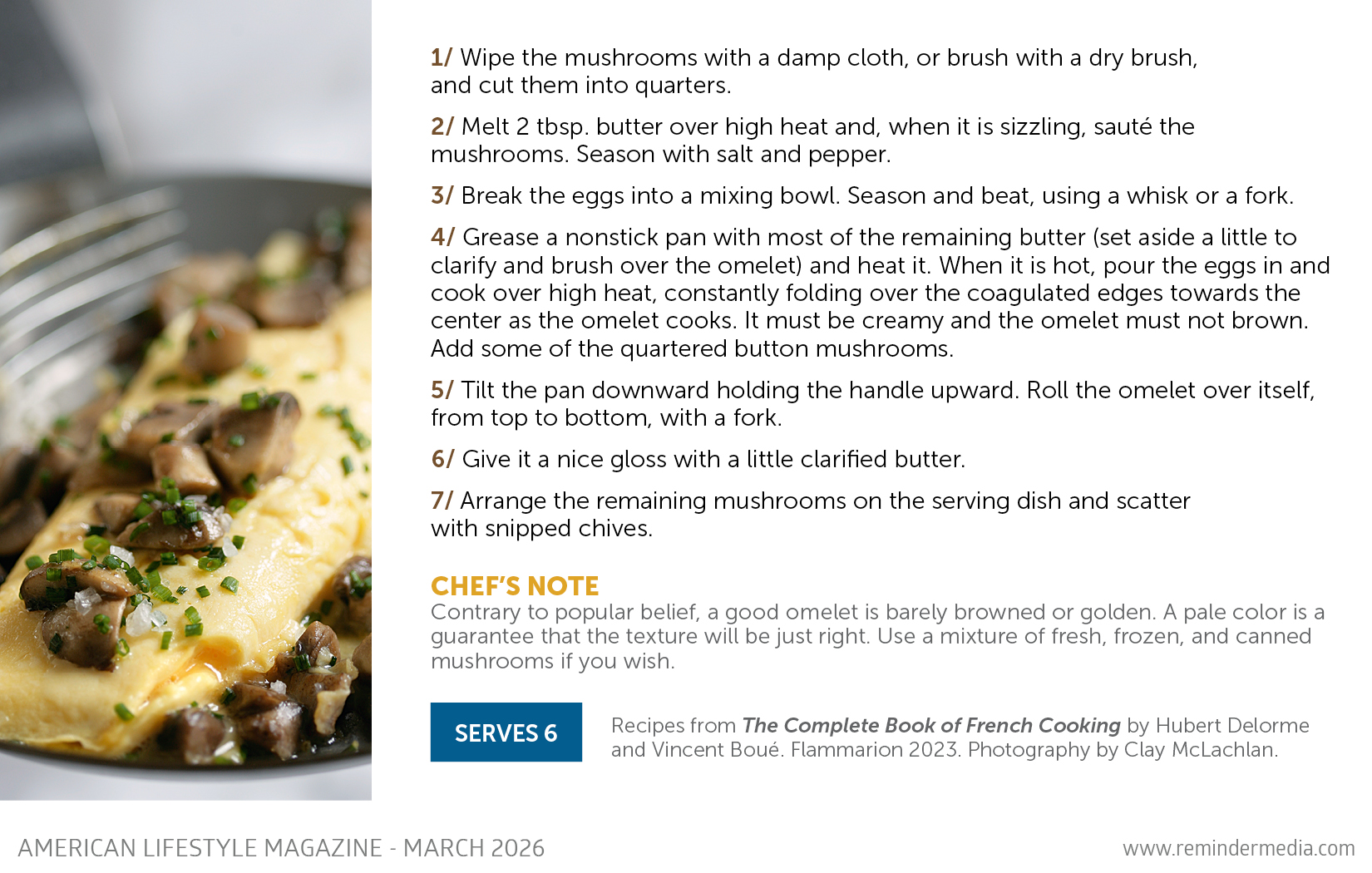



Chef’s notes:

Serves 6


Chef’s notes:

Serves 8
Did you know?
A clafoutis is a simple dessert that was traditionally made in the country when cherries were harvested. When cherry season is over, the recipe works equally well with many other fruits.
When a Maryland couple approached interior designer Dana Schwartz to transform their four second-story bedrooms into private guest suites, they received more than they could have hoped for: eclectic-yet-elegant retreats that smack of individuality.
Would you tell us about your design background?
After graduating college with a bachelor’s in English, I had a few editorial and social media jobs. But I just didn’t love my career and wanted to do something I was more passionate about. So I went to design school in 2011 and worked for three interior designers, gaining valuable experience in the industry. I then opened my own firm in 2019.
How would you define your sense of style?
I would say my style is to add a little color and some funky, unexpected stuff to every home to freshen it up. However, not every client wants that. Thankfully, the homeowners of this project let me go a little crazy, which I loved.
But I’m not the kind of designer you go to for a specific look. Though I hope that clients come to me for my elevated style, my goal is always to bring their vision to life and make their home feel like them, not like me. The results should never be a copy-and-paste of the other designs I do. That’s why it’s really important for me to get to know my clients well.
How did this couple approach you?
They saw an article about one of my projects that was actually in their Silver Springs, Maryland neighborhood and enjoyed its use of color. They wanted to infuse more life into four second-story guest bedrooms in their home, so they reached out to me.
The clients had built this house almost twenty years ago when they were raising their family, and the kids’ bedrooms looked very childish—they weren’t very appropriate for adults staying over, even their now-grown children. The homeowners travel a lot and, inspired by the hotels and resorts they’ve stayed at, wanted each room to feel like an elegant guest suite.
What choices did you make to execute this concept?
There were some initial struggles because we had to fully renovate two bedrooms: the blue one and the one with magnolia wallpaper, which used to be connected by a guest Jack and Jill bath. A lot of construction was necessary before we even got to the design process, and that was a little tricky to execute. We had to move doors around, including an attic entryway, and modify plumbing—probably the least fun part of any project.
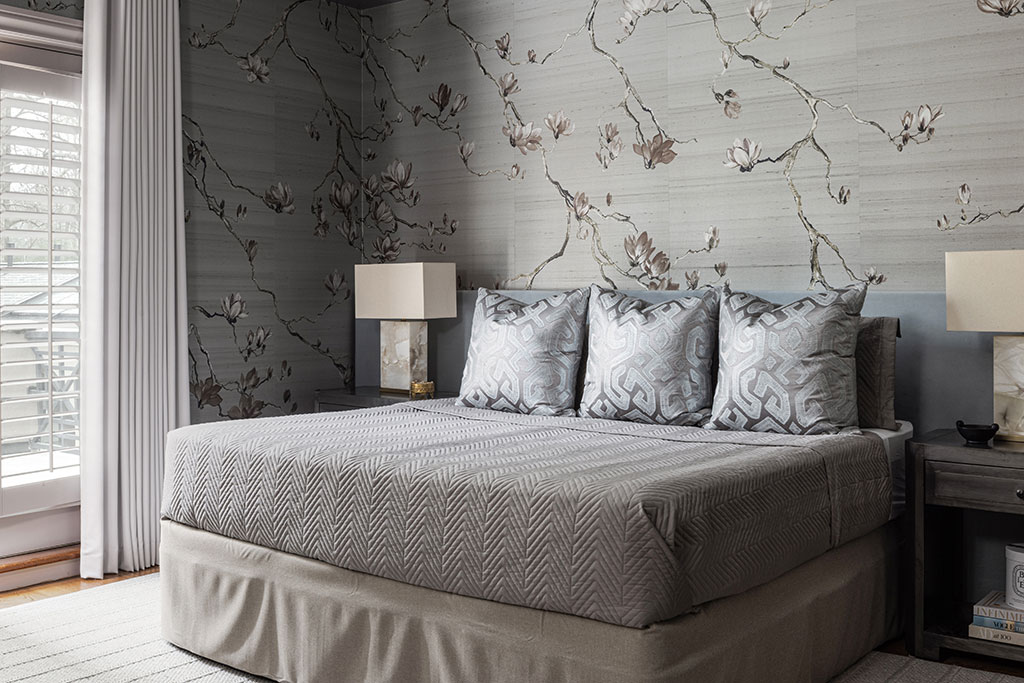
The actual design process started with wallpaper. The clients loved the idea of using very textured products, so we explored different options before landing on choices that I could design around. I used those jumping-off points for each bedroom to decide on furniture and smaller decor, and then the rest kind of fell into place.
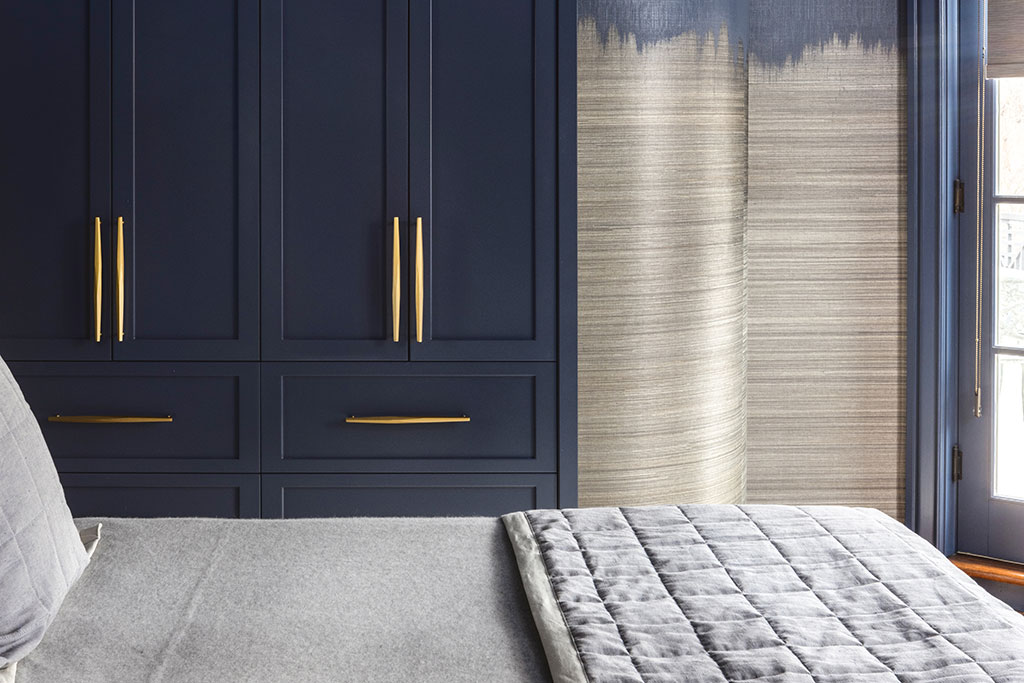
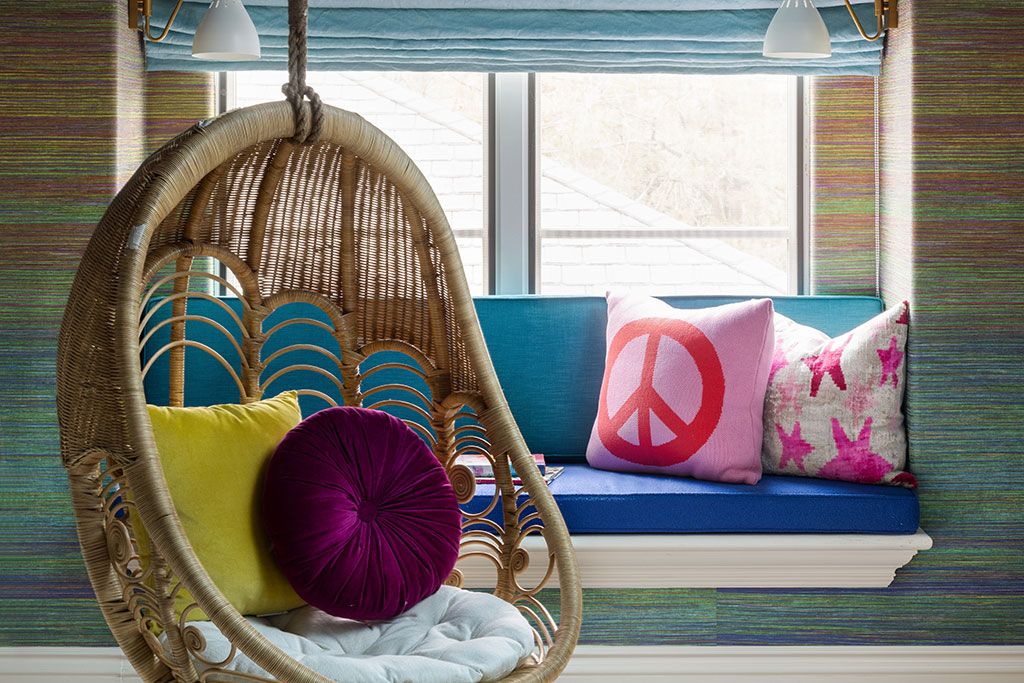
Every room has its own personality, even though they’re all similar in size. For example, the gray one feels glamorous with its floral wallpaper and subtle-patterned bedding. Meanwhile, the blue one leans more masculine thanks to the restored antique bed and grass cloth wallpaper. The same is true of the en suite bathrooms—features like the floral mirror in the green one and horsetail sconce in the reddish one help give each suite a unique feel. Now when people visit, they can say “I want the purple room” or “I like the blue one.”
The coffee bar centered in the main hallway was also key. My clients asked for a convenient drink station near the bedrooms to prevent guests from having to come downstairs for refreshments. So we installed a sink and cabinets for storing food and drinks, and inside the lower drawers are a refrigerator and freezer. And the faucet is a hot/cold tap, allowing people to make tea, etc. These elements suited the hotel concept nicely.
Do you have a favorite feature of this project?
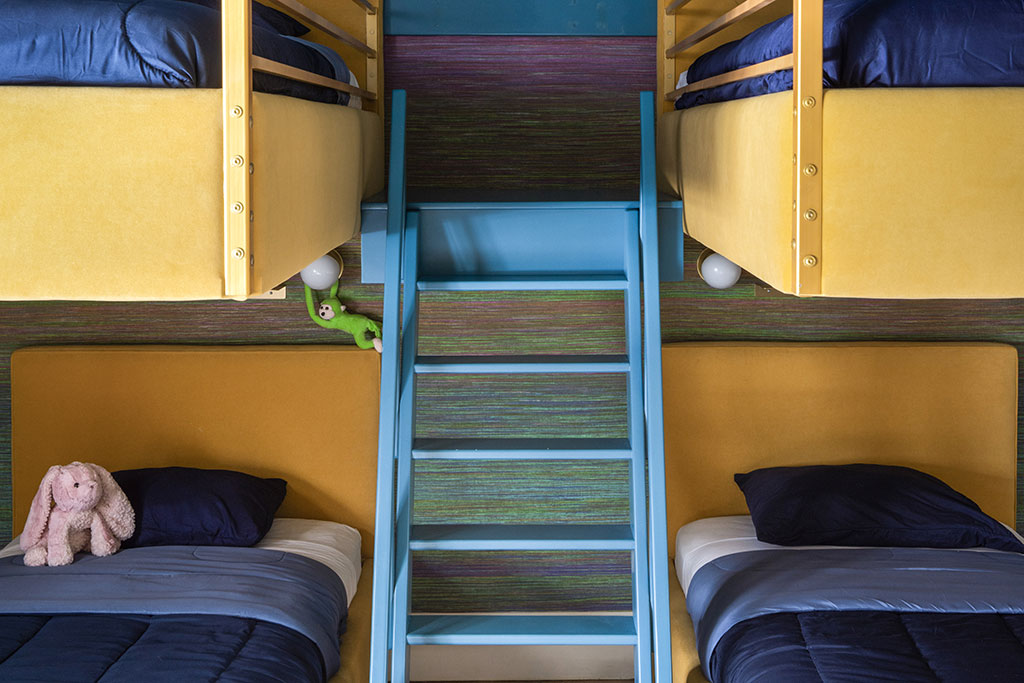
I have a couple. I’m obsessed with the bunk beds in the purple room because they’re so fun and stylish. Since people in their twenties or older may be staying here, we had to elevate the design from a former kid’s bedroom. But I was glad to be able to preserve this one’s youthful energy. We worked with my contractor to reinforce the ceiling so it could hold up the beds.
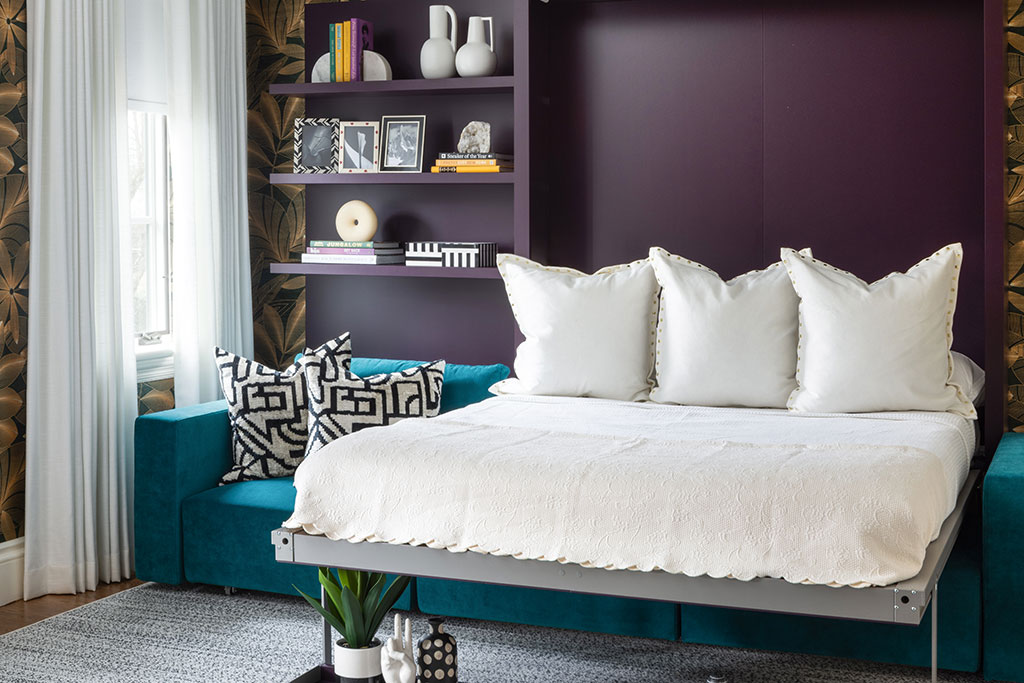
I also love the connecting bedroom with its fun purple Murphy bed. My clients wanted to create a lounge space where guests’ kids could hang out together and a nanny could sleep if any families brought one with them. That meant the room had to be functional for both sleep and socializing, and I think it came out perfectly.
Which current design trends do you enjoy?
I love burl wood—it has such a unique, elegant texture. In the last two years or so, a lot of furniture and decor has been made with it, which I appreciate. I also enjoy the tone-on-tone look—same-colored walls, furniture, etc.—because it’s really elegant. I used that approach for the blue bedroom in this project.
What is your number one design tip?
I would say that when you’re shopping for larger, pricier pieces like armchairs and sofas, keeping things neutral makes the most sense. Then have fun with pillows and other decor that include pops of color. You don’t have to invest a lot of money in these items and can easily change them out after a year or two as trends change.
For more info, visit danaschwartzdesign.com
America has long been considered a melting pot, a convergence of many different people from all around the world. It’s no surprise, then, that certain parts of the country are associated with specific cultures—Florida’s Little Havana and Massachusetts’s Boston being just two notable examples.
Take a trip to the heartland, and you’ll discover a similarly unique place that celebrates all things Dutch: Pella, Iowa. Located less than an hour southeast from Des Moines, this city is primarily known for its annual Tulip Time festival but has so much more to offer to the curious traveler. So put on your klompen (wooden shoes) for an unforgettable, fascinating trek through this hidden Midwestern gem that’s been dubbed America’s Dutch Treasure.
As with many other founding stories, Pella’s began as a search for a better life. In 1847, the Reverend Hendrik Scholte led four ships with several hundred colonists to the New World in search of religious freedom. After over four months of travel, the group finally settled in northwestern Iowa’s Marion County, where they purchased 18,000 acres of land and thirty-five farms.
One of the city’s earliest residents would go on to become renowned in his own right: Wyatt Earp. Over his life and in the decades following, Earp gained fame as a lawman and gunslinger in the American West, reportedly never suffering a wound in any of his fights. He and his family called Pella home for the better part of 1849 through 1864 before they made their way to California.
Today, Pella boasts around 11,000 citizens and is an impressively inviting place that continues to embrace its past. For example, both the Reverend Scholte’s and Earp’s original homes have been preserved and are open to visitors; there’s also a Wyatt Earp Day held in late September every year. The city even has its own Dutch dialect, called Pella Dutch.
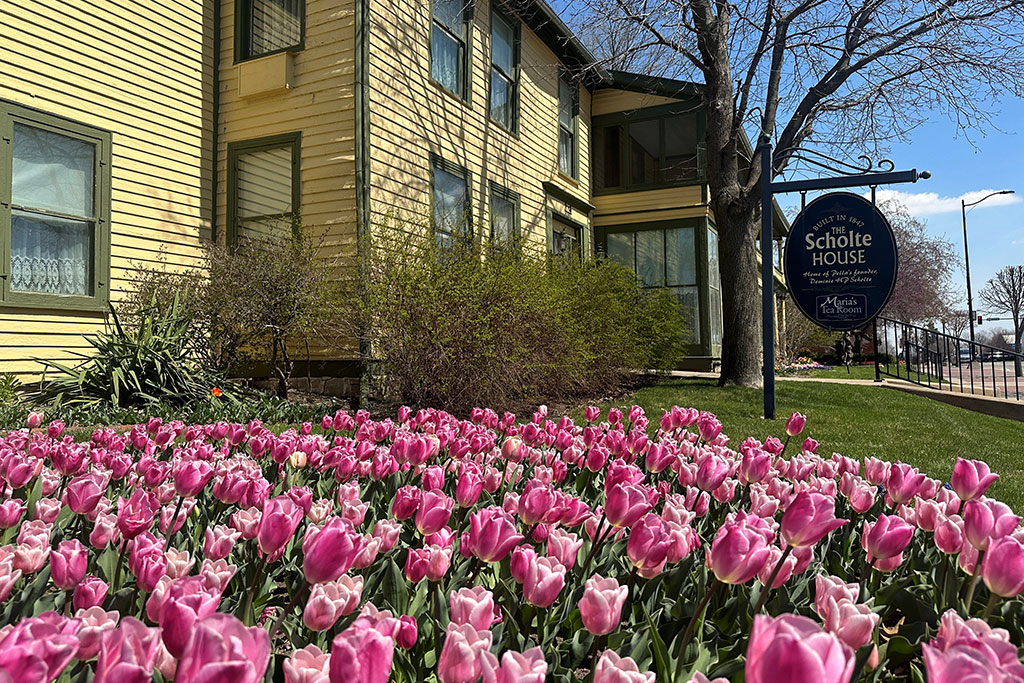
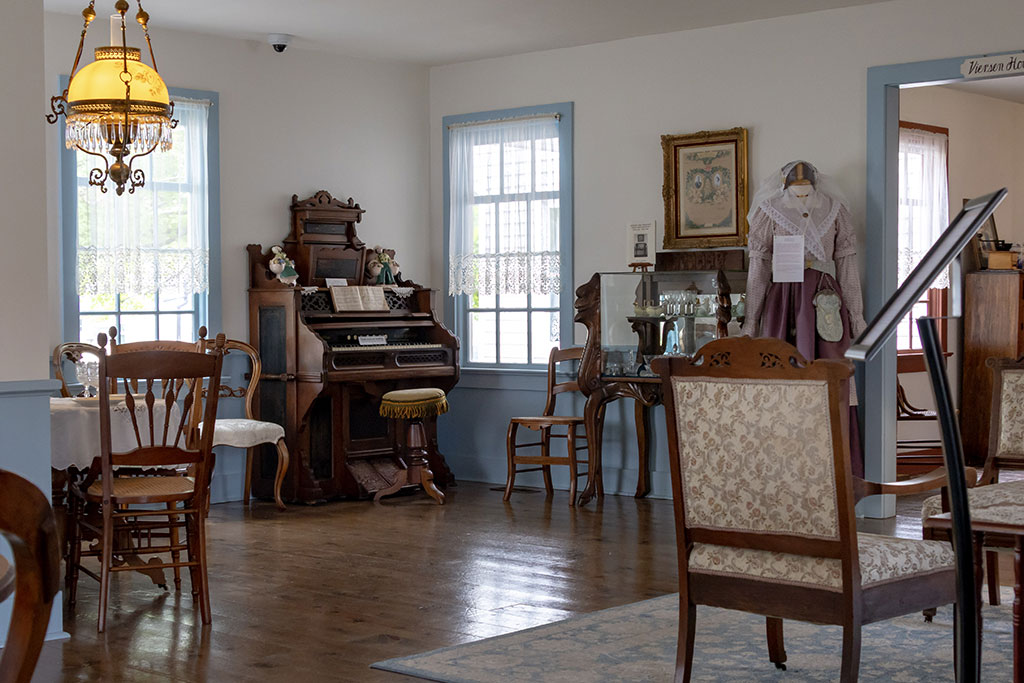
Of Pella’s many wonderful aspects, perhaps the most appealing is how easy it is to see so many sites via walking. A good place to begin is at the visitor center, where you can pick up useful information such as maps and itineraries. Then simply stroll across the street to the Scholte House Museum & Gardens, the original 1848 home and property of the city’s founder. Step back into history by learning about the Scholtes, touring their indoor and outdoor spaces, and even observing some of their belongings.
Cross over to Main Street, and you’ll venture into the heart of downtown Pella. Among its many unique experiences include catching a show at the Pella Opera House, a restored historic venue with a nearly century-old organ. If you arrive at the right time, you may also be greeted by the Klokkenspel next door, whose mechanical figures dance as a 147-bell, computer-driven carillon plays dulcet chimes.
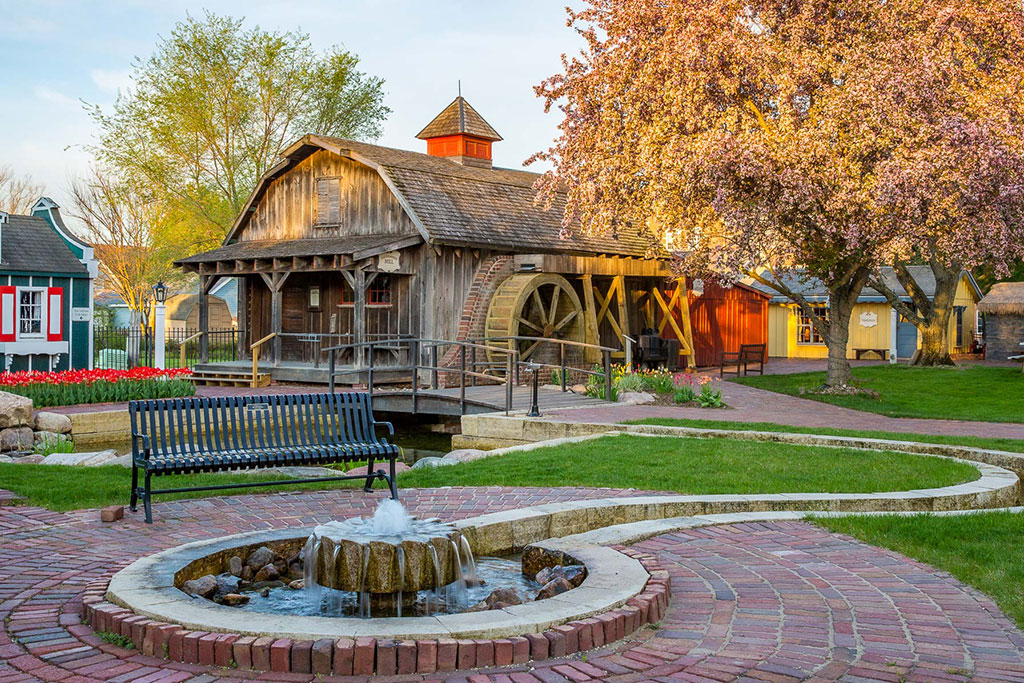
Another must-visit attraction is the Molengracht Plaza and Canal, located in the city’s business district. Here you can feel yourself transported to the nineteenth-century Netherlands thanks to the serene, lapping waters of its 5,720-foot waterway and beautiful brick buildings, all built to mimic their overseas counterparts.
There are ample shopping opportunities downtown as well, from books to clothing to antiques. As far as dining, you’ll find both national chains and upscale and casual local establishments—including, naturally, several Dutch-focused ones. And don’t forget to treat yourself to authentic baked goods! Whether you’re craving hand-crafted chocolates, cupcakes, or pastries, you have plenty of options to choose from.
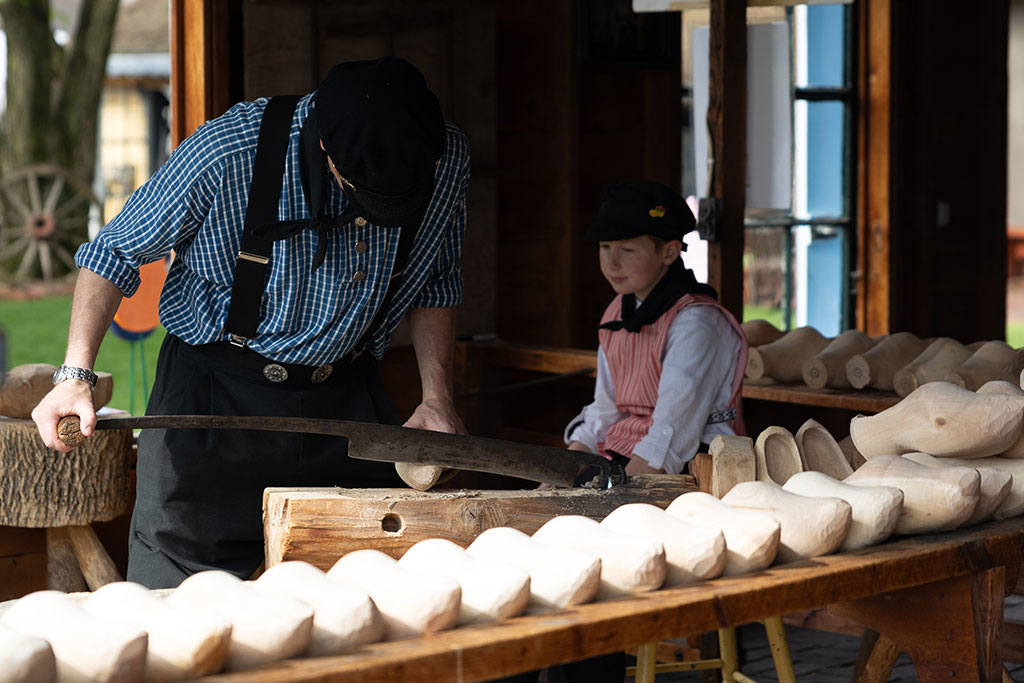
Just around the corner from the opera house, be sure to take a tour of the Historical Village, a preserved collection of twenty-two buildings, many from the 1800s. A few highlights are the gristmill; the blacksmith shop; the Wyatt Earp Experience, a self-guided tour through Earp’s childhood home; and Werkplaats, a replica of a shop that produces the iconic Dutch shoes.
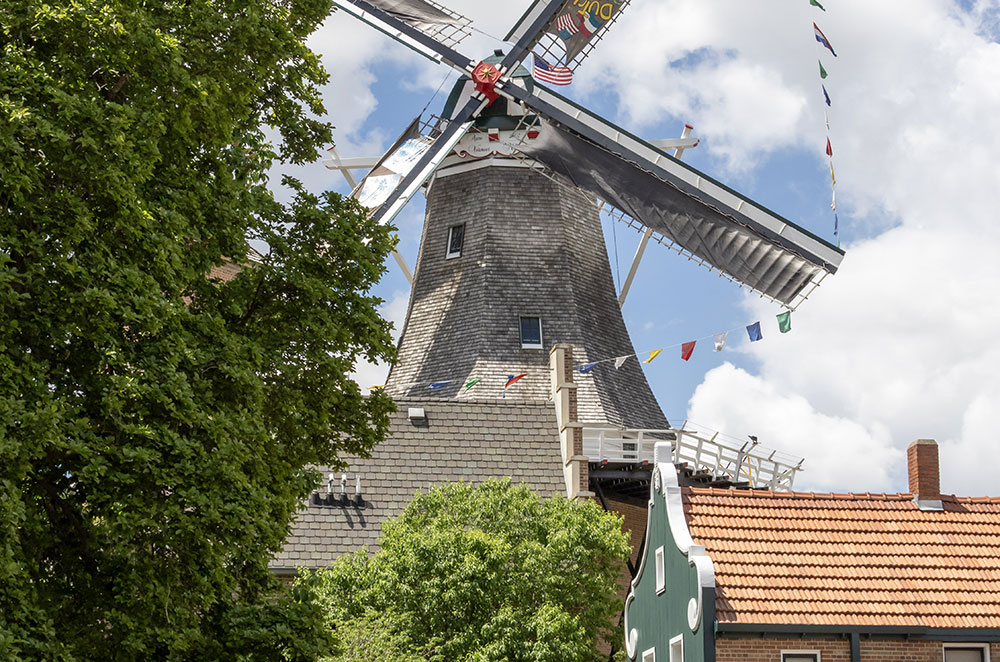
Also looming over the village is the Vermeer Windmill, one of the tallest working windmills in North America (and one of five total in the city). It was actually built in the Netherlands and then shipped to and reassembled in Pella, so when you climb it, you feel like you’re experiencing the real Dutch deal—because you are.
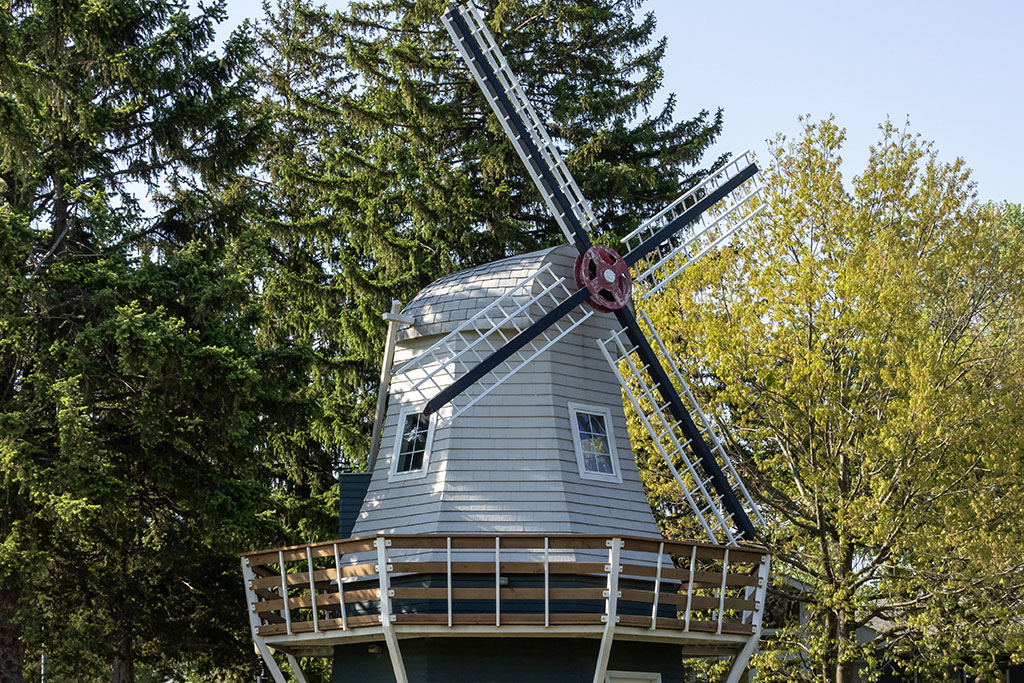
This part of Iowa is filled with chances to get out in nature. For instance, Pella has over fifteen city parks, including Cordova Park, which has the Midwest’s tallest observation tower in a public park and ten miles of bike trails. Meanwhile, Central Park lives up to its name at the center of the city, offering a bucolic area with scores of flowers (including tulips in April and May) and smile-inducing structures like its Tulip Tower, fountain, and, of course, windmill. A few blocks north, Sunken Gardens Park even has a pond in the shape of a wooden shoe!
To up the ante on your outdoor adventures, head just west of the city to Lake Red Rock, the state’s largest lake. With up to 17,000 square acres of water and 35,000 acres of land to enjoy—including shoreline areas scattered with its namesake rocks—it offers something for every adventurer. Do you seek a more casual experience? You can enjoy ample fishing opportunities as you take in the picturesque views. And for more action, try a water sport like stand-up paddleboarding or hit one of the many biking or walking trails.

As mentioned earlier, the Tulip Time extravaganza goes all out in a frenzy of Dutch heritage celebrations, creating a feast for the senses. The highlight, of course, is the flowers themselves: some 300,000 are on display throughout the town to lend a vibrant backdrop for the event. In addition, you can experience Dutch-focused parades, songs and dances, performances, crafts, and more.
The festival is held Thursday through Saturday on the first weekend of May (May 7–9 this year), but if you can’t make it, Pella offers many other amazing events throughout the year. Visit in July, for instance, to attend the Lake Red Rock Balloonfest, which includes rides, live music, a boat parade, and dozens of giant hot-air balloons. Or if you come during the holidays, you’ll find yourself mesmerized by Kerstmarkt (Pella’s outdoor Christmas market) and its Christmas Tour of Homes.
Sometimes, the best destinations are off the beaten path, and Pella, Iowa, is a stellar example of this. If you’re taking I-80 through the central US, do yourself a favor and add it to your itinerary—this charming, one-of-a-kind destination will give you ample reasons to go Dutch.
For more info, go to visitpella.com