This season is prime time for firing up the grill and welcoming friends and family to your home for outdoor get-togethers. These gatherings can be the highlight of the year for many, but as the host, you may struggle to find a balance between prioritizing fun and ensuring the well-being of your guests.
With some forethought, though, you can throw a laid-back summer soiree everyone will enjoy—and you won’t need the rest of the weekend to recover from it. Use these tips to help guarantee that your guests leave feeling content, healthy, and happy.

Ask anyone, and they’ll tell you that food and drinks are the heart of every great barbecue. Fortunately, it can be surprisingly simple to put a healthy spin on summer classics.
If you’re planning to grill, you’re already at an advantage. Grilled foods are not only delicious but also nutritious. Unlike frying or baking, grilling prevents foods from reabsorbing fat; in fact, the grates actually allow excess fat to drip away from the food. Fish, beef, and chicken are high-protein options that pair well with seasonal vegetables like corn, peppers, and tomatoes.
Most grilled foods will taste amazing with nothing more than a sprinkle of salt and pepper. However, you can up the ante on flavor by offering a plethora of homemade dipping sauces, which will be much healthier than store-bought choices. You can quickly whip up a chimichurri sauce, for example, with just a few handfuls of cilantro and parsley, onion, garlic, olive oil, vinegar, and basic seasonings; it pairs well with virtually anything but is particularly tasty on grilled meats. You also can’t go wrong with a tangy, low-sugar barbecue sauce or a smoky romesco sauce made from roasted red peppers.
Sides are often easy dishes to swap in better-for-you ingredients, such as by subbing mayo in pasta and potato salads for Greek yogurt and preparing creamy dips with low-fat or nonfat sour cream or cream cheese. Cooking everything homemade can be a big undertaking, though, so don’t be afraid to buy premade; just be mindful of the ingredients to ensure that the quality is top-notch.
Now on to drinks. Depending on the time frame of your party and the weather, guests may be inclined to enjoy a lot of refreshing beverages. A good estimate is about one to two drinks per hour per guest, which means if you’re planning an all-day affair, the sugar quotient can add up quickly. To help keep it down, target the variety of low-sugar beverages on the market, including lemonades, teas, sodas, and alcoholic drinks, and offer plenty of water so guests can stay hydrated, especially if they’re imbibing or the heat is scorching. And if you’re making your own mixed drinks, opt for a homemade simple syrup—or, better yet, nix it altogether—to better control the sugar content. Premade drink mixes tend to be loaded with sugars and syrups.
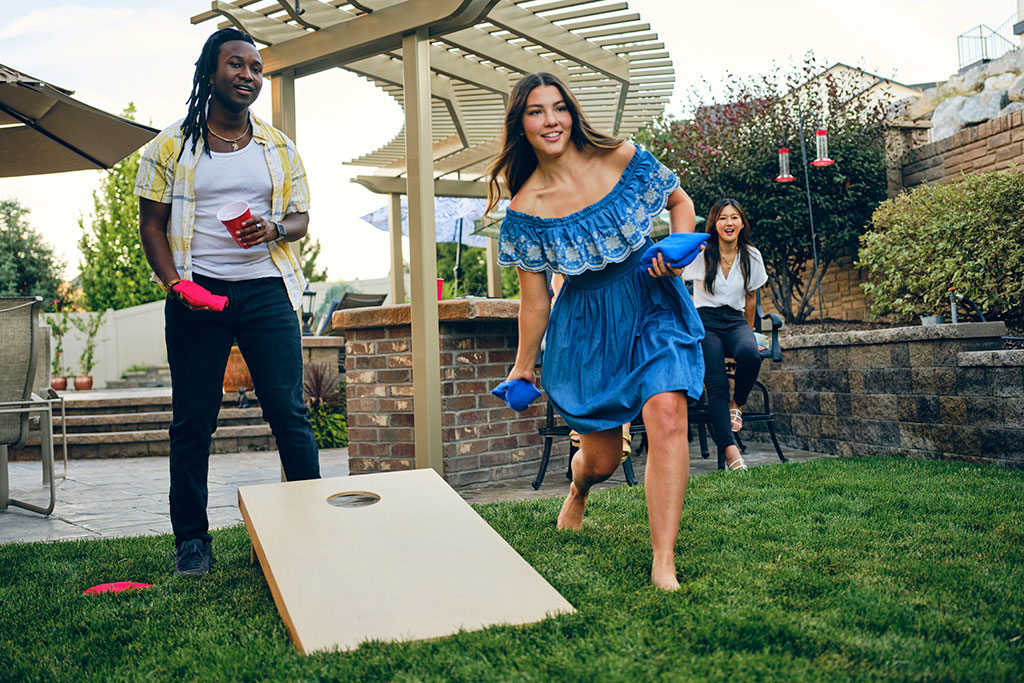
After food and drinks, entertainment is the most significant element of your party, so it’s important to get it right. Whether your partygoers enjoy engaging in good conversation, playing lawn games, or swimming, setting up a safe environment for them to do so is crucial.
Make sure your patio or deck is clear of tripping hazards, like bunched-up rugs or an overabundance of furniture, and that the space is well lit, especially if the gathering is going to extend deep into the evening. Inspect your seating for rust, loose screws, and wobbly legs that could pose a potential threat, and fix or replace any furniture pieces that are broken.
Games are a must for your barbecue, but you’ll want to examine your lawn to make sure you’re setting them up in an optimal spot. Avoid placing activities like cornhole, horseshoes, and ladder toss on a slope or rocky terrain where players could more easily trip and injure themselves; instead, put these games in flat areas where there’s no risk of players running into the street or a neighboring yard. If your plans involve water balloons or other small objects, encourage players to pick up after themselves to prevent these pieces from becoming choking hazards for children or pets.
Whether in-ground, aboveground, or kiddie, a pool can be an epic focal point of a summer barbecue. However, as every responsible pool owner knows, it’s essential to take precautions to ensure the well-being of all swimmers. First and foremost, pool gates should be closed and locked at all times to prevent little ones and pets from sneaking through. If guests plan to bring their pets, you should instruct them to keep the animal indoors or, at the very least, on a leash and away from the water. Young children should never be left alone in the pool or without an adult supervisor, and all swimmers should be made aware of any rules, such as “no jumping or diving from the edge” and “no swimming after dark.”
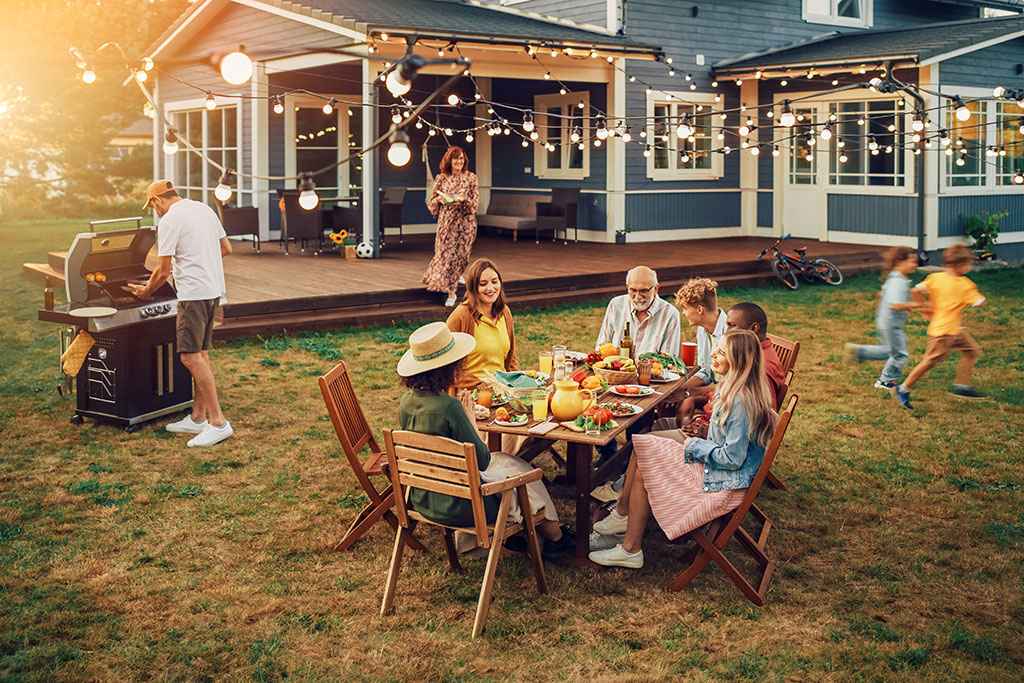
Last, you’ll want to prioritize creating a comfortable atmosphere for your guests—even small, pleasant finishing touches can go a long way. For example, instead of asking guests to douse themselves in sticky, smelly bug spray that’s often full of chemicals, place citronella candles on tables or citronella torches around your yard’s perimeter to help keep bugs at bay. Want an even more natural approach? Planting certain flowers and herbs, such as lavender, basil, lemongrass, and mint, can prevent pests from invading your yard; these plants may smell lovely to us but are repulsive to them.
Speaking of bugs, increased foot traffic in and out of your home can quickly result in critters making their way inside. This will inevitably be a pain for your indoor visitors during the festivities and for you when you’re chasing the insects out later. Encourage guests to keep doors and windows closed, and consider investing in a magnetic door screen, which will automatically seal shut behind guests as they pass through the doorway.
As you prepare your backyard to be filled with the sights, sounds, and smells of barbecue season, make sure you factor in the well-being of your guests by heeding the advice in this guide. Your partygoers will be grateful to have such a thoughtful and gracious host.
In an age when sleek minimalism and perfectly curated spaces often take center stage, a more grounded, authentic alternative has recently emerged as a quiet force—wabi-sabi. Rooted in ancient Japanese philosophy, this aesthetic embraces imperfection, impermanence, and the beauty of natural materials, celebrating the soulfulness that comes with genuine elements.
Because of its increasing popularity, many experts are now incorporating the style into their work, including Lauren Lerner. Known for her elevated yet approachable designs, she is the founder and CEO of Living with Lolo, a top-rated firm based in Scottsdale, Arizona. She shares how she interprets wabi-sabi and how people can bring its calming energy into their homes.

Tell us about yourself and Living with Lolo:
My career path started in business and sales, but I have always loved dabbling in design any chance I could get. Taking a huge leap of faith, I started Living with Lolo in 2017, aiming to focus on how a room makes my clients feel rather than simply how it looks. Today, we offer white-glove interior design services nationwide, have designed for many celebrities, athletes, and busy executives, and have been featured in national publications for our unique style. I was also recognized as one of Arizona’s top ten interior designers and named to LUXE Interiors + Design’s Next in Design 99.
Would you describe your design philosophy?
No matter the style—from eclectic to wabi-sabi—I always bring in my core philosophy of blending warmth, functionality, and a sense of ease. I love mixing textures and playing with contrast, working to find those special pieces that make a space seem elevated yet approachable. Even when using different aesthetics, my goal is to create a home that feels thoughtful and cohesive, with layers that reflect both the client’s personality and our signature look.

How do you define wabi-sabi?
Wabi-sabi is a design concept that embraces natural materials, imperfection, and simplicity, often featuring a muted color palette. It shares common threads with styles like minimalism and Japandi, but while the former tends to feel clean and curated and the latter leans refined and modern, wabi-sabi is softer and more soulful. Imagine a crack in a handmade vase, a vintage chair with a little patina, or the quiet character of a textured wall—these are the kinds of details wabi-sabi celebrates. It’s about infusing areas with emotional warmth and an organic ambience; there’s even a hint of hygge in its love for nature and serenity. And yet wabi-sabi carries a subtle elegance all its own.
Why do you think this style has grown in popularity?
It’s easy to feel overwhelmed by the constant pressure for things to be perfect, and wabi-sabi offers this beautiful reminder that imperfection can actually be what makes something feel special and meaningful. People are craving more authenticity and simplicity in their homes, which is why many clients come to us wanting to incorporate wabi-sabi. Unfortunately, the architecture doesn’t always reflect the style, but we’re still able to pull in small elements that nod to it. We find a balance so that the space feels cohesive but also speaks to the lived-in vibe they are drawn to.
What elements do you typically use?
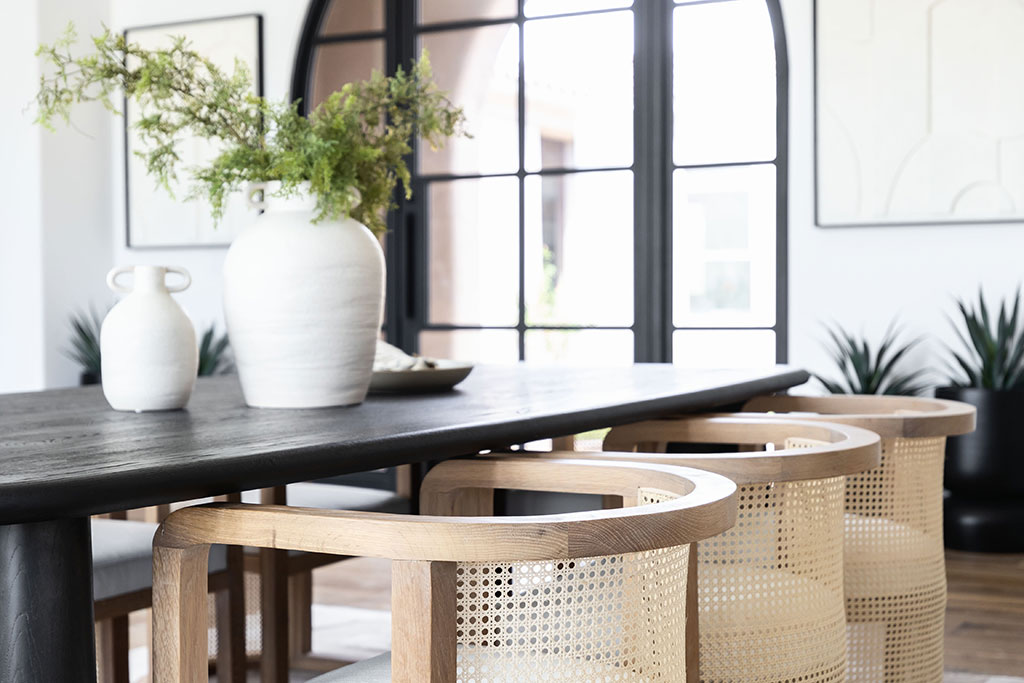
It’s all about natural, organic materials that feel warm and a little imperfect in the best way. I love textures that have a bit of soul to them, whether it’s a nubby textile, a plastered wall with movement, or a vintage piece with a bit of wear. The color palette is usually soft and earthy, featuring warm neutrals and muted tones—shades that feel calming and grounded. When I design in a wabi-sabi style, I stay away from anything too shiny or polished and instead go for matte or brushed finishes that are more relaxed.
Do you have any tips for people wanting to incorporate wabi-sabi?
Start with texture and character, adding in a few pieces like a handmade ceramic, a vintage wood bowl, and a linen throw that’s a little rumpled. And let go of the need for everything to match perfectly. Some of the most beautiful moments come from contrast and the feeling of things being collected over time. Even just simplifying a corner by clearing out the extras and letting a few special items breathe can shift the energy of the space. It doesn’t have to be a big change—it’s more about creating warmth, calm, and an effortless vibe.
For more info, visit livingwithlolo.com
A staircase isn’t just a means of moving between floors. It’s also one of the most underused design opportunities in a home. Because it naturally draws the eye, a staircase can act as a bold focal point, a reflection of your personality, or even a storytelling feature. Whether you’re looking to make small updates or go all-in on a transformation, here are a few creative ideas for turning a merely practical piece into a standout element.
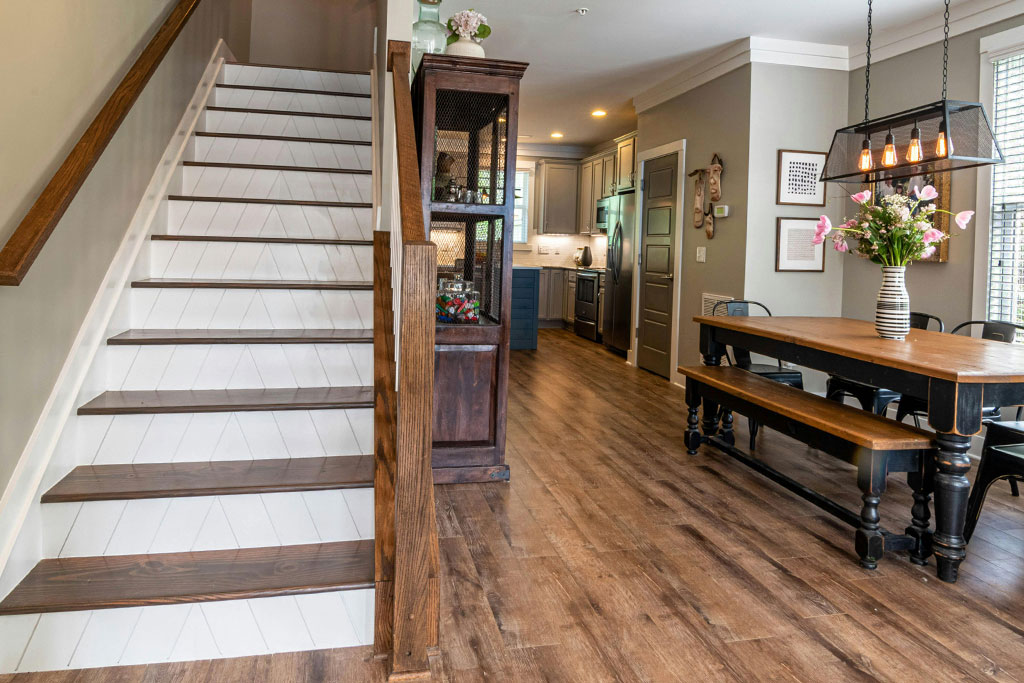
Adding a fresh coat of paint to the risers (the vertical part of each step) is one of the easiest and most affordable ways to infuse more personality into your staircase. Depending on your home’s style, you can go classic with crisp white against natural wood treads or bold with a bright, unexpected color. Want something more artistic? Try an ombre effect that gradually shifts shades as you climb or a hand-painted pattern using stencils or stripes for extra charm.
Wallpaper has made a comeback in recent years, and your staircase might be the perfect spot to experiment with these wallcoverings. Whether you choose floral, geometric, or abstract prints, covering your risers or stairwell can add instant character and turn the space into a focal point. If you’re afraid of making a major commitment, consider a peel-and-stick option so you can easily change its look without causing damage.

Securely adding a runner to a staircase can not only increase your comfort and safety when traversing the area but also give it a more elevated look. Opt for a durable material in a style that matches your home’s aesthetic, whether that’s a patterned vintage wool or a solid modern synthetic like nylon or polyester. You can enhance it even more by adding stair rods, which are both functional and decorative, along the back of every tread. Dust corners are another viable addition. These small, triangular pieces of metal add a touch of vintage elegance while also making cleaning those tricky spots easier.

The wall alongside your staircase is ideal for showcasing family photos, art, or keepsakes. And a gallery here turns each trek between floors into a personal journey. To keep it cohesive, stick with a unifying element, such as matching frames or a shared color palette, and consider adding sconces or track lights to highlight the collection. For an easy way to plan your layout, trace each frame onto kraft paper, cut out the shapes, and tape them to the wall. This will let you experiment with spacing and arrangement before committing to nails.
Lighting can completely change how your staircase feels, and it’s especially important if the area is closed in and lacks natural light. Peel-and-stick LED light strips under the treads can lend a sleek, modern glow, while a statement pendant or chandelier above the stairwell adds elegance. Even small touches, like wall sconces, help to enhance the overall function and mood of the space.
As you explore style options, remember that your staircase doesn’t have to be purely functional. With a few thoughtful updates, it can become one of your home’s most impressive and unique design features. After all, every step is another chance to express your style.
Once upon a time, home was where you slept, work was where you commuted to, and hospitality was something you booked for vacations. Today, those boundaries are dissolving, especially in the world’s most dynamic cities. Enter the hybrid home: a new way of living that seamlessly blends work, leisure, and lifestyle under one roof (or at least one address).
Driven by remote work, global mobility, and a growing desire for flexibility, hybrid homes are redefining what it means to “live” somewhere. They’re not just places to stay; they’re places to experience.

In global hubs like London, historic townhouses are being reimagined with soundproofed garden offices, shared lounges, and short-term guest suites. Residents can host collaborators from abroad for a week, work from home without distraction, and still feel connected to the city’s creative pulse. It’s a modern answer to an age-old challenge: balancing privacy with connection.
Over in Lisbon, hybrid living takes on a sun-soaked, community-first feel. Renovated apartments in Alfama and Príncipe Real often combine stylish residences with coworking spaces, rooftop cafés, and concierge-style services. You might start your morning answering emails with a view of the Tagus River, break for a long lunch, and end the day hosting visiting friends who are passing through on their own global adventures.
In New York, space is precious, so innovation is key. Hybrid homes here often live within mixed-use buildings—luxury residences paired with shared work floors, wellness amenities, and even boutique hotel services. Residents can book meeting rooms, grab a coffee downstairs, and welcome overnight guests without sacrificing their own living space. It’s urban efficiency at its finest.

Asia is also leading the charge. In Tokyo, compact living has inspired beautifully designed hybrid apartments that maximize function without sacrificing style. Think modular furniture, built-in workstations, and shared hospitality spaces within the building. In Singapore, high-rise developments blend private residences with business lounges, guest suites, and resort-style amenities, catering to a globally mobile, business-savvy population.
What makes the hybrid home so appealing isn’t just convenience; it’s freedom. Freedom to live in one city while working for a company halfway around the world. Freedom to host friends, colleagues, or family without the friction of traditional housing. Freedom to choose a lifestyle that adapts as quickly as you do.

This trend also reflects a deeper shift in values. People are prioritizing experiences over excess space, community over isolation, and flexibility over permanence. A hybrid home supports a life that’s less about being tied down and more about being tuned in: to culture, opportunity, and connection.
And the beauty of hybrid living is that it’s not one-size-fits-all. Whether you’re drawn to the creative energy of Berlin, the coastal calm of Sydney, the elegance of Paris, or the entrepreneurial buzz of Dubai, there’s a version of the hybrid home that fits your rhythm.
So, are you ready to try a new way of life? As a member of Leading Real Estate Companies of the World®, our firm can help you explore real estate opportunities anywhere, connecting you to trusted local experts who understand not just the market but the lifestyle you’re looking to create. The world is full of possibilities. Your next home might just be the most flexible one yet.