Every winter, cities around the world transform into enchanting wonderlands, with twinkling lights and festive decorations adorning the streets and the scent of mulled wine wafting through the crisp air. At the heart of this magical season are Christmas markets, which offer a unique glimpse into local traditions, flavors, and festive charm. Found everywhere from medieval towns in Europe to bustling metropolises in North America, they bring communities together to celebrate the holiday spirit.
If your hectic schedule in recent years has caused you to count down the days until the season is over rather than savoring the moments, traveling to a Christmas market may be just what you need to rekindle your cheer! Here’s a look at some of the most enchanting ones and what makes each so special.
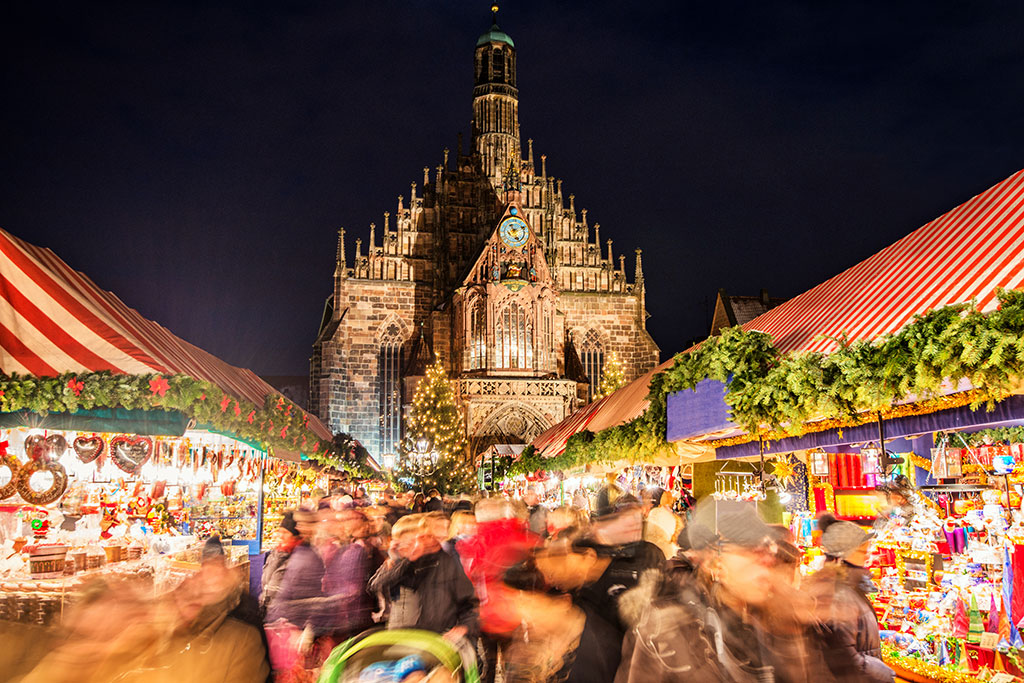
Germany is the birthplace of the traditional Christmas market, and Nuremberg’s Christkindlesmarkt is perhaps the most iconic. Dating back to the seventeenth century, it exudes old-world charm with its timber-framed stalls, hand-carved wooden toys, and traditional ornaments. What truly sets it apart, though, is the presence of the Christkind—a golden-haired angel figure who opens the festivities with a prologue from the Frauenkirche church’s balcony. Visitors flock to sample lebkuchen (spiced gingerbread) and glühwein (hot mulled wine) served in collectible mugs.
Held in the historic Distillery District, this market brings European style to North America with its cobblestone streets, Victorian-era buildings, and artisanal vendors. What makes it special is its cultural diversity, reflecting Toronto’s global population. Visitors can find everything from traditional Canadian treats to international holiday foods and crafts. Carolers, light canopies, and a massive Christmas tree help create a heartwarming atmosphere.

Known as the Capital of Christmas, Strasbourg hosts one of the oldest Christmas markets in Europe, first held in 1570. The Alsatian city’s market is set against the stunning backdrop of the Strasbourg Cathedral and features over three hundred wooden chalets spread across the city center. It is unique for its strong blend of French and German influences, evident in both architecture and cuisine. Local delicacies like bredele cookies and spiced wines along with handcrafted decorations offer a warm, traditional experience steeped in cross-cultural heritage.

Hyde Park’s Winter Wonderland is more than just a Christmas market—it’s a full-scale holiday extravaganza. Two of its distinguishing factors are its size and variety. Alongside dozens of festive stalls, visitors can enjoy amusement rides, an ice-skating rink, circus performances, and even an ice kingdom filled with sculptures. The market is especially appealing to families and thrill seekers looking for more than traditional shopping, combining classic holiday magic with modern entertainment.
The historic Tivoli Gardens amusement park transforms into a fairy-tale holiday setting every mid-November through early January. With its distinctly Scandinavian flair, this market is famous for its cozy ambience, snow-covered rooftops, and sparkling lights. Visitors can enjoy Danish treats like aebleskiver (pancake balls), warm glogg (spiced mulled wine), and Nordic handicrafts. Tivoli also boasts rides, fireworks, and theatrical performances, perfectly balancing nostalgia and modern charm.
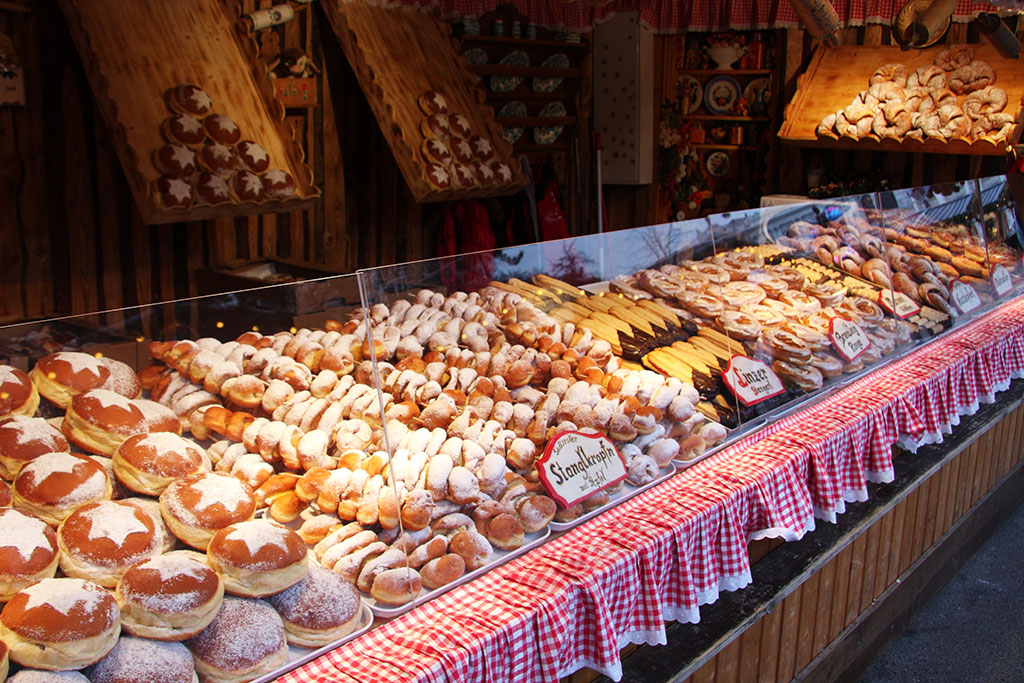
Vienna hosts multiple Christmas markets, but the most famous is in front of the Rathaus, or city hall. With such incredible Gothic architecture behind it, the setup dazzles with illuminated trees, choirs, and over 150 stalls. However, all the city’s markets are renowned for their elegant atmosphere and musical offerings, from classical concerts to children’s choirs. A cup of weihnachtspunsch (hot, typically sweet punch) and a slice of Sacher torte (chocolate sponge cake featuring apricot jam and a chocolate glaze) complete the experience in true Viennese style.

NYC’s Winter Village offers a quintessential urban holiday experience. Located in Midtown Manhattan’s Bryant Park, it surrounds a free ice-skating rink and features a curated selection of artisan vendors in glass kiosks. Unlike many markets that close in December, it runs well into January, making it a popular destination for both locals and tourists. The New York skyline provides a one-of-a-kind holiday background, and only a short walk away is Radio City Music Hall’s Christmas Spectacular show, performed from early November to early December.

Though each Christmas market around the world provides a distinct experience rooted in local culture, they all share the same core values: community, celebration, and the joy of giving. Whether you’re sipping mulled wine in a medieval German square or seeing the Rockettes kicking up their heels in New York City, take time this season to create new memories with a sense of wonder that transcends borders.
The beauty of nature can be utterly breathtaking, with one of its most stunning features being the foliage that shifts from green in spring and summer to a swath of reds, yellows, and oranges in fall. But, as it turns out, those very same eye-catching leaves may hold the key to a recycling revolution—one spurred on by the company Releaf Paper, the world’s first manufacturer of paper from fallen leaves.
One of the more recent global scientific initiatives has been how to be more responsible with the earth’s resources, including the millions of acres that are deforested worldwide for paper production alone. That was the challenge that led then-sixteen-year-old Ukrainian biotechnologist Valentyn Frechka to mull whether sources besides trees could be used to create paper. Eventually, he landed on a unique alternative: fallen leaves.
After some trial and error, he finally experienced his “eureka!” moment in 2018 when he made paper castings from fallen leaf fibers. Inspired, he pushed the concept even further by cofounding Releaf Paper with entrepreneur and company CEO Alexander Sobolenko. (Frechka also serves as chief technology officer.) After six years of research and development, Releaf Paper perfected its scientifically proven, patented, award-winning technology; last year, it opened its first large-scale leaf-processing pilot production near Paris, where Frechka had relocated in 2022.

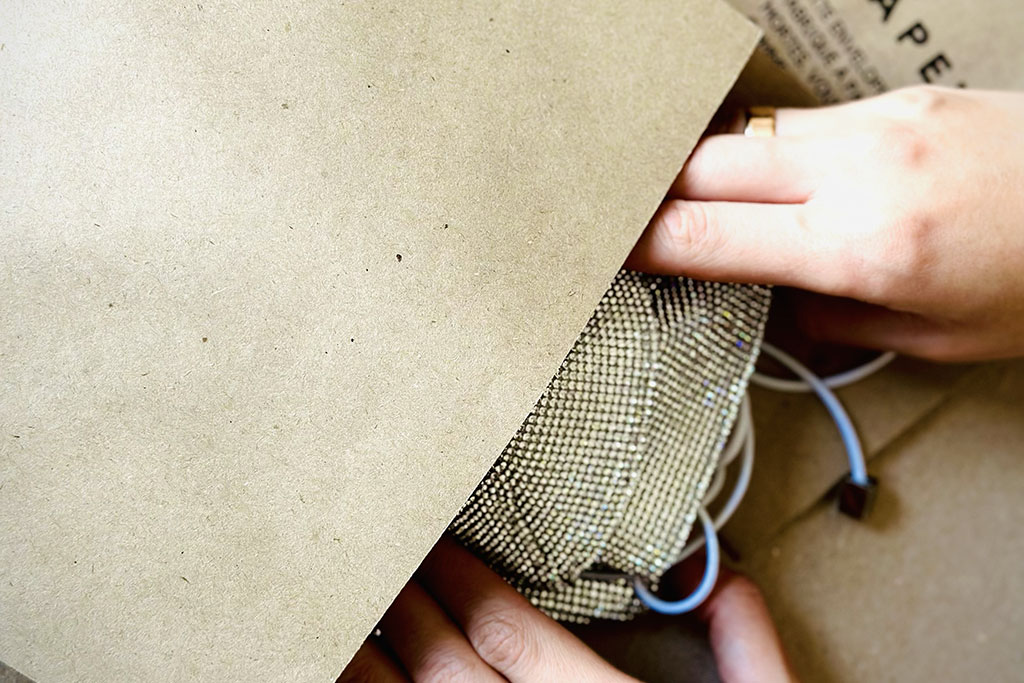
Releaf Paper says it’s currently the only company in the world that uses leaves to produce packaging materials on an industrial scale. One of its core products is Releaf kraft paper, which packaging companies use in their own manufacturing. But perhaps most exciting are the ready-made packaging solutions Releaf offers to brands and retailers, including bags and boxes as well as customization; it counts L’Oréal, Samsung, and Chanel among its partners.

It’s estimated that an average European city collects 8,000 tons of leaves a year; some of this is used in other eco-friendly practices like composting. But thanks to Releaf Paper’s innovation, the leaves in these places can reportedly be converted into more than two million tons of pulp annually—saving approximately thirty-four million trees. The company also says that each of its paper and packaging items has no effect on the environment because of its recycling process, which uses significantly less carbon dioxide and water than other manufacturers.

Now that this spark has ignited, the possibilities are virtually endless. For instance, the materials Releaf produces can be used for a variety of applications, such as cardboard, containerboard, injection-molded containers, and bioplastics. The company isn’t content to rest on its laurels, either, as it continually seeks out-of-the-box ways to use its technology to recycle other readily available raw materials, including grapes and flower stems.
Within the next decade, Releaf Paper aims to expand its production to every continent, including North America. So the next time you’re admiring the leaves on the trees above, remember the possibilities that exist within each one.
For more info, visit releaf-paper.com
Dining tables are where the greatest memories of the season are made, whether you and your loved ones are indulging in platefuls of beloved dishes, toasting to good health in the upcoming year, or gleefully reminiscing about the past months. If you’re looking for a spark of inspiration as you prepare to play host, check out this assortment of unique decorating schemes. Bold yet charming, any of these concepts can transform your tablescape and add an extra touch of magic to your celebrations.

Borrow white winter motifs from people who are all too familiar with snow. To achieve a stylish Scandinavian scene, dress your dining table in a white tablecloth and mark the center with a vase full of pine or juniper branches. If you have a long table, choose a plush, white runner to resemble a path of snow, then dot the scene with charming accents such as pine cones, tiny ceramic houses, and wooden serving boards with rims of authentic bark.
As for the table settings, lean wholly into Scandinavian minimalism, which favors natural materials and colors—think textured ceramics in a range of neutral shades, including some walnut-brown objects to offset the white expanse. Finish the look with simple glassware and matte utensils, and your colorful holiday meal will pop amid all the natural luxury.

Who says your table must feature the anticipated festive imagery of trees, stars, and snowflakes? Houston-based interior designer Bilal Rehman recommends an alternative: decorating your dining table in simple sophistication that’s suitable for any season. In other words, don’t use overtly themed items like a snowman-shaped platter or one with candy-cane decals. “Instead, choose a beautiful crystal dish,” Rehman suggests. “It will blend seamlessly on Christmas and any other holiday.”
The key to achieving this perennial look is curating dinnerware and decor made with elegant materials that work with the rest of your interiors. Seek pieces that borrow colors from the surrounding walls, furniture, and other elements to ensure that they mesh well in the space. You may expect your guests to call you a grinch as they grumble about the lack of typical holiday scenery, but as they settle into their dining chairs, they’ll understand that you’ve found a special way to dignify the gathering.

Then again, if you feel that surrounding yourself with seasonal colors and motifs is like being wrapped in a warm hug, by all means, utilize festive decor! But you can still honor the holiday and defy expectations; just embrace your inner child and dream up some DIY ornaments. For inspiration, try this holiday garland idea by UK designer Annie Sloan: Tie green leaves and dried orange slices onto long strands of twine, then suspend them from a real tree branch. Hang it above your dining table for a thoughtful centerpiece that features seasonal elements in a surprising way. Sloan finishes the look with strings of golden lights layered over the table’s surface and dinnerware in white and olive colors.
Get creative with other homemade goods such as table runners, place mats, and vase dressings. To craft the most attractive pieces, though, remember that quality is king. Filling your dining room with tinsel and plastics just won’t feel as pleasing as working with a few high-quality materials or even elements sourced from nature.

Traditional decor has achieved classic status for a reason: you can’t go wrong when combining pieces like bone china, stemmed crystal wine glasses, and holly wreaths because they never go out of style. However, if you still want to surprise your guests, aim for a more transitional look, which balances timeless with contemporary. You merely need to throw in some new and fresh finds from home-decor retailers like CB2 and Target or local artisans.
“If you have vintage china plates that are a little bit older and more ornate, place them next to some contemporary wine glasses or a beautiful pair of clean-lined and simple silverware,” Rehman suggests. “That juxtaposition of old and new will make your tablescape feel curated and collected.”
When you shop for decor, select pieces with simple silhouettes and little to no pattern. As for the color scheme, balance seasonal hues with neutral shades or opt for muted colors like merlot red and olive green. Such a contemporary color palette will form the perfect backdrop for savoring holiday flavors and making festive memories with those who matter most.
Seashal Belldina, owner of the design studio Interiors by Seashal, discusses how she merged French aesthetics with durable products to transform a family’s new construction in suburban Pittsburgh.

What is your design background?
My parents bought and renovated our late-1800s Victorian home, so I grew up around design and was always making over my own space. After graduating from college, I worked in advertising for almost fifteen years. One company I was at transferred me to San Francisco, where my husband and I bought a condo in the heart of the design district. I was always walking around and checking out the stores to peruse the latest furniture lines to fulfill my love for design.
Eventually, we moved to Pittsburgh to raise our kids closer to his family. Needing to furnish and decorate our new house, I started going to High Point Market, a home-furnishings mecca in North Carolina, with a friend in interior design; I also dabbled in that area as a hobby for a few years. People kept encouraging me to do it full-time, though, so I decided to reinvent myself. I went back to school, got an interior design certification, and launched Interiors by Seashal six years ago.
This home was a brand-new build. How do you tackle such a project versus renovating an existing place?
We use 3D modeling for all our projects, which is particularly important for new builds because you’re often looking at drawings instead of actual rooms. Ideally in such situations, the designer, builder, and architect work together and have clear communication from the start. In fact, large-scale home builders have told me that they won’t even start a job until there’s an architect and designer involved. It prevents them from having to make changes after they begin and saves homeowners a lot of money.
Unfortunately, though, that doesn’t always work out, and it can become tricky to determine whether things will fit. That happened a bit with this home—I was brought in after the floor plans were constructed and, as a result, had to ask the builder to move a couple of walls to account for the furniture.
What were the clients looking for?
They enlisted me and my team to make their house French provincial while also accounting for their three young kids. To accomplish this, we added touches of the style with family-friendly materials such as sturdy frames and performance fabrics.
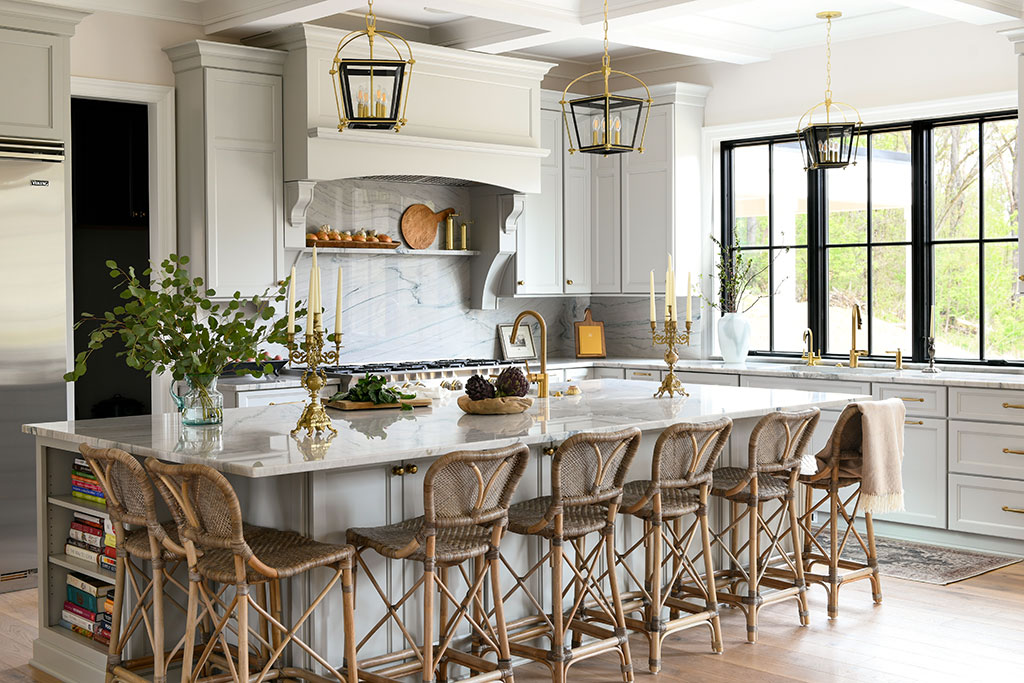
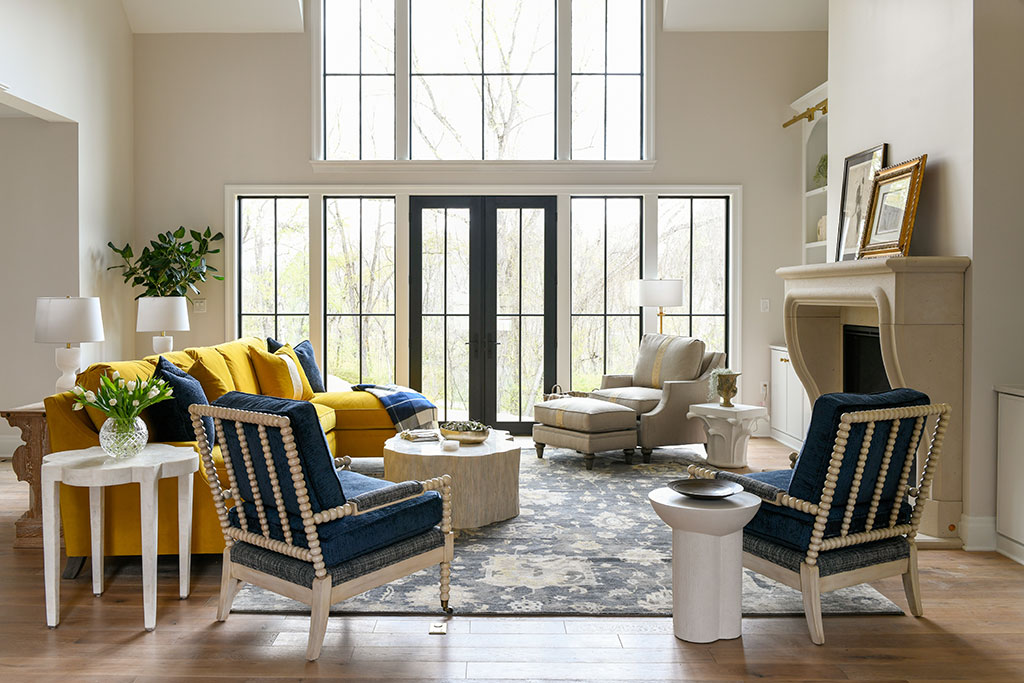
The clients also wanted the main areas to be neutral with bolder pops of color. A good example of this is the living room—its overall hue is muted, but the sofa is yellow like flowers from the South of France and the chairs are navy blue. Natural light is important when looking at paint colors, too, and this home has tons of it. We chose a warm white throughout for a calmer vibe.

In contrast, a few other rooms are quite dark. What was your objective there?
One of my favorite rooms is the moody bar room/lounge near the entry, which allows guests to get a drink, sit down, and chat before going into the rest of the home. The husband wanted a tufted leather sofa in it—very traditional French. But to make the space more modern, young, and stylish, I wrapped the backs of the aged-leather chairs in fun striped fabric, created textured walls, and added a corked ceiling with gold flecks as a nod to the couple’s love of champagne. Overall, I really enjoy the juxtaposition of that cozy, dark room transitioning to the grand open floor plan with its bright kitchen and living room.
Details are clearly important to you. Would you discuss why?
Thank you. For each design, I like incorporating unique pieces that lend texture, color, or pattern to a room and can serve as conversation starters. For instance, the living room’s clam-shaped coffee table is really different and unexpected, especially as the space’s focal point. Almost all the furniture I select is customized and direct from the manufacturer: no client will see their design in a catalog or even in their neighbors’ homes. It should reflect their personality.
How did you make the kids happy with their rooms?
One of the boys first said he loved jungle animals, but then right before they moved in after the two-year build process, he changed his choice to dinosaurs. The design worked great for both, and it became a jungle dino room. His brother enjoys gaming, so I had a muralist come in and put wild graffiti art all over his room; I also added colorful LED lights and a funky rug.
Their sister, meanwhile, wanted her room to feel elegant and girly, which I accomplished with the wallpaper and some Restoration Hardware furniture—they really brought in the home’s French design and provided just the right look she was hoping for.
Tell us how you made the primary bedroom a sanctuary:
The couple needed a calm space, so I put velvet everywhere, from the fabulous layers of bedding to the classic French-blue settee. I also added reproduction French nightstands and lamps. However, their biggest ask was an antique mirror; I managed to track down an amazing gold eighteenth-century piece to add as a wow factor.

Did you design the ample kitchen and dining room for entertaining?
Definitely. They host a lot, hence the jumbo kitchen island slab and added seating. Similarly, I had the oversized dining room table, including extra leaves and chairs, custom designed to fit everybody comfortably for holiday gatherings. I also placed a sturdy rug beneath it to both bring in some color, texture, and pattern and prevent the high-ceilinged room from being echoey.
On your website, you promise that if clients trust your process, everyone will have fun. Would you elaborate?
While we work hard and are serious about what we do, we also have a lot of fun along the way. We’re bringing joy to people’s lives—how could we not? A renovation can be a long journey, but the results are always worth it when clients trust the process. We’re very clear about ours from start to finish and keep our timelines tight so we can deliver beyond homeowners’ expectations.
For more info, visit interiorsbyseashal.com