There’s something universally magnetic about life near the water, whether it’s the rhythm of the tides, the quality of the light, or the promise that even an ordinary Tuesday can end with a walk along the shore. But coastal living isn’t a single experience. It changes dramatically depending on where in the world you drop anchor. From the sun-washed shores of the Mediterranean to the warm, welcoming coasts of the American Southeast and the iconic landscapes of California, each region offers a distinct version of seaside life.
Here’s how coastal living differs across these three much-loved areas and why each continues to capture the imagination of buyers around the globe.

Coastal living in the Mediterranean feels like stepping into a slower, more intentional pace. Whether you’re in southern France, Italy, Spain, Greece, or along the Adriatic, the sea is not just a backdrop; it’s a way of life shaped by centuries of tradition.
Homes here often emphasize connection: to history, to community, and to the outdoors. Think stone villas perched above the water, apartments with shuttered windows opening to balconies, and village homes clustered around small harbors. Indoor-outdoor living isn’t a trend; it’s simply how things have always been done.
Daily life revolves around food, family, and shared moments like morning swims, long lunches, and evening passeggiatas (strolls) along the waterfront. The coast is social, walkable, and deeply human-scaled. Even in glamorous destinations like the French Riviera and the Amalfi Coast, life retains a strong sense of place and continuity.
For buyers, Mediterranean coastal living often appeals to those seeking authenticity, beauty, and a sense of permanence. These are homes meant to be lived in for generations, not rushed through. The tradeoff? Less emphasis on speed and convenience and more on patience, preservation, and lifestyle.

Coastal living in the Southeastern United States—specifically, Florida, the Carolinas, Georgia, and Alabama—offers a very different kind of appeal. Here, the coast is relaxed, friendly, and designed for daily enjoyment, not just special occasions.
Homes are typically larger, lighter, and built with comfort in mind. Wide porches, elevated structures, open floor plans, and generous outdoor spaces are common, reflecting both the climate and the culture. The beach isn’t something you visit occasionally; it’s woven into everyday routines, from sunrise walks to weekend gatherings with neighbors.
Community plays a central role in the Southeast coastal life. Many coastal towns are anchored by strong local traditions, family-oriented neighborhoods, and a genuine sense of hospitality. Whether it’s a laid-back barrier island or a thriving waterfront city, there’s an emphasis on belonging and approachability.
The Southeast also offers accessibility. Coastal living here is often more attainable than in other global regions, with a wide range of property types, from casual beach cottages to luxury waterfront estates. It’s an attractive option for buyers looking to balance lifestyle, value, and year-round livability.

California’s coast is perhaps the most visually recognizable in the world and one of the most diverse. From San Diego to Malibu, Santa Barbara to the Bay Area, coastal living here is defined by variety, creativity, and constant reinvention.
Homes along the California coast often reflect innovation and individuality. Architectural styles range from sleek modern builds with walls of glass to classic bungalows and dramatic cliffside estates. The focus is on views, design, and seamless indoor-outdoor flow, with an emphasis on light, sustainability, and technology.
Lifestyle is front and center. Coastal California living is active and aspirational—surfing before work, hiking above the ocean, dining at farm-to-table restaurants, and blending wellness into daily life. The coast here is both playground and inspiration, closely tied to creative industries, entrepreneurship, and global culture.
That said, California coastal living comes with tradeoffs: higher price points, limited inventory, and complex regulations. For many buyers, though, the combination of natural beauty, cultural influence, and long-term value makes it worth the effort.

What unites the Mediterranean, the Southeast, and California is a shared love of the sea, but how that love is expressed couldn’t be more different. The Mediterranean offers heritage and timelessness. The Southeast delivers warmth, ease, and community. California provides energy, innovation, and iconic lifestyle appeal.
Choosing between them isn’t about which is better; it’s about which version of coastal life fits your story. Are you drawn to centuries-old villages and long lunches by the water? A friendly beach town where neighbors become friends? Or a dynamic coastline that blends nature, creativity, and ambition?
Wherever your coastal dream leads, having the right local expertise matters. Ready to try a new way of life? Members of Leading Real Estate Companies of the World have trusted connections in all major coastal markets and can help you navigate real estate opportunities anywhere in the world. Reach out today so you can find not just a home by the water but a lifestyle that truly fits.
If you’re ready to improve your health, the good news is that you don’t necessarily need to follow a rigorous workout routine to do so. One of the top things you can do for your body and mind is also one of the simplest: walking. Whether you’re running errands on foot or striving toward achieving 10,000 steps a day, this pursuit is a powerful way to stay active, no matter your age or fitness level.

Walking may be low-impact, but it delivers high-value results. In fact, a brisk thirty-minute session every day can help lower blood pressure, improve circulation, aid digestion, regulate blood sugar, and reduce the risk of serious health issues such as heart disease, arthritis, and even dementia. Experts recommend aiming for at least 150 minutes of moderate activity per week, and walking makes that goal feel manageable. When sustained over time, it can gradually strengthen your muscles, maintain your bone density, and keep your joints flexible, helping you feel your best.
Studies show that walking can reduce symptoms of anxiety and depression, elevate mood, and help increase creative thinking. And because this activity gives your brain a break from constant digital stimulation, it often promotes mental clarity and improved focus. As a bonus, by taking your walk outdoors, you also add an extra boost to an already beneficial activity. Exposure to fresh air and natural sunlight can lower your stress hormones and help regulate your circadian rhythm, helping you sleep better at night and feel more energized during the day.

One primary advantage of walking is that you can easily weave it into your routine since it doesn’t require a gym membership, commute, or fancy equipment. You just need a pair of comfortable, supportive sneakers and an open road or space, either around your neighborhood, through a local park, or on a nearby hiking trail. On rainy or hot days, consider an indoor option like a shopping mall, or invest in a walking pad or foldable treadmill so you can walk anytime. The key is to stay consistent and get your steps in whenever possible.
Begin with short walks, like a lap around the block in the morning or a ten-minute stroll after dinner. Once that feels comfortable, gradually increase your time and distance each week. You can also add structure by aiming for a specific number of minutes per week or setting a daily step goal. Around 6,000 to 10,000 steps a day is ideal for maximizing the health benefits, but fewer steps can even make a big difference. As you increase your distance or time walking, keep things interesting by exploring different routes or parks.

If you’re after more of a challenge, try increasing the intensity by picking up your pace or walking up gentle inclines. You can also incorporate light ankle weights to engage your muscles more and boost your calorie burn. No matter what type of walking you do and how much, make sure to stretch your legs, hips, and back beforehand and afterward to stay flexible and prevent soreness.
Finally, be patient with yourself and take your time building up your endurance. Walking is one of the most natural forms of exercise out there, and by committing to making it a part of your routine, it can become an enjoyable part of your daily life.
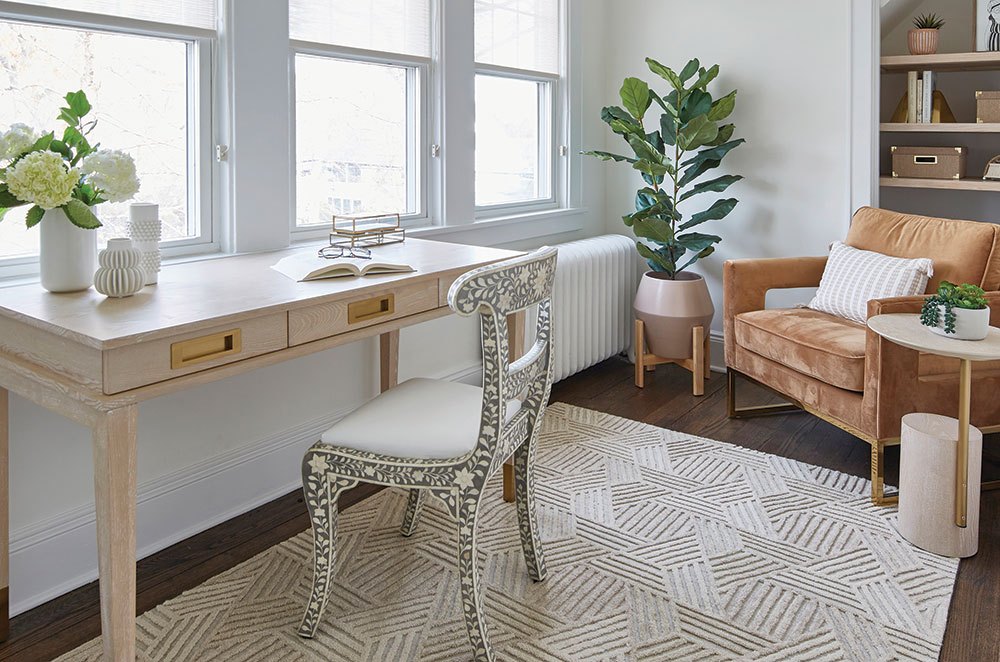
Family-focused design is front and center at Curated Nest, a full-service firm serving Connecticut and New York. Here, its founders, Lina Galvão and Erin Coren, reveal how they renovated a Larchmont, New York, colonial home with fun and function in mind.
How did you discover your passion for interior design?
Erin: It’s definitely been a lifelong passion for me. I remember when I was six, my mom would yell at me for rearranging all the furniture in my bedroom over and over. There was never any doubt about what I would do growing up. I went to school for interior design, trained under talented designers in Atlanta, and moved to New York City to start my own company.
Lina: Interior design is a second career for me after doing management consulting for about ten years. I felt a huge pull toward the creative arts, so I took a leap of faith and returned to school for interior design. I never looked back—I love the marriage of problem-solving and creativity inherent to design. I met Erin in Brooklyn shortly after we both became moms for the first time, and we instantly hit it off. Combining her extensive experience and my business background, we started Curated Nest together as a new venture.
What is your design philosophy, and how does it inform your client relationships?
Lina: Our specialty is livable luxury, with a focus on creating homes that deliver comfort, well-being, and, most importantly, a high degree of functionality to support modern families with busy lives. This philosophy has resonated beautifully with our clients. In fact, most people contact us because of it. Today’s families want custom solutions that serve their unique needs, so we hammer home our mission in all points of the client relationship, from conception to installation.
You designed the Larchmont Colonial home for a family. What were their goals for the project?
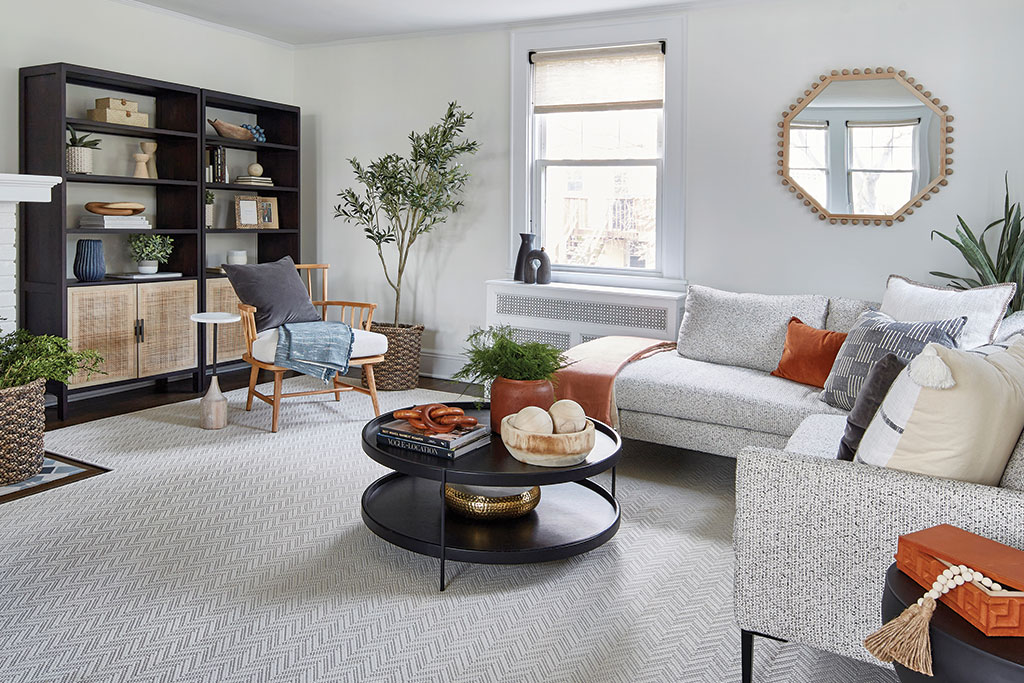
Erin: This early 1900s home is in a charming area of downtown Larchmont with many other historic homes. It has three bedrooms, three and a half bathrooms, and three floors, including a spacious finished attic, but its layout was choppy due to previous remodels and the center hall structure typical of colonials. The kitchen lacked counter space, storage, and natural light. However, the living and dining rooms had ample space. Overall, the home’s history gave it a lot of character.
Lina: The clients wanted a better, more open layout to suit their needs of raising energetic kids and entertaining frequently. Aesthetically, the husband loves leather, midcentury furniture, and bold colors while the wife prefers modern designs in light, airy neutral colors with copper- and rust-toned finishes, so we had to find a way to marry their two styles together.
There’s a unifying element to each room in this project. What is your secret for achieving this without it feeling overly repetitive?
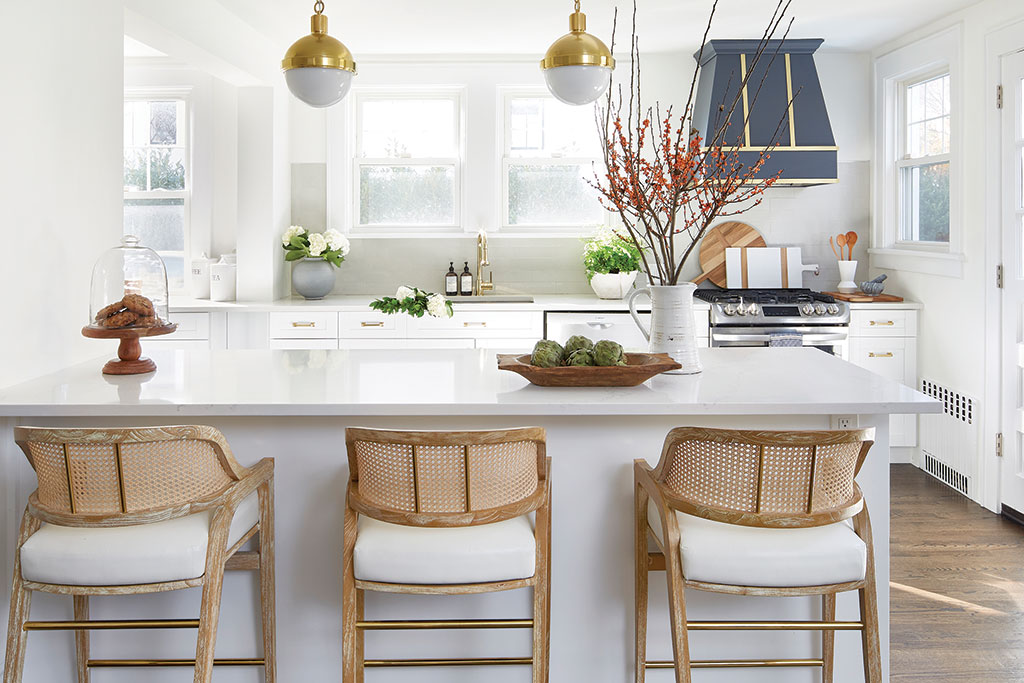
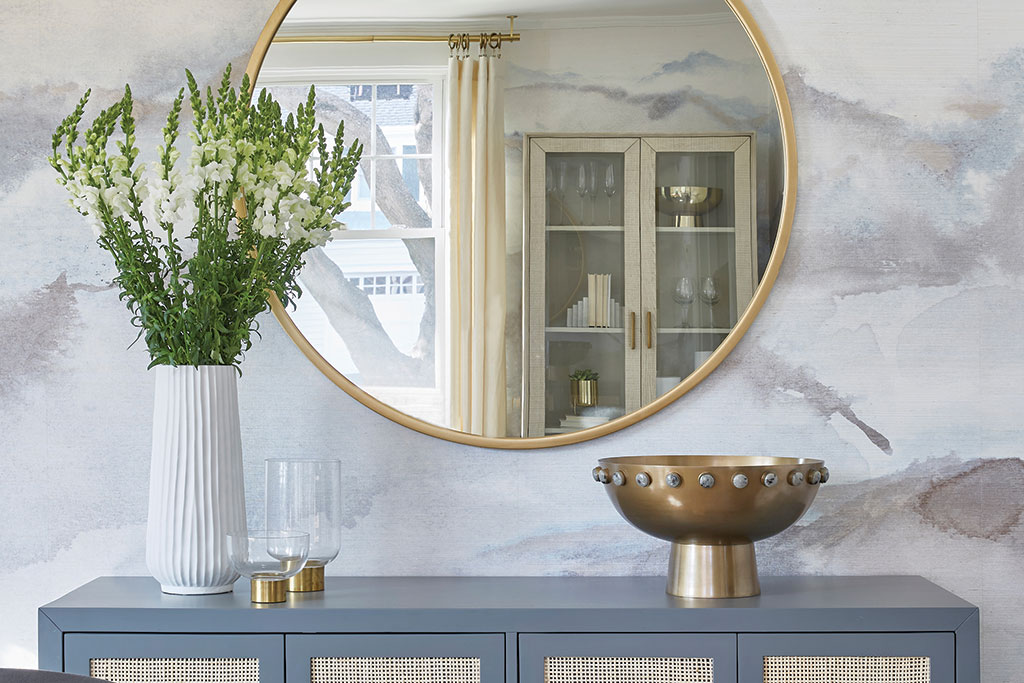
Lina: We like to repeat certain elements in our palette of materials, such as light oaks, brass-and-gold metals, rust-and-blue tones, and black accents. This creates a lovely rhythm and cohesion throughout a home. The secret to doing it right is using these colors and materials in different ways with a supporting background of various complementary neutrals. We used blue, for example, in the beautiful grass cloth wallpaper in the dining room, which offers an organic and soothing texture. In the same sight line, looking into the kitchen, you can see the range hood is also blue but in a bolder solid tone and, of course, a totally different texture. This keeps the repetition from being boring.
How did you go about selecting the perfect lighting for each space?
Erin: Lighting is critical because it provides so much bang for your design buck, and it can do many things: create a mood, add an interesting sculptural element that “floats” in the air or on the wall like art, and serve as the jewelry of the space, like the accessory to the perfect outfit. We love using it to make a statement, as we did in the dining room, where the geometry of the chandelier is striking against the soft lines of the table and wallpaper. It activates the space, drawing you in with how unexpected yet complementary it feels. In the primary bedroom, an intentionally relaxing room, we chose a more toned-down light fixture with soft curves.
The framed shower in the main bath gives the room such a stylized look. Do you think people are moving toward more unique and bold bathroom designs?
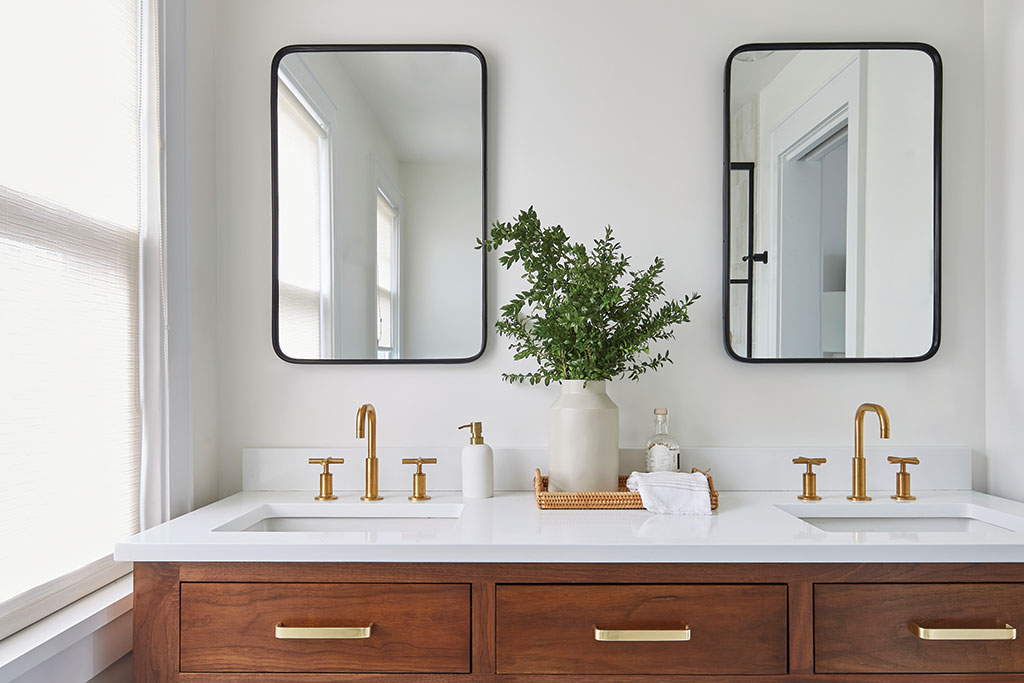
Lina: Absolutely. Shower enclosures are a major area where designers have gotten creative, and we’ve seen a lot of frames like this one in multiple configurations and styles, some even arched. One look we also love is floating vanities made of stone, which is a great way to incorporate natural textures. We made this primary bath unique to our client by creating a custom walnut vanity to tie in the desert tones in the bedroom, and we used the triangle tile to reflect the couple’s personality—not too serious, whimsical, and full of energy.
The children’s elements seem to blend seamlessly with the rest of the home’s design. How did you achieve this?
Erin: That’s kind of our thing! Our goal is to create homes that really work for families, not the other way around. We added several clever storage solutions to handle clutter and toys in almost every room. We also created a dedicated playroom on the first floor, which is ideal for keeping larger and messier toys contained. The kids’ furniture blends with the rest of the home’s aesthetic and has a touch of midcentury modern with light-oak wood and tones of dark blue. When everything has its place for the adults and kiddos alike, we find that our clients use the functionality they have.

How do your personalities combine in your designs?
Lina: I like designing spaces that feel comfortable and easy to live in, like when you’re in a five-star spa and everything is provided. When designing a kitchen for a family of five, for example, the drawer, cabinet, and appliance layout should keep the kids in mind. We love including a beverage center for kids’ snacks and drinks so they can access them easily without a parent. It’s about function without the fuss.
Erin: Travel serves as a huge source of inspiration to me. I love experiencing other cultures, architecture, art, and nature. For example, I took a hiking trip to the Azores and experienced wildly different terrains that were so dramatic and breathtaking. I bring these adventures back with me and translate them into color palettes, shapes, and patterns in our designs. I’ve always been attracted to Moroccan motifs and am hoping to travel to Morocco in the near future.
What is your favorite design trend of the last few years? Which new design trend are you most excited about?
Erin: We’ve been loving the use of bold stone in kitchens, baths, and other spaces. Similar to the resurgence of wallpaper we saw in the last decade, stone adds color and visual texture and is timeless. If that price point is inaccessible, porcelain has come a long way in replicating the look of natural stone. We’re seeing this trend continue in smaller pops with the use of exotic stone and bold marble as accents on furniture and lighting—we can’t wait to see how this trend develops!
For more info, visit curatednest.com
Though you may be settled in your house and determined to stay there for another five or ten years, you never know when life might nudge you to a new chapter, such as with a job change or a growing family. That’s why the best time to get it market-ready isn’t when you’re ready to sell—it’s right now. Thinking like a seller can help you protect your home’s value, avoid expensive last-minute fixes, and make life easier when it’s finally time to list.

It’s no secret that first impressions matter in real estate, and your house’s exterior sets the tone long before anyone steps inside. Even if selling isn’t on the immediate horizon, it’s always a good idea to maintain your curb appeal. Start with the basics, keep your lawn trimmed, walkways clear, and landscaping tidy. These smaller tasks, when done steadily, can save you from the stress of a massive cleanup later. Plus, they’ll make your abode a place you’ll be proud to call home every day.
If you want to take it a step further, consider adding seasonal flowers and ample mulch to instantly refresh your yard. Further, don’t forget to periodically pressure-wash the siding and driveway to keep surfaces looking new. Other simple updates, like repainting the front door and swapping out worn hardware and house numbers, can help keep your exterior looking well cared for. In turn, these changes send a clear message—to both neighbors now and to potential buyers later—that your home has been loved.
Though many people may be impressed by your home’s aesthetics; what buyers can’t see often matters just as much as what they can. Keeping your house’s major systems in top shape will not only make it more comfortable to live in but also give future buyers peace of mind. Think of it as preventative care for your dwelling: a little attention now can help keep things running smoothly later.
Make sure to schedule biannual checkups for your HVAC unit, roof, gutters, and plumbing and electrical systems. Catching small problems early can save you thousands of dollars in the long run and prevent unpleasant surprises down the road. Something as simple as fixing a slow leak or replacing worn weatherstripping can protect your home from greater damage.

One of the perks of prepping your house before you’re even considering selling is that you can take your time working on your interiors and actually enjoy those changes. Start with easy, high-impact updates like repainting walls in neutral colors, replacing outdated light fixtures, and swapping in new cabinet hardware. These small touches can modernize your place’s look without breaking the bank.
If your flooring is showing wear, consider refinishing hardwoods or replacing old carpet with something more durable. And don’t underestimate the power of organization: clearing out clutter and maximizing storage can make your home feel more spacious and functional.
Every project you take on, whether it’s a kitchen upgrade or a new water heater, adds to your home’s history and potential value. So whatever you do to improve your spaces, it’s important to keep track of it. Create a folder or digital file to store receipts, warranties, and contractor information so you can stay organized. This will show buyers all the care and attention you’ve put into your property. Moreover, these detailed records can streamline future appraisals and inspections since you’ll have everything ready to go.
Getting your home in showing shape doesn’t actually require turning it into a perfect showroom. It’s more about maintaining what you own, developing good habits, and making intentional updates gradually. This approach helps protect your investment, making your space feel cozy and welcoming today and more sellable tomorrow.