A new issue of Good to Be Home means more ideas for enriching your greatest, most important investment. After all, there’s no place like home, and the choices you make for its rooms, structural elements, and more will affect how you feel every day.
First, take a look at expert renovation insights courtesy of Dennis Walsh, a veteran home builder who understands how contractors work and what pitfalls to avoid. His guidance in this featured article can help you make the most of your renovation projects, whether large or small.
But transforming your home doesn’t always require dramatic work. Sometimes, making DIY swaps can add touches of style and practicality worth cherishing. The next article highlights one simple upgrade: swapping out your hardware. This article could motivate you to update these overlooked features, from cabinet pulls to doorknobs.
The kitchen is the heart of the home, and to make the most of it, don’t just reflect on how it looks; update the meals you craft in it as well. Check out two recipes courtesy of the celebrated cookbook Brunch Season: A Year of Delicious Mornings from the Buttermilk Kitchen. Learn how to make a rich bacon casserole and a tomato toast, both of which are perfect for starting your day.
Inspiration doesn’t stop in the kitchen. As you work to cultivate a more wonderful home, consider how to make the best of other spaces too. Believe it or not, you may have unused areas that are brimming with opportunities for productivity, play, hosting, organizing, or relaxation. The final article in this issue shares design concepts for making these underutilized spaces shine.
How will you use the ideas in this issue to craft the perfect home environment? As always, it’s a pleasure to send you this magazine.
Veteran home builder and real estate coach Dennis Walsh, co-owner of the online training program yourhome.academy, shares some key thoughts about collaborating with contractors and tradespeople who may work on your home—so you not only end up with the home of your dreams but also do so without stress.
Whether it’s with a specialty contractor or the general contractor, there should be an established line of communication. Too often, a homeowner jumps in and sends a message through anyone they can find on the job—and too often that message either gets lost in the shuffle or gets misinterpreted and shared incorrectly with someone in charge.
So the lesson here is to establish right upfront how communication is to be properly handled and with whom—and make sure that’s exactly how it happens. Further, I would suggest that all key communications are recorded somehow in writing, whether it be in the form of an email or text or some other agreed-upon system.

An approach used by many professional contractors is to not only establish a consistent point of contact but also schedule a weekly appointment for a call or meeting to review questions, selections, and the progress of the project. I found this highly effective in my custom building and remodeling business. Unless there was something that appeared to be an emergency, our customers would keep notes of questions to review during their weekly update call or job-site meeting.
Even when you know the correct point of contact, it’s important to establish the process and paperwork that will be used to quote any pricing details and how and when any additional costs will be paid; you should also give us a permanent record of this.
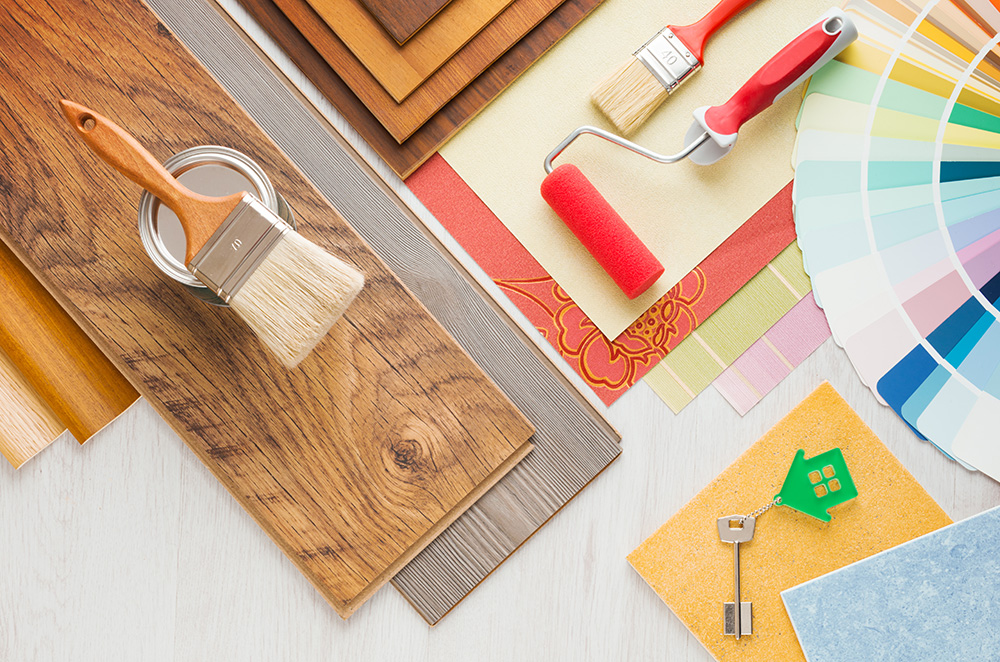
The same thing applies to selections. When and how do we choose colors, finishes, and details of things like roofing, siding, cabinets, flooring, fixtures, and more? Are all selections finalized prior to the start of the project? Or is there a timetable set up to finalize these selections at different points as the project moves forward? These are important concerns and need to be established right from the start.

As a custom builder, I lived through far too many situations where my customers kept procrastinating and caused delay after delay by not finalizing selections on time. In some cases, there were significant lead times for items like cabinets, specialty flooring, tile, appliances, and such. Delays to the project not only are frustrating for the customer but also become very expensive for the contractors.
What happens is many people freeze in their tracks with so many options to choose from, so they experience decision-making burnout. What I would tell them at some point early on is that there’s no such thing as one best overall choice; there are any number of great choices that will work fine.
I can tell you as a contractor that a lot of well-meaning clients love to visit, stand around, and even help out by holding the ends of boards we’re cutting. They just generally find ways to be part of the fun.
Unfortunately, we really don’t need their help! More often than not, they’re just getting in the way, slowing the project down, and creating safety issues. In spite of their best intentions, all they’re doing is making it more difficult for us to get our work done.
So if you don’t have anything better to do at home, please just get the heck out of the house and come back later.

This is a common affliction that strikes some people whenever they have construction workers around.
Here’s how it happens: An electrician is working on some wiring, and the homeowner comes up and says, “Hey, while you’re at it, could you run some wiring over to the other side of the room and add another receptacle there by the window?” Or the plumber is running a gas line to the fireplace and they ask, “While you’re at it, would you take another gas line out to the back corner of the house for a barbecue grill?” And the special requests go on.
Unfortunately, what some homeowners are actually saying is “Since you’re already here doing this, could you also do this extra work for free?” The appropriate question is “How much will it cost if you were to add this extra work while you’re already here on the project?” Contractors will appreciate it when you don’t make them feel as if you’re trying to take money out of their pockets.
I hope you find this list of suggestions helpful as you prepare to jump into the swirling waters of home remodeling!
For more info, visit yourhome.academy
In recent years, minimalist features like plain Shaker cabinets and seamless doors have dominated interior design. As clean-lined and contemporary as these features may be, it might be time to reconsider some previously overlooked elements that are now back in vogue: statement-making hardware. From vibrant cabinet handles to visually striking drawer pulls and bold new takes on knobs, it’s brimming with design potential.
The key question is: Are you underutilizing it? This summer, open the door to hardware that’s more than just functional, serving instead as a focal point that elevates your home’s overall style.
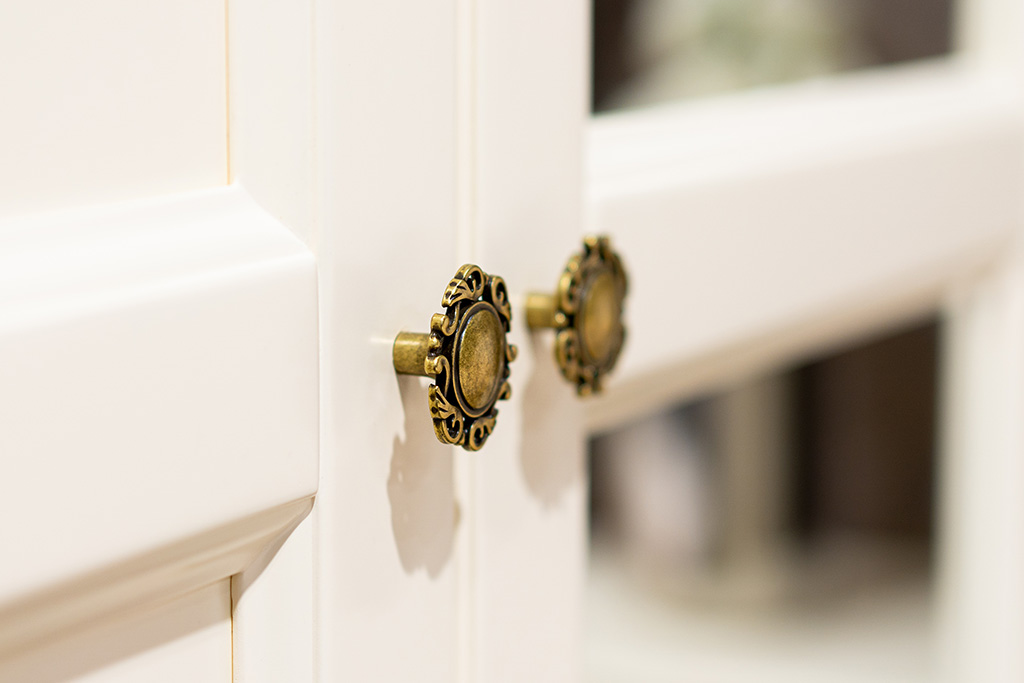
Small features can make a big impact, and today’s hardware trends reflect that. Consider embracing bolder colors, unexpected shapes, and artful patterns on your doors, cabinets, and drawers. But there’s no need to overhaul every room. To experiment with style, install pieces like oversized handles that span the length of a cabinet or hand-painted floral knobs in one area, such as your pantry or under-sink cabinets.
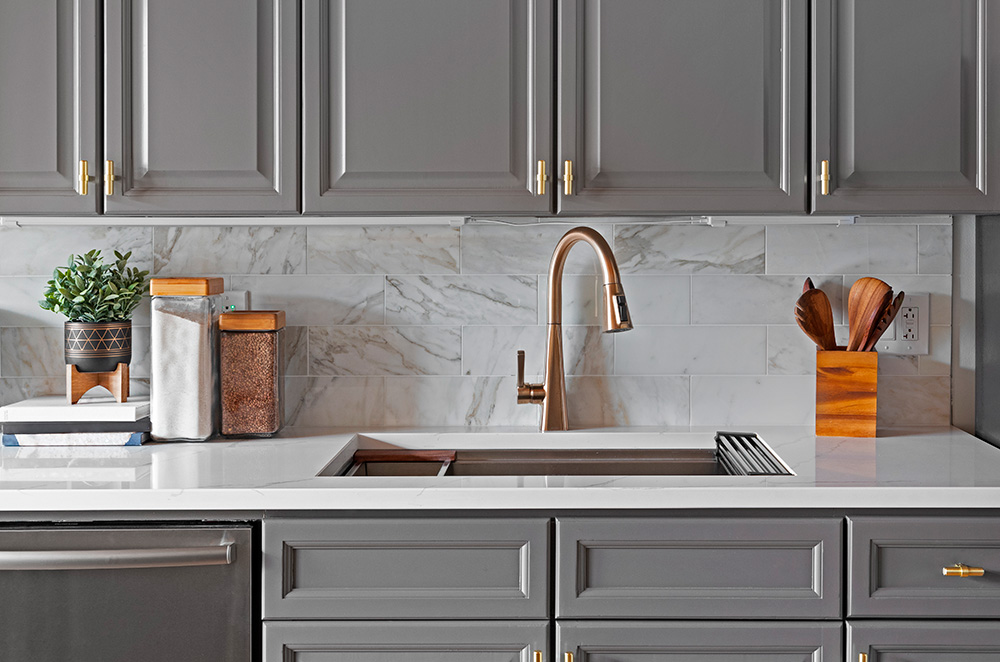
For a more traditional aesthetic, replace builder-grade or plain hardware with an elegant alternative like matte-black metal or brushed brass. These finishes catch the light in modern ways and are available in a range of alluring styles. Focus on areas guests will notice and interact with, such as your front door handle, living room armoire, and kitchen cabinetry. Even in classic silhouettes, quality materials can make a refined impression.
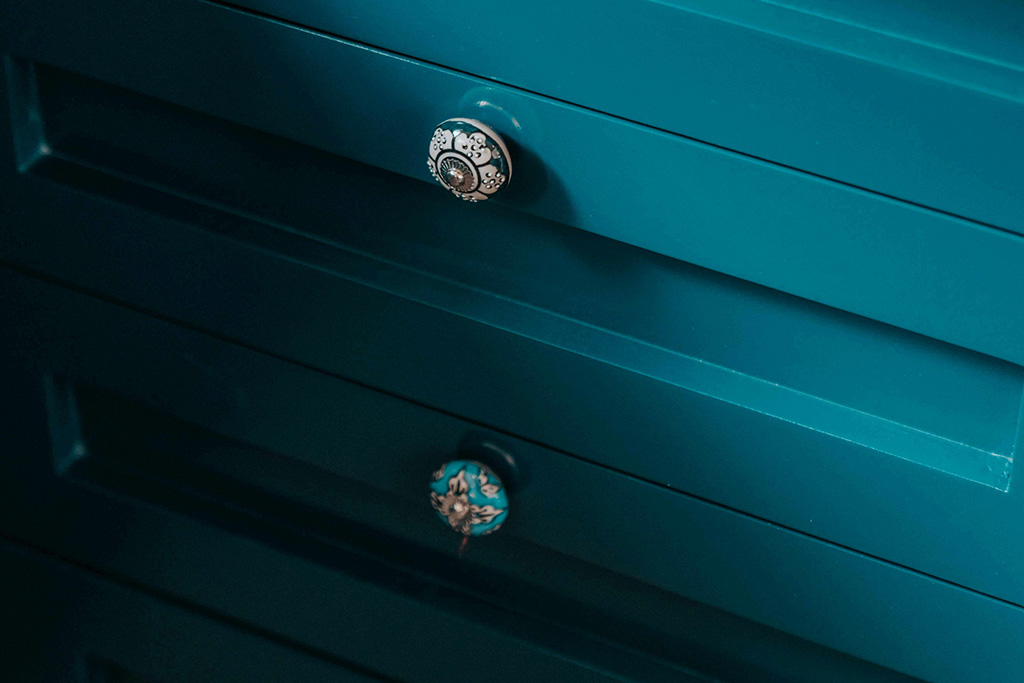
To add dramatic flair, opt for hardware in bold and bright hues. For instance, liven up a bathroom filled with dark walnut cabinetry by swapping in jade-green knobs, or introduce a stately feel to a home office with sapphire-blue crystal doorknobs. To ensure that these vivid colors feel cohesive and not out of place, pull inspiration from existing accents in the room, such as vibrant wall art or subtle tones in stone countertops. When chosen with care, jewel-toned hardware will elevate any space to another level of color and shine.
Certain design elements never go out of style. Case in point: antique keyhole covers, wrought-iron door knockers, and vintage ring pulls offer timeless appeal. You might uncover treasures at local thrift shops or by repurposing old furniture you already own since many vintage pieces just need a polish to shine again. To add regional character, incorporate elements inspired by your home’s location and history, such as Scandinavian motifs in Minnesota, art deco features in New York, or fleur-de-lis accents in Louisiana.
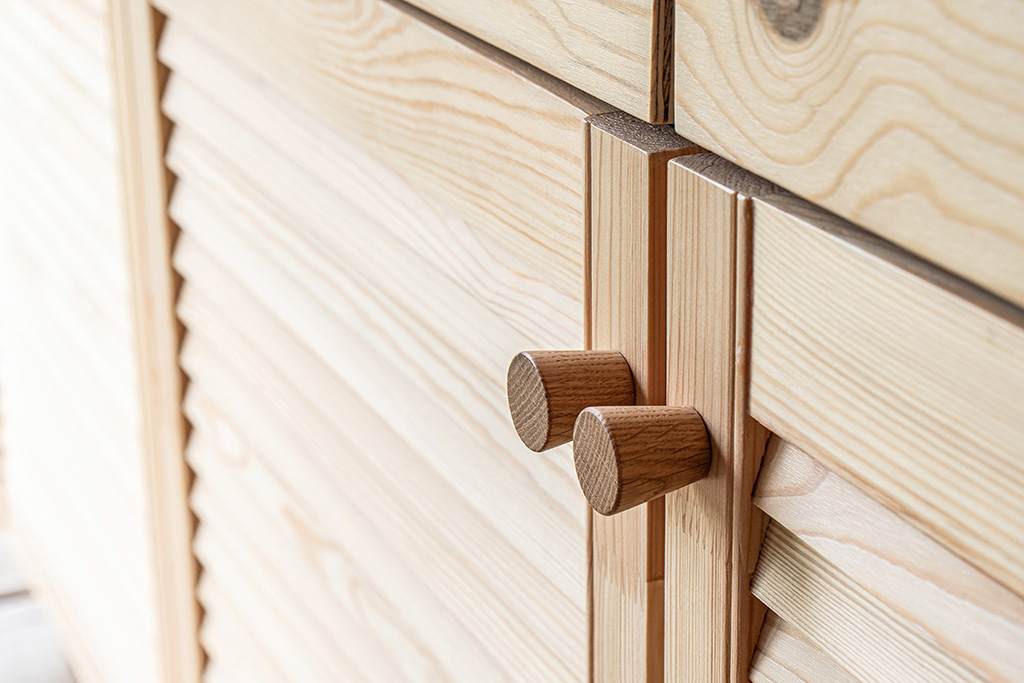
Does the term “hardware” only bring to mind metal pieces? If so, don’t dismiss wood hardware, which, while more common on dressers and bedside tables, can also add warmth and texture to kitchens and bathrooms. Choose a tone-on-tone look for understated elegance, or create color contrast (e.g., light beech against dark mahogany) for a playful twist. To make the most of wood’s natural beauty, skip the paint and opt for a clear finish that preserves the grain and ensures durability.
But you don’t need to stop there. Once you’ve added a little fashion to these functional pieces, consider elevating other overlooked accents, such as switch plates, doorway trims, or lighting. These subtle upgrades can help you create a breathtaking look that pulls any space together—and transforms your home into a treasure trove of style.
While you might think of this season as high time for hot sun and family travel, it may be the foods that make summer so delightful. Produce that ripens at this time packs on the flavor and makes other ingredients shine their brightest. Take a bite of two recipes that feature summery foods, including Vidalia onions and heirloom tomatoes, at their absolute best.
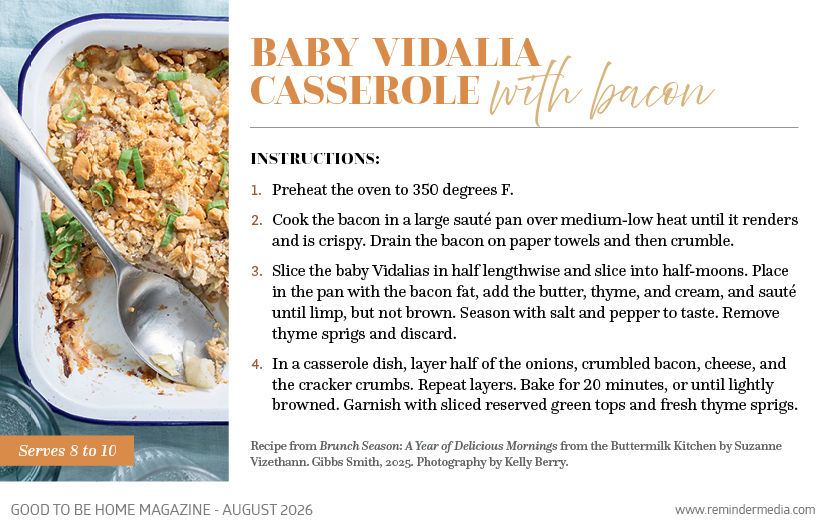
Steal the spotlight from a main dish with this super-indulgent, oniony side.
Tomatoes find their perfect mates with juicy berries, rich cheese, and crisp bread.

Recipes from Brunch Season: A Year of Delicious Mornings from the Buttermilk Kitchen by Suzanne Vizethann. Gibbs Smith, 2025. Photography by Kelly Berry.
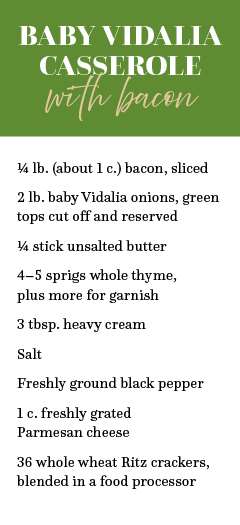
This is a dish we always had on the table growing up, most commonly paired with a steak my dad would grill. This also goes great with eggs. You can use regular Vidalia onions if you can’t find baby Vidalias.

Serves 8 to 10



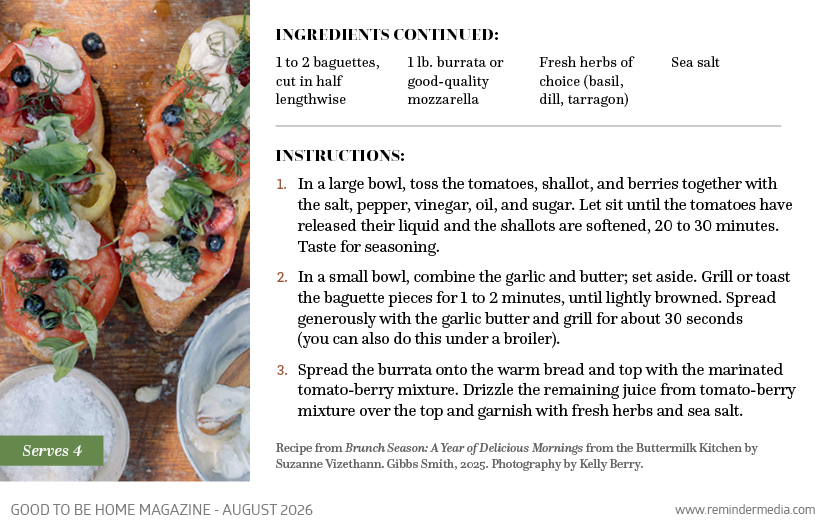
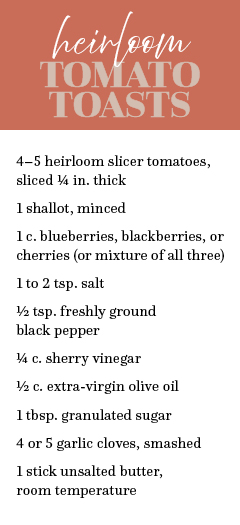
Summer tomatoes are just the best, and these toasts are a perfect way to celebrate them. We don’t often think of tomatoes as a fruit, but they are, and the acidity and sweetness of the marinated berries play beautifully with them.

Serves 4
No matter the size of your home, it can sometimes feel like there’s never enough storage. Closets can quickly fill up, countertops disappear under clutter, and you’re left wondering where everything is supposed to go. However, chances are your home has more potential than meets the eye. With a bit of creative thinking and intentional planning, you can uncover the hidden opportunities in every room, making your space not only more organized but also more functional and enjoyable to live in.
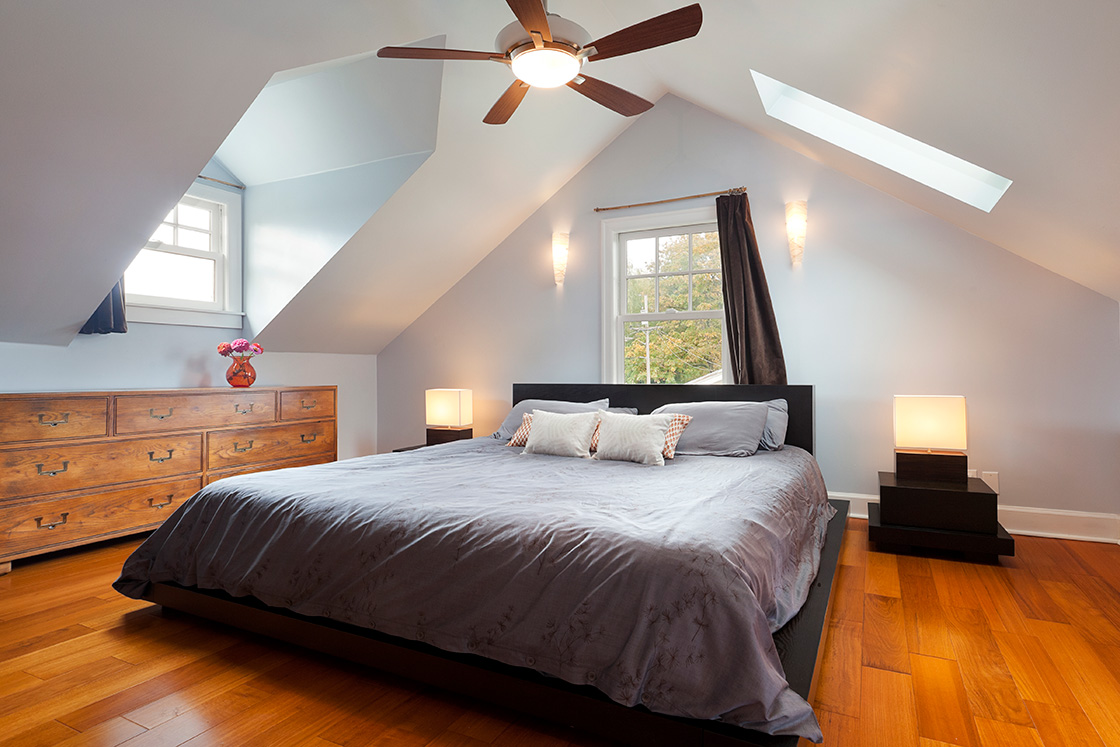
These sloped surfaces are generally difficult to design around since they’re often too short to fit standard furniture or impossible to hang artwork on. But they may just be the perfect spot for some much-needed storage. Consider transforming such an area with a custom shelving unit that matches the slant of the wall or even stacking IKEA shelves to follow the angle closely. You could also use it as a compact workstation by installing a wall-mounted desk on the flat part of the wall. (Just be sure you have an adjustable chair so you avoid hitting your head.) Whichever route you choose, it’s important that you lean into the angle rather than fight it.
You may have one or two over-the-door hooks throughout your house, but there’s so much more you can do with this vertical space. Depending on what’s behind the door, it could be the perfect spot to mount slim shelves to store small odds and ends that might otherwise clutter your dresser or vanity. In the pantry or laundry room, install larger racks to hold cans, cereal boxes, or cleaning supplies, which can help to maximize every inch of usable space.
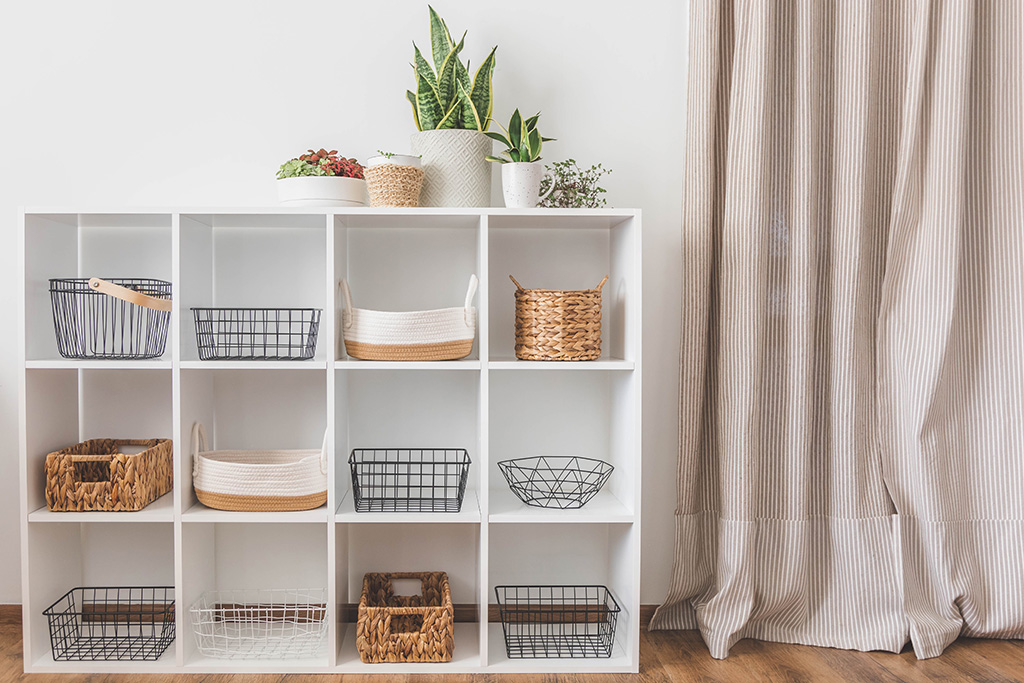
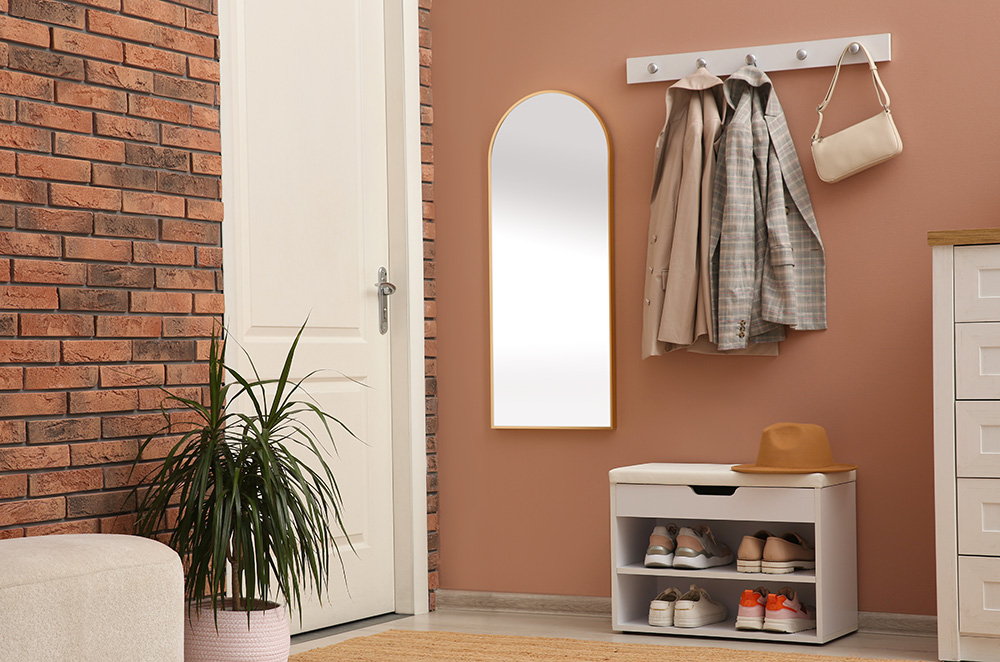
These pieces can do more than look good. They could actually be used to store items you need regular access to but don’t want to keep visible at all times. Consider investing in pieces with built-in storage space, including coffee tables, ottomans, and even couches, which are perfect spots to tuck away things like blankets and extra pillows. Even more, a storage bench at the end of your bed or in an entryway offers both seating and a place to hide shoes or seasonal decor. For small bedrooms, beds with drawers or lift-up storage underneath can make a world of difference, helping you stay organized without sacrificing comfort or style.
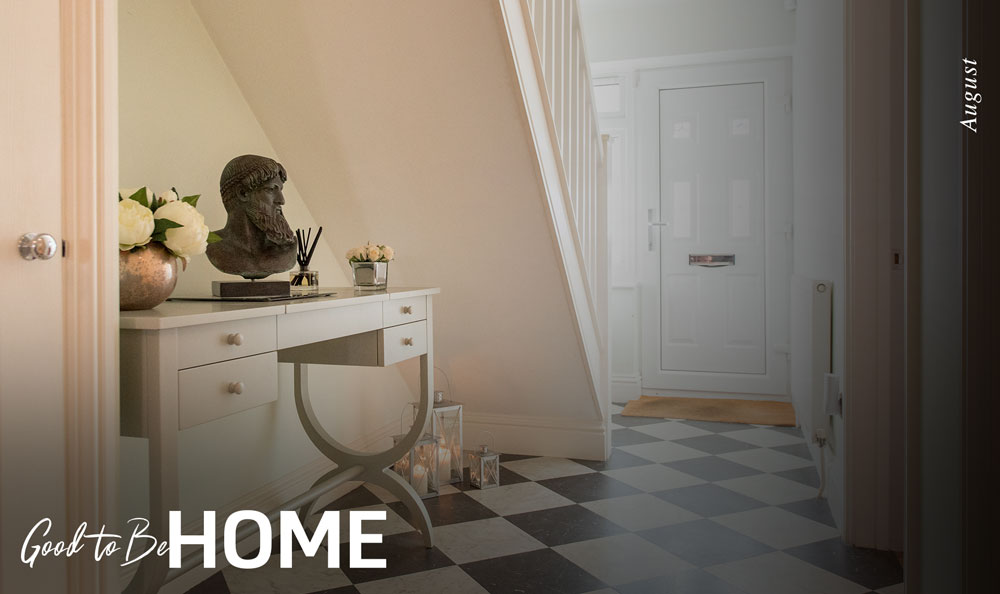
This area may seem too narrow to be useful, but with a little creativity, it can become surprisingly practical. Try adding floating shelves for books, plants, or art to make the space feel intentional rather than just transitional. A slim console table can provide a convenient landing spot for keys and mail. And if your hallway is on the wider side, consider installing built-in cabinetry or a bench with cubbies for extra storage that doesn’t disrupt traffic flow.

If these built-ins don’t reach the ceiling, that unused space is actually a hidden storage gem. Use decorative baskets or bins to store rarely used items like holiday dishes or serving platters; for a more styled look, display plants, cookbooks, or ceramic pieces that tie in to your kitchen’s color scheme. Just be sure to keep it minimal since too many items can make the space look cluttered. And since it’s high up, keep a folding step stool nearby so you can easily access whatever you store up there.
More than other places in this list, an attic certainly qualifies as “out of sight, out of mind,” an area usually dedicated to collecting old boxes (and dust) rather than making memories. However, a finished attic can serve as a guest suite, a home office, or even a playroom for kids; the key is to focus on insulation, lighting, and ventilation so it’s comfortable year-round. In addition, built-in storage along low walls or under eaves will allow you to continue storing your belongings. As a bonus, finishing your attic may also increase the value of your home, which can help offset the upfront costs of renovating it.
When it comes to creating a more functional home, you don’t always need more square footage—just a fresh perspective. By reimagining the areas you already have, you can uncover space and purpose in the most unexpected places. Even the smallest adjustments can add up to a home that feels more efficient, intentional, and uniquely yours.