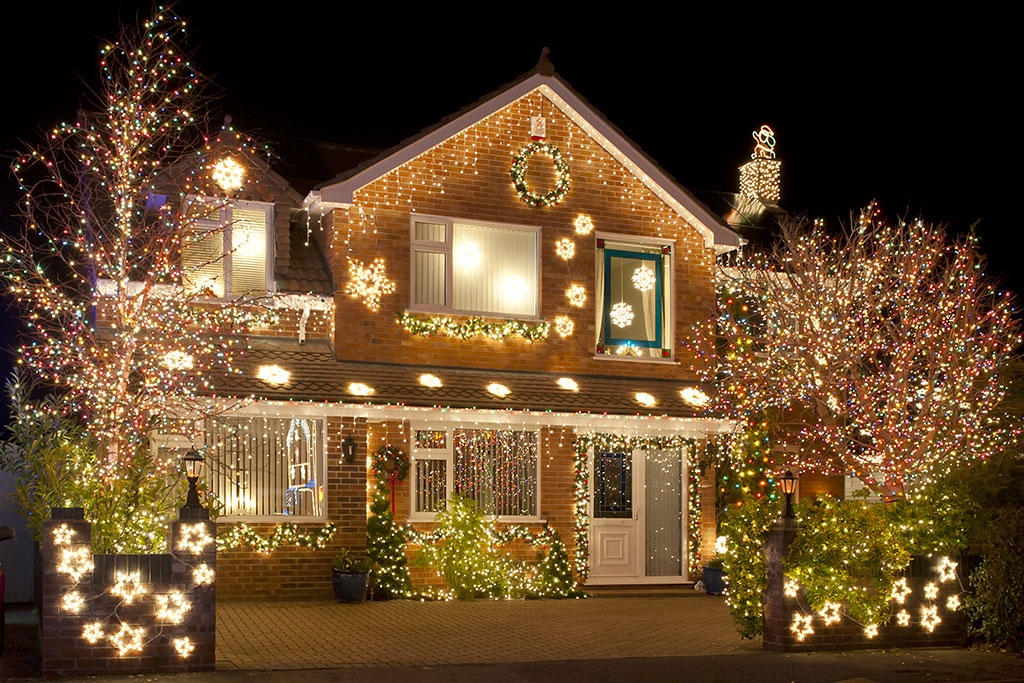
As you get ready for the holidays, this issue of Good to Be Home invites you to embrace the spirit of the season. Discover how to select a fireplace for your space, explore new twists on seasonal dishes, learn to create effortlessly festive tablescapes, and find out how expert light displays can transform your home.
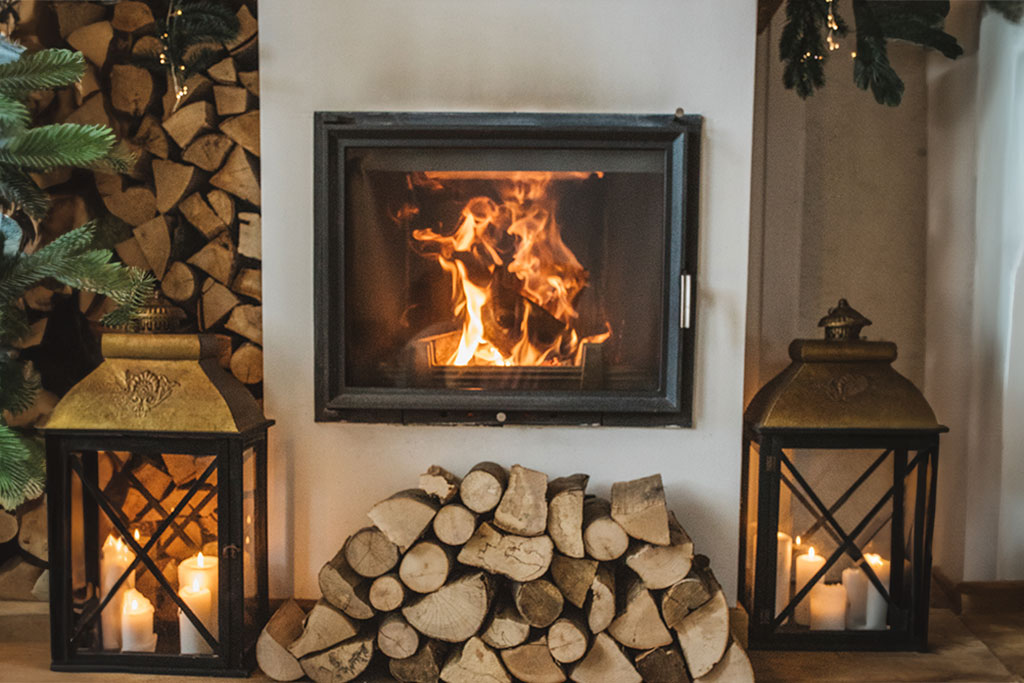
A warm and inviting hearth often serves as the quintessential symbol of cozy comfort, offering a perfect retreat from chilly evenings. The enclosed article provides tips for selecting the ideal fireplace, guiding you through the nuances of various fuel types and styles to help you choose the right feature.
The holiday season often centers on delightful dishes and decadent desserts shared with loved ones. This issue offers three innovative recipes, presenting new takes on classic favorites. Discover a unique approach to stuffing, a rich and sweet pound cake, and a clever, delicious way to transform Thanksgiving leftovers.
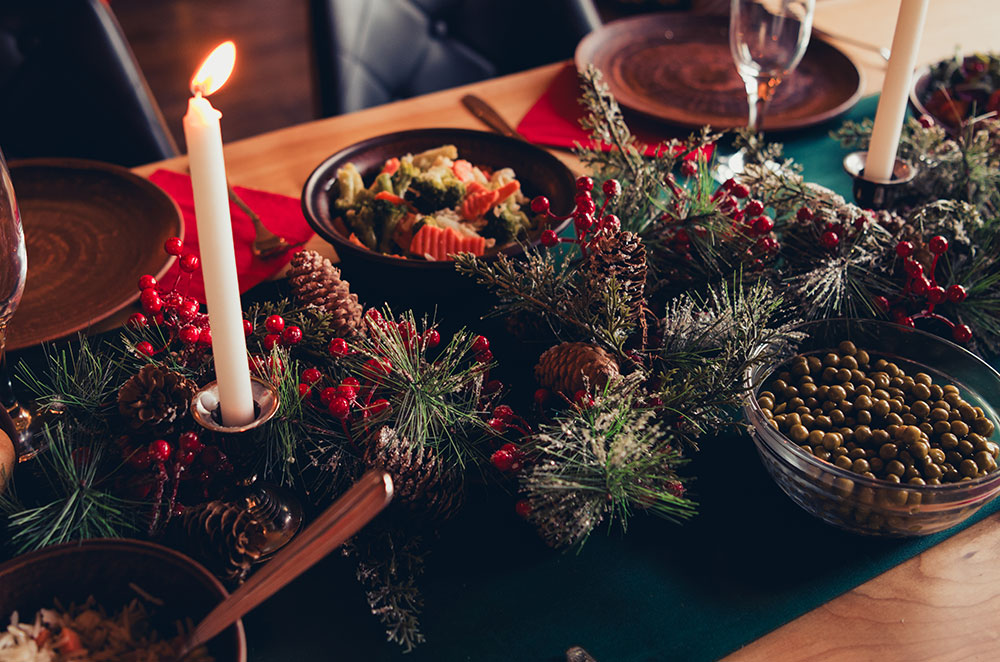
Speaking of meals, no gathering is complete without a festive dining table. Inside, find ideas for designing a beautiful and functional tablescape, including how to layer a base and craft a centerpiece. With such attention to detail, you can create an inviting ambience that elevates the feast and contributes to a truly memorable experience for everyone.
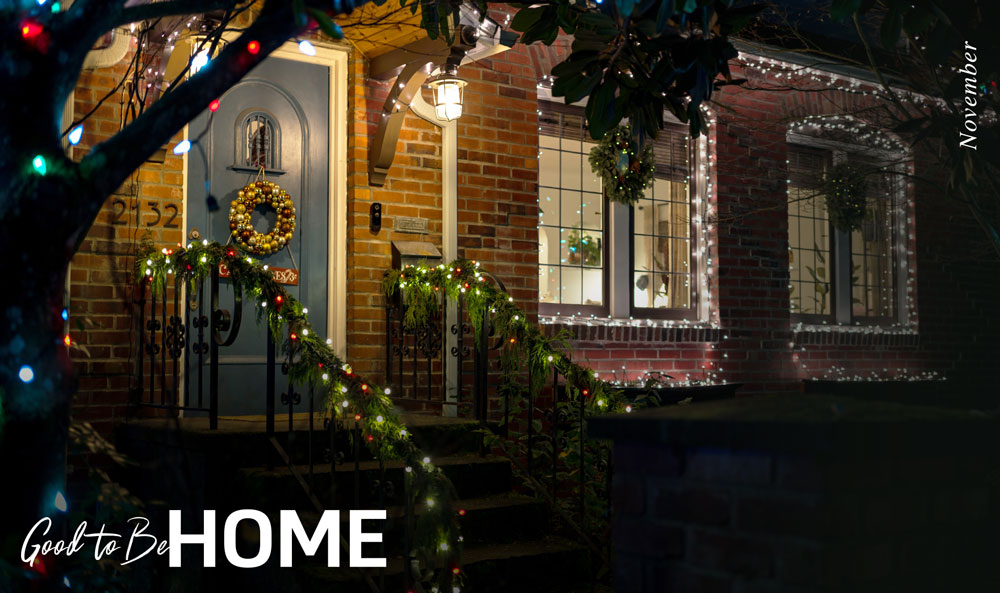
If you’re dreaming of a dazzling exterior light display without the effort, it’s worth considering hiring a professional installer. The article inside breaks down key considerations, from defining your goals and understanding cost factors to ensuring safety and vetting companies, ultimately helping you achieve a brilliant and stress-free holiday display.
Here’s to a season filled with cozy moments and delicious food! As always, it’s a pleasure to send you this magazine.
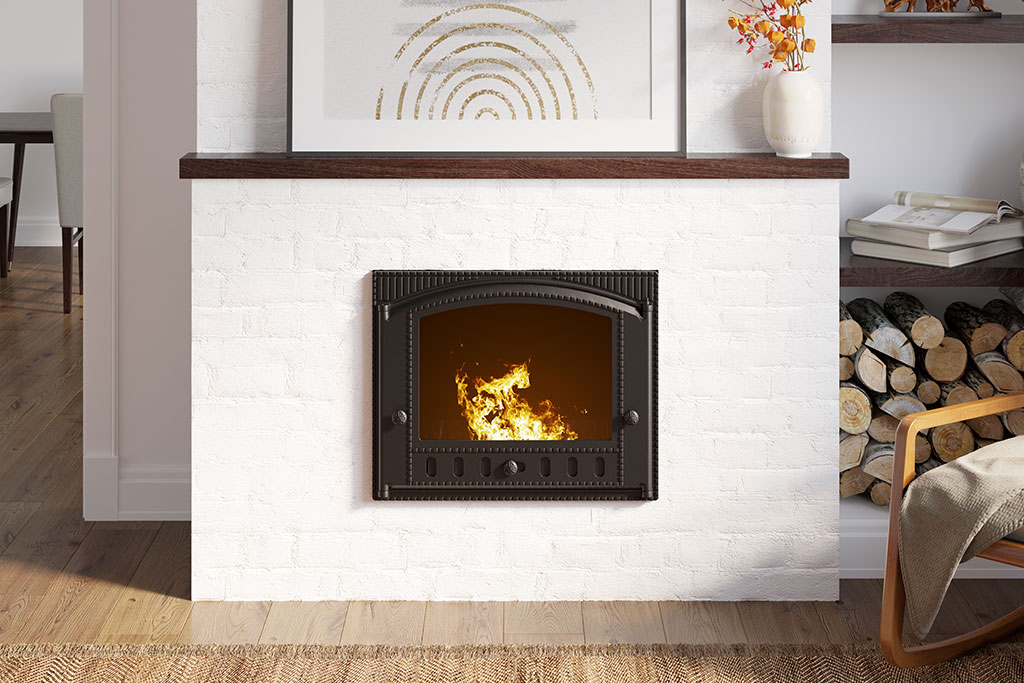
Almost nothing expresses the comforts of home like a fireplace—the perfect cozy spot to retreat to after coming indoors from a chilly night. Such a feature allows you to set a romantic ambience, enjoy treasured gatherings with your family, and savor the natural glow of a flame flickering safely in its hearth. If you’re looking to install one in your home, the following tips can help you select and style a truly heartwarming centerpiece.
You’ll first need to decide which basic fireplace type to install. Each one is designed to consume a specific fuel source and may vary in price, visual potential, and maintenance needs. Here are the most common options:
Wood-burning
Pros: Excellent scent and classic charm
Cons: Necessitates replenishing its firewood often, demands more extensive maintenance due to the debris it creates, and utilizes a broad chimney, which may be complicated and expensive to add to an existing home
Gas
Pros: Quick to install, especially if you opt for a ventless model, and more efficient than a wood-burning fireplace
Cons: Requires a potentially risky gas connection and may be costly to set up if your chosen model needs a ventilation system
Electric
Pros: Simple to install, doesn’t require ventilation features—which makes it extremely energy efficient—and is available in built-in or portable models
Cons: Doesn’t burn a pleasantly authentic flame and cannot provide much-needed heat during a power outage
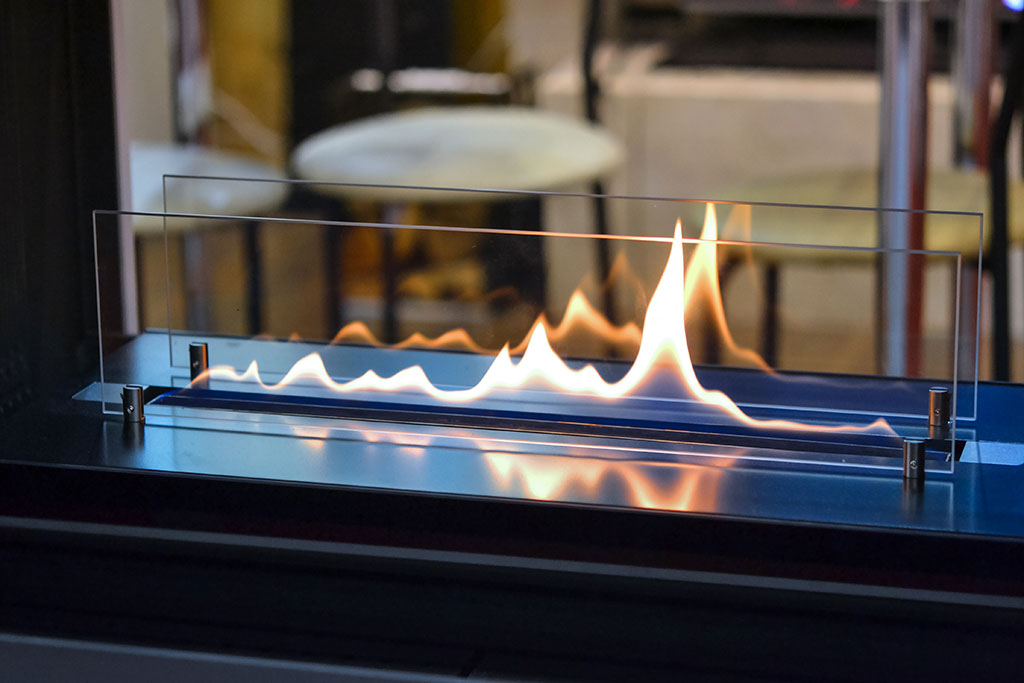
Ethanol
Pros: Offers the same advantages as electric, plus produces a smokeless flame due to the fuel type
Cons: Generates less heat than the prior options, uses somewhat pricey bioethanol fuel, and is potentially less safe than gas and electric
If you’re unsure of which to choose, contact a fireplace contractor to go over the various models and finishing features available; they can also give you a better estimate of the total price based on factors like materials and dimensions. Per the home-improvement site Angi, the average installation price is about $2,500, so to mitigate your costs, you may want to build the surround (the frame encircling the fireplace opening) out of simple brick or go with a more affordable prefabricated model.
In addition, be mindful that some states have banned certain models, such as ventless fireplaces, due to air-quality concerns. To be safe, discuss your planned upgrade with your local zoning department before you decide on a structure.
Once you choose a fireplace, you can then design the decorative elements for enclosing it, including the mantel and hearth. For a seamless style, take inspiration from the surrounding room, pulling from a single motif—such as contemporary clean lines or traditionally ornate woodwork—that would complement it nicely. For example, while an intricate wooden surround and mantel with ornate trim beckons thoughts of fine estates, such pieces would appear out of place in a midcentury modern home.
To enhance visual impact, select a quality material like flagstone or brick for the fireplace surround, hearth, and chimney breast (the structure around and above a fireplace that projects into the room). You can even affix a ventless fireplace into the latter for an old-fashioned look. Further, installing a prominent mantel can set the stage for displaying goods like holiday decor or electronics above the firebox. Making these thoughtful style considerations will help you create a truly stunning centerpiece.
Working closely with a fireplace contractor is ultimately the key to devising an attractive yet practical model that suits your tastes. Just as important, they can provide ongoing maintenance advice about cleaning debris, inspecting the fuel source often, and more based on the variety you choose. Stay on top of these tasks, and you and your loved ones can bask in the welcoming glow of a fireplace for years to come.
The holiday season is upon us, and with it comes an essential question: What should you cook? Whether you want to refresh your festive menu or are scratching your head over what to do with extras after a meal, these creative takes on classic dishes are sure to impress and delight.
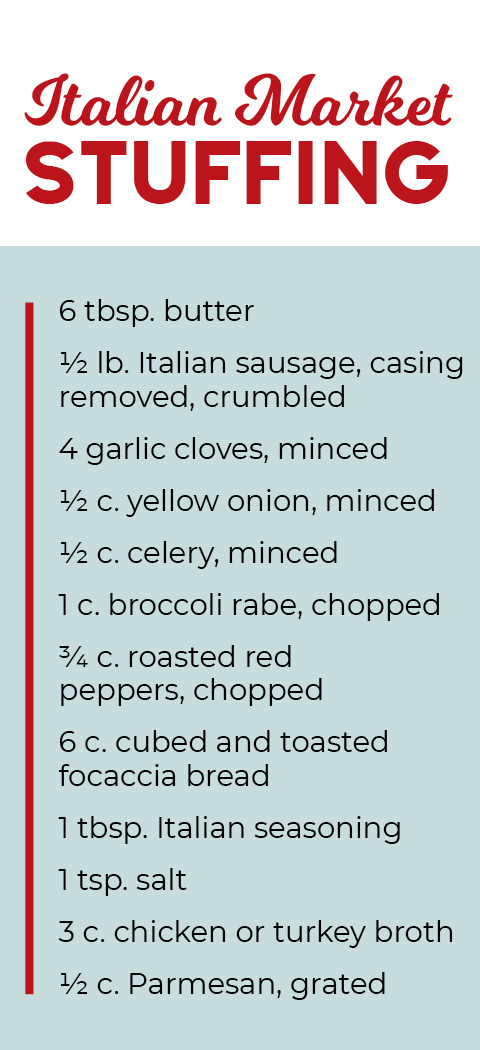
Made with focaccia, broccoli rabe, roasted red peppers, Italian sausage, and Parmesan, this stuffing is unlike any you’ve ever had before.
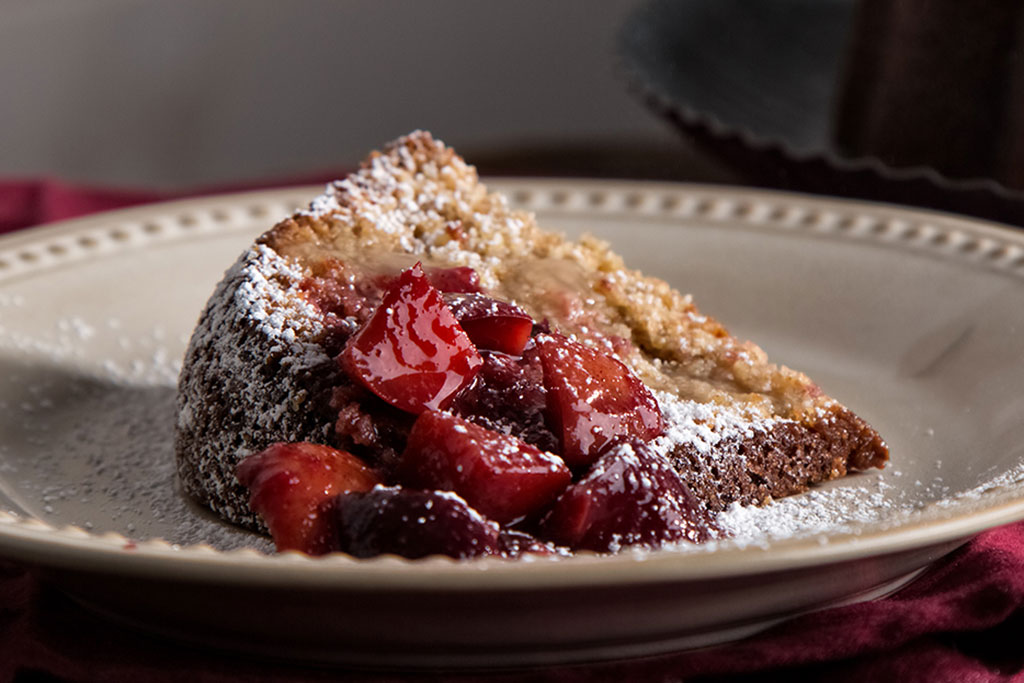
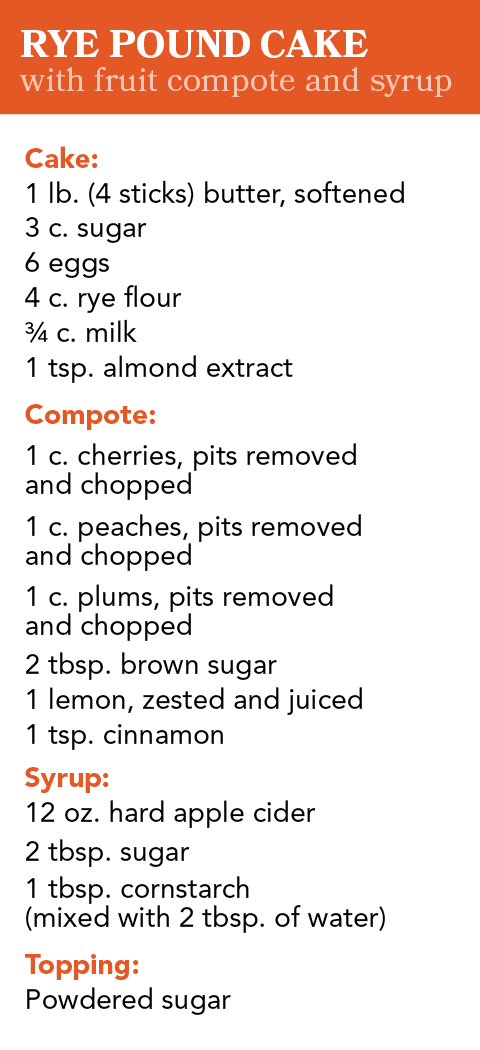
If you’re seeking a rich and sweet addition to your table, you can’t go wrong with this dessert, which is topped with a compote of cherries, peaches, and plums followed by a splash of hard cider syrup.
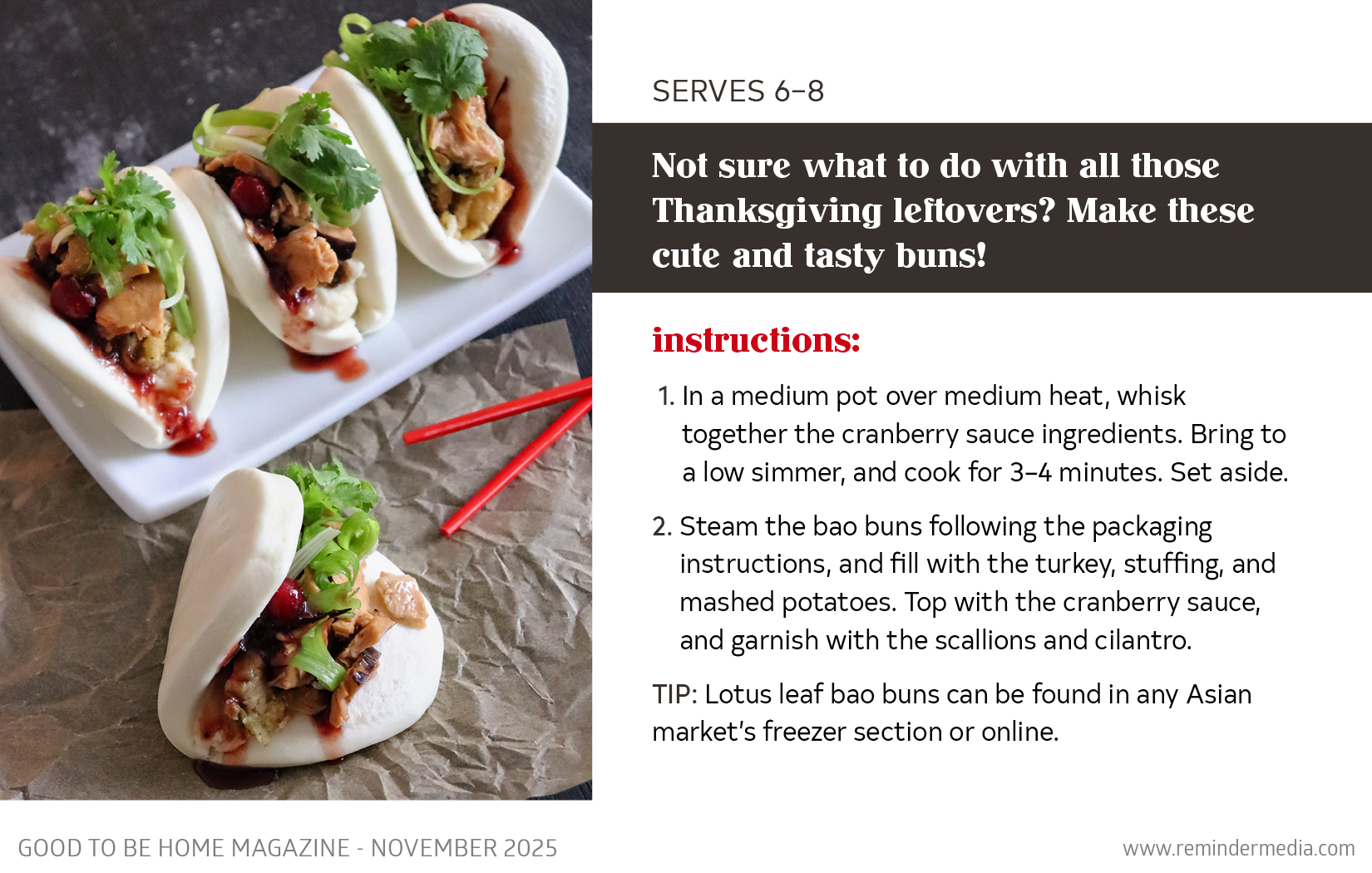
Got leftover turkey, stuffing, and mashed potatoes? Use them as filling to craft deliciously soft, steamed bao buns.
recipe by patterson watkins
Serves 6–8
Tip: Feel free to use spicy Italian sausage or even pepperoni to add a little heat!
recipe by patterson watkins
photos by shana smith
Serves 6–8
Tips: The compote and syrup will continue to thicken as they cool. Store covered in the refrigerator for up to a week.
recipe by patterson watkins
Serves 6–8
Tip: Lotus leaf bao buns can be found in any Asian market’s freezer section or online.
Your dining table undoubtedly shines during formal feasts, when it’s filled with tempting platters and surrounded by good company. But on an average day? It might look a little uninspired. Luckily, there’s an easy solution: create a tablescape.
More than just decorations, a tablescape is an artfully arranged combination of centerpieces, tableware, and accents that sets the perfect festive mood. And the best part is that it doesn’t require expensive pieces or elaborate setups. With just a few small touches, you can create a warm, inviting holiday table that’s sure to impress.
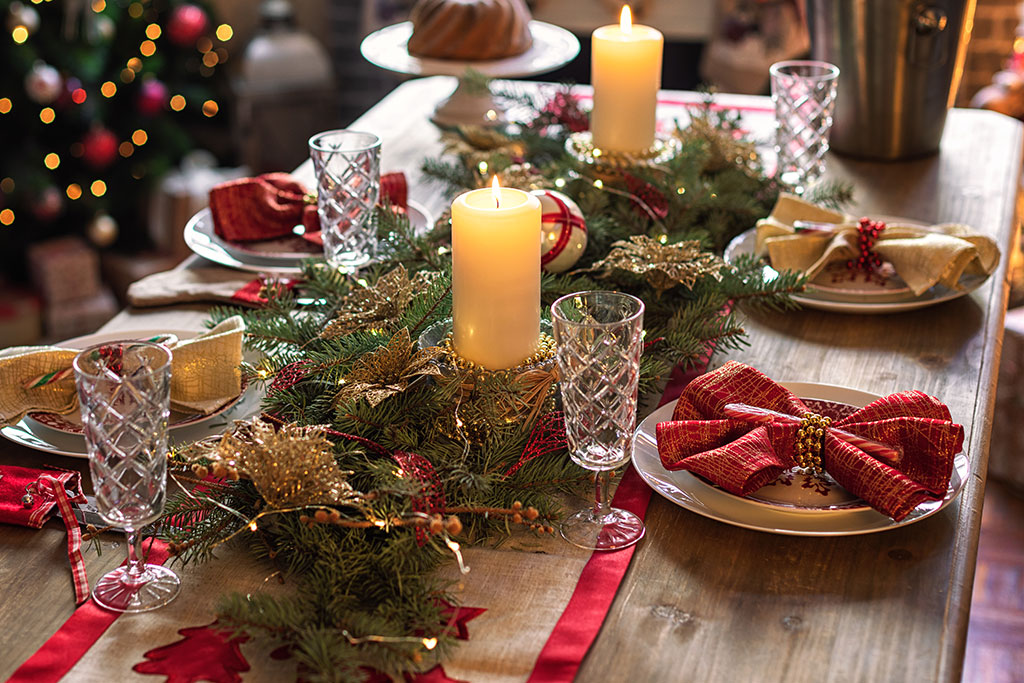
When designing your setting, start with a table runner featuring a print, pattern, or color that speaks to you, and lay a strand of fresh or faux garland on top. It’s a simple way to add texture and dimension to your design, forming a solid foundation that you can then build upon.
You can easily throw together a stunning centerpiece by buying a pretty basket or bowl (or repurposing one you already have) and filling it with holiday-themed items such as pine cones, ornaments, and dried orange slices. For a little sparkle, you could even mix in a strand of battery-powered fairy lights. It doesn’t have to be overly complicated or ornate since it won’t be the only decorative feature adorning the table.
Speaking of lights, candles are the best way to lend warmth and ambience. Select a mix of tea lights and pillar candles in varying heights, and scatter them down your runner for an effortlessly chic look. If you’re concerned about open flames, opt for battery-operated versions that flicker in close resemblance to the real thing.
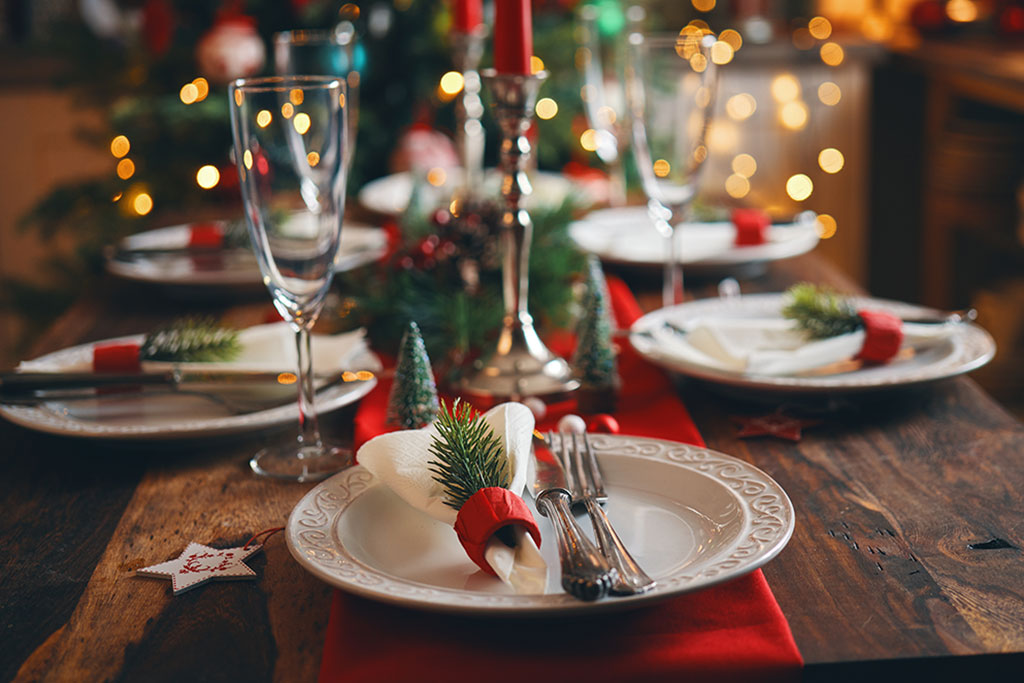
With the center of your table established, you can now move on to place settings. The traditional mode of thought is that you need matching fine china to be appropriately fancy, but a mix of different chargers, plates, bowls, and glasses in complementary colors can lend an equally charming collected-over-time look. Complete the design with coordinating cloth napkins and silverware for each person; if you don’t already have a nice set of the latter, it may be worth investing in a quality one to use for special occasions.
You can often find beautiful dishware for low prices at thrift stores and antique malls. When shopping, stick to a color scheme, like classic red and gold or elegant silver and blue, to keep everything cohesive. Also, small details can make a big impact. Try tying a piece of twine around a folded napkin and tucking in a sprig of rosemary or a cinnamon stick for a natural, rustic touch.
While it’s fun to put together a festive display, make sure not to go too overboard. You’ll want to leave enough space for serving dishes and platters, especially if you’re hosting large groups this season, and keep your centerpiece low and arrangements compact at a sit-down dinner so guests can easily see and talk to each other across the table. You could also opt out of using chargers to ensure that they have enough room to comfortably rest their arms while dining.
Remember, the best part about a tablescape is that it doesn’t have to be perfect—it’s about creating something festive and unique to your home. Take your time shopping to find pieces that make you happy, and you’re sure to craft a holiday table that brings joy day in and day out.
Putting lights on your home during the holidays is a labor of love—between detangling them, checking for burned-out bulbs, and hanging the strands, it can require hours of your time. For Clark Griswold types, the effort is usually well worth it. However, there’s an alternative option that takes care of all the work for you while creating a display that’s the envy of the neighborhood: hiring professionals for the job.
Companies have actually been doing such installations for decades, but they’ve become an increasingly popular choice for homeowners in recent years. Here are some important factors to weigh before leaping in.
Goals
To begin, determine how you’d like your exterior to look during the holiday season. Do you want to go all out, cramming in as many bulbs as you can, or would you prefer simple elegance? Do you enjoy large LEDs or many small ones shimmering like little diamonds? And what color palette will you pick? Having such answers from the get-go can help you with . . .
Cost
Per the home-improvement site Angi, the average price of an expert install is $443, though Today’s Homeowner estimates a much higher one at a little over $1,000. Of course, yours will vary based on several factors, such as your home’s square footage, the type of bulbs, the number of lights, and whether they extend into your yard.
Upgrades
You may also want to ponder possibilities beyond the basics. For example, a convenient upgrade would be adding a timer so your display automatically turns on and off every night. Or up the fun factor by including twinkling lights, sound, or inflatables as part of your festive package. In addition, you can choose to keep your illumination up year-round if you wish—and, to make it even more impressive, purchase smart color-changing bulbs to match each holiday throughout the calendar. Angi estimates that a permanent setup can cost around $3,500.
Reviews
Look into companies who provide this service to your area, focusing on both their aggregate ratings and number of reviews. Then scour local neighborhoods searching for yard signs boasting their branding to get a firsthand look at their work. Even better, if you’re friendly with the homeowner, strike up a conversation with them to ascertain how they feel about the results. Getting the opinion (and possibly the pricing) from someone you know and trust would be invaluable.
Safety
Finally, be realistic about your own situation. If you are older, have difficulty moving, or own a tricky-to-navigate roof, safety could be a real concern. In such a circumstance, you may be better off letting a professional take care of the work. But account for their safety (and your liability) as well by checking that they’re insured.
Once you’re ready to start contacting companies, prepare a list of questions to ask to help ensure that you cover your bases. Use the classic reporter’s questions as your guide:
One final point—be sure to get multiple quotes, as you would with any other project. Doing so will allow you to compare packages to better guarantee that you’re getting the best bang for your buck.
Holiday lights are mainstays of the season, but that doesn’t mean you need to spend time and endure hassle to add them to your home’s exterior yourself, especially if you’re physically limited. After pondering all the relevant factors, you may just decide that hiring a professional is in the cards for you this year.