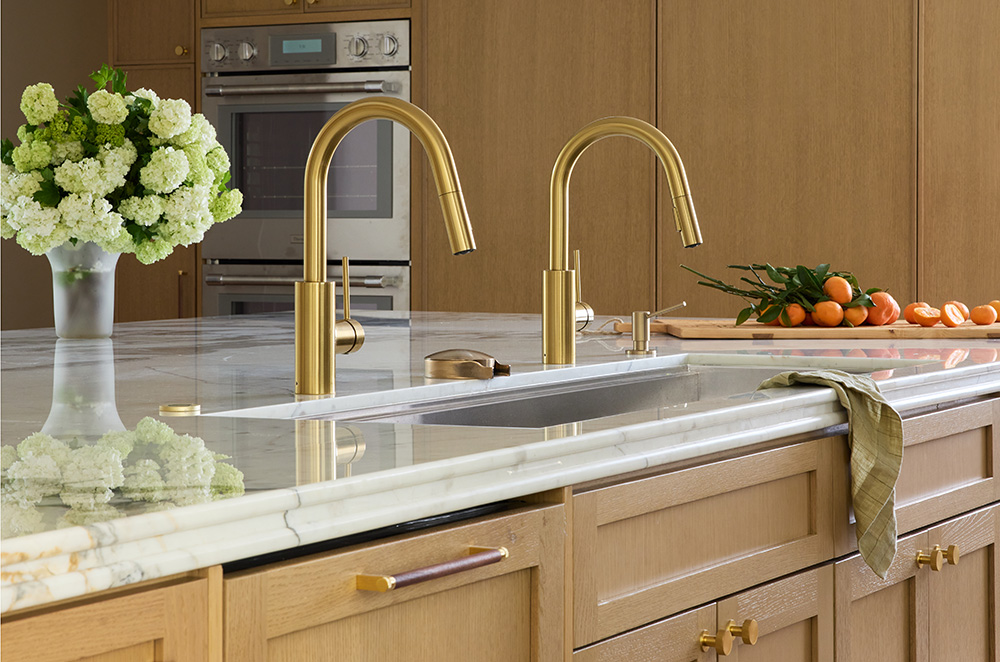
Lindsay Olson, owner of Lulu Designs, shares how she completely transformed a small, outdated kitchen for a busy family of six in Huntington Beach, California.
How did you get started in interior design?
I was always creative, but at around five or six years old decided that I wanted to go to business school. So I did and after graduation got an internship in real estate. I loved seeing the houses but hated the sales side of it. I ended up meeting a developer, and we started flipping houses together because I had an eye for design and noticed when something felt off about a house and what needed to change. I didn’t have the confidence to know why what I was doing was working, but it was clearly helping him sell the houses quickly. This was something I wanted to pursue further, so I went to school at night for interior design and got my degree. I’ve been doing it ever since.
Would you describe your design philosophy?
I’m all about blending function and form. I can make anything look beautiful, but it must work well for my clients. If it doesn’t, then I haven’t done my job. Those two elements are what I strive for every day in every project, along with client satisfaction. I’ve been doing this for around twenty-four years now, and for some people, I’m on their fourth or fifth room or even their third or fourth house. I’m in a relationship business, and that repeat business is so important.

You’re considered a kitchen expert. What’s your general approach to designing this space?
I always start with a client questionnaire to understand how they use the kitchen, whether it’s primarily for just heating quick meals or making everything from scratch. From there, I can plan the layout and working triangle between the stove, fridge, and sink based on how the kitchen is used. If they’re not cooking every day, I can separate zones or make it more of a showpiece; if they’re in there constantly, it needs to become a workhorse. But I also always think long-term. Even if a client doesn’t cook, the next homeowner might, so it has to work for anyone.
What were the goals for this particular kitchen renovation?
This client, a doctor, said from day one, “I hate my kitchen. It’s got this ugly green granite and a random wall. I don’t know why it’s here.” Her wish list ended up being simple: get rid of the green, make the design classic because she doesn’t want to redo it again, and keep the space beautiful but functional for her lifestyle. She’s a mom of four and runs a catering business, so she uses her kitchen constantly. She needed a space that would work hard and also look great since it’s visible from the front door.
We ended up removing a wall and adding an archway to the kitchen from the entry, which opened up the space completely and gave full access to it. Now she can sit eight people at the island, which is essential for a family of six who also have other family members and friends visiting all the time. The cabinets also needed to handle the wear and tear that will naturally come with how heavily the family uses the space, so I didn’t want white paint that would chip and need to be touched up. We went with white oak cabinets, which, even though they’ve been on trend, aren’t time-stamped to 2026 and can take more of a beating than paint.

The island is stunning and clearly takes up a large part of the space. Would you tell us more about it?
Like I mentioned, it needed to seat at least eight people, so it had to be around seven by fourteen feet. When I went with my client to look at slab options for the counter, she fell in love with the marble. But this type of stone is a different animal because of the veining, so we needed to purchase four slabs to make it all line up, which was so worth it.
With marble, you also have the opportunity to create a really cool edge detail that you can’t with ceramic countertops since they need to have a square edge. Because we were using this stone, I wanted to do something a little different that would be more of a conversation starter. I worked with my fabricator to come up with the design, and we were all so happy with the final product. If we had just kept it all square, it would have been a missed opportunity.
Did that marble have any influence on the rest of your design choices?
Yes, the marble’s mix of cool and warm tones inspired the palette I used in the rest of the space. I wanted both to coexist since I feel like many kitchens lean too white and gray. I made sure the gold veining was carried through to the hood’s metal trim and the knobs and pulls so the space felt warm and cool at the same time. That balance helps it stay timeless.

The kitchen has two fridges, a freezer, two dishwashers, and a huge sink with two faucets. How did you fit everything in?
The client admitted later that when she saw my designs, she was worried that she’d lose too much cabinetry. But after we finished, she said, “Now I have to buy more stuff because I have so much storage!” The large island is really central to it all since it supports the forty-eight-inch sink and multiple appliances, and then we added the two fridges, a freezer, and plenty of cabinetry along one of the walls. The layout gives her everything she wanted yet still feels open.
Were there any challenges or unexpected adjustments during the process?
We originally wanted to add a mini mudroom in the space, but there’s a drain from an upstairs shower in one of the walls that we couldn’t move. Instead, we expanded the existing mudroom into the front entry because it leads directly into the kitchen, turning it into a more flexible space for my client. We added large cabinets in the same finish as the kitchen, so she can also use them for additional storage for the catering business they own, if needed.
Tell us about the coffee bar. Was that her idea or yours?
That was all her. On top of owning a catering business, she also has a franchise of Duck Donuts, so she has about fifty ways to make coffee: Keurig, Nespresso, espresso machines, kettles, and more. And with four kids, everyone makes different drinks using different methods. The family doesn’t drink alcohol, but she wanted the area to feel like a traditional bar—just for coffee. It has a nugget ice machine and refrigerator, so it could easily convert to a bar in the future for any future homeowners.

What inspired the arch detail above the coffee bar?
We added the arch at the entry, and the coffee bar actually sits to the left of it. Everything started feeling a little too square, so repeating that curve balanced the space and made it feel intentional. She didn’t need more storage, so I could cut a little bit into the available room, which ended up creating a cozier space.
Which element of this design are you most proud of?
It honestly feels like a completely different house. Removing that wall helped make the kitchen more functional and completely changed the home. You can now see straight through from the front door to the backyard. But I’m probably most proud of the fact that she sends me pictures weekly of her kids and their friends in her house. That’s why I do what I do.
For more info, visit luludesigns.com
While indoor comforts may perfectly capture the essence of home, it may be a well-tended landscape that truly makes you feel proud of your personal property. Care for your lawn and garden diligently, and its healthy plant life will surround your house with vibrant natural splendor—and potentially even add value to your home.
But if you fail to nurture these areas correctly, especially when it comes to watering, you can actually do more harm than good (and the wilting, discolored results will speak for themselves). Refresh your yard-hydrating knowledge with this guide to common mistakes homeowners make, and learn some more beneficial alternatives.

Underwatering can obviously lead to dry patches in your grass and crunchy, faded plant life, but how much should you actually be watering? Truthfully, this largely depends on your local climate, the species of plant you’re working with, and the season. So for guidance, consider speaking with a local landscaper or gardening center associate.
Take photographs so the expert can identify the variety of plants on your property, including your lawn, trees, and flowers. From there, they can provide exact watering recommendations as well as advice on other factors, such as disease and pests, that could be impacting its health. For additional information on healthy tree watering, you may want to consult an arborist.
While your specific grass may have its own unique needs, the general rule is that most lawns need one to one and a half inches of water per week. Drench it deeply once or twice weekly—and, if you own an irrigation system, set its schedule to suit such timing. Also verify that the moisture penetrates at least six to eight inches into the turf’s dirt each time, which will support healthy roots better than light, frequent waterings. For accuracy, use a soil moisture meter or even a simple trowel to gauge how thoroughly you drench the turf each session.
As for the plants in your garden, consider keeping tabs in a spreadsheet or notebook on how often unique species need moisture, particularly in mixed garden beds that host a variety of different flora, then adjust various sprinklers throughout your yard so every species gets a full drink each week. If you don’t have irrigation installed, refer to your notes daily to determine when and where precisely to water.

Conversely, you’ll want to avoid overwatering your lawn and garden, even if you live in a dry climate. In fact, this is especially dangerous in hot, dry areas because most native plant life isn’t suited to heavy dampness.
Numerous consequences can arise from overzealous watering. For instance, it can lead to shallow root development and, due to settling moisture, invite pests and diseases, making it potentially just as lethal as neglecting your plants altogether. Not to mention, it’s just downright wasteful. To also protect yourself from any water-overuse fees, be sure to check your local guidelines since watering may be limited—or even prohibited—due to local restrictions or droughts.
When you water is just as important as how much you dispense. Opt for early-morning sessions, which are ideal because temperatures are typically cooler and the wind is calmer, potentially minimizing waste. In other words, low sunlight and breezes will give hydration time to settle deep into the soil or be absorbed by leaves rather than simply evaporating away. This timing also allows the dirt to dry before evening, reducing the risk of plant diseases that can arise in dark, wet soil.
Try to stay consistent with your timing as well. Altering your watering habits frequently can actually damage certain plants, particularly flowering varieties and edible ones. However, you may need to revisit your irrigation system’s schedule or turn it off temporarily during rainy periods.

Finally, while irrigation machinery certainly makes watering easier, these systems are by no means faultless. Should they fail to provide the right amount of moisture in the correct increments, your lawn and garden can suffer the consequences. So to ensure that they’re working properly, look out for common signs of defects, including unexplained dry spots, water pooling in certain areas, unusual noises coming from the device, and poor pressure.
If you notice these issues or are simply curious why certain plants just aren’t holding up, contact an irrigation repair specialist. Maintaining an effective watering system—whether it’s your manual work or devices doing it for you—is one of the most important methods for ensuring that your lawn and garden receive all the hydration it needs . . . no more, no less.
While you might associate brunch with dining out, this midday meal is best enjoyed in the comfort of home. Where else can you so freely delight in conversation and company with the people you love? If you need inspiration for hosting a home-cooked meal, look no further than this pair of eats from the Brunch Season cookbook.
Bright flavors like fresh herbs, spicy peppers, and citrus juice elevate the classic breakfast entrée.
This take on a brownie-like Swedish treat is sure to satisfy your summer guests.

Recipes from Brunch Season: A Year of Delicious Mornings from the Buttermilk Kitchen by Suzanne Vizethann. Gibbs Smith, 2025. Photography by Kelly Berry.
This is the kind of dish you make for yourself and feel really good about it. It’s light, and is an easy way to make an omelet thanks to a little help from the oven.

Serves 4



Kitchen Note:
The trick to good eggs is getting the pan to the right temperature. This takes a bit of practice, but the butter will let you know immediately if the pan is too hot. Practice a few times by putting cold butter in a preheated skillet.
This is a version of the Swedish sticky cake called kladdkaka, which is very similar to a brownie. The key here is to not cook it too long.

Makes 6 to 8 slices


Kitchen Note:
This also pairs well with the Brunch Season cookbook’s homemade Whipped Cream.
Though you may be settled in your house and determined to stay there for another five or ten years, you never know when life might nudge you to a new chapter, such as with a job change or a growing family. That’s why the best time to get it market ready isn’t when you’re ready to sell—it’s right now. Thinking like a seller can help you protect your home’s value, avoid expensive last-minute fixes, and make life easier when it’s finally time to list.

It’s no secret that first impressions matter in real estate, and your house’s exterior sets the tone long before anyone steps inside. Even if selling isn’t on the immediate horizon, it’s always a good idea to maintain your curb appeal. Start with the basics: keep your lawn trimmed, walkways clear, and landscaping tidy. These smaller tasks, when done steadily, can save you from the stress of a massive cleanup later. Plus, they’ll make your abode a place you’ll be proud to call home every day.
If you want to take it a step further, consider adding seasonal flowers and ample mulch to instantly refresh your yard. Further, don’t forget to periodically pressure-wash the siding and driveway to keep surfaces looking new. Other simple updates, like repainting the front door and swapping out worn hardware and house numbers, can help keep your exterior looking well cared for. In turn, these changes send a clear message—to both neighbors now and to potential buyers later—that your home has been loved.

Though many people may be impressed by your home’s aesthetics, what buyers can’t see often matters just as much as what they can. Keeping your house’s major systems in top shape will not only make it more comfortable to live in but also give future buyers peace of mind. Think of it as preventative care for your dwelling: a little attention now can help keep things running smoothly later.
Make sure to schedule biannual checkups for your HVAC unit, roof, gutters, and plumbing and electrical systems. Catching small problems early can save you thousands of dollars in the long run and prevent unpleasant surprises down the road. Something as simple as fixing a slow leak or replacing worn weatherstripping can protect your home from greater damage.

One of the perks of prepping your house before you’re even considering selling is that you can take your time working on your interiors and actually enjoy those changes. Start with easy, high-impact updates like repainting walls in neutral colors, replacing outdated light fixtures, and swapping in new cabinet hardware. These small touches can modernize your place’s look without breaking the bank.
If your flooring is showing wear, consider refinishing hardwoods or replacing old carpet with something more durable. And don’t underestimate the power of organization: clearing out clutter and maximizing storage can make your home feel more spacious and functional.

Every project you take on, whether it’s a kitchen upgrade or a new water heater, adds to your home’s history and potential value. So whatever you do to improve your spaces, it’s important to keep track of it. Create a folder or digital file to store receipts, warranties, and contractor information so you can stay organized. This will show buyers all the care and attention you’ve put into your property. Moreover, these detailed records can streamline future appraisals and inspections since you’ll have everything ready to go.
Getting your home in showing shape doesn’t actually require turning it into a perfect showroom. It’s more about maintaining what you own, developing good habits, and making intentional updates gradually. This approach helps protect your investment, making your space feel cozy and welcoming today and more sellable tomorrow.