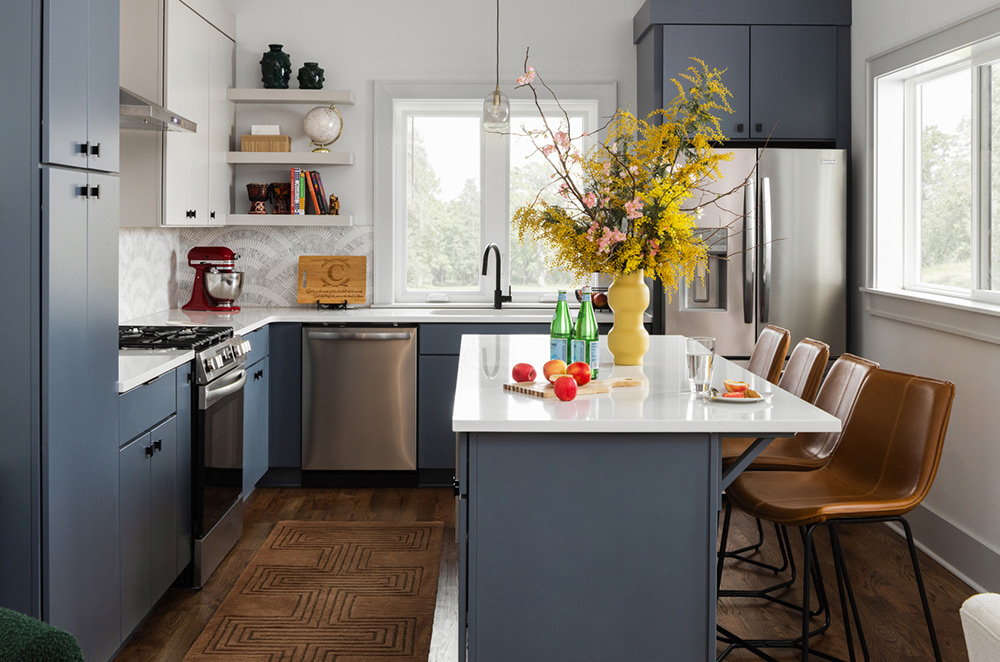
Blessed Little Bungalow founder Amber Guyton shares how she crafted a comforting, character-driven home for a Nashville client.

How and when did Blessed Little Bungalow come about?
I have always been creative. As a kid, I was constantly repainting my room, rearranging furniture, and making my space feel just right. But my professional background is in marketing, and I spent years working in financial services and tech.
After earning my MBA, I relocated from Atlanta to San Antonio for a new job. About six months later, I bought a 1948 bungalow. Within a week of moving in, I had redecorated the entire place to make it my own. When my mom came to visit, she looked around and asked, “When are you going to do this for real?”
So I launched Blessed Little Bungalow, my blog about my home projects, as a side gig in 2016. Over time, readers began asking for my design help. That led me to start offering e-design services, and I slowly built a client base and project portfolio.
I went full-time with it in 2021 and have expanded to artwork that’s sold at select HomeGoods stores and a Mitchell Black wallpaper collection, and I even published my first book. These days, I think of myself as a multihyphenate creative, but interior design remains at the center of it all.

You describe your style as “soulful maximalism.” Would you elaborate?
I’m so glad you asked! Soulful maximalism is not only my design philosophy but also the title of my book. While I’ve always been drawn to maximalism, the word can sometimes carry a negative connotation, like chaos. The way I design is very intentional, though. Over time, I realized that the spaces I create consistently revolve around four ideas: joy, culture, layers, and intention—soulful maximalism.
It celebrates who you are and what you love. Maybe the bookends on your shelf belonged to your grandfather, or a displayed object came from a trip that changed your life. Those details turn a space into your story. When everything in a room has purpose, maximalism feels curated rather than cluttered.

You mentioned joy. Do you sometimes have to remind clients to experience it in their homes?
Absolutely. Many people play it too safe, which can be frustrating. Some clients have lived in their home for years and still haven’t hung art or even put nails on their walls. Others think they need to keep everything pristine and neutral in case they put it on the market someday.
But the idea of a “forever home” has changed, especially for younger generations. People move more often, and that can make them hesitant to personalize their space. I try to encourage them to think differently. Your home should feel like a sanctuary—a place where you feel safe, comfortable, and truly yourself.
Many clients hire me because they see the color and energy in my work. I love Crayola, so I want my house (and often others’) to look like a Crayola box—and not necessarily with the primary colors. I love the bold and jewel-toned ones, which truly make eyes light up and people feel happy.

Who is the client for this Nashville Nest project?
Cynthia is an attorney whose family is incredibly important to her. She’s also passionate about civil rights and Black culture, and she loves to travel.
She purchased a tall, narrow house not too far from downtown and wanted help turning it into something that felt more personal. The house itself was beautiful and modern, but like many new builds, it lacked character. She needed help shaping everything into a cohesive home that reflected who she is.
How did you help her achieve this?
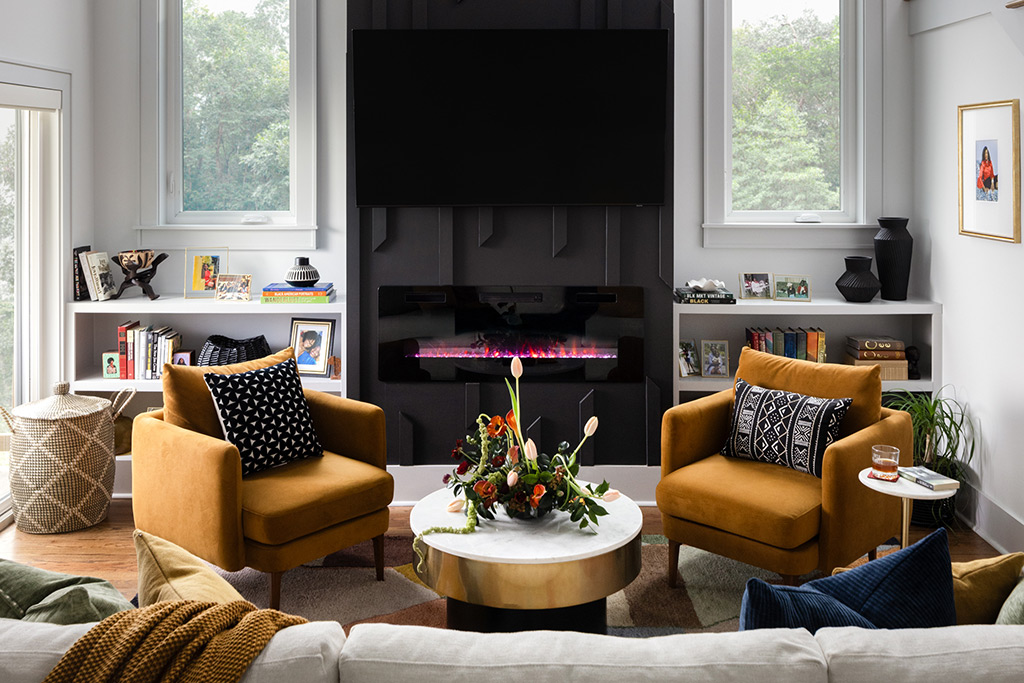
That living room was our first challenge. It has a two-story ceiling, which can sometimes make a space feel more like a lobby than a living area. I wanted to bring warmth and structure to the room while still embracing that openness.
We started by adding board and batten above the fireplace and painting it Iron Ore by Sherwin-Williams, which draws the eye upward and adds contrast without overwhelming the room. Then we layered a rug beneath her existing seating as an island that anchors the furniture and defines the space.
From there, we added a coffee table and incorporated pieces that reflected Cynthia’s story, such as her favorite books, souvenirs, and family photos. We also created a gallery wall along the staircase, which brings warmth and legacy into the home without feeling overly traditional.
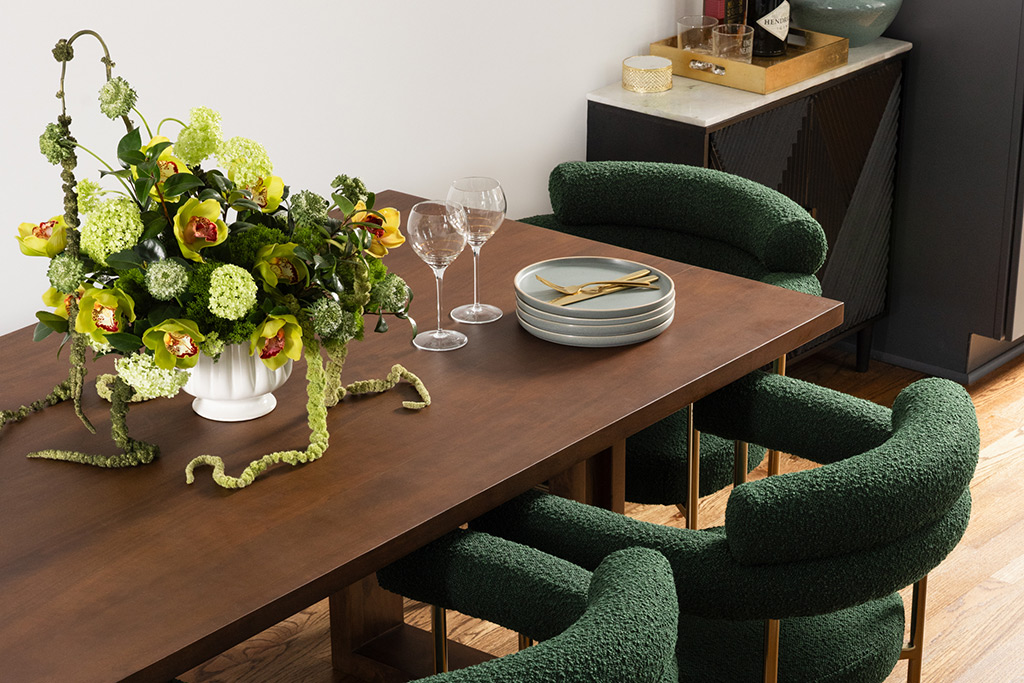
It didn’t have a dedicated dining room, so we created one in the open area between the entry and kitchen. By using a low-profile table and a bench on one side, the space feels intimate rather than formal—perfect for entertaining without feeling like a boardroom.
Would you walk us through your bold wallpaper choice for the powder room?
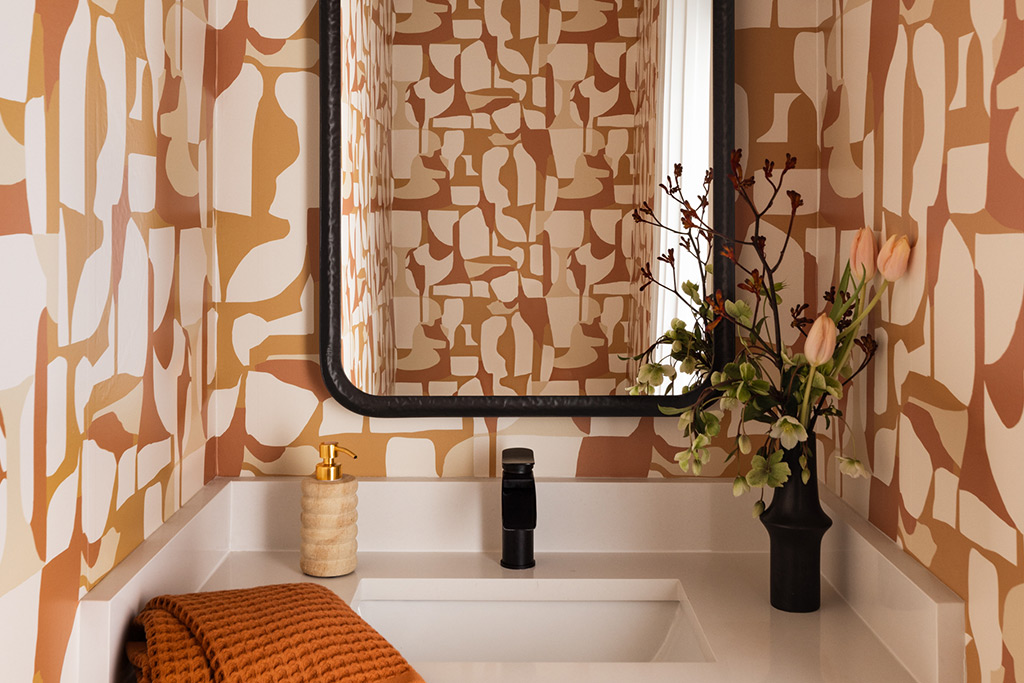
I love using such spaces to introduce something unexpected. When you first enter her house, you see wallpaper with an Afrocentric, tribal-inspired print in a neutral palette, a black console table, and a gold mirror—hints of the home’s color story before you even step into the main space. But in the powder room, I added a rust-colored wallpaper from my collection with Mitchell Black called Abstract Attraction, so the space serves as a bit of a surprise.
The house seems to exude comfort and elegance. How did you balance that?
Thank you. Texture, functionality, and color played a big role. For instance, I wanted Cynthia’s bedroom to be a calming retreat so she could just melt into it at the end of the day. A good example is the lounger in the corner. Some people use their bed as seating; if there’s a chair in a bedroom, it turns into a catch-all for clothes and junk. But I wanted to create an area where she can literally throw up her feet and relax.
Plus, even though the room has a bold terra-cotta color, it doesn’t feel loud. The layered linen blackout drapes, soft ivory bedding, and restrained use of decor help ground the space. Altogether, it feels balanced, feminine, and serene.

Did the results make her feel truly at home?
I wanted to leave space for Cynthia to add on as she grew in her home. The style is maximalist, but it’s still airy so she can change things without disrupting the overall flow and feel. In fact, if the project wasn’t called Nashville Nest, I feel like Breathing Room would have been a nice name.
She loves the results and was an amazing client. It’s the biggest compliment when a client invites you to the housewarming (especially if they didn’t change a thing) or sends you a random text saying, “I’m sitting here in my home, and I’m so happy.” I don’t want my work to feel transactional. My best clients are repeat ones, and some of them even become friends. That’s the type of relationship I hope I create with the work I do.
For more info, visit blessedlittlebungalow.com
It’s interesting how seasons can make certain gathering places more appealing depending on the time of year. For instance, guests may spill onto the patio in the evening warmth of July. Today, though, they likely gather closer to the fireplace while cold winds whip against the windows.
However, you shouldn’t let your climate dictate your get-togethers. The key is to create living spaces that offer comfort any time of year. With just a little adaptability, flexible furnishings, and thoughtful planning, you can host successful gatherings year-round—wherever you live.
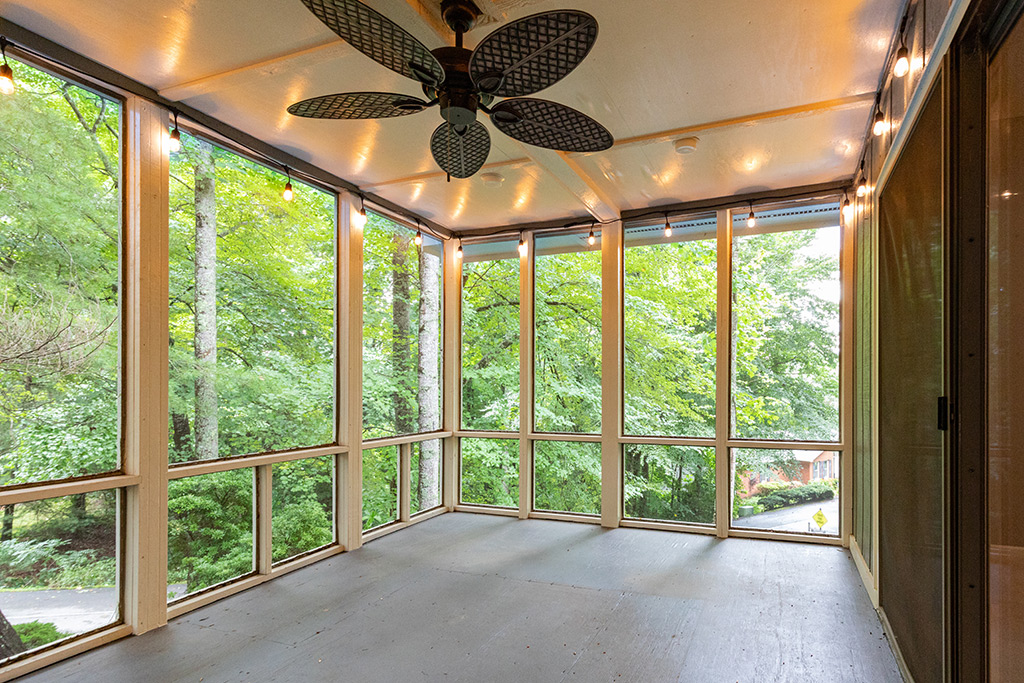
Memorable hosting often relies on what designers call flexible living spaces. In short, rather than building your furniture and decor around one specific season, the idea is to focus on what functions comfortably in any month. In some homes, that might be a covered patio or screened porch. In others, it may take the form of a sunroom, finished basement, or living room that opens to a deck.
Similarly, multipurpose rooms have been increasingly popular in recent years. Though the root cause—more remote work since the COVID-19 pandemic—was born out of necessity, homeowners, designers, and architects alike have embraced the idea. For instance, a converted garage could not only serve as a home office or workout space in everyday life but also double as a game room or guest room.
Regardless of your climate, the goal should be comfort. For people in warm states, that means being strategic with shade and airflow. For instance, adding light-blocking shading can reduce indoor heat gain on south-facing windows. In addition, foster cross-ventilation by opening windows across from each other on a mild day. And remember to be intentional with any ceiling fans—they should turn counterclockwise when the temps are warm, which pushes cool air down.
Colder regions, many of which are now feeling the chill, require a different approach. In these homes, insulation and heat retention take priority. Install energy-efficient windows to retain more warmth and keep guests cozy while also reducing your energy bills. If window replacement isn’t in your budget, make sure that these openings are well sealed to keep hosting areas toasty. Adding a fireplace, outdoor heaters, or wind barriers can make a patio usable deep into the year. And, yes, the aforementioned ceiling fans can help: Running them clockwise can help redistribute warm air.
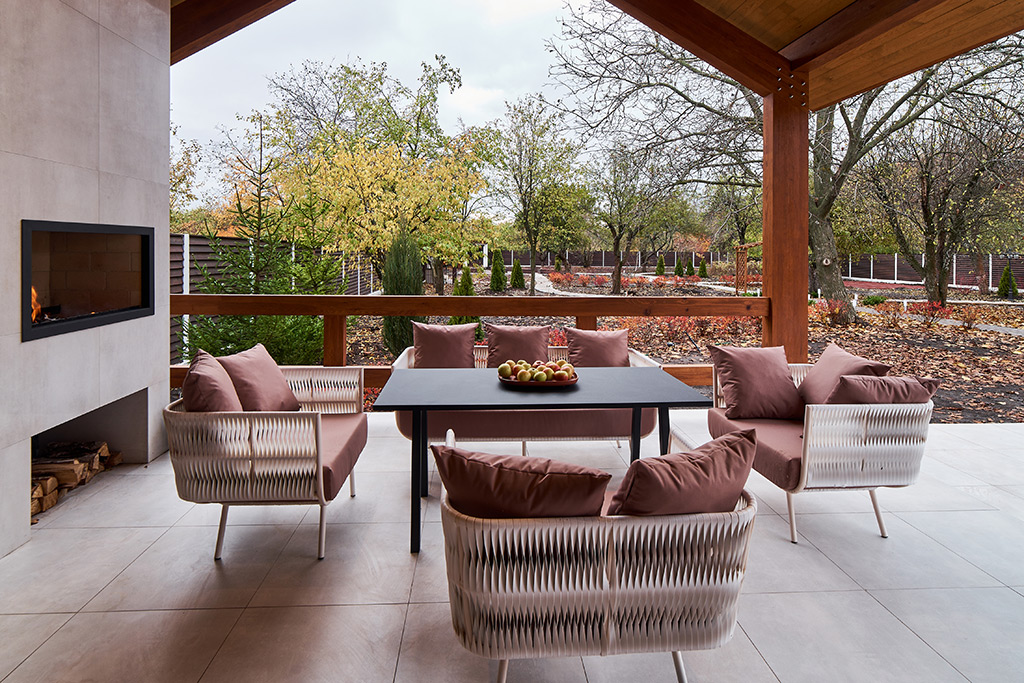
Where you place furniture is almost as important as the pieces you choose. One simple hack is to create more space between seating and tables for larger gatherings, which allows guests to mingle easily. Yet those same pieces can be brought closer together to create cozier conversation areas, such as a quieter dinner. Another good idea: keeping lightweight, stackable chairs stored away in case extra seating is needed. (As a bonus, such furniture allows for easy indoor-outdoor movement.)
Speaking of the outdoors, dedicated alfresco furnishings have also improved significantly, especially since many performance textiles such as solution-dyed acrylics now resist moisture, fading, and mildew while still feeling soft. As a result, cushions can often remain outside longer without constant worry about sudden precipitation, making flexible hosting even more viable.
Even the smallest decor tweaks can make a big difference. Simply swapping pillow covers, rolling out a heavier rug, or adding textured throws for different seasons or holidays can elicit a different feeling for guests while the bones of the space stay the same.
Ambience can also determine whether guests linger in a space, and lighting plays a central role in that experience. In winter, layered interior lighting helps offset the early darkness of the season, whereas string lights and lanterns extend gatherings comfortably into the evening during summer and fall.
Making use of portable objects can also make every season enjoyable. Fans and misting systems can cool a crowded patio in summer, of course. But for this time of year, firepits and outdoor heaters keep guests cozy during cooler nights. Larger upgrades, such as improved doors or built-in heating, can also be impactful.
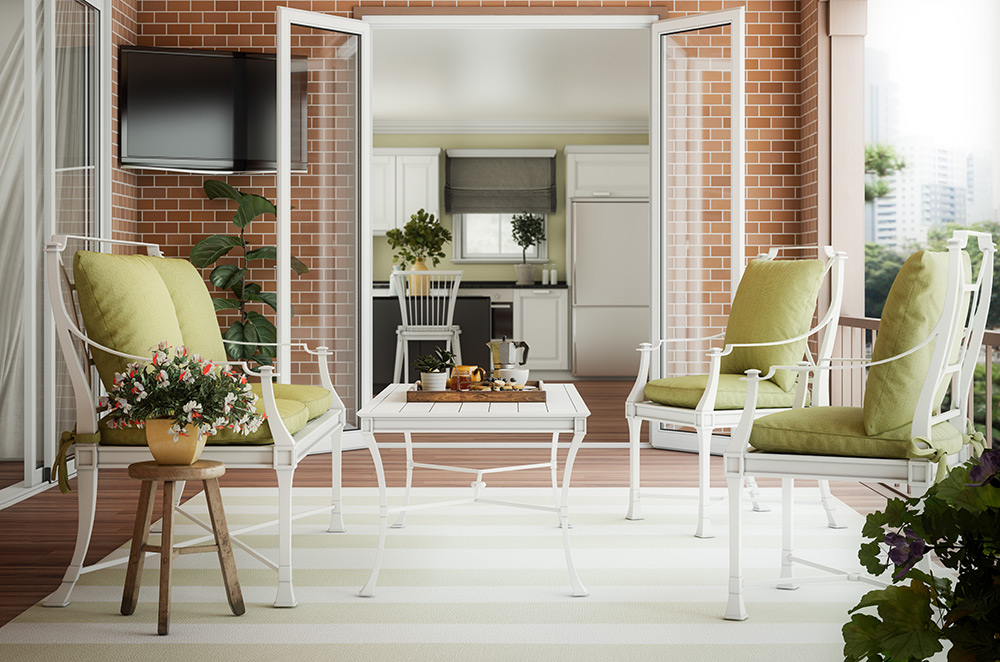
When the weather cooperates, purposeful usage of your spaces can encourage gatherings to move naturally between indoor and outdoor spaces. If conditions shift in the fickle fall season, for example, a flexible plan keeps the evening comfortable. You might serve drinks outside before dinner moves indoors, allowing the flow of your gathering to adjust with the temperature.
Winter entertaining often benefits from flexible hosting as well. Instead of concentrating everyone in a single room (and creating a stifling atmosphere), set up your gathering to encourage guests to circulate between rooms throughout the evening. Come spring and summer, any open-house gatherings you host will feel especially relaxed as guests move between the kitchen, patio, and living room.
Your local climate will always impact your get-togethers, but it rarely determines whether they happen at all. Homes designed with flexibility in mind can better accommodate a wide array of conditions with equal aplomb—allowing the same home to welcome guests comfortably in every season.
Being a great home cook means having a few especially good recipes in your inventory. Perhaps there’s no better place to start than with these two classic recipes from Paris Pâtisserie: 70 Recipes at the Heart of Parisian History—perfect examples of simple food made well. Learn how to make an adored dessert and a beloved bread that are warm, welcome wintertime treats.
You can bake these bite-sized, sugar-topped French treats in no time for friends and family.
It’s easier than you think to make this buttery, flaky pastry for any meal or coffee break.

Recipes from Paris Pâtisserie: 70 Recipes at the Heart of Parisian History by Arnaud Delmontel. Rizzoli International, 2026. Photography by Guillaume Czerw.
With the suffix “ette” suggesting their diminutive size, chouquettes are reputed to have been created by Popelini, a fictional pastry chef under Catherine de Medici in the 16th century. It is said he developed a recipe based on pastry dried over a fire and called popelini, popelin, or poupelin. This “hot pastry” is a forerunner of the choux pastry that Jean Avice (Talleyrand’s pastry chef) perfected, followed by Antonin Carême. Many choux pastry recipes, in addition to chouquettes that are sprinkled with pearl sugar, were created from this classic dough.

Makes about 50 chouquettes
Variation: You can sprinkle the chouquettes with chocolate chips if you prefer.


Although small, crescent-shaped cakes were already being made in 17th century Paris, legend has it that they were introduced to the French court by Marie-Antoinette. In 1839, two Austrians were selling kipferls, croissants made with brioche dough, at their Viennese boulangerie on the rue de Richelieu. In 1905, this king of Viennese pastries had a flaky texture and by 1920 the croissants were being made with butter. At this point, they became a fixture on the breakfast tables of the nobility and the bourgeoisie.

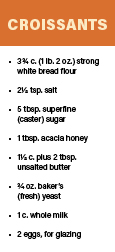
Makes 20 croissants

No matter where in the country you reside, climate whims can be a force to be reckoned with. From extreme heat waves in California to layers of ice chilling New England, there is ample reason to keep weather top of mind.
To protect your property against the elements and preserve your residence as a place of rest and repose, consider making some upgrades like these six to help secure your structure’s integrity.

While most people equate sunshine with ideal weather, its ultraviolet rays can deteriorate your home’s outer layer. To protect your siding, cover it in a coat of UV-resistant paint, which contains special blockers and stabilizers for enhanced defense. Don’t slack on this if you live in a relatively cool region, either. Just as sunscreen is essential to wear in any amount of sunlight, UV-resistant siding paint can potentially save you money on repainting and siding repair over time.

Wrap your home exterior in extra stability thanks to products that not only tolerate tough winds and hail but also offer ultimate leak prevention for enhanced efficiency. Look for hurricane-rated glass, which is designed to endure flying debris, or insulated laminated varieties, both of which are highly rated for their thermal performance as well. While these options may be pricier than standard glass, they’re essential for storm-prone regions. Additionally, they can offer peace of mind and potential utility savings in many places.
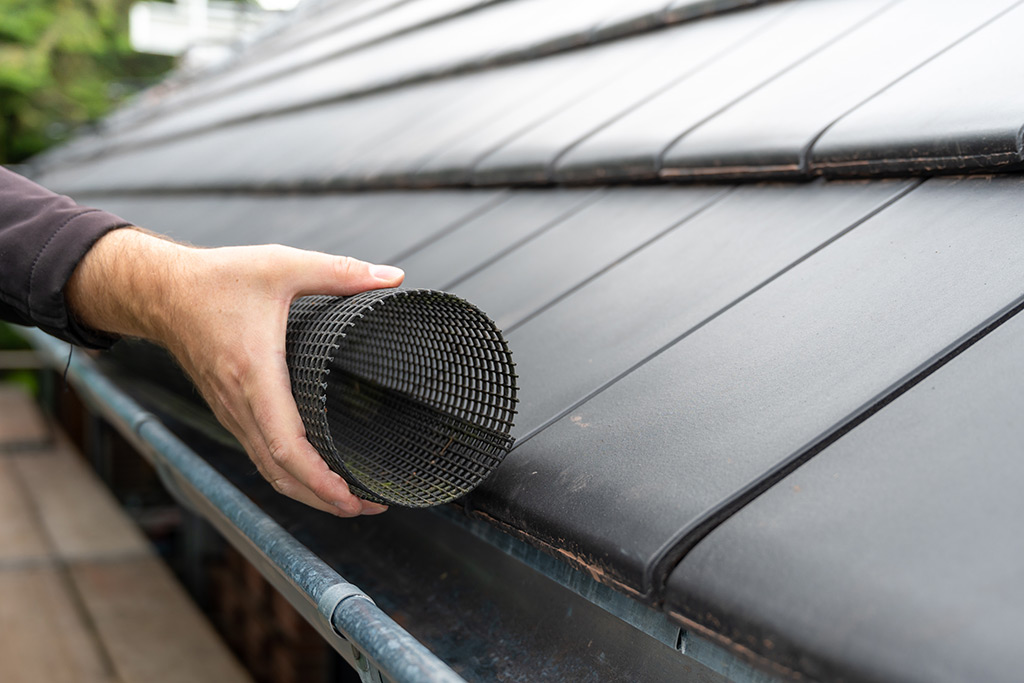
Gutters do more than just capture water from your roof. They also help prevent standing moisture from causing roof rot and direct water away from the soil under your foundation, which may shift and swell when oversaturated, leading to issues like cracking or an unlevel structure. To preserve your gutters’ efficacy and prevent damage, fortify them with guards. These porous layers allow moisture to run through them to your downspouts while also filtering out storm debris like leaves and sticks. For maximum roof and foundation protection, look for a product with dual-layer filtration.

Winter apparel isn’t just for keeping you and your loved ones warm. Jacketing your outdoor faucets against chilly weather, ice, and snow can help prevent frozen pipes, a costly issue that can lead to leaks or even floods. While you have many options and materials to choose from, consider thick foam faucet covers with built-in gaskets, which will remain sturdy while offering a dense coat of padding. Insulated faucet socks, meanwhile, are easier to install and don’t need to sit flush with the wall, making them a more versatile choice. Before you select either product, though, you’ll need to measure your faucets and their spigots and consider your siding type to find just the right fit.

If winter storms motivate you to cozy up around your hearth, you need to safeguard your fireplace and chimney from stray fires, especially as ash and soot build up from frequent use. Thankfully, an arrestor—a metallic mesh screen—can cover your chimney vent to help block stray sparks from escaping then expanding into larger roof fires. (Note that this is not to be confused with a chimney cap, which rests above the opening and helps keep rain and critters out.) While many building codes necessitate arrestors, it’s prudent to install them even where not required.

If you live in a high-wind zone, reinforce your roof against destructive winds using these metal fasteners. Hurricane straps help adhere your roof trusses to the walls, providing ample uplift resistance to better prevent severe damage. While the products are often required for new home builds in some places, they may be absent from others, especially older ones, even though they may be a godsend for roofs in some tornado-prone environments and areas with high coastal drafts. Opt for stainless steel straps for their water-resistant, long-lasting benefits; however, note that they will require installation by a professional roofer.
While there’s no such thing as surefire protection against storms and severe temperatures, these products can help protect your household against the fickle forces of nature and preserve your peace of mind.