The new year brings with it the promise of fresh beginnings and exciting adventures, and this issue of American Lifestyle offers inspiration to help you make the most of your opportunities. Inside, you’ll find an exploration of ice-sculpting artistry, a travel destination perfect for escaping the chill, a pair of recipes to warm you up, and a breakdown of an invaluable weather and plant guide.
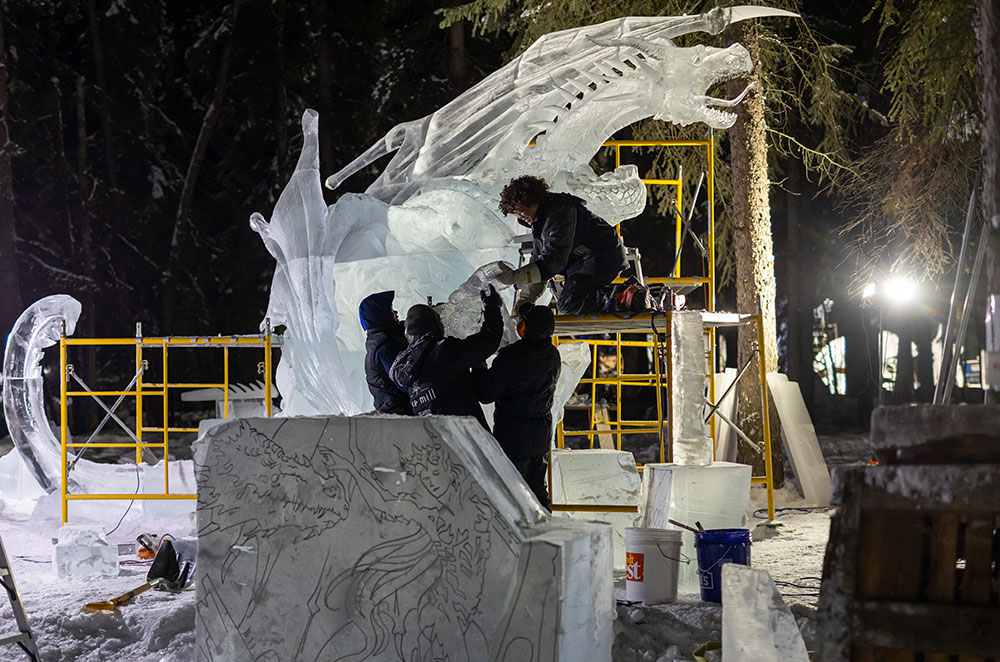
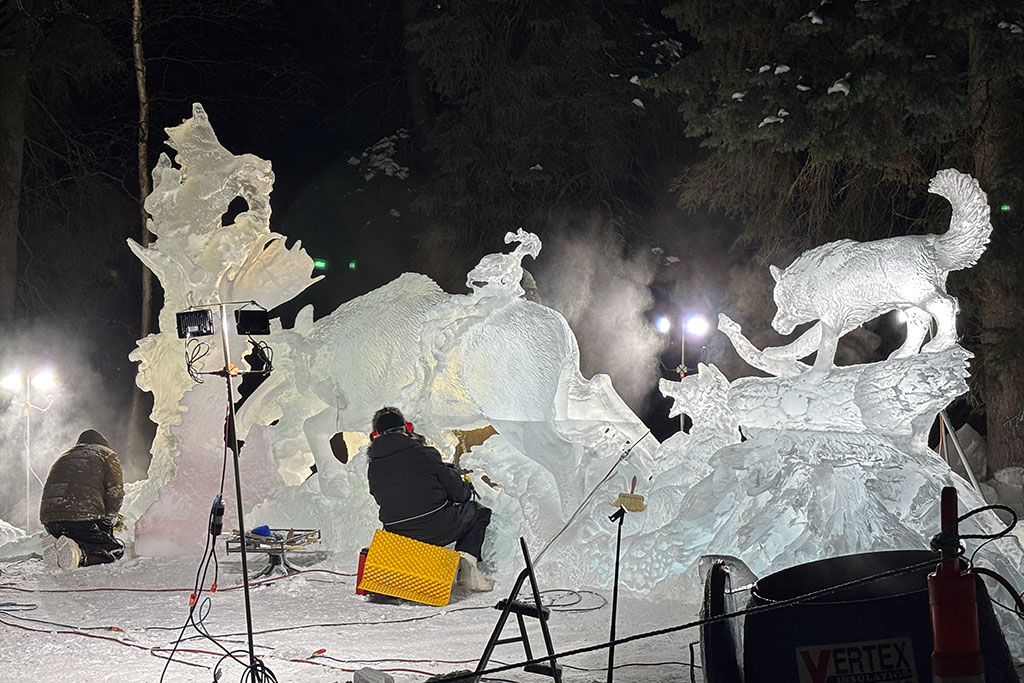
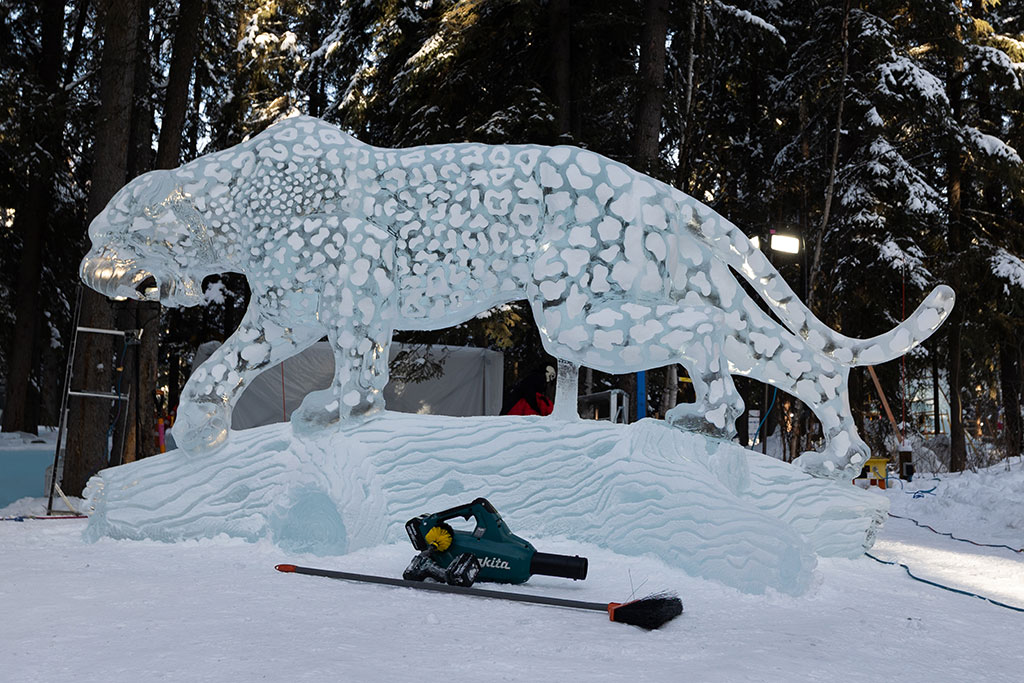
For a dose of winter magic, step into the arena of the World Ice Art Championships in Fairbanks, Alaska. The enclosed article provides a glimpse into this event, which brings together master carvers from across the globe to transform massive blocks of ice into shimmering works of art. It’s an awe-inspiring celebration of talent, dedication, and beauty.
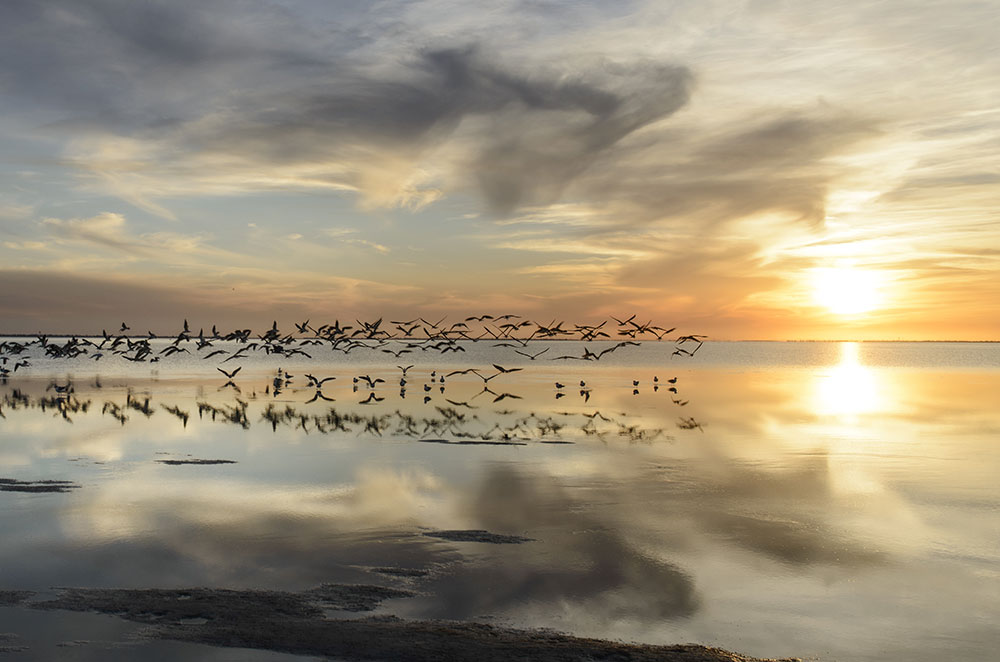
If you're yearning for sun-drenched skies instead of snowflakes, then South Padre Island could be the place for you. Located off the coast of Texas, this gem features thirty-four miles of beach, warm gulf waters, and endless sunshine. Discover everything you need to plan your getaway, including a closer look at its lively activities and peaceful nature reserves.
Of course, nothing says winter quite like the comfort of a cozy meal at home. Consider the selected recipes from A Cookbook for Winter that are designed to warm both the body and soul. First, indulge in seasonal flavors with a roast squash and lentil salad, then enjoy a decadent chocolate dessert that’s sure to sweeten any chilly evening.
Rounding out the issue is a fascinating dive into The Old Farmer’s Almanac. Inside, editor in chief Carol Connare shares the publication’s rich history and enduring relevance, noting how it has adapted in the digital age. From its time-tested gardening advice and weather predictions to its unique blend of folklore, astronomy, and science, there's so much to gain from this valuable resource.
Here’s to a year filled with inspiration! As always, it’s a pleasure to send you this magazine.
Alaska is known for many things, but perhaps the most notable is its majestic glaciers—there are over 125 times more of them there than in the rest of the United States combined. It’s no wonder, then, that the state welcomes carvers from around the country and across the globe to its World Ice Art Championships in Fairbanks every winter. With just one look at the dedication and artistry on display, you’ll understand why the event means so much to so many.
Though humans have been harvesting and molding ice for millennia, the first supposed ice sculpture wasn’t created until 1740, when Russian empress Anna Ivanovna commissioned an entire palace of ice. Around a century later, ice manufacturing for public consumption began, and in 1892, the first modern ice sculpture—a swan used to display a dessert—was credited to French chef Auguste Escoffier.
As for Alaska specifically, ice sculpting has been a sport of sorts for decades. Since 1990, the governing body Ice Alaska has held the World Ice Art Championships in February and early March. Most artists are from America, but through the years, representatives from over fifty countries, from Latvia to Japan to Australia, and all seven continents have entered. In total, over 100 competitors and 45,000 visitors descend on Fairbanks for the occasion, with the former utilizing over 1.2 million pounds of ice to create truly incredible works of art.
Participants can choose from three categories depending on the number of people involved and blocks they use: single-block (one person carving one block), double-block (two and two), and multi-block (a team of four and nine blocks). And they don’t just show up and carve—ample steps must be completed beforehand. They arrive two days before their respective events and check in to the competition by the next afternoon. Afterward, they attend a safety meeting, do their site setup, and submit their designs and sculpture names.
Then it’s game on. Over the course of six days for multi-block teams and three days each for double-block and single-block ones, the carvers craft their masterpieces. Amazingly, they can do their work at any time day or night—a potentially daunting proposition, considering that Fairbanks’s average low during the latter is below zero. They can use as many tools as they like, with the most popular being chain saws, die grinders, heat, chisels, and aluminum plates. In short, they are limited only by their imagination.
Upon conclusion of the competition, the sculptures (some of which weigh over 20,000 pounds) are graded by a three-person judging panel based on ten equally weighted criteria. These include initial impression; originality, creativity, and artistic intent; degree of difficulty; advanced techniques and craftsmanship; utilization of ice; and overall impact. A total purse of around $45,000 is divvied up between the categories, with a first-, second-, and third-place winner named for each. In addition, some carvers dare to be in all three, and the one who earns the highest cumulative score is crowned the Champion of Ice. Ice Alaska holds other events during this time as well, including a novice challenge, family snow-sculpting competition, and youth classic.
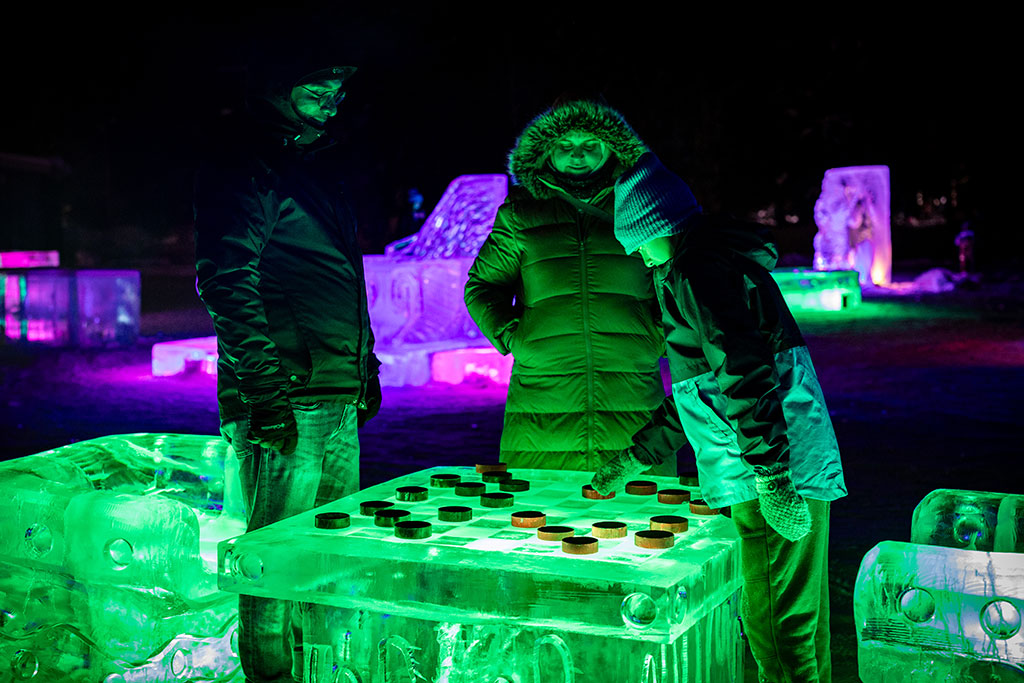
But that’s not all that takes place. The championships are the centerpiece of the six-week Ice Alaska Winter Carnival, which offers even more for people to enjoy. For example, there’s a kids park that features community-created snow sculptures and an outdoor gaming area. Here, guests can do just about everything imaginable on ice, such as going down slides and playing checkers, table tennis, and miniature golf.
The World Ice Art Championships is a labor of love for not only the contenders but also those who help organize it each year. “The heart of this event is the many volunteers, from the board of directors that plans for it year-round to those who prepare the park to the office heroes who do all the unsung work,” says Leigh Anne Hutchison, a member of Ice Alaska’s board of directors and its secretary. “Everyone is important here—it is a truly symbiotic endeavor, with each person doing their job to make it happen.”
In the end, there’s a common denominator found in Fairbanks every winter among all those involved: fostering the wondrous and endless creativity of ice art that’s beloved across the globe. For Hutchison, it doesn’t get any better. “We love this art form, and we want to share it with our community and the world,” she adds. “People can communicate their feelings through this medium even if they don’t all speak the same language. Ice art is a unique combination of love, passion, and hard work—and that resonates with everyone who witnesses it.”
For more info, visit icealaska.com
Ah, the beach—almost nothing says “vacation” like basking under the warm sun and breathing in the sea air to the tune of chattering birds discussing their latest catch. Such imagery may immediately evoke thoughts of oceanside destinations, but it’s also an apt description of South Padre Island, a spectacular tropical paradise off the coast of Texas. Whether you’re looking for a sandy expanse to relax upon or local cuisine like spicy Tex-Mex dishes to indulge in, a jaunt here is sure to linger in your memory for years to come.

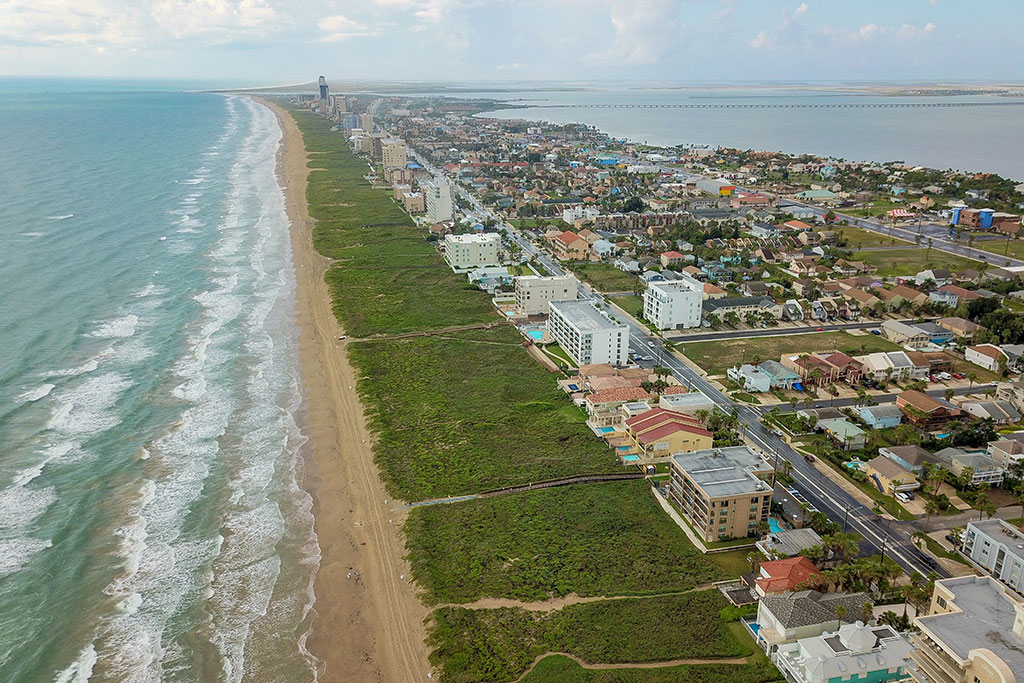
One of the southernmost points of the contiguous United States, South Padre Island is a remarkable town located just a few miles from Mexico’s border. It’s situated on Padre Island, the world’s largest barrier island—a skinny landmass that forms off the mainland when tides collect sands in chains. With thirty-four miles of beaches, perpetually warm waters, and over three hundred days of sunshine, it is the perfect site to trade your winter sweater for a wet suit.
Luckily, despite its location, South Padre Island is accessible by car; simply take SH 100 across the bridge from Port Isabel. If flying in, head to Brownsville South Padre Island International Airport, about twenty-five miles southwest. From there, you can either rent a car or ride an airport shuttle to complete the final leg of your trip.
Before you can crash into the waves with boogie board in hand, you’ll need a comfortable place to drop your luggage. The population is only about 2,000, with most beachgoers being tourists, meaning there are loads of accommodations available. First, though, you’ll need to choose between the two sides of South Padre Island: its populous eastern shore that leads to the gulf and ocean waters beyond or its more casual western shore that faces the Texas mainland, separated by a lush lagoon. In between the two is Padre Boulevard, which forms the town’s backbone and courses much of the island.
Whichever one you go with, you’re sure to find a setting that suits your tastes. Options range from a high-end pampering resort on the beach to more laid-back condos that feel like home away from home on the bay. And while selections beyond the easternmost strip of hotels will require that you walk or drive to beach access, some are conveniently located near grocery stores, restaurants, and quirky surf shops.
This barrier island is lined with a stunning array of beaches, including peaceful stretches and energized spots. If you elect to book a beachfront hotel, your accommodations will likely offer exclusive gateways to the sands just steps from your door. However, everyone else can find a point of entry via any of the whopping twenty-four free public access areas dotted along the island’s length, some of which provide bathrooms, showers, and ample parking for anyone visiting by car.
You’re sure to find satisfaction wherever you go, but a particularly standout spot is Andy Bowie Park on the north end. This breezy beach sits well away from any towering hotels and condos, offering a pristine environment sheltered among coastal wildflowers and grasses. Or if you’d prefer to unwind near the heart of the community, head south to Isla Blanca Park, which is notable for its walking trails, fishing piers, and jetties—elongated walkways through the waves where you can take in panoramic views of the town and sea.
Thrill seekers have a number of additional opportunities to enjoy fun under the invigorating sun. Your headquarters for such escapades is the aptly named South Padre Island Adventure Park, where you can book your choice of horseback riding on the surf, zip-lining, parasailing over the gulf, or fishing. (Fun fact: many local restaurants will cook what you catch if you reel in something edible!)
To continue feeding your adrenaline rush, make your way to Gravity Park, a local favorite that houses a multilevel go-kart track, giant swing ride, Ferris wheel, and miniature golf course. All are suitable for children, and there’s even a rock-climbing wall where they can test their mettle. But you may want to sit them down as you hop on the Rocket, the world’s tallest reverse-bungee contraption of its kind.
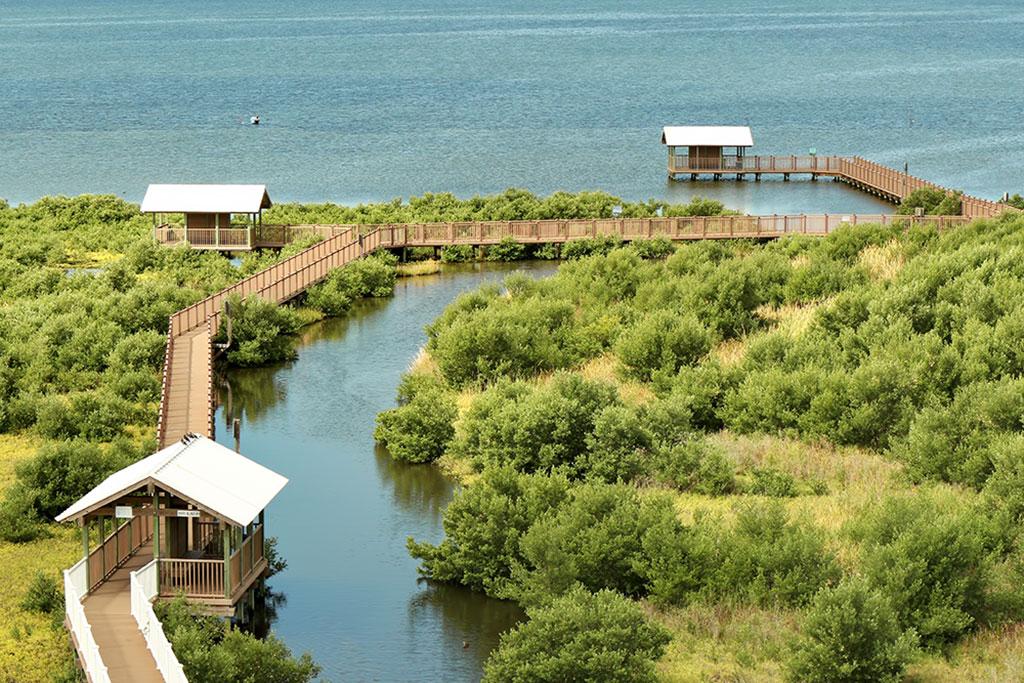
South Padre Island’s outstanding scenery extends well beyond the beach, so don’t miss your chance to truly get in touch with nature. As a major migratory route, it is heaven for bird-watchers, who can witness painted buntings, green herons, seagulls, and other multicolored fliers carousing here. For the best glimpses, stop by the South Padre Island Birding, Nature Center & Alligator Sanctuary. Its long boardwalk through the island’s wetlands offers the perfect chance for sightseeing—and you can even book a tour for assistance spotting some reclusive creatures.
Located just steps away is Sea Turtle Inc., a renowned sanctuary for rehabilitating and protecting this delicate wildlife. It is home to the world’s largest enclosed sea turtle hospital, which has helped preserve and release thousands of hatchlings (and counting). At your visit, you can learn all about these shell-coated inhabitants, watch their feedings, and much more. But they aren’t the only sea life you can view up close. Take a boat expedition, available year-round, to get within touching distance of playful bottlenose and spinner dolphins; also consider pairing your watch with an immersive snorkeling session.
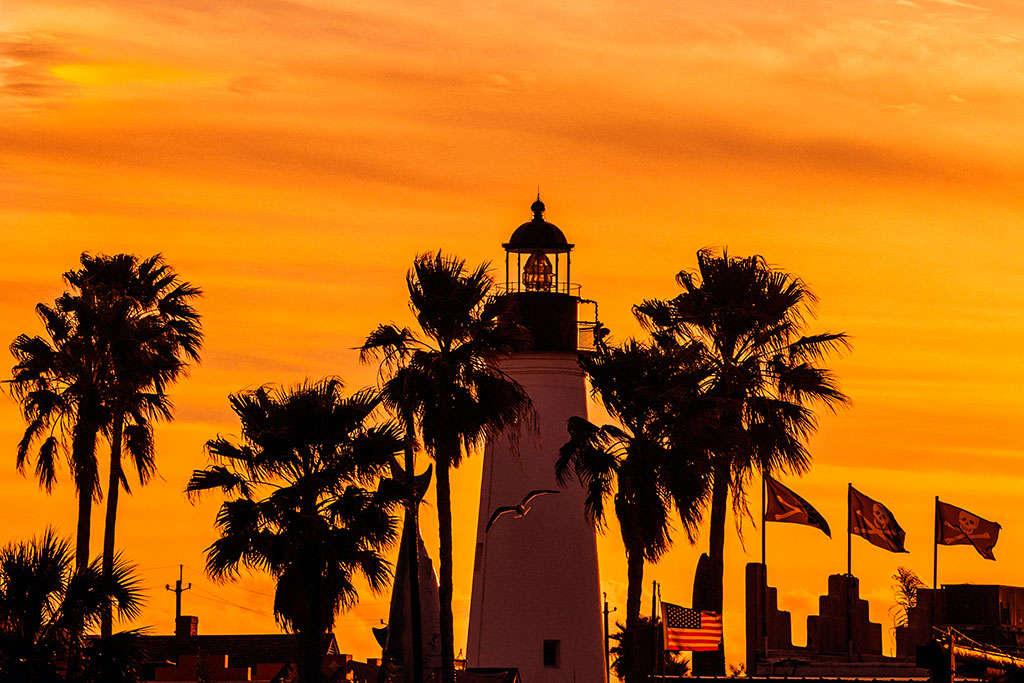
The aforementioned outings only scratch the surface of what’s available to do in and around this destination. For instance, you can make your way across the bay to Port Isabel to board a Black Dragon cruise—a pirate-themed excursion with mock cannon battles and sword duels. If you simply can’t turn off your inquisitive mind when vacationing, the Historical Museum of South Padre Island offers an in-depth journey through time, from prehistoric activity to the island’s role in major American events. And if you visit between late March and late October, you can sit back and enjoy evening fireworks shows on Fridays, Saturdays, and major holidays. Curl up on your hotel balcony or lie back on the sands as they light the sky to soak in South Padre Island’s never-ending spirit of celebration, even after the tropical sun sets.
For more info, go to visitsouthpadreisland.com
During the cool days of January, there’s nothing quite like a dish that warms you from the inside out. These two inviting recipes from A Cookbook for Winter perfectly capture the essence of cozy dining, one offering savory comfort and the other a delightfully sweet indulgence.
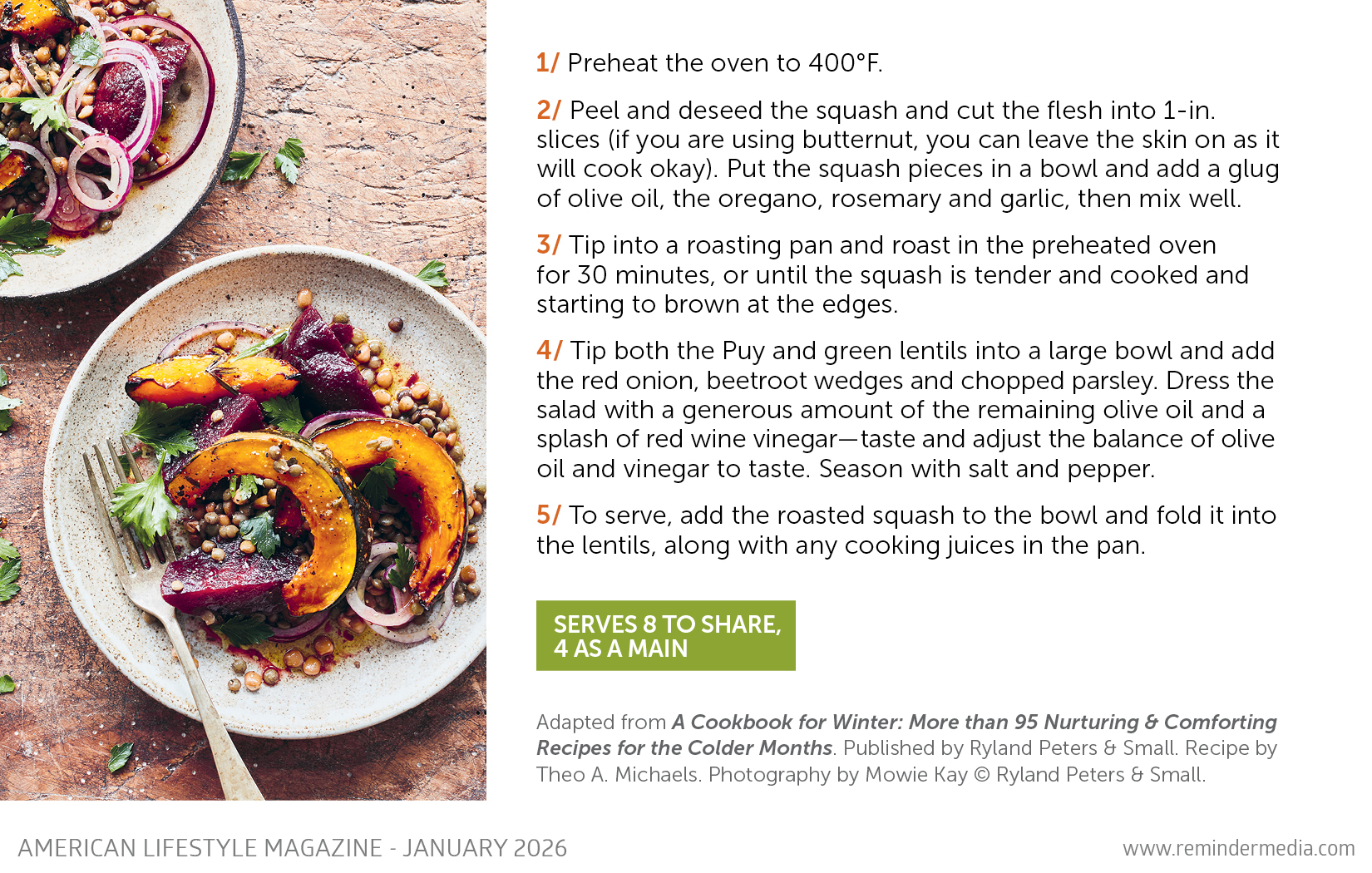
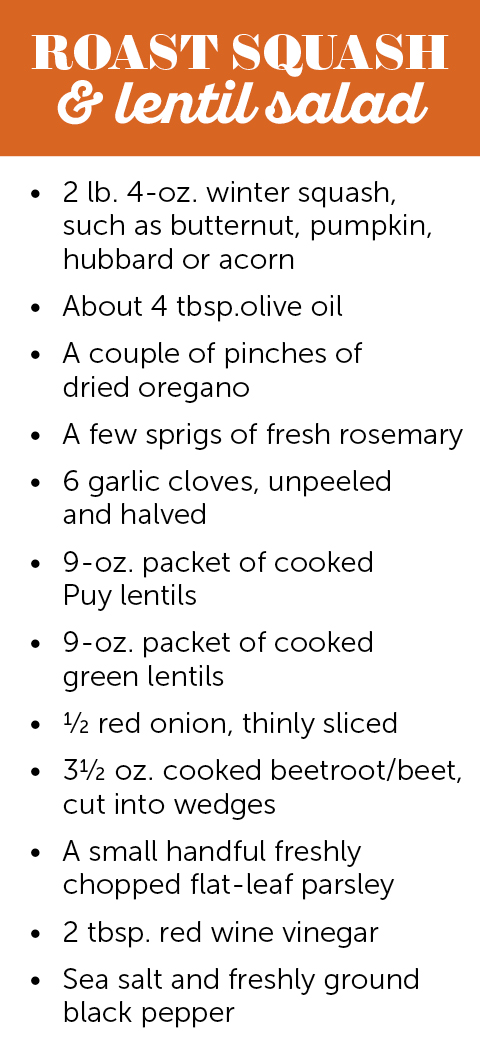
Wonderfully simple yet hearty, this salad combining sweet butternut squash with tender lentils is seasonal fare at its finest.
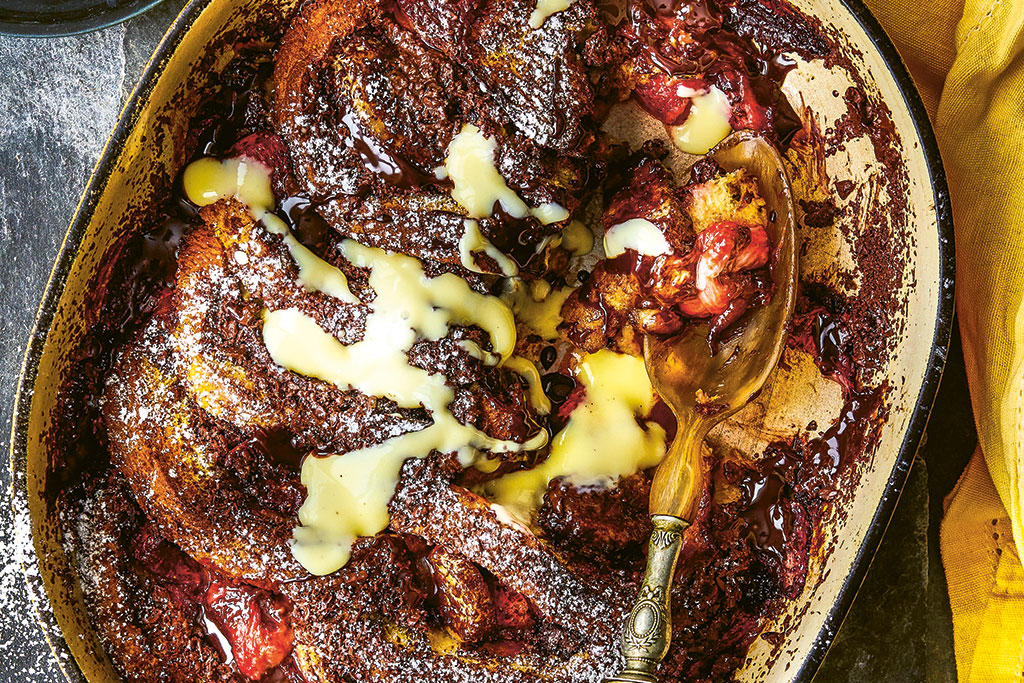
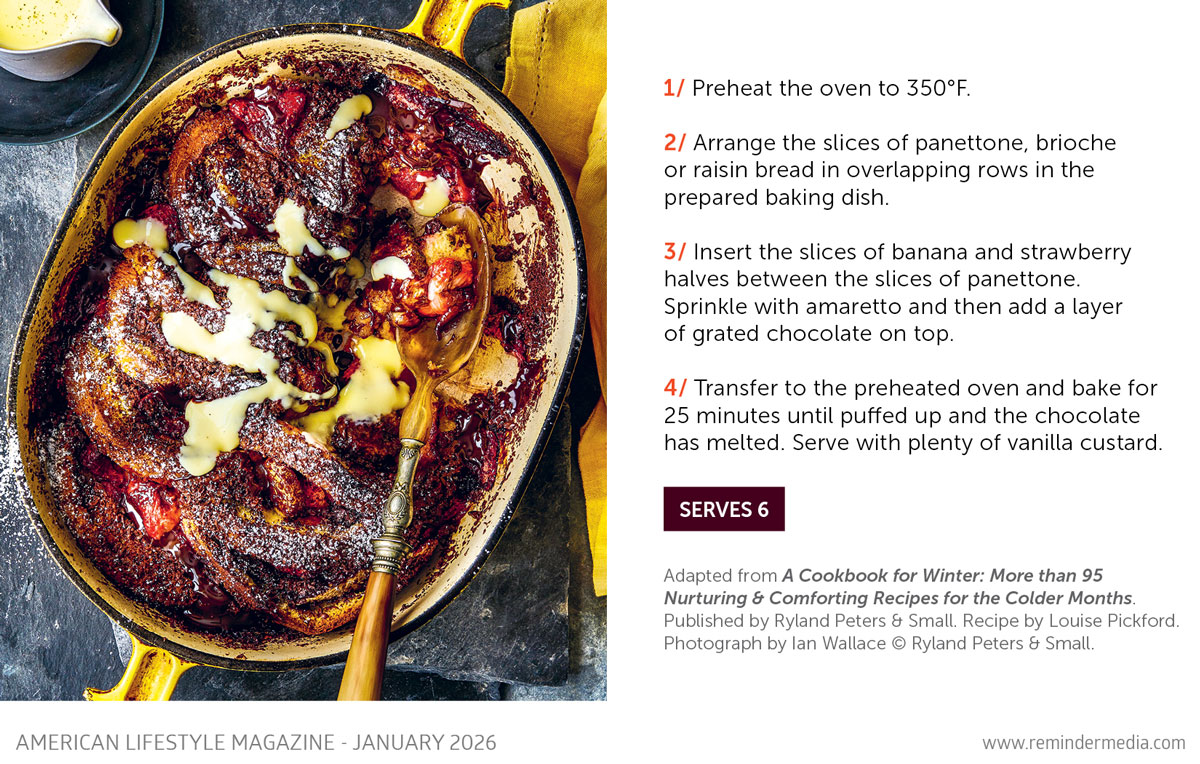
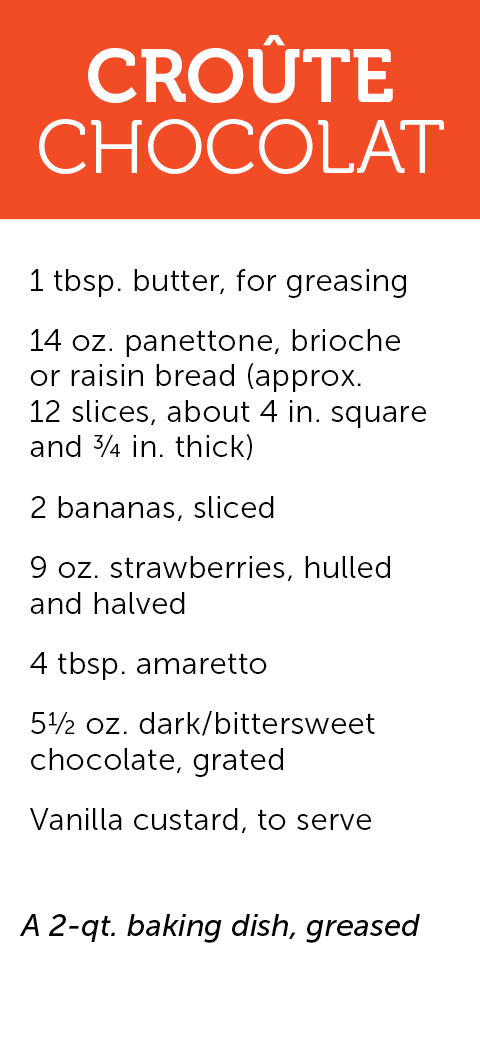
This irresistible dessert combines bread, melted chocolate, and fruit, making it a surefire hit for anyone who tries it.
Adapted from A Cookbook for Winter: More than 95 Nurturing & Comforting Recipes for the Colder Months. Published by Ryland Peters & Small.
recipe by theo a. michaels
photos by mowie kay © ryland peters & small
This is simple to make and such a satisfying dish to eat on colder days. Butternut squash contrasts nicely with the dark and earthy lentils and if you’ve got some feta lurking in the fridge, throw a few crumbs on top to serve.
Serves 8 to share, 4 as a main
recipe by louise pickford
photos by ian wallace © ryland peters & small
Bread and chocolate are an ever popular combination in Switzerland, and this sweet spin on the classic croûte fromage (melted cheese on bread) makes a great finale for any meal. Serve it with lashings of vanilla custard on the side.
Serves 6
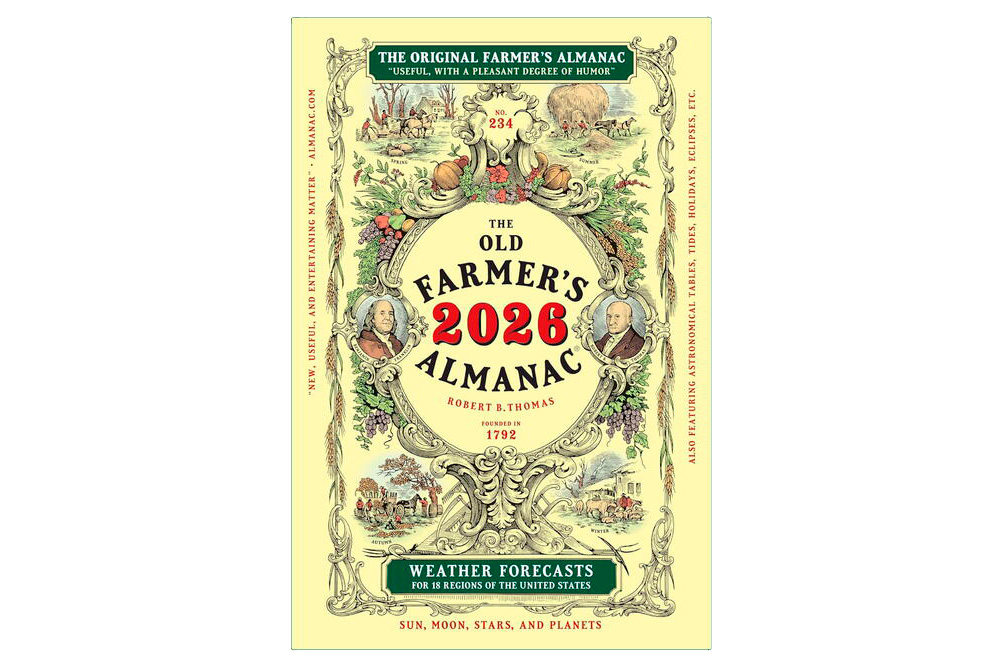
How rainy will spring be? How do you regrow garlic from bulbs? And what exactly is a perennial? Whatever weather and plant-care questions you may have, turn to a resource that has been trusted for centuries: The Old Farmer’s Almanac. Carol Connare, the publication’s editor in chief, digs into its history and how it has stayed fresh to this day.
Tell us about the publication’s background:
The word “almanac” actually means calendar, and that’s exactly what The Old Farmer’s Almanac is. It was first published in 1792, a time when just about everyone was growing their own food. Before us, there were other almanacs—including one of the earliest and most famous, Poor Richard’s Almanack by Benjamin Franklin—that published information about astronomy, farming, and important dates. However, they were each locale specific, limiting their scope.
Our founder, Robert B. Thomas, thought he could do a better job with nationwide weather forecasting and create an almanac that was useful to a wider audience by providing more reliable information. As an astronomer, he was an early adopter of sun science, which entails studying solar magnetic storms and how they affect weather patterns on earth—a practice we still use today. His mission was to create an almanac that was informative with a pleasant degree of humor as well. I think that blend is what made the original Farmer’s Almanac (the “Old” wasn’t added until 1832) a winner. And his mission endures over 230 years later.
What sort of information does The Old Farmer’s Almanac share?
We’ve always made it our mission to share the best information at hand, including long-range weather forecasts for every day of the year, accurate and geographically specific sunrise and moonrise times, and best dates for planting food, flower, and fruit crops. We also offer reference guides on topics like rotating crops, innovations in livestock care, trending houseplants, and natural household solutions. One of the most popular, which we continually update, is for planting by the moon’s phases. Just as the moon influences the tides, it also impacts water we can’t see, specifically moisture in soil. And since water is so vital to growing any crop, you can imagine why farmers would want to understand these subtle shifts.
Who researches and compiles your data?
Primarily, we employ a staff of six editors who research, write, and fact-check. They painstakingly review every page multiple times before we publish because trustworthiness is our backbone. We also have many expert contributors from all over North America, including astronomers Bob Berman and Bethany Cobb. Among other writing, Berman creates our Sky Watch, which is a layman’s guide to what to see in the night sky each month.
On top of that, we have our own team of meteorologists at AccuWeather. We’ve been working with our partners there for almost four decades, creating a unique formula for long-range forecasting that includes meteorology, climatology, and the aforementioned study of the sun’s magnetic storms.
Do you feel that the purpose of this publication has changed as society has?
We certainly publish more products than we used to. Each year, we circulate numerous editions of The Old Farmer’s Almanac in formats ranging from hardcover to large print, create several digital issues, post to social media, and make information freely available on our website—all of which offer unique details. We have lots of interaction with our audience online, putting us very much in touch with their interests. On almanac.com, for instance, I and the other editors answer questions every day from the public. We also respond to reader mail and phone calls and hold reader essay and recipe contests, giving us many opportunities to learn what they like and don’t like.
What would you say to people who think they can just google planting and weather information?
I think technology like AI in search engines has created more competition for us in digital spaces, especially since it is using our and others’ authoritative information to give an aggregated set of “facts” while only secondarily supplying the sources. Even still, we have exclusive features and tools you can’t find anywhere else, all in an entertaining, educational, and simple format. Sure, you can pull up a weather app to read about tomorrow’s temperatures, but we are projecting a year or more ahead using data from hundreds of years of climate patterns. Planning your family reunion six months from now? We can tell you if it’s going to rain or shine on that date with 80 percent average accuracy.
Further, we compile complete planting guides that are convenient to access in one place rather than looking up plant varieties individually. Most importantly, our facts are well researched and verified, so you know they’re reliable. Plus, we cater content to different readers in different formats. Google might give you our trusted almanac.com answer to a quick question such as “How can I stop killing my spider plant?” But in print, you’ll also get wit, wisdom, growing advice, history, and much more, information our readers tell us they highly value.
Are any additional changes on the horizon?
We’re mainly strategizing how to reach more people, including a younger demographic and those who are new to growing. There are certain staple topics consistently featured in our publication, such as beginner gardening and folklore, that are surging among younger readers. But we’re also creating new content to align with gardening trends, like small-space growing on patios and windowsills. Our team is always looking to find out what’s new and useful!
Is there anything else you’d like to share about the almanac?
If you are just starting out in your journey to connect with the natural world, we provide many pathways to help, from guides on the planets’ orbits to info on understanding pollinators. Or if you’re an old pro like me, our general advice comes in handy when you might need a refresher. Anyone can find knowledge in The Old Farmer’s Almanac—whether you’re a beginner or seasoned grower, stargazer, nature lover, or weather watcher—alongside stories that will make you laugh and think more deeply about the world around you.
For more info, visit almanac.com