A productive day doesn’t start when you walk into the office—it begins the moment you wake up. From brushing your teeth to eating a good breakfast, everything you do sets the tone for whatever else may lie ahead. Rush through the morning, and you may find yourself exhausted and overwhelmed before the workday has even commenced. But if you instead craft a structured routine, you can create unstoppable momentum that powers you through your busy schedule. Here are five foundational ideas to serve as a jumping-off point.

From the example set by other top entrepreneurs, you may have internalized that the key to productivity is getting up at 5:00 a.m. However, the exact hour doesn’t necessarily matter. Rather, it’s more important to rise at the same time every day (yes, even on weekends) to help regulate your body’s internal clock, leading to better sleep quality and more morning energy. Simply find a time that best fits your lifestyle, and stick to it as much as possible.
Just keep in mind that it’s vital to still get the recommended minimum seven hours of sleep nightly, so you might need to adjust when you go to bed accordingly. And if you’re trying to wake up earlier, don’t do it suddenly. Instead, change your alarm clock by fifteen minutes each day until you get to your target time.

Though you may be tempted to jump into emails right away, it’s better to take a pause in the morning; this will give your brain time to transition from rest to focus without immediately triggering stress or decision fatigue. To avoid temptation, consider putting your phone in airplane mode or on Do Not Disturb when you go to bed each night and leaving it like that until you’re ready to head to the office, whether it’s at home or in the workplace. Setting such a firm boundary will ensure that you attend to your and your family’s needs, which can, in turn, help keep your mind on business during work hours.

You might be used to drinking only a cup of coffee first thing, but it’s essential to give your body proper care. Start with hydration, drinking a glass of water as soon as you wake up to kick-start your metabolism, and eat a filling breakfast that includes protein and healthy fats to increase your energy and focus. Further, incorporate some form of movement to get your blood flowing and sharpen your mind. This doesn’t mean you have to hit the gym for an hour—other viable options include taking a brisk walk around the block, spending ten minutes stretching, and completing an online yoga session. Whatever you prefer, such activity can improve your brain function, stabilize your mood, and give you the pep you need to conquer your day.

Exposure to sunlight and fresh air in the morning does more than wake you up—it helps boost your alertness, soothe your mind, and improve your sleep. Stepping outside for even a few minutes signals to your brain that it’s time to start the day, which can increase your energy and enhance your focus. Try combining this habit with another one, like sipping your coffee on the porch, walking your dog, or doing a quick stretch on your patio. And if you can’t get outdoors, open your blinds wide and sit near the window to soak up as much sunlight as possible. The simple act of savoring bright rays can set a positive tone for the hours ahead.

Toward the end of your morning routine, shift your attention to your goals for the workday, giving yourself a few minutes to determine your top priorities. Write down three must-do items, block time on your calendar for focused work, and establish realistic expectations for what you want to accomplish. This proactive planning will help keep you organized and give you a clear road map so you can move through your day with greater purpose and confidence.
You don’t need a complicated routine to achieve a successful morning. With just a few intentional habits done consistently, you can set yourself up to win the day and propel your business forward.
TAKE ACTION:
Add one new habit to your morning routine this week, and see how it helps improve your energy and focus.
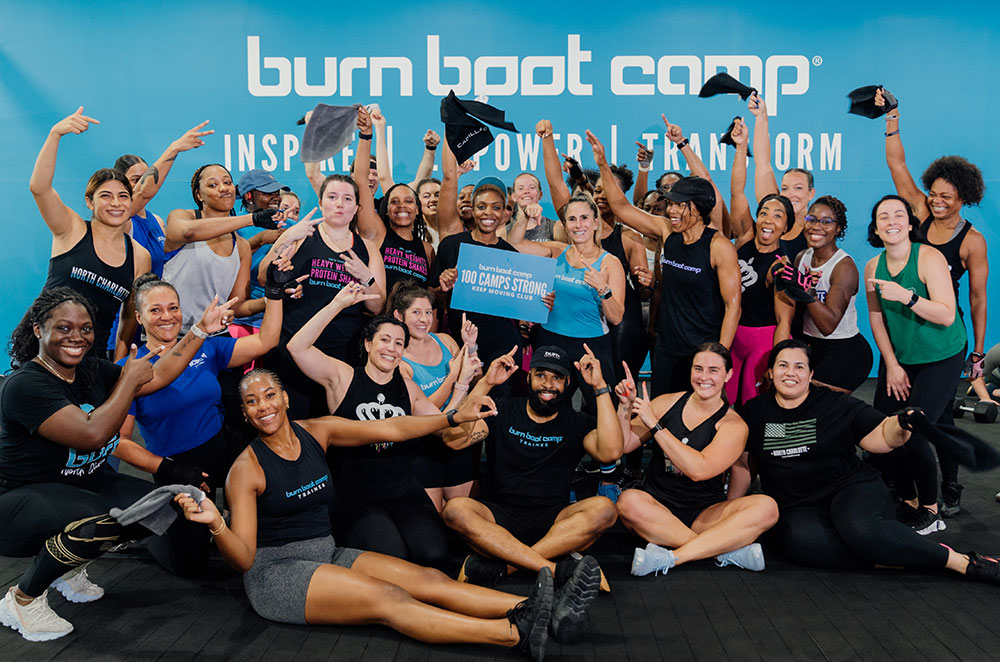
Sally Andersen, lead trainer and operations manager for Burn Boot Camp’s Exton, Pennsylvania location, discusses how she and her company make their fitness option unique in an oversaturated industry.

How did you get involved with Burn Boot Camp?
I was always active as a child, but during my early adulthood, I drank heavily for several years. Fitness changed everything for me at age twenty-five. I felt like I had a new lease on life: my mental health, energy, and mood were all better. I decided to quit my job as a magazine editor and become a full-time personal trainer.
However, I soon learned that everyone saw training as a hobby, something to do after hours. Because of this, I had to piece together work at several different places, which was exhausting. That’s when I discovered Burn. It offers personal training in a group setting, allowing you to sustain yourself financially as well as build a career. I immediately bought into this philosophy and opened the Exton gym in 2018. I’ve never looked back.

Fitness is a highly competitive space. How is Burn different from the rest?
I knew it was as soon as I read its business plan, which stood out from other gyms I was familiar with at the time. They all focused on how to get people to pay them money yet not work out; otherwise, they’d have to repair or replace their equipment. I just don’t believe in that. I also don’t believe that people need to be on a treadmill every single day—at Burn, we have nothing that plugs in. In fact, one of the first signs at my location said, “We don’t use machines. We are machines.”
Burn also encourages me to tailor my training, turning it into the perfect workout for my people in my spaces, whereas other companies insist that their trainers never change their core offerings. For example, another nearby location I help manage in West Chester has around only 3,200 square feet, but in Exton, I’ve got over 5,000. So I can lead a lot of big, fun activities like relay races and full laps around the building here.
In addition, some gyms do the same warm-up every single day, which is not only boring but also not what your body needs. In contrast, Burn’s forty-five-minute workouts have a five-minute warm-up, a five-minute explanation of what we’ll be doing, the bulk of the workout (about thirty minutes), and a strong finish in the last five minutes. It’s a different experience each time you come in.
Who is your target demographic?
Our cofounder, Devan Kline, truly believes in supporting moms, so he originally created Burn to give them that support as well as time to focus on themselves. Plus, when he first founded it, women in general weren’t lifting—if they went to the gym, it was to hit a treadmill or elliptical. It was extremely difficult to get them to do something else, and there were very few female personal trainers.
So our audience gradually became any women, and around 2020, we started shifting toward being more coed because headquarters found that some men were also intimidated by being in a traditional gym; I was actually one of the first of our trainers to go full coed. We get a lot of families training too. In fact, we have free child-watch services for parents, allowing them forty-five minutes to themselves.

It is notoriously difficult for gyms to retain clients. How do you go about it?
It’s all about building community. We give high fives to each person before the workout’s over—valuing the importance of human touch and recognizing that some people might not normally get it. During that time, I also remind everyone that they’re important to me and to each other. Today, for example, I teamed up three people for the warm-up when they arrived, telling them to make sure they knew everyone’s names so they could cheer each other on. All this breaks down barriers, creating a positive workout experience that keeps people coming back. In turn, it encourages referrals, which have been golden for us.
How important are merchandise sales to your business?
One of the first things trainers are taught here is that they’ve got to sell like retail since it increases their revenue per member, our key metric. An approach I like to use is focusing on boosting members’ nutrition. As an example, they’re often not getting enough protein, so I can push our protein powders or bars—products I’d recommend anyway since headquarters is very hands-on with development and nothing is outsourced to a third party.
Most of our members are also all in on the brand and wear our merch everywhere. That’s free marketing. And if someone refers us, I’ll give them Burn Bucks to spend on retail. Whether they’re bringing more people in, wearing our clothing, or buying nutrition products, it’s revenue coming back to my business.

What’s your biggest business expense? The equipment?
Actually, it’s my rent. That is one of the downsides of a franchise model. Burns must be located in a high-traffic area, and the space has to be approved. As a result, my rent is $13,000 a month, whereas a local competitor’s is less than half that—so she can get away with having only a hundred members to break even, but I need over two hundred. On the flip side, we’ve got walk-by traffic and even a kids’ consignment shop next door because of location intentionality.
How seasonal is your business? Is post-New Year’s a big time for you?
A weird thing recently happened in the industry. Ten years ago, you couldn’t get into any gym in January because they were all overflowing with people coming in with their resolutions. But as social media got bigger, people online started discouraging that, which actually killed the New Year’s surge. Everybody began avoiding the gym in January; it was like a ghost town. We pushed hard to get those clients to come back, but we’ve only started seeing them return over the past few years. Today, attendance is pretty steady, though we definitely have little peaks at back-to-school time and New Year’s and a small drop-off during summer.

What is the greatest joy of running a Burn location?
My passion lies in supporting those who are afraid of the gym. Don’t get me wrong: I’ll help athletes get a great workout, but I prefer the person who has to ask, “What’s a dumbbell?” I understand that most people aren’t going to lift alone for hours and enjoy it, so I have to find ways to make it fun. Some days I’ll do obstacle courses, get out Hula-Hoops, or have them climb monkey bars. Basically, I make it like structured recess because I believe in the power of play for mental health—it brings such happiness. Operating a Burn is a lot of work, but I love watching our members enjoy life and get healthier.
For more info, visit burnbootcamp.com
As an entrepreneur, one word you never like to hear is stagnation, whether it relates to your revenue or the overall economy. However, you also don’t want it creeping into your organization at an individual level, negatively impacting your team members’ growth and your own. Discover the rewards your company can reap when you prioritize professional development at all levels.

The simple answer is that the more skilled your workforce is, the better they will be at their jobs. But it’s not just about your bottom line—it’s also about retention. Here are just a few of the many statistics that illustrate how employees today regard their growth:
So even if you don’t always hear about your employees’ desired progression, it’s still there and they will seek it out, either at your company or at another willing to provide it. The best way to avoid the latter is to proactively encourage your people to better themselves; doing so will increase the odds that they’ll stay because you’re showing that you want them to grow. In addition, you’ll create a culture that’s more collaborative rather than being top heavy, allowing them to feel as if they have a voice and aren’t merely cogs in the machine. (As a bonus, it will also make your organization more attractive to potential hires.)
Just as important, it strengthens connections within your team and increases overall morale. As a result, individuals will be more engaged with your mission—if not outright enthusiastic about your business itself—instead of seeing their work as just a job. And, as every leader knows, a motivated workforce is a productive one eager to meet, or even exceed, the company’s goals.

There are numerous simple, cost-effective ways to go about professional development. But you know your organization best, so it’s your job to determine what will work for those within it. Some common examples include specialized training, workshops, and courses (in-house, outside your walls, or online)—tools that are easy to incorporate into your employees’ day-to-day schedules without affecting their work. Offering full or partial tuition reimbursement for getting a higher degree, such as an MBA, is another great option.
Even the seemingly simplest gestures can have a big impact. For instance, discuss with each team member their career goals along with their path for growth within your company, and provide the equipment and tech they need to achieve them. And if an enthusiastic worker is eager to manage someday, consider mentoring or coaching them to help them get there.
Finally, don’t hesitate to seek solutions straight from the horse’s mouth. Send out surveys or questionnaires to everyone, asking what tools they need to be even better at their jobs, and remember to tap the already-developed skills and know-how of your seasoned workers. Encouraging them to disseminate their expertise to their peers creates a win-win situation since it will help these veterans feel respected and valued, increase the learning of your other employees (at no additional cost!), and naturally build team bonds.

This concept shouldn’t be relegated to lower levels, though—you and your C-suite must participate in it as well. Leading by doing is often more impactful than leading by saying, after all, so if you haven’t made it a habit already, prioritize soaking in all the knowledge you can. Start by reading any of the countless books available from wildly successful business leaders, which will sharpen your mindset and reveal key strategies. Also, attend conferences a few times a year to learn about the latest trends in your industry as well as what’s ahead. Ultimately, no matter how you choose to do so, showing yourself to be a continual learner will make it clear to everyone that you not only take personal growth seriously but also are on the journey with them, striving together toward becoming the best company possible.
Sir Isaac Newton famously concluded that a body at rest will stay at rest unless an external force makes it move. Be that force in your organization by implementing and encouraging professional development, ensuring that everyone within it keeps moving in one direction—onward and upward.
TAKE ACTION:
Brainstorm ideas for how you can include professional development as part of your business’s mission.
When it’s time to roll up your sleeves, clear your throat, and pick up the phone to attempt a sale, you may feel a touch of dread about the potentially tense conversation coming your way. After all, cold-calling a lead can be hit or miss depending on the person’s openness to hearing your pitch, leaving you wondering if it’s worth the effort at all. However, this classic conversion technique is unmistakably profitable across various industries. For instance, revered sales coach Rana Kordahi reports on The 360 Blog from Salesforce that a majority of her clients originated from cold calls—a whopping 70 percent, in fact.
Clearly, these avenues are brimming with potential, and elevating your approach to them could mean securing more deals. Whether you’re a tried-and-true sales professional eager to polish your conversion skills or a supervisor tasked with navigating your team toward superior closing rates, consider these tactics that may just make cold calling a more lucrative strategy for your business.

Timing is essential to reaching a prospect—even the best pitch at the wrong moment can kill an otherwise surefire deal. To start off on the right foot, schedule cold-call sessions for Wednesdays and Thursdays, either between 11:00 a.m. and noon or toward the end of the workday. According to Indeed, these are the most effective periods for performing outreach because people are less likely to be buried in a task. In case your industry is an outlier, track times and dates for all touchpoints in your CRM; should you pinpoint successful trends, adjust your schedule accordingly.
It’s important that you make the individual comfortable within seconds. Rather than misleading them about who you are or why you’re calling, respond to a “Hello?” by clearly stating your name, the organization you represent, and what industry you belong to. Taking this step can help a total stranger build at least a rough image of who you are, planting an early seed of trust that you can nurture later in the conversation.

Poll your loved ones, and they may tell you that their natural reaction to answering a sales call is promptly hanging up. To avoid suffering this fate as the one dialing the phone, you need a compelling hook. Incorporate your value proposition into your introduction, such as by saying “I’m calling from X Business Solutions, a software company that can cut the time needed for your bookkeeping tasks in half.” Immediately outlining how your respondent stands to benefit from doing business with you could intrigue them into giving you room to continue.
In order to make a comprehensive pitch, you need to create an environment in which cold leads actually feel invested in speaking to you. Your hook will go a long way toward achieving this, but you should also apply a little congeniality. “The more back-and-forth interaction you have with your prospect, the greater your chances for success,” writes Science of People founder Vanessa Van Edwards. Ask a few questions about their lifestyle and work, and offer personal takes based on how they reply (e.g., “Oh, you’re at lunch? Those breaks go by too fast, don’t they?”).
Essentially, your goal is to make them feel as if they’re conversing with a familiar contact. However, don’t dally too long; find the best opportunity to quickly relate the discussion back to your pitch (e.g., “I know your workday is limited, so let’s talk more about our software. It can help your team save hours per day on paperwork.”).

Once you feel like you have captured a prospect’s interest and taken control of the conversation, ramp up the pressure. With a little healthy insistence, you can create a situation in which they hesitate to say no to you. There are multiple ways to execute this. For example, try gradually increasing the speed of your speech. You may find that they subconsciously match your pace, getting swept up in the excitement despite any potential concerns. (Just remember to remain professional. There’s a difference between pitching your product well and bullying people into giving you their money.)
Then, when the moment seems right, confidently request the close. But don’t merely suggest it—say it outright. A question like “Can I go ahead and take your credit card details?” makes it clear to both parties that a sale is occurring. If they need some reassurance right before they take the leap, refer back to your value proposition as a reminder of what they can gain from making a payment now.
It’s very likely that you’ll hear a refusal at some point during your conversation. After all, a 2024 Focus Digital survey across various industries indicates that it took respondents anywhere from 41 to 134 cold calls to close a single sale.
The key, though, is that they did close. Simply put, an “I’m not interested” doesn’t mean you should give up. The prospect has the power to terminate the call whenever they’d like, so don’t take this action for them. Continually seek and address their objections as long as they stay on the line with you, including common concerns like a limited budget, a perceived lack of relevance to their lifestyle, and little knowledge of your product. Stay courteous and calm as you counteract each one, relying on your best customer service skills. Do so well enough, and you just might transform a no into a yes.

While you should enter each conversation confidently expecting a sale, not every call will be successful. Ultimately, you can’t control who’s on the other end, their present state of mind, or how much time they have to converse with you; even a perfectly compatible prospect may be having a stressful moment when you contact them. In the event that they won’t budge, thank them for their time, request that they keep you in mind for their future needs, and then move on to the next number on your list—there just might be a deal there waiting to be snatched up.
TAKE ACTION:
Discuss these strategies with your sales team to heat up their cold-calling potential.