With Memorial Day weekend on the horizon, it’s a great time to focus on reviving your outdoor space, especially your patio or deck if you plan on doing any entertaining. While other parts of your home’s exterior also need attention, this spot is where you and your guests will gather. And between ice, snow, rain, and whatever else Mother Nature might have hit it with, it’s likely a little worse for wear. Give it some extra care now to ensure that it’s prepped and ready for you to enjoy in the months ahead.
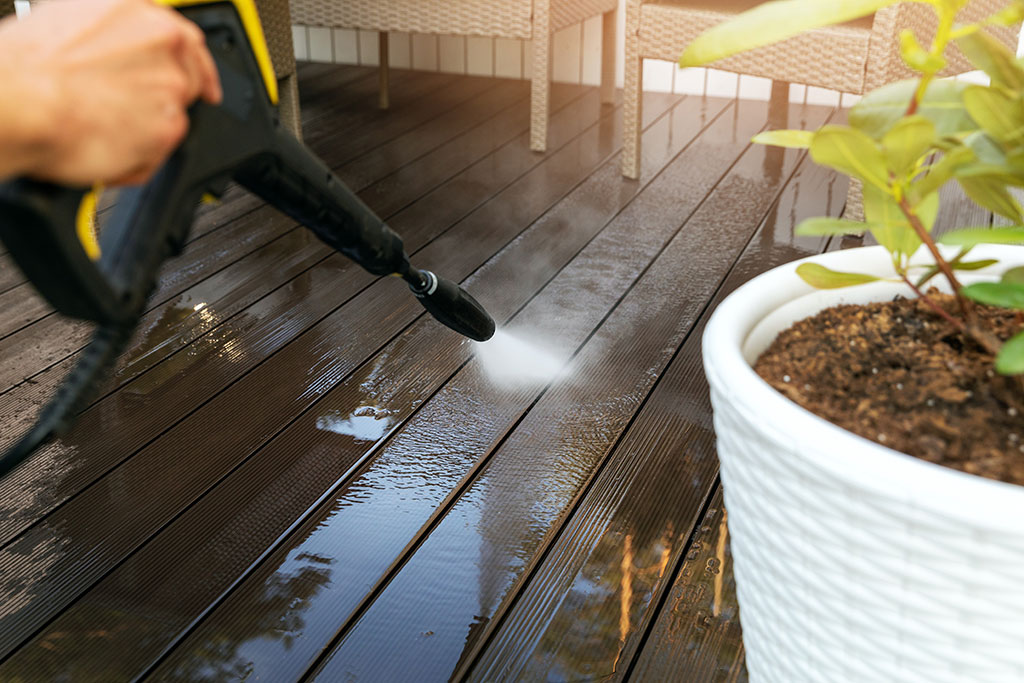
Whether your outdoor structure is made of wood, concrete, or composite, it’s important to give it a cleaning at least once a year. Mildew, algae, and grime may build up quicker than you think, especially in shaded or damp areas. Left unchecked, they can make the surface slippery and dull and even lead to decay. This season, dedicate a day to clearing off any furniture, sweeping away debris, and rinsing the surface with a hose. If it needs a deeper clean, use a pressure washer on a low setting or a scrub brush and a solution made for your specific material. Just be careful not to damage wood grain or paver grout, for example, by using the wrong setting or cleaner.

While you’re cleaning, keep an eye out for damage that may have developed over the last year. In a wooden deck, look for loose nails or screws, warped boards, and signs of rot. To ensure safety, fix any wobbly railings or unstable steps immediately. For a patio, check for cracks or chips that could worsen if left alone. Small ones can often be repaired with a ready-mix concrete patch, while larger issues may require professional attention.

Most patios and decks need refinishing every one to three years, though the exact timing depends on factors like sun exposure, weather, and foot traffic. To see if yours is due, try this quick test: Sprinkle a little water on the surface. If the liquid soaks in instead of beading up, it’s time for a fresh treatment. Before you start, choose several dry days before and after application, and check your product’s instructions for recommended cure times. In some cases, you may also need to sand or brighten any wood before moving forward.
After prepping the surface and repairing any damage, apply a high-quality sealant or stain designed for your specific material. This will not only revive the color but also protect against moisture, UV damage, cracking, warping, and splintering, helping it look great and last longer.

Once the area is clean and secure, take a few extra steps to turn it into a structure you’ll actually want to spend time on. The best setup depends on how you plan to use it. If outdoor entertaining is on the agenda, think about adding a dedicated prep station for grilling or serving. Prefer quiet mornings with a cup of coffee? A bistro table and a pair of comfortable chairs might be all you need. Adding planters, string lights, or an outdoor rug can also go a long way in making the ambience feel welcoming.
No matter how you choose to style it, giving your outdoor space the attention it deserves now will pay off all season long. Proper maintenance and thoughtful planning can transform your deck or patio into a favorite gathering place and help you enjoy every minute of the warmer months ahead.
The crack of a bat. The thump of a ball hitting a mitt. The chimes of an organ playing “Take Me Out to the Ball Game.” All are unmistakable sounds of America’s pastime and surefire signs that the boys of summer have returned. One place that celebrates baseball’s long history like no other is Cooperstown, New York—home to the National Baseball Hall of Fame and Museum. Step outside the diamond, though, and you’ll get a fuller picture of how much there is to see and do in and around this sports mecca, especially during warm-weather months.
You may rightfully wonder: How did this small village (population of around 1,800) in the foothills of the Catskill Mountains in central New York become baseball’s epicenter rather than, say, opening it two hundred miles south in the Bronx (home of the New York Yankees)?
Officially, it is where baseball began, though perhaps the achievement should come with an asterisk. Abner Doubleday has largely been credited with creating the athletic endeavor and its rules, reportedly in 1839 while he was teaching in the village. What people don’t know is that Doubleday was a decorated Civil War general—a fact that complicated matters since research later discovered that he was training at West Point during that time. The truth is that baseball has unknown origins but was likely a variation of an old English game.
Nonetheless, the legend stuck and became its own lore, including when the National Baseball Hall of Fame and Museum was founded one century later; it has since become Cooperstown’s top attraction. Instead of being a field of dreams, though, this is a gallery of dreams for any sports fan, having welcomed over eighteen million visitors to its 60,000-square-foot facility. While here, you can gaze at more than a dozen exhibits curated from the museum’s collections of more than 250,000 images and 40,000-plus artifacts. The Hall of Fame houses everything from the curious (such as some members’ weapons and uniforms worn by the tallest and shortest players in MLB history) to the cherished (e.g., Babe Ruth’s bat and Hank Aaron’s uniform from when they set legendary home run records; the glove Willie Mays used to make “The Catch”). In addition, you can lose yourself for hours in its library and research center, which is home to three million baseball documents—it’s so frequented, in fact, that reservations are highly recommended.
As memorable as going through this museum is, it certainly isn’t the only baseball-related fun you can have here. For instance, add a couple of ballparks to your itinerary: Doubleday Field and Damaschke Field. The former is a legendary 9,800-seat stadium dubbed “the birthplace of baseball” and hosts community events throughout the year, while the latter is a century-old structure that’s the home of the Oneonta Outlaws collegiate summer league team. You can even take a personalized piece of your trip home with you by getting your own custom-made wooden bat created at Cooperstown Bat Company.

The Hall of Fame may be the most popular institution here, but it’s not the only cultural attraction to take in—there’s a reason Cooperstown is known as “the Village of Museums,” after all. For example, art lovers should visit the Fenimore Art Museum, which is set in a 1933 neo-Georgian mansion. From folk art to photography, there’s plenty to take in, including paintings from Georgia O’Keeffe and John Singer Sargent. Unsurprisingly, there’s also a collection dedicated to the village’s namesakes, the Coopers, most notably portraits of its founder, businessman William Cooper, and one of his sons, author James Fenimore Cooper, whose literary works include The Last of the Mohicans.
After your visit, be sure to stop at Fenimore Farm and Country Village, a living history museum located just across the street on Route 80. As the name indicates, it’s a throwback—to nineteenth-century living, specifically—where you can greet animals, peruse century-old barns and houses, see exhibitions, patronize its general store, and more. Is music more your muse? The Glimmerglass Festival will enrapture you, with the seasonal opera company staging new productions in its intimate 918-seat theater from mid-July through mid-August.
Speaking of Glimmerglass, the music venue is not the only hot spot with the name in this region. Glimmerglass State Park, an amazing outdoor oasis located about eight miles northeast of the village, is one of many places of interest around Otsego Lake, a nine-mile body of water that Cooperstown sits at the bottom of. At this green space, you can enjoy not only hiking, walking, and biking picturesque trails (replete with wildlife like muskrats) but also relaxing on the bucolic lake’s beach.
In addition, you can literally walk through history at this park. For example, it’s only a short stroll from its main road to Hyde Hall Covered Bridge, the oldest existing bridge of its kind in America. And be sure to take a tour of nearby Hyde Hall, a nineteenth-century mansion-turned-national historic landmark and museum. It not only stands as a dazzling example of neoclassical architecture but also offers amazing views of both Otsego Lake and the area’s rolling hills.
Not to be undone, Cooperstown itself has its own enthralling park, Lakefront Park, a charming area featuring picnic areas, relaxing views of the southern tip of the lake, and its own marina. Perhaps best of all, it’s located right near the Baseball Hall of Fame.

Here’s another little-known fact about Cooperstown: it was once the hops-growing capital of the country. In honor of its past, the village created the Cooperstown Beverage Trail, a thirty-seven-mile, eight-stop itinerary featuring the area’s top beverages—from Belgian beer to wine to hard cider—that includes Fly Creek Cider Mill & Orchard, voted the best cidery in America by USA Today readers.
There’s plenty of family-friendly food, drink, and frivolity to be had as well. A good example is Barnyard Swing mini golf, which not only offers putting adventures but also a dairy bar, gem mining, stuffed animal building, and a digital gaming wall with dozens of options. The village’s self-titled farmers market near Doubleday Field provides the best of fresh food on Saturdays year-round and on Tuesdays during summer. Finally, consider a pair of unique ways to get around while seeing the many sights: trolley and Rail Explorer. Cooperstown Village Trolley drops you off right at many of the major attractions in the village; in contrast, the Explorer is a fascinating self-propelled buggy on tracks that you ride on a miles-long loop (such as along the Susquehanna River) while soaking in various views.
If you really want to knock a spring or summer vacation destination out of the park, you can’t beat a visit to Cooperstown, New York. You may travel here for baseball, but you’ll stay for the village’s unbeatable rustic charm.
For more info, visit thisiscooperstown.com
Imagine spending your summer days by the coast, waking up to the scent of vanilla and cinnamon drifting through the kitchen and then winding down with pasta tossed in the season’s freshest farmstand finds. It’s the kind of effortless rhythm that inspired Ricky Lauren’s The Hamptons: Food, Family, and History cookbook, which helps bring the beauty and flavor of coastal living right to your table.
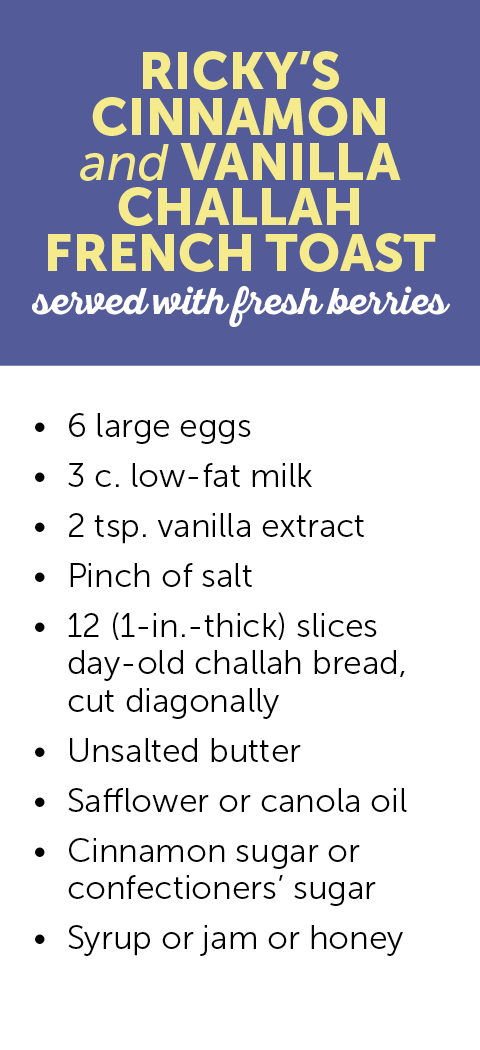
This golden, custardy breakfast classic is crisp on the edges, soft in the center, and made to be shared with loved ones.
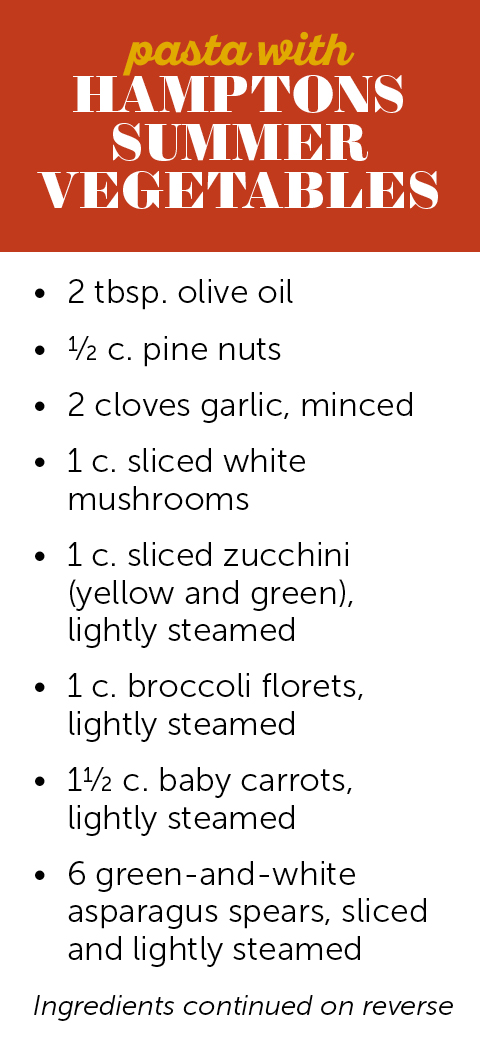
A light, colorful dish filled with tender summer produce and fresh basil—this entrée has fresh flavor in every bite.

Recipes excerpted from The Hamptons: Food, Family, and History by Ricky Lauren. Rizzoli New York, 2025. Photography by Anne Stratton.
I love to start my family’s day at the beach with this lovely, warm, delicious breakfast. If I can sell seconds to them, then I am the Queen of the Kitchen! I use an egg challah. I cut it 1 inch thick and as much on the diagonal as possible to get the largest slices. French toast is best when it’s crispy and golden on the outside and rich and custardy on the inside. The trick is for the bread to soak up the maximum egg mixture without falling apart in the pan. I love the smell of the vanilla and the sound of bread frying. Top it with cinnamon or powdered sugar, then berries on top for the visual effect after plating. You may also present this with grape jelly, strawberry preserves, a “honey bear,” and a bowl of cinnamon sugar on the side.

Serves 6


For this recipe I always use the freshest, youngest, and most tender vegetables that are available in season. Growing them yourself or picking them up at a local farmstand is the most fun. I enjoy gathering baby peas bursting from their pods, sweet baby carrots, ripe tomatoes, and young, proud green-and-white asparagus spears, to which I add tender zucchini. I always marvel at the colorful selection in my basket. Generally, I combine the fresh vegetables with a delicate pasta like angel hair (capellini). Everybody likes this light spring/summer meal. Add a simple salad and a crusty breadstick and enjoy!

Serves 4 to 6

Few events on earth capture global intrigue quite like the FIFA World Cup. Every four years, billions of eyes turn to this single tournament where national pride, athletic prowess, and captivating victories converge on the field. More than just a sporting spectacle, the World Cup is a cultural phenomenon that spotlights diverse nations and even acts as a powerful economic catalyst. As the United States prepares to cohost the games in 2026, there has never been a more suitable time to learn about the competition’s rich history and immense significance—after all, it’s never too late to become a “football” fan.

Though the sport of soccer has ancient origins, the tradition of the World Cup began in 1930. Jules Rimet, the first president of FIFA (Fédération Internationale de Football Association), is chiefly responsible for organizing the inaugural competition in Uruguay, where thirteen nations participated. Though these were relatively humble beginnings, it was a testament to the burgeoning international appeal of the sport, and tournaments have continued thereafter (only being interrupted by World War II). The World Cup eventually grew into one of the premier international sporting events still ongoing today.

This year, the FIFA Men’s World Cup is set for a monumental expansion, growing from thirty-two to forty-eight participating teams. It will be cohosted by three North American nations: Canada, Mexico, and the United States. For the US, it’s a highly anticipated return, having previously hosted the men’s game in 1994. (We also hosted the Women’s World Cup in 1999.) The eleven American cities selected to welcome the world are Atlanta, Boston, Dallas, East Rutherford, New Jersey (representing New York and New Jersey), Houston, Kansas City, Los Angeles, Miami, Philadelphia, San Francisco (including the surrounding Bay Area), and Seattle. The first match on American soil will take place in the LA area on June 12, and, appropriately, Philadelphia will host a showdown game on July 4.
The decision to bring the World Cup back to the United States reflects the significant growth of soccer’s popularity here, largely fueled by Major League Soccer (MLS), which was founded the year after America last hosted the FIFA Men’s World Cup. The 2026 games stand to ignite more homegrown passion for the sport and could inspire a new generation of domestic players and fans.

What makes the World Cup an event that is so meaningful, even off the field? First, it has a significant economic impact on host nations and cities. The influx of teams, staff, media, and millions of fans generates substantial tourism, hospitality, transportation, and retail revenue everywhere matches are hosted. Host cities often undertake massive infrastructure upgrades, from new stadiums to improved public transportation, which creates jobs and boosts local businesses, creating a ripple effect throughout the economy. Their visibility on this global stage can also lead to increased foreign investment and a surge in future tourism. And even fans who cannot leave their home country to attend a match purchase merchandise locally and participate in other economically boosting activities to savor the sport.
Perhaps most of all, though, the World Cup showcases not only immensely talented athletes but also a shared passion for the world’s most popular sport. For a month, crowds from diverse backgrounds will roar after tour-de-force goals and seas of different national colors will transcend language barriers. After all, the World Cup is more than just a game; it’s a celebration of human spirit, competition, and connections that defy borders.
For schedule and ticket info, visit fifa.com