For a few weeks each spring, Washington, DC, becomes as much a celebration as it is a capital. And at the heart of it all is the annual rebirth of the city’s world-renowned cherry blossom trees.
The National Cherry Blossom Festival fills both visitors and Washingtonians with a sense of occasion—families arriving with excitement, longtime residents returning out of habit, and a steady stream of visitors moving between events that stretch well beyond the water’s edge. The pink flowers remain the draw, of course—the festival simply amps up the experience.
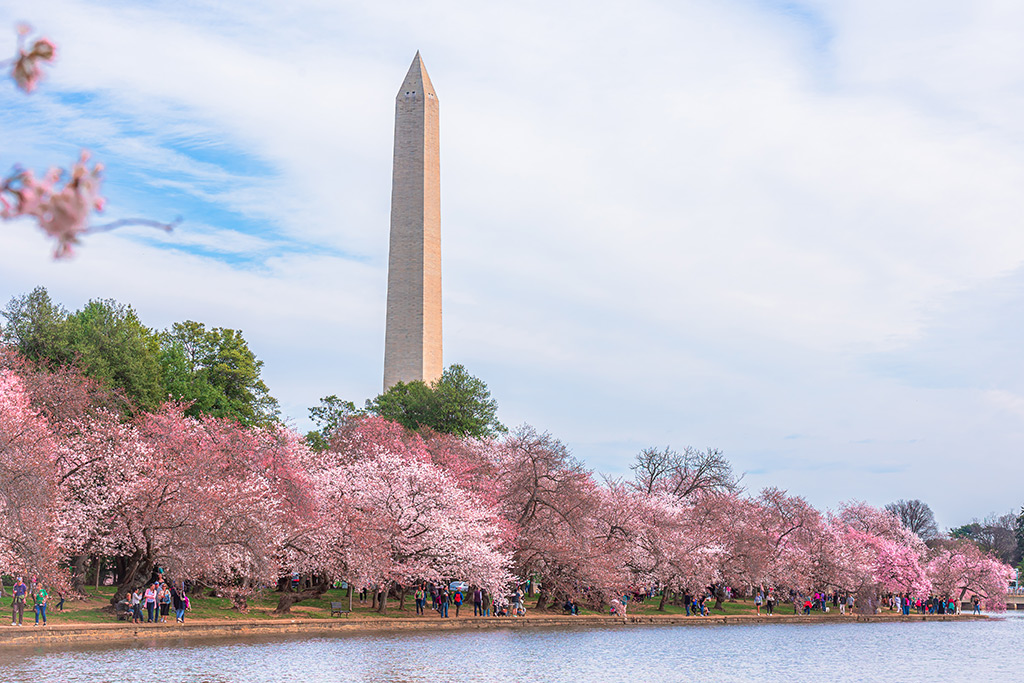
The cherry blossoms’ roots trace back more than a century. In 1912, Tokyo’s mayor, Yukio Ozaki, sent thousands of cherry trees to Washington as a gesture of goodwill. First Lady Helen Taft and the Viscountess Chinda, wife of the Japanese ambassador, planted the initial pair along the Tidal Basin, an area that, like the trees, has grown in prominence. This origin makes the blossoms more than merely ornamental; they mark the enduring relationship between two nations.
The National Cherry Blossom Festival continues the tradition. In 2027, it is scheduled from March 20 through April 11. Peak bloom typically falls within that general window, though exact timing depends on the weather. You can follow the festival’s official Bloom Watch page for the most up-to-date information.

Washington’s weather can be fickle in spring, so time your trip intentionally. In early March, you can walk the Basin a bit more freely and admire the shift in color from bud to blossom. Come April, the petals begin to fall like snow and the ground softens with drifts of pale pink, creating a different yet also appealing experience. Also, early mornings are generally the least crowded time of day.
Be particularly strategic about where you settle on the grounds. Once you arrive at the festival, entering from less crowded access points to the south may be helpful.
There are three primary places to see the blooms, all National Park Service locations: around the aforementioned Tidal Basin in West Potomac Park, in East Potomac Park, and near the Washington Monument. The Basin remains the center point, offering scenic views near the Jefferson and MLK Jr. memorials; meanwhile, East Potomac Park offers longer stretches of trees. Want to get away from the bustling crowd? Even a short walk away from the main blossom loop will allow you to enjoy the trees at a more peaceful pace.

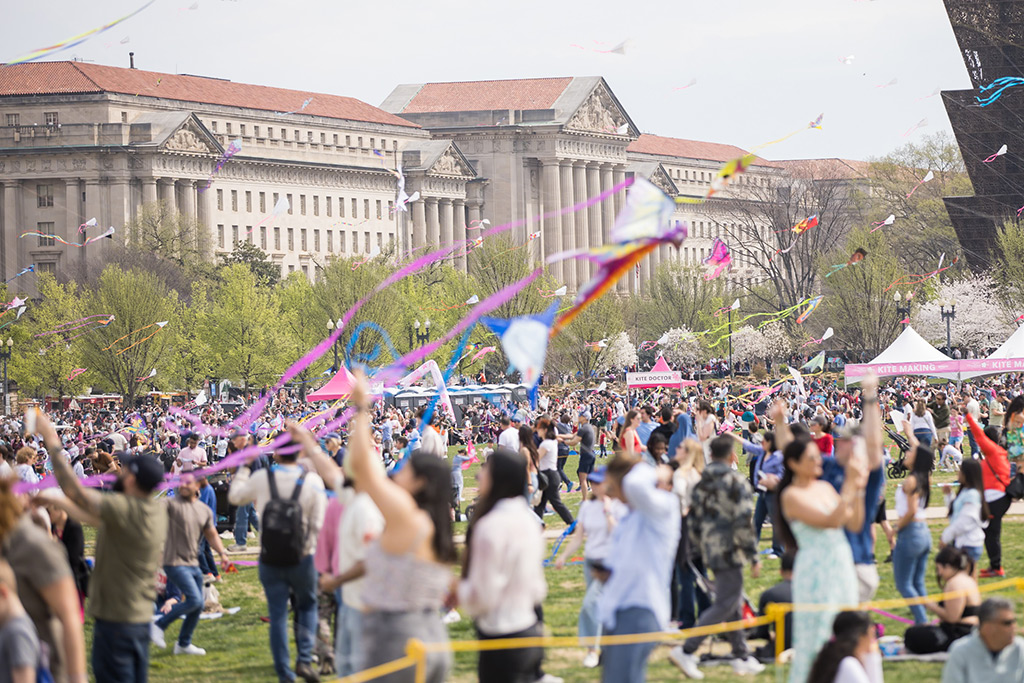
The festival calendar is centered on several established events. The Opening Ceremony, presented in partnership with Japan, features traditional and contemporary performances. The Blossom Kite Festival, held on the National Mall, includes demonstrations and competitions as the sky fills with colors. Petalpalooza at the Capitol Riverfront Navy Yard offers an evening program with live music, interactive art installations, and a fireworks display over the water. But the true hub of the festival is the National Cherry Blossom Festival Parade, in which blossom-themed participants celebrate along Constitution Avenue.
If you come for the blossoms, you need to stay to see the city. Washington is replete with must-see museums, monuments, and memorials (many of which are free) as well as a plethora of performing arts venues and retail stores to take in. And the offerings don’t stop at the city, either; the metropolitan area extends into Virginia and Maryland for even more adventure.
DC is notorious for its heavy traffic, and that amps up even more during the festival, making street parking nearly impossible. Your best bet is to plan your road trip or try an alternate form of transportation. If driving, you can reserve parking at one of several city parking garages through the festival’s website. For a more leisurely commute, consider traveling here via train or bus. Options even include e-scooters, e-bikes, and the Cherry Blossom Water Taxi!
Both the National Cherry Blossom Festival and the blossoms themselves offer visitors a sense of wonder and continuity. The trees come to life like clockwork in early spring, enticing pilgrimages from all over the country and the world to witness their splendor. Washington, DC, enhances the celebration with kites, music, gatherings, and more. When you attend, you might just find that beauty, renewal, and history have rarely been so perfectly arranged, with a pink bow courtesy of Mother Nature herself.
For more info, visit nationalcherryblossomfestival.org
As American side hustles became a cultural norm in recent years, hobbies were increasingly viewed as potential income streams. Knitting shops filled with entrepreneurs testing product lines. Home kitchens doubled as microbakeries. Even someone with a weekend watercolor habit wondered: “Could this be worth something more?”
Such a question is now losing some of its shine. Many people are returning to activities that exist for one reason only—the pleasure of doing them. Pottery studios report full classes with no talk of selling pieces. Birding groups are expanding, filled with people content to stand still and watch nature take flight. Gardeners enjoy the time spent cultivating as much as what it can yield. These choices share a common theme: They are for pure enjoyment, not auditions for a second career.

Part of the appeal is control. A hobby that remains personal, not monetized, has clear boundaries. It begins and ends on one’s own terms, freed from customer expectations, algorithmic pressure, and any sense of obligation. There is freedom in being an amateur again—free to be inconsistent, to improve slowly, and to lose interest and return without consequence.
When you have this mindset, you also tend to reflect on what matters to you. As you’ve probably experienced, time spent on something “unproductive” usually requires justification. (Time is money, after all.)
However, this notably changed for many people because of COVID, when they were forced to rediscover the simple pleasure of just doing. Today, you can gleefully spend an hour shaping clay or walking a wooded path with binoculars, knowing that you’ll get a distinct kind of return on investment: one where your mood is steadied and your mind occupied in a way that exhilarates rather than exhausts. Research has long suggested that restorative leisure improves well-being, and more and more, our lived experiences are validating that it does.
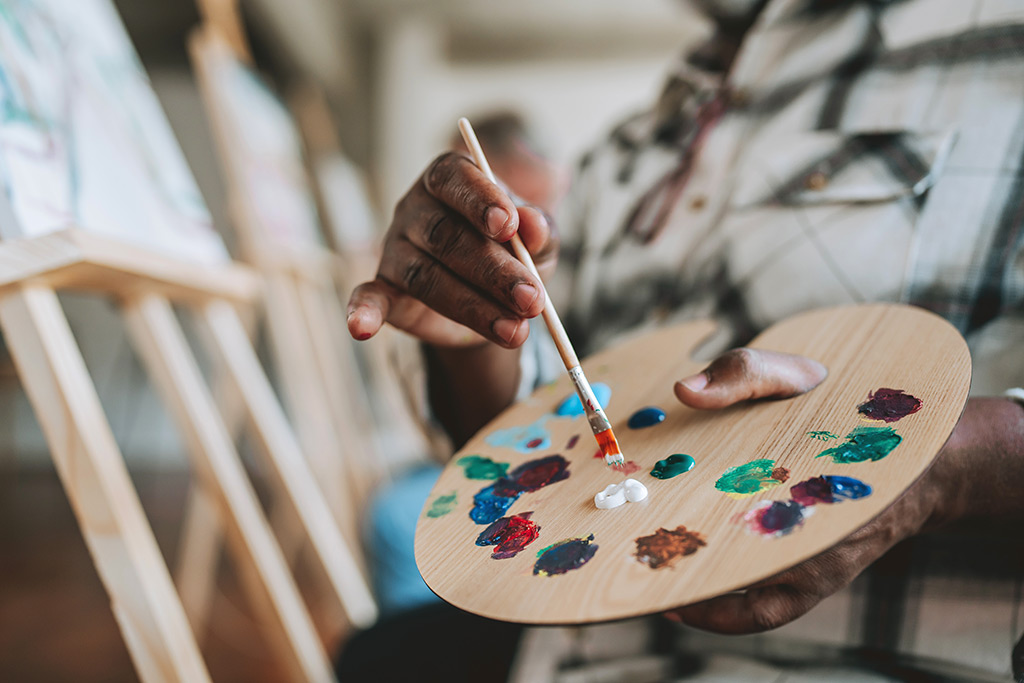
Perhaps the most telling changes are conversational. Whereas people once wondered what a hobby might become or be worth someday, they now prioritize how it feels to participate. The experience is often simple: absorbing and calming (and occasionally frustrating) but well worth the time.
Food content creator Davon Moseley, founder of the multifaceted brand Royale Eats, has dedicated his life to great food. His popular recipes are inspired by the community he was raised in and the people he continues to support. Here, Moseley shares two of his favorites from his cookbook, Let’s Get Into It.
Tender and packed with Asian-inspired flavors, this is the ultimate main course.
Moseley uses butter and plenty of aromatics to make an irresistibly comforting side dish.

Recipes from Let’s Get Into It: 130+ Comfort Food Recipes for Novice Cooks by Davon Moseley. DK Publishing, 2025. Photography by Stephen Buchanan.
If I’m not in a chicken mood, then I am definitely ordering the steak. Tender steak bites tossed in a flavorful sweet and savory sauce are a home run. With a few different recipes, my goal is for you to have hibachi nights at home to treat yourself and your loved ones. Maybe you can even have your family sit at the counter while you cook!

Serves 4



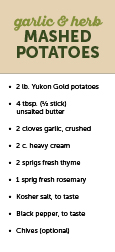
There are a lot of dishes that people can debate over whether they’re good or not. However, I’ve never heard anyone say they didn’t like mashed potatoes. This is my favorite way to make mashed potatoes because they’re buttery, rich, and sure do satiate. I like to serve these with almost every entrée in this book—they all work!

Serves 6

You turn the page, pour another cup of coffee, and settle into the couch. The book in your hands might be a gripping thriller or a dense historical biography. But you did not join this group just to analyze plot points. You joined because you craved a space where people actually look at each other, listen, and share. The deeper draw of book clubs, these long-running social groups, is the connection waiting for you on the other side of the table.

Book clubs have endured as one of the most consistent forms of regular social gathering. In fact, some niche clubs have seen dramatic growth. CNN Business reports that #BookTok has become one of TikTok’s most prominent communities for readers.
So what has sustained these storied groups and even helped them flourish? In a world where digital interactions dominate, these circles offer something increasingly rare: a physical space to slow down and practice the art of deep conversation with others.
And while the scheduled topic might be a bestselling novel or a historical biography, the discussion doesn’t have to stay bound within the pages. In fact, gathering to discuss a book can act as a natural catalyst for casual chats—and even deeper ones, should you wish to bond more closely with members. As you analyze a character’s choices, you may begin to share your own stories: relationships, career pivots, grief, and joys.

It is no coincidence that book clubs continue to meet in 2027. Psychologists frequently warn of a modern loneliness epidemic, noting that traditional community spaces are rapidly disappearing in favor of digital-only ones. Yet book clubs help create a more comfortable and enriching rhythm in life, elevating face-to-face gatherings to a standing appointment every week or so.
Just as important, they foster accountability. If you feel tempted to settle into a homebody after-work lifestyle, a book club legitimizes your need for a social life outside of professional and familial obligations.
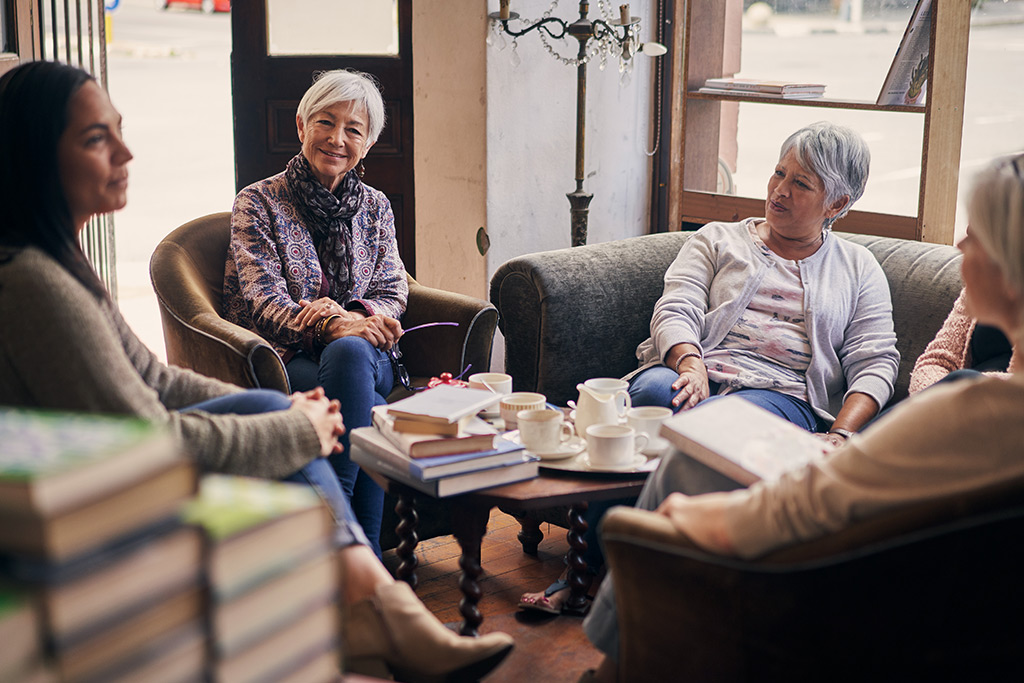
The next time you feel isolated, in need of a bright spot scheduled into your routine, or eager to discuss the latest trending bestseller, research local book clubs on social media sites like TikTok and Instagram. Alternatively, you can reach out to your local public library for details on book clubs based on certain subjects or demographics. You could even plan your own with like-minded friends and coworkers, many of whom may be awaiting an invitation to join such a community.
The only real question is: What’s on the docket for your next meeting? Dive into your next fiction or nonfiction selection, and let the conversation take you somewhere even the book never could.