By the time January ends, winter might feel less charming and more like it’s overstaying its welcome. That’s exactly why February 2 matters to many people: It offers hope. However, Groundhog Day can be more than a novelty on the calendar. You can also treat it as an annual reason to pack your bags.
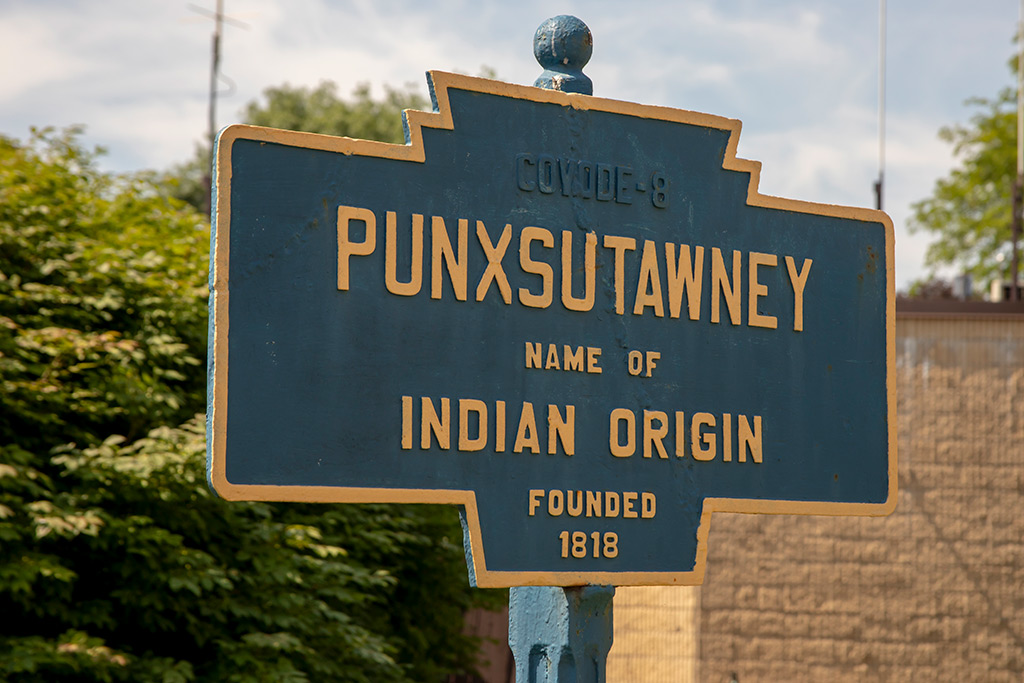
Groundhog Day traces back to European Candlemas traditions and German folklore linking animal behavior to seasonal change. In Punxsutawney, Pennsylvania, the sunrise ceremony at Gobbler’s Knob dates to 1887, and the Punxsutawney Groundhog Club now runs an event that draws thousands of visitors annually. The spectacle begins with music, fireworks, and the much-anticipated prediction around 7:30 a.m.
The date lands squarely in the postholiday lull, and travel in early February often aligns with shoulder-season pricing before spring break surges in many destinations. By anchoring a trip to a symbolic date, you can transform a short getaway into an annual ritual.
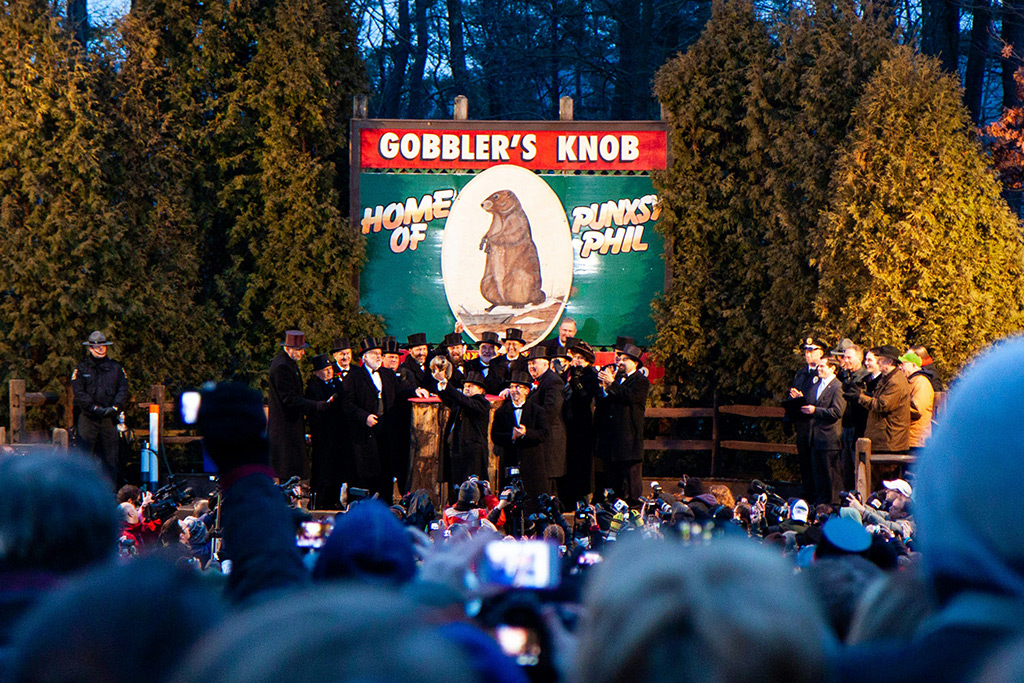
If you want the full folklore experience, Punxsutawney delivers. You arrive bundled in layers and join a crowd gathered in the dark at Gobbler’s Knob. The Inner Circle members, dressed in tuxedos and top hats, lead the ceremony with theatrical flair. Beyond the main event, you can visit the Punxsutawney Weather Discovery Center and see Phil’s home at the local library. Restaurants roll out themed menus, and shop windows lean into groundhog iconography with cheerful enthusiasm.
Other towns embrace their own versions of the tradition, similarly creating travel opportunities for families who enjoy pageantry, couples who love quirky Americana, or anyone who finds comfort in shared rituals. Woodstock, Illinois, the filming location of the 1993 movie Groundhog Day, hosts walking tours and themed events each February. Wiarton, Ontario, celebrates Wiarton Willie with a multiday festival that includes fireworks and winter activities.

You may prefer to broaden the idea and choose a place that celebrates winter itself. In Lake Placid, New York, for instance, you can skate on Mirror Lake, tour Olympic venues from the 1932 and 1980 games, and explore a walkable Main Street lined with Adirondack-style lodges. February brings crisp air and reliable snow, yet visitation typically dips after the New Year’s holiday peak.
North Conway, New Hampshire, offers classic New England architecture framed by the White Mountains, along with access to cross-country skiing and snowshoeing trails. In Bayfield, Wisconsin, if conditions align, you can head to Apostle Islands National Lakeshore’s mainland ice caves along Lake Superior’s frozen edge. Many winter festivals and ice sculpture events unfold in late January and early February, giving you festive energy without peak-season congestion.

Book enough nights to enjoy your chosen activities, and schedule far enough in advance to take advantage of better pricing. A destination within driving distance can keep a midweek trip financially manageable depending on lodging choices, while short flights vary based on route and demand.
Structure your itinerary around one event you don’t want to miss. It might be the sunrise ceremony in Punxsutawney, an ice festival, or a dinner reservation you refuse to rush. Let that focal point shape the rest of your plans, and treat February 2 as a recurring appointment with yourself and your loved ones.
Winter will likely always test your patience, yet Groundhog Day offers a built-in pause. You can watch the prediction from your couch, or you can use the date as an annual invitation to go somewhere that surprises you.
The month of love is about more than just dinner reservations and gifts of jewelry. It’s also about indulging in sweet treats alongside your partner, family, or friends. Baking these two recipes at home—a soft, classic cookie and a twist on a fudge brownie—will express to someone special how much you care.
This recipe transforms the classic candy bar into sumptuous brownies worthy of a professional bakery.
Recipe and photo by Patterson Watkins.
Follow this time-tested, New York-inspired recipe for the ultimate take on a classic dessert.

Recipe from Eat NYC: The Iconic Recipes That Feed the City by Yasmin Newman. Smith Street Books, 2024. Photography by Alan Benson. Food styling by Lucy Tweed.

Serves 6–8
Tip: This recipe is for homemade brownies. If you are short on time, you can use a boxed brownie mix instead—just fold in the chopped Butterfinger bars before baking.



recipe by yasmin newman
photography by alan benson
food styling by lucy tweed
New York is a city of cookie lovers. In almost every cafe, bakery, and even restaurant, you’ll find a house cookie on offer, enjoyed from breakfast until late at night. The deservedly famous purveyors—Jacques Torres Chocolate, Levain Bakery and Maman—and their unique takes on the cookie have spread across the world, but the inventiveness doesn’t end there.
If there is one flavor that elicits Gotham’s devotion, it’s chocolate chip. This cookie—generous in size, perfectly round, chewy yet soft, and studded throughout with chocolate—follows in these footsteps, with an addictive sprinkling of hazelnut meal and roasted hazelnut chunks.
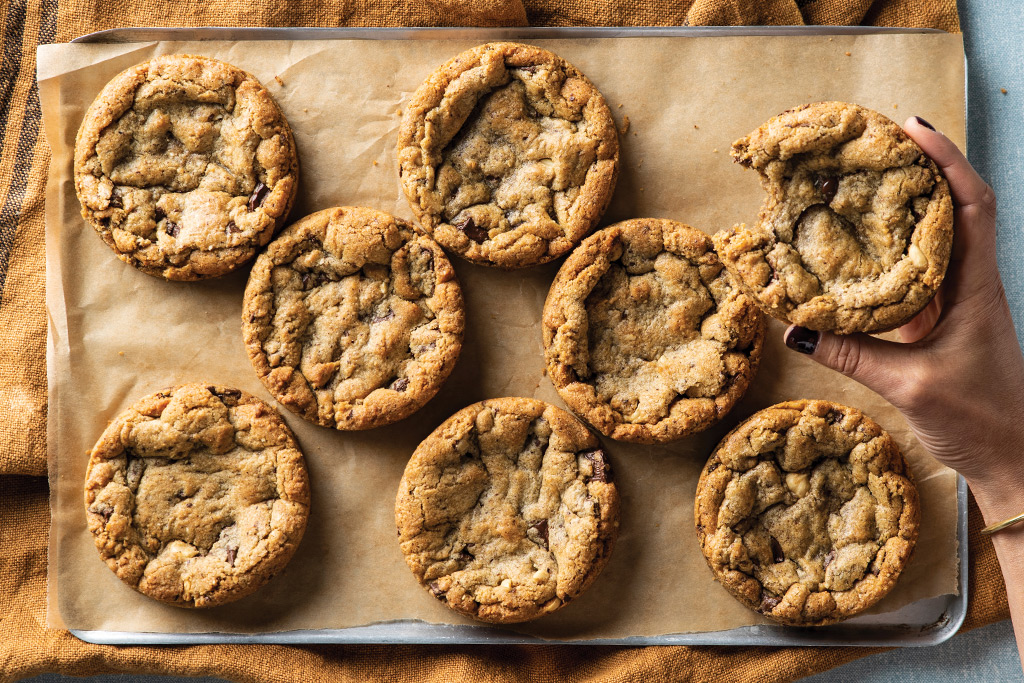
Makes 10


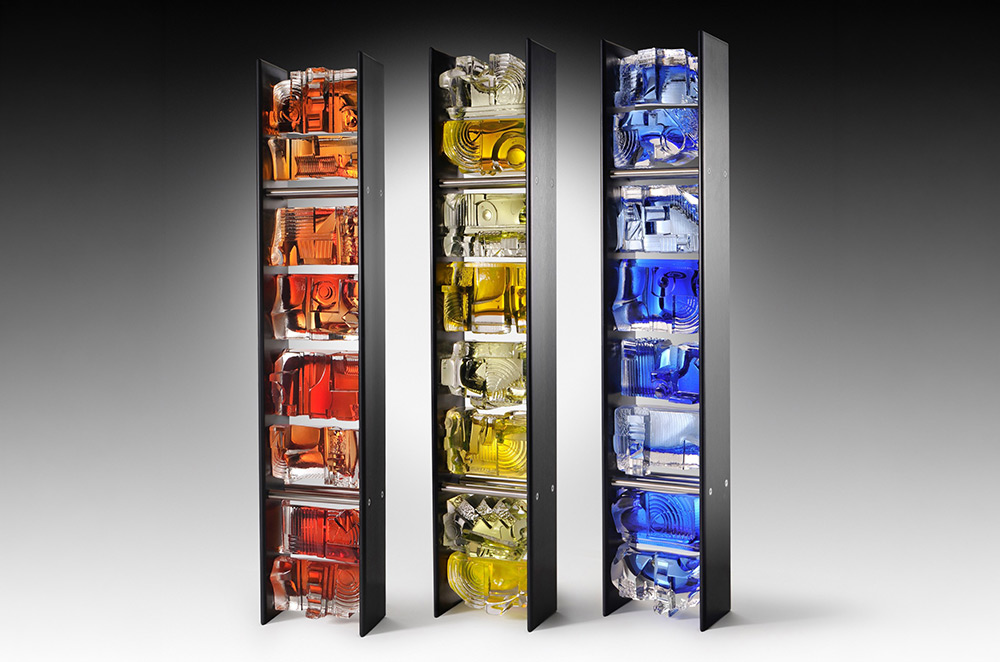
Cleveland-based glass sculptor Michael Mikula discusses the artistic and architectural influences behind his one-of-a-kind pieces.

What drew you to being an artist?
I grew up in rural western New York in a family that worked in timbering and farming, but I knew early on that I wanted to be an artist. As the first in my family to head off to college, I relied heavily on my high-school art teacher, John Paul Wolfe, for guidance. He suggested the Cleveland Institute of Art, a smaller private art school. As someone coming from a small rural high school, I knew immediately that it was a good fit.
I enrolled thinking that industrial design would be my major. However, I realized that while I was a good designer, I wanted to be more hands-on. So I switched my major to glass, earned my undergraduate degree, and immediately began working out of the studio of my glass professor, Brent Kee Young. He taught me how to think deeper and has been a true mentor.
You call your art “architectural blown glass.” Would you elaborate?
I’ve always been fascinated by architecture and in high school briefly considered that profession. Now, whenever I travel for art fairs and exhibitions, I visit historic buildings and photograph architectural details. My current body of work is heavily inspired by this ongoing research.
In addition, several years ago I took a monthlong trip to Barcelona, London, Paris, and Nîmes, France. Seeing ancient structures like the Pont du Gard in France and the masterworks of architect Antoni Gaudí in Barcelona profoundly shaped me. In Europe, architectural history is integrated into daily life. That sense of continuity and scale also contributes to the evolution of my sculptural work.
Tell us about your studio and materials:
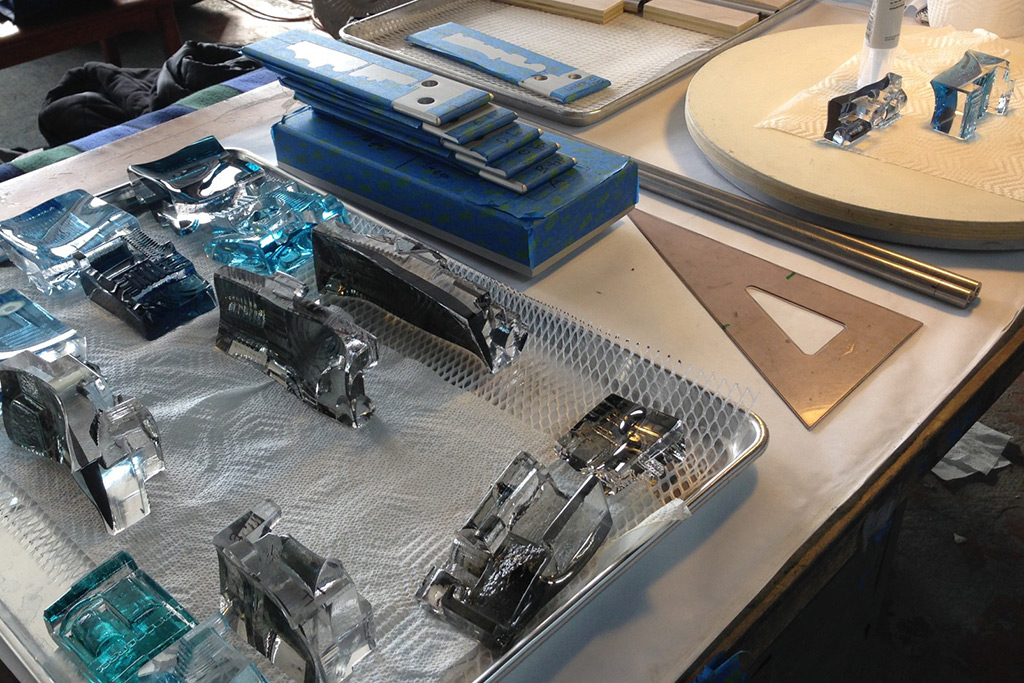
My studio is located in a former factory space in midtown Cleveland. I source graphite locally and shape it into molds. For glass, I use cullet—pre-melted glass—because it’s cleaner and more efficient to melt in my own glass furnace. To add color, I purchase bars of colored glass formulated to be compatible with the clear cullet. I think of it like a painter buying tubes of paint. Some of my sculptures incorporate many colors.
Is color secondary to form in your craft or vice versa?
Color and form are inseparable in my work. Color draws people in; form sustains their attention. The graphite molds create intricate exterior geometry, while the interior of the blown form remains fluid and organic. Light transforms negative space into positive form, creating dynamic visual shifts.
What’s your process for creating the glass?
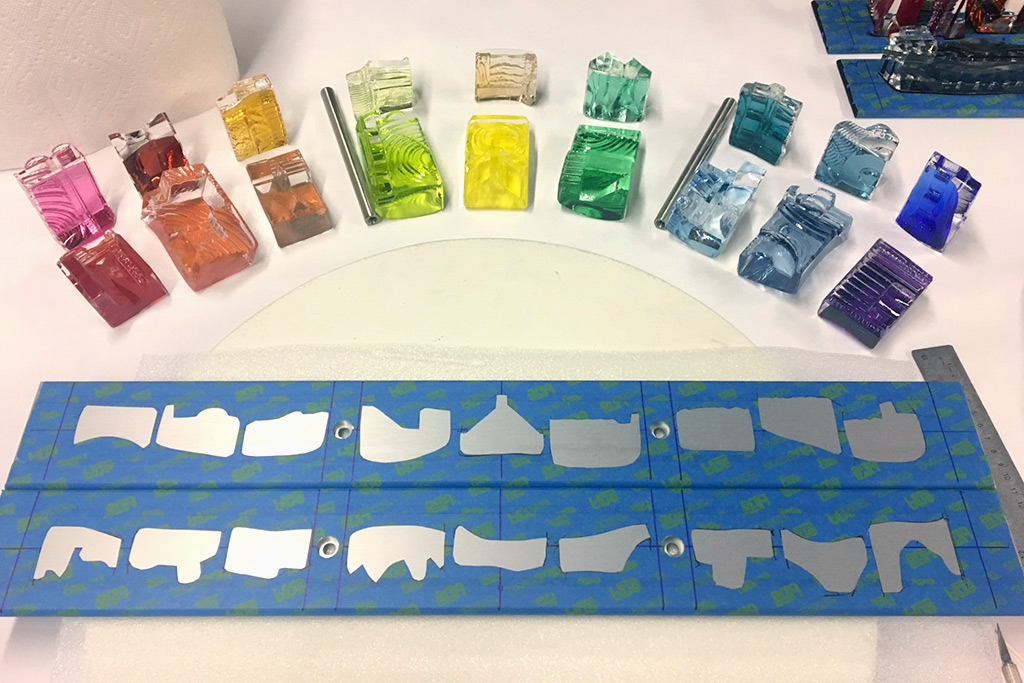
Once I have an idea, I make thumbnail sketches and work them into scale drawings. From there, I compose the graphite molds using various cutting, grinding, and sculpting tools. I then set the molds in place on the floor surrounded by concrete blocks, creating a frame to hold the mold parts in place.
Next is the glassblowing. A layer of colored glass is melted onto the end of the blowpipe, followed by adding successively thicker layers of clear glass, gathered out of the furnace at 2,100°F. Once I have the desired amount of glass, I quickly place it into the mold, inflating and expanding the molten glass into every crevice.
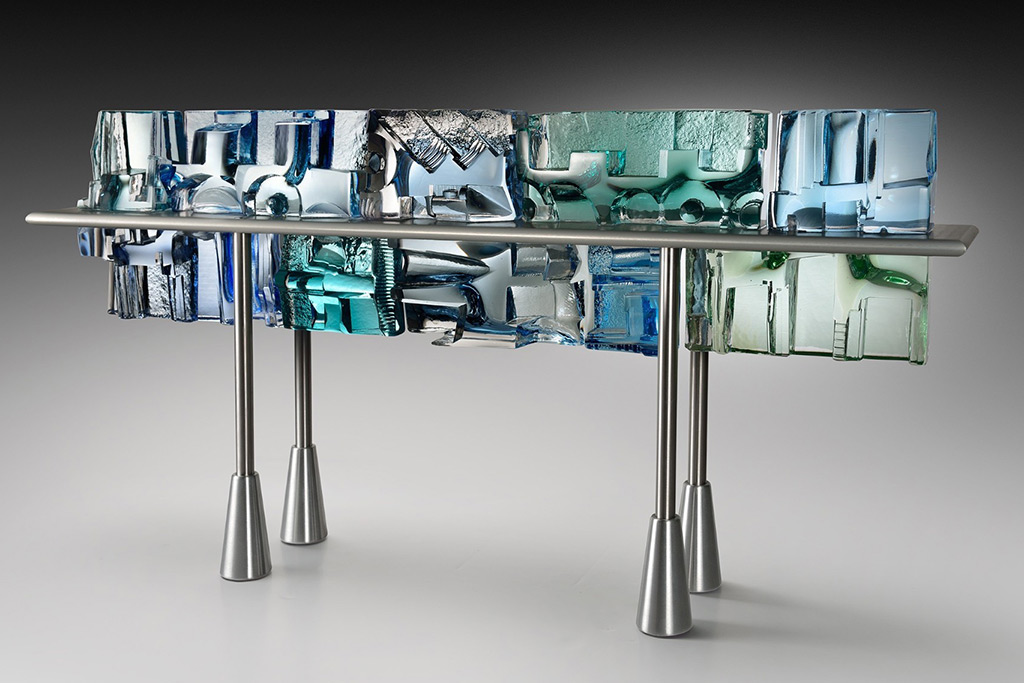
That blown form is then placed into a kiln to cool. Once it reaches room temperature, I cut it apart, grind and polish those individual elements, and recompose them into the sculptural design.

Do you do everything yourself?
I’m essentially a one-man operation, though I hire metal fabricators and assistants when blowing larger forms and later for polishing components. For some time now, I’ve been finishing work in my studio after blowing glass off-site, but I’m now installing my own furnaces again. That will give me greater creative control and flexibility.
How long does a piece take from start to finish?
From conception to completion, a sculpture or commissioned piece can take weeks or even months. I follow where the design process takes me, as needed.
What tools are essential to your work?
In addition to carved molds, I use traditional glassblowing hand tools, essentially unchanged for centuries, but also adapt tools from other trades: a brick saw fitted with a diamond blade and faceting tools used for decorative glass windows. I even use a thick pad of wet newspaper to hand-shape the molten glass.
How often do you travel to exhibit your sculptures?
In a typical year, I will exhibit in about a dozen fine art and fine craft fairs and special exhibitions. I’ve participated in over five hundred shows across the country since 1988. It requires enormous energy to pack, transport, set up, and break down displays. Lately, I’ve been intentionally shifting toward commissions, gallery representation, online sales, and fewer art fairs.
What do you wish the public knew more about artists?
I encourage people to reach out and meet artists directly and not be intimidated. Ask questions. Visiting us at exhibitions creates a human connection, making art more accessible and meaningful.
For more info, visit mikulaglass.com
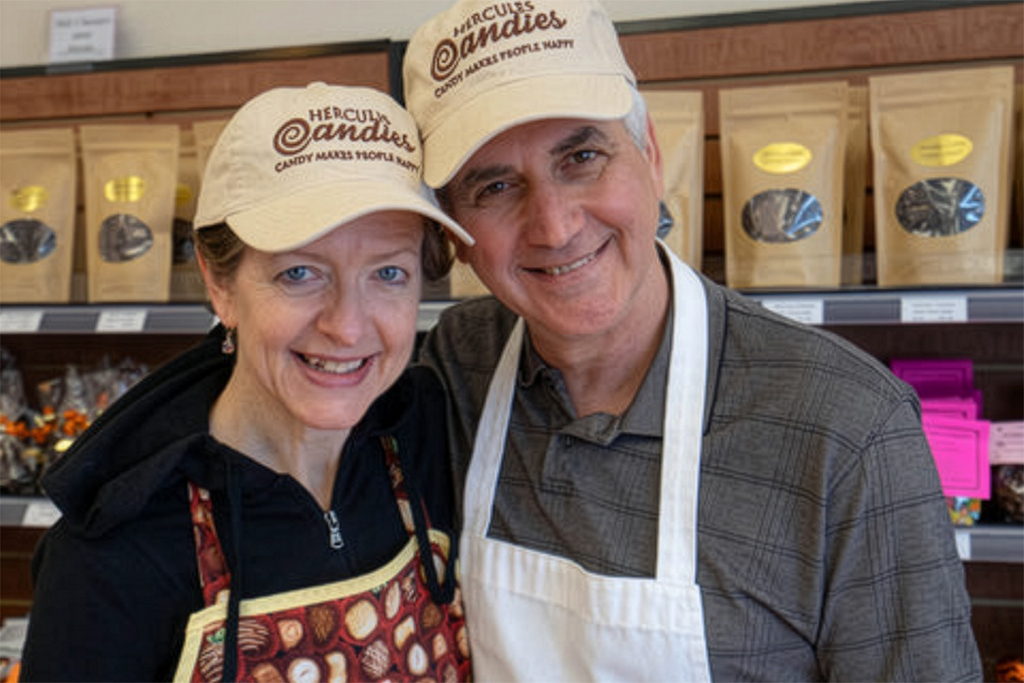
Treat yourself to this conversation with Terry Andrianos from Hercules Candies, who unwraps the story of the company she co-owns and operates with her husband.
Who founded Hercules Candies?
It was started by three brothers, Robert, Peter, and James Andrianos, in 1910. My husband, Steve, who is Robert’s grandson, started making candy with his father when he was twelve years old. His father was the last one to run the original store in 1962, and he eventually closed it in 1972. But Steve always dreamed of running Hercules Candies.
In 1977, he saved up $500, bought some ingredients, and reopened the store at just twenty-one years old. He used the same equipment and utensils that had been left idle for five years.
What inspired the shop’s name?
It was originally called the Boston Candy Kitchen. Even though they relocated to the Syracuse, New York area to open the shop, they named it that in honor of where the family first lived when they came from Greece.
Hercules was the name of the founding brothers’ father, and Robert named his firstborn son Hercules. Once Robert and Hercules ran the shop together, when the latter was an adult with his own family, they decided to rename it Hercules Candy. It turned out that they couldn’t generate enough business to support both families, though, so Herc (as he was called) went to work for General Electric.

What did the original menu look like, and how has it changed?
The original offerings included Cashew and Peanut Brittles, Spice Hard Candy, and Spice Ribbon Candy. For chocolate, they made clusters, assorted chocolates, and other molded items.
Since then, we have essentially expanded upon these original offerings with many new flavors, including our popular Super Sour Hard Candy. We have also added a variety of bark options and even Chocolate-Covered Potato Chips (my personal favorite)!
How has your company stayed true to its past while also remaining current?
We haven’t changed the original recipes in any way. At the same time, we’ve embraced the future by leaning heavily into social media to get our name out there. Steve and I have also used new technology to run our business and ship products all over the nation.

Why did you choose to keep making candy by hand rather than by machine?
There is more control when making candy by hand. You can also taste it along the way to catch any changes in flavor before it becomes a problem.
Does your menu change around certain major holidays?
Yes. We have many seasonal items for the major holidays, like assorted chocolates for Christmas, Valentine’s Day boxes, and Easter bars.

Do you plan to pass the business down to your own family?
All three of our children are already involved in the business. Leah (our oldest daughter) works here full time, Cara (our younger daughter) is the store manager and plans to take it over when we retire, and her twin brother, Craig, is in charge of social media.
What do you enjoy most about what you do?
In a nutshell, candy makes people happy. So if a customer arrives in a less-than-jovial mood, once they wander around and check out our unique creations, they are usually pretty happy.
We are proud to be a traditional part of so many family celebrations over the years and to continue using our founding fathers’ recipes. Christmas is the best because folks tell us that it’s one of the highlights of their holiday season. For many people, the trip to Hercules Candies is part of their holiday tradition, just like trimming their tree.
For more info, visit herculescandy.com