
A Tennessee Transformation


Blessed Little Bungalow founder Amber Guyton shares how she crafted a comforting, character-driven home for a Nashville client.

How and when did Blessed Little Bungalow come about?
I have always been creative. As a kid, I was constantly repainting my room, rearranging furniture, and making my space feel just right. But my professional background is in marketing, and I spent years working in financial services and tech.
After earning my MBA, I relocated from Atlanta to San Antonio for a new job. About six months later, I bought a 1948 bungalow. Within a week of moving in, I had redecorated the entire place to make it my own. When my mom came to visit, she looked around and asked, “When are you going to do this for real?”
So I launched Blessed Little Bungalow, my blog about my home projects, as a side gig in 2016. Over time, readers began asking for my design help. That led me to start offering e-design services, and I slowly built a client base and project portfolio.
I went full-time with it in 2021 and have expanded to artwork that’s sold at select HomeGoods stores and a Mitchell Black wallpaper collection, and I even published my first book. These days, I think of myself as a multihyphenate creative, but interior design remains at the center of it all.

You describe your style as “soulful maximalism.” Would you elaborate?
I’m so glad you asked! Soulful maximalism is not only my design philosophy but also the title of my book. While I’ve always been drawn to maximalism, the word can sometimes carry a negative connotation, like chaos. The way I design is very intentional, though. Over time, I realized that the spaces I create consistently revolve around four ideas: joy, culture, layers, and intention—soulful maximalism.
It celebrates who you are and what you love. Maybe the bookends on your shelf belonged to your grandfather, or a displayed object came from a trip that changed your life. Those details turn a space into your story. When everything in a room has purpose, maximalism feels curated rather than cluttered.

You mentioned joy. Do you sometimes have to remind clients to experience it in their homes?
Absolutely. Many people play it too safe, which can be frustrating. Some clients have lived in their home for years and still haven’t hung art or even put nails on their walls. Others think they need to keep everything pristine and neutral in case they put it on the market someday.
But the idea of a “forever home” has changed, especially for younger generations. People move more often, and that can make them hesitant to personalize their space. I try to encourage them to think differently. Your home should feel like a sanctuary—a place where you feel safe, comfortable, and truly yourself.
Many clients hire me because they see the color and energy in my work. I love Crayola, so I want my house (and often others’) to look like a Crayola box—and not necessarily with the primary colors. I love the bold and jewel-toned ones, which truly make eyes light up and people feel happy.

Who is the client for this Nashville Nest project?
Cynthia is an attorney whose family is incredibly important to her. She’s also passionate about civil rights and Black culture, and she loves to travel.
She purchased a tall, narrow house not too far from downtown and wanted help turning it into something that felt more personal. The house itself was beautiful and modern, but like many new builds, it lacked character. She needed help shaping everything into a cohesive home that reflected who she is.
How did you help her achieve this?
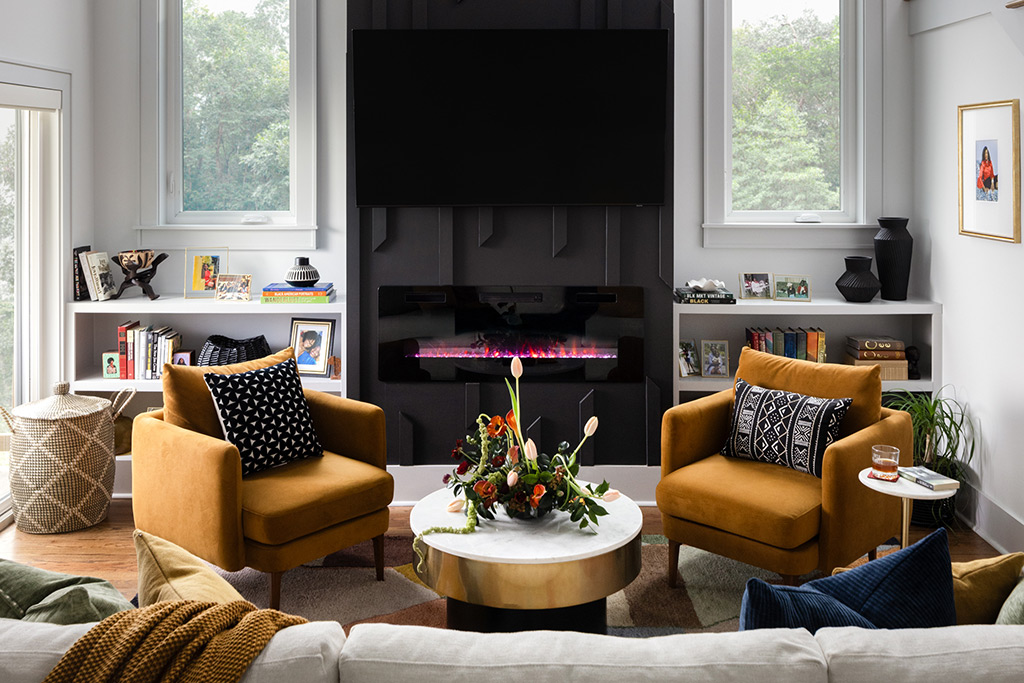
That living room was our first challenge. It has a two-story ceiling, which can sometimes make a space feel more like a lobby than a living area. I wanted to bring warmth and structure to the room while still embracing that openness.
We started by adding board and batten above the fireplace and painting it Iron Ore by Sherwin-Williams, which draws the eye upward and adds contrast without overwhelming the room. Then we layered a rug beneath her existing seating as an island that anchors the furniture and defines the space.
From there, we added a coffee table and incorporated pieces that reflected Cynthia’s story, such as her favorite books, souvenirs, and family photos. We also created a gallery wall along the staircase, which brings warmth and legacy into the home without feeling overly traditional.
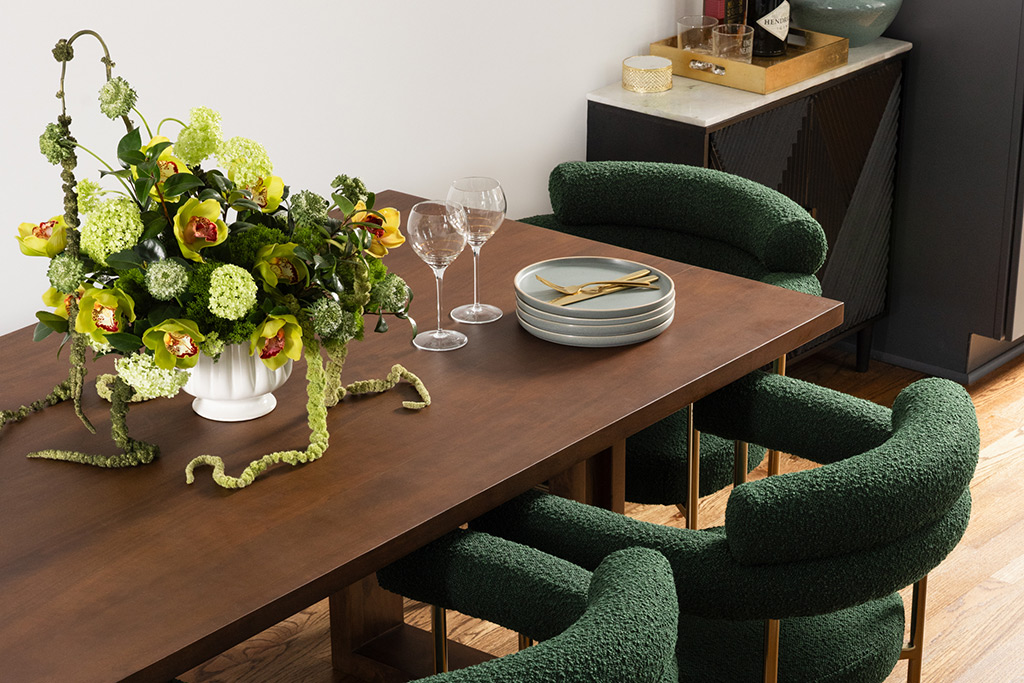
It didn’t have a dedicated dining room, so we created one in the open area between the entry and kitchen. By using a low-profile table and a bench on one side, the space feels intimate rather than formal—perfect for entertaining without feeling like a boardroom.
Would you walk us through your bold wallpaper choice for the powder room?
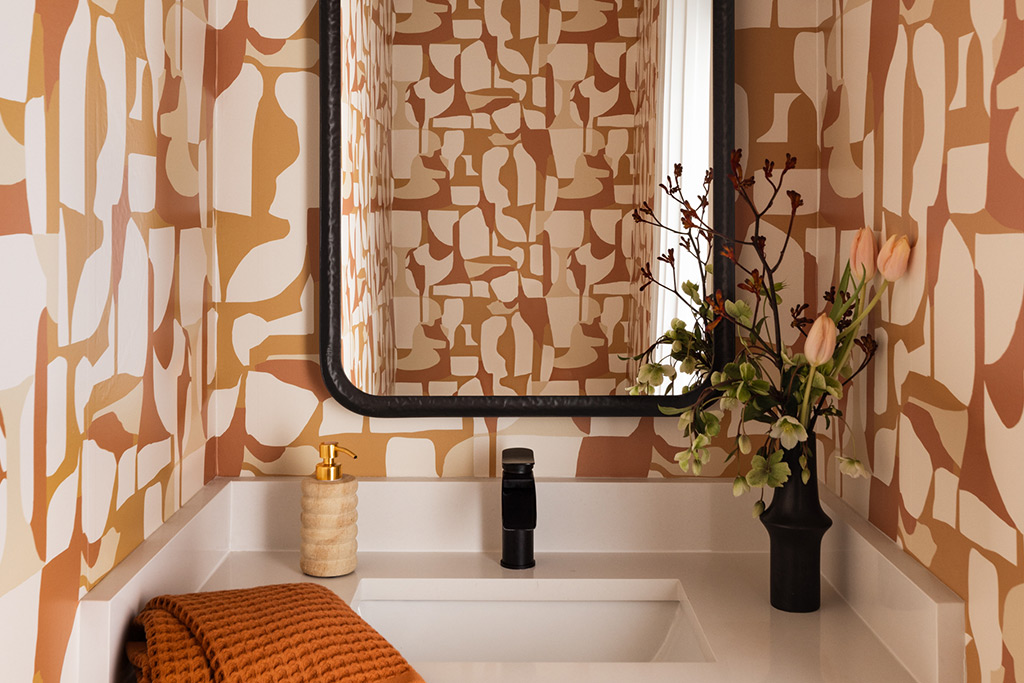
I love using such spaces to introduce something unexpected. When you first enter her house, you see wallpaper with an Afrocentric, tribal-inspired print in a neutral palette, a black console table, and a gold mirror—hints of the home’s color story before you even step into the main space. But in the powder room, I added a rust-colored wallpaper from my collection with Mitchell Black called Abstract Attraction, so the space serves as a bit of a surprise.
The house seems to exude comfort and elegance. How did you balance that?
Thank you. Texture, functionality, and color played a big role. For instance, I wanted Cynthia’s bedroom to be a calming retreat so she could just melt into it at the end of the day. A good example is the lounger in the corner. Some people use their bed as seating; if there’s a chair in a bedroom, it turns into a catch-all for clothes and junk. But I wanted to create an area where she can literally throw up her feet and relax.
Plus, even though the room has a bold terra-cotta color, it doesn’t feel loud. The layered linen blackout drapes, soft ivory bedding, and restrained use of decor help ground the space. Altogether, it feels balanced, feminine, and serene.

Did the results make her feel truly at home?
I wanted to leave space for Cynthia to add on as she grew in her home. The style is maximalist, but it’s still airy so she can change things without disrupting the overall flow and feel. In fact, if the project wasn’t called Nashville Nest, I feel like Breathing Room would have been a nice name.
She loves the results and was an amazing client. It’s the biggest compliment when a client invites you to the housewarming (especially if they didn’t change a thing) or sends you a random text saying, “I’m sitting here in my home, and I’m so happy.” I don’t want my work to feel transactional. My best clients are repeat ones, and some of them even become friends. That’s the type of relationship I hope I create with the work I do.
For more info, visit blessedlittlebungalow.com