
Making Her House a Home


Dallas-based designer Kristin Mullen shares what inspires her work and how she changed her current home from a 1980s snapshot to an elegant yet functional space for her family.

Have you always been interested in design? Who or what influenced you to join this field?
My mother was a self-taught home decorator and loved the process. Since my dad traveled frequently, she would pass the time by rearranging the furniture at night, putting pieces on towels or rugs to move them easily. I’d wake up to find the rooms transformed, often after hearing mysterious hammering the night before.
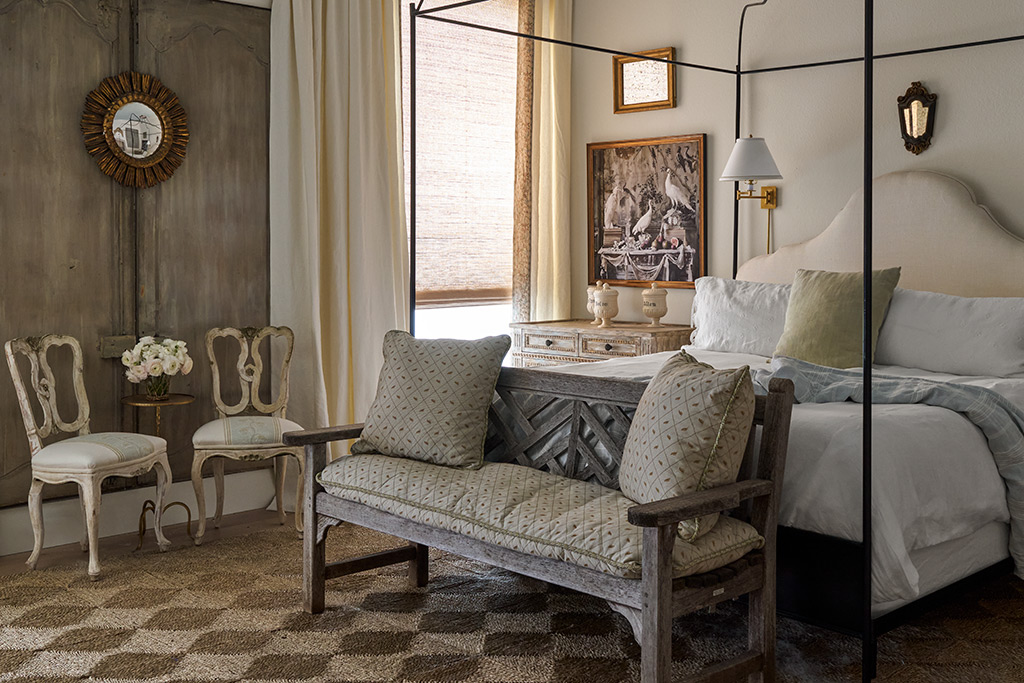
That said, I personally don’t have the typical designer origin story. The closest I came to that was playing with my dollhouse and helping with displays at my mother’s clothing store. My real interests have always been history, storytelling, and traveling. My mom also loved antiques, as do I. She favored American ones, whereas I lean toward Swedish and clean-lined French. I didn’t start working as a professional designer until around 2005. Before that, I just worked on my own home and casually helped friends with theirs. They’d offer a glass of wine as thanks. [Laughs]
Things shifted when my husband and I moved our family to Dallas. One friend asked me to design her dining room and insisted on paying me. Word spread, and soon other friends began hiring me. What began as very part-time work quickly evolved into a full-time profession.
What did you do before starting your firm?
I majored in speech and language pathology in college and minored in theater: quite different from interior design! I actually worked as an actress then stayed home after starting my family.
Tell us about your travels. Which countries influence your aesthetic the most?
I’ve lived abroad and traveled extensively. My biggest influence, perhaps surprisingly, is Japan. My work doesn’t look Japanese, but while living there, I took ikebana classes and learned to appreciate the power of negative space and balance over symmetry. I also embraced the idea that imperfection can be beautiful.
European design also influences me heavily. Europeans often live in smaller spaces, so every item is thoughtfully chosen and I appreciate their willingness to incorporate whimsy and imperfection. While residing in England, I often visited friends’ homes in France and got to see how people really live, not just the showy side.
When did you buy your current home, and what condition was it in?
We bought it in December 2021. It was very 1980s: pink tiles, wallpaper, carpet, shiny brass, and oddly shaped wall openings. But the exterior was charming, with storybook-like rooflines, and the layout had generous living spaces and a large primary suite. It’s also a single-story home, which was important for our daughter, who has cerebral palsy. I saw a lot of potential.
How much of it did you change structurally?
We closed some walls, opened others, and made a laundry room out of our third-car garage. I tried to respect the existing footprint as much as possible while making it more functional. The kitchen layout was changed to open into the family room. I also converted the dining room into my study. In all, it took about nine months because of appliance shortages at the tail end of COVID. We moved in without a functioning kitchen!
Your decor stands out. How do you choose what to include, and how do those pieces personalize your home?
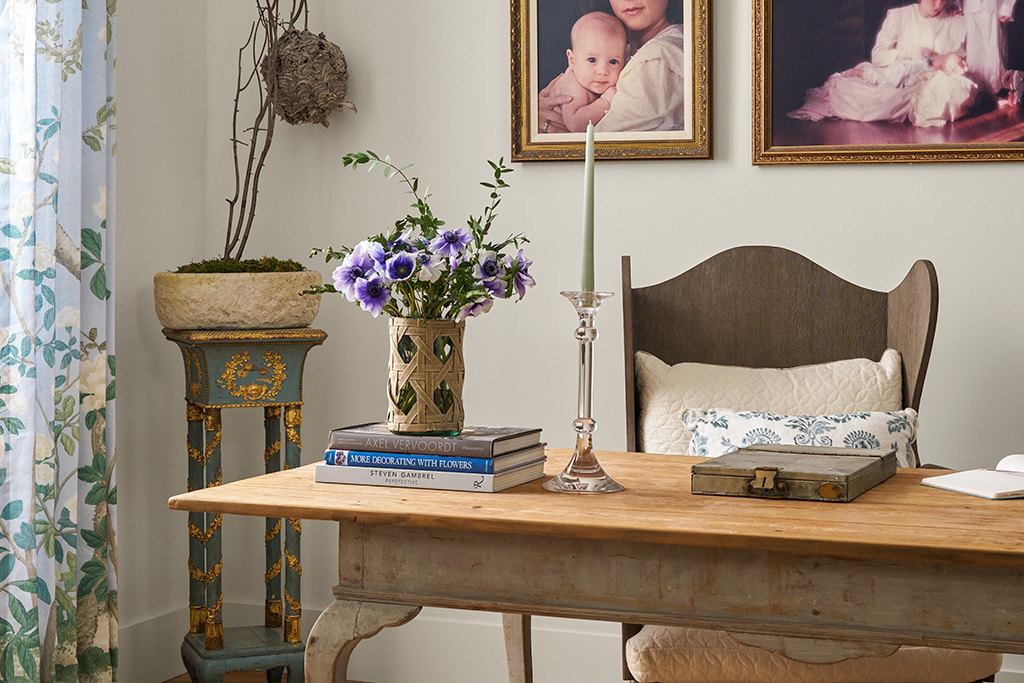
When I furnish a home, I believe in incorporating items with emotional texture—things that feel lived-in and meaningful, even if you don’t know their history. Most of what you see in our home has been repurposed from our previous ones, and many of the standout pieces are antiques with stories. For example, the large cabinet in my study once held a TV and later sat in a dining room. Now it has a whimsical back panel that fits the room’s vibe.
How do you maintain cohesiveness in your design?
I like the home’s entryway to showcase the full color palette, then I weave those colors throughout the main areas, recombining them differently in each room. This helps everything flow well and feel calm.
What are your thoughts on color’s impact?
It influences mood, so one of the first things I ask clients is how they want to feel in a space. From there, I choose colors that support that emotional goal. In my home, I incorporated lots of neutrals so our antiques would stand out rather than compete with stronger colors. I tend to work with those all day, so I prefer to come home to something soothing. Overall, the light walls here encourage rest and let a few pieces have that “main character” energy.
Tell us about how you updated your living room:
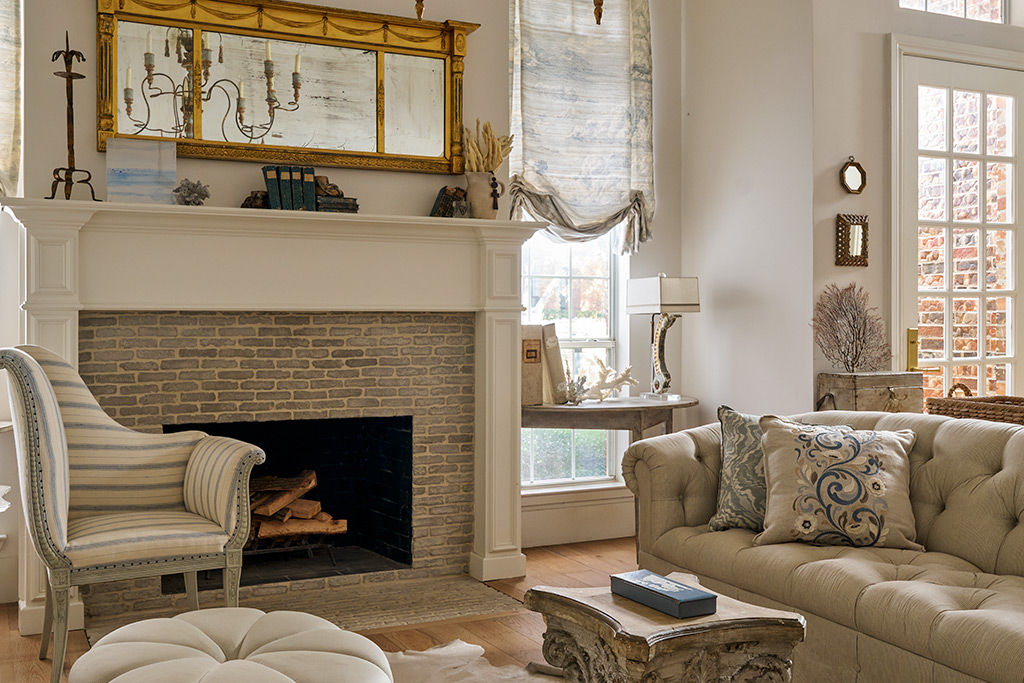
The fireplace originally had pink tile, so we updated it with thin European brick to give it architectural weight. The Trumeau mirror above it, which has been in nearly every home we’ve owned, reflects the Italian chandelier; that reflectivity combines with the softness of the mirror’s frame to make it stand out. I also added a striking blue grisaille painting above it to draw one’s eye.
The kitchen also pops. What were you aiming for there?
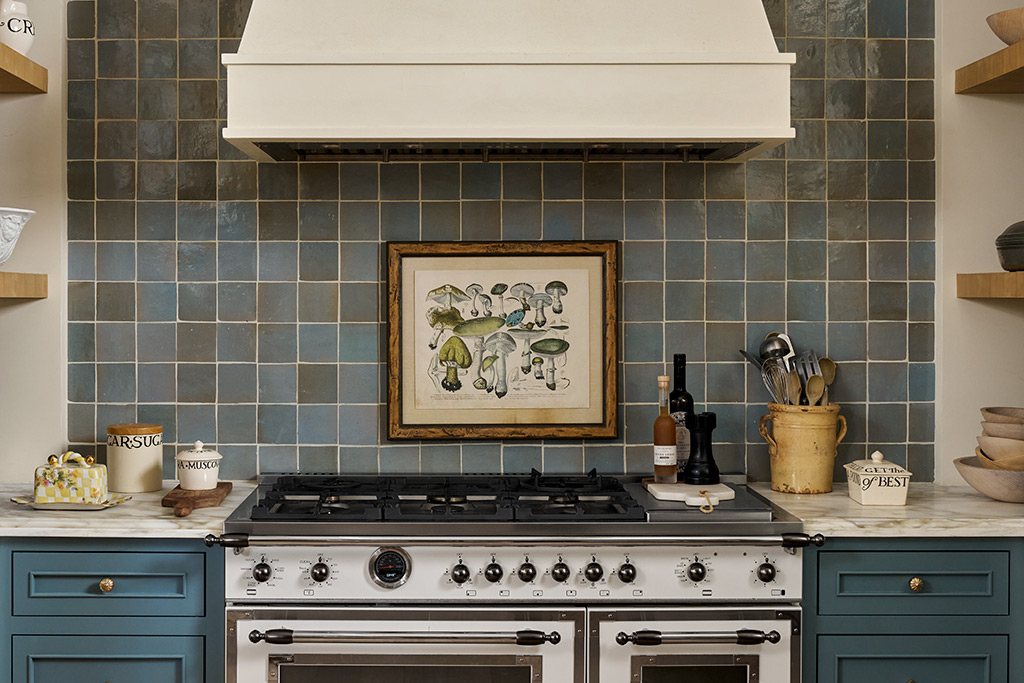
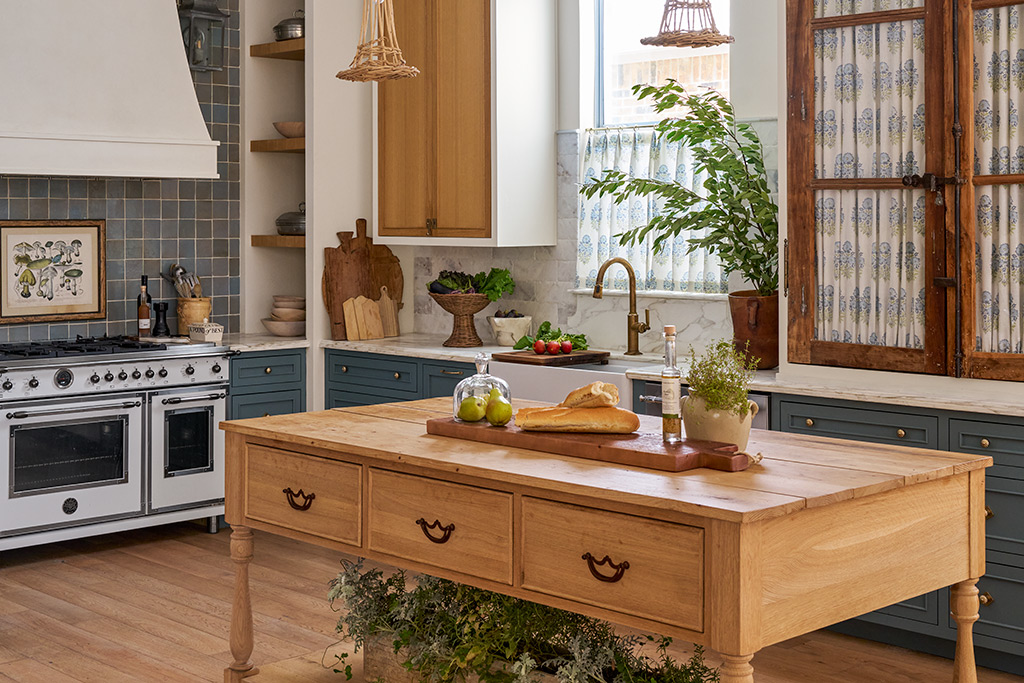
I wanted a European farmhouse feel, though the layout was tricky: It’s long and narrow, so fitting an island was difficult. But when everyone’s home, the kitchen is the hub, and we needed space for cooking together. The wooden island became the centerpiece. In addition, I added antique French casement windows to the pantry with fabric behind them to hide everyday items. The same fabric is used for the café curtains, a detail I love.
Were the home’s high ceilings a challenge?
At fourteen feet high, they’re unusually tall for a house this size. That meant I needed to balance vertical elements with horizontal ones for visual stability. I used tall cabinets and headboards and layered artwork to draw the eye up while keeping the rooms grounded and inviting.
What do you love most about the renovation?
Believe it or not, my master bathroom floor. Its combination of antique terra-cotta and limestone is breathtaking. I also love my Bertazzoni range, which is beautiful and incredibly functional. And we recently added silk balloon shades in the living room; they catch the northern light perfectly.

In 2025, you opened your online store, the Edit. What are your goals for it?
Initially, I resisted the idea because we only sell antiques at the Round Top Antiques Fair a few times a year and figuring out the fulfillment logistics was challenging. But people kept asking for a website, so I created one that includes curated collections, both antique and newly made, with thoughtful descriptions. I wanted the experience to reflect my voice, much like chatting about design in my booth, so customers can get a little KMD perspective without hiring me directly.
How is it different designing for yourself versus for clients?
Designing for yourself offers endless options, which can be overwhelming. Every designer I know can envision multiple fabulous versions of a space; the hard part is choosing just one. I enjoy the process, but I also want to reach the finish line. I’m a firm believer that function comes first. Once that’s right, making it beautiful is the easy part.
For more info, visit kristinmullendesigns.com