
Leading the Food Bank Charge


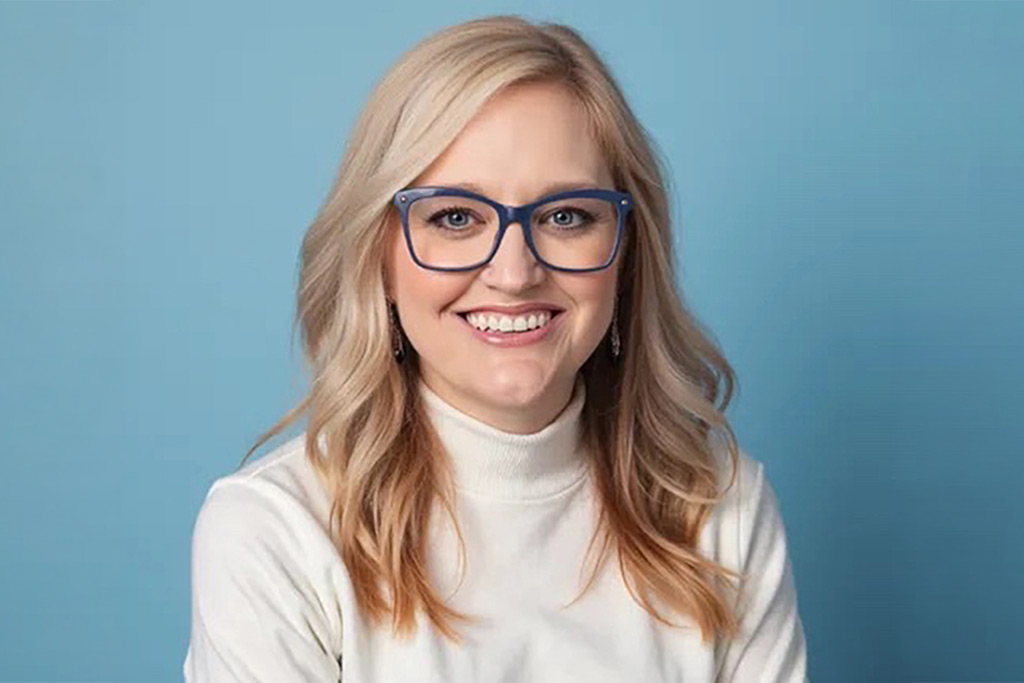
Amy Beros, president and CEO of the Food Bank of Central and Eastern North Carolina, reveals what it takes to continually serve the needs of the community.
Have you always had a passion for helping people?
It’s actually part of my earliest memories. When I was growing up in South Carolina, a family friend’s husband passed away. She was a stay-at-home mom and suddenly couldn’t pay bills or put food on the table, so the community rallied around her. When she was able, she started an organization that helped others who were struggling to make ends meet.
My family always volunteered and raised money with grassroots events like classic car shows, cake raffles, and food distributions. After I graduated from college and moved across the country, I always found ways to stay involved in helping others. I previously worked in the financial banking sector, though, which is very different from food banking. I felt pulled to the latter and transitioned into nonprofit work about sixteen years ago. I have been working professionally in hunger relief for about twelve years now.
How helpful was your background for that transition?
Very, especially in the past few years. People often think of nonprofits differently from corporations because of the mission, but 501(c)(3) is simply our tax status. If we’re not making decisions like a business, we won’t be here for the long term.
Approximately how many people do you serve, and how much food do you distribute?
We provide nearly one hundred million pounds of food each year to over 600,000 individuals. One in seven people in the thirty-four counties we serve, including one in five children, are food insecure, meaning they’re not sure where their next meal will come from. That’s unacceptable in a country like ours. It takes tremendous resources to meet that need, and, unfortunately, the demand continues to grow.
What strategies have you implemented to meet that demand?
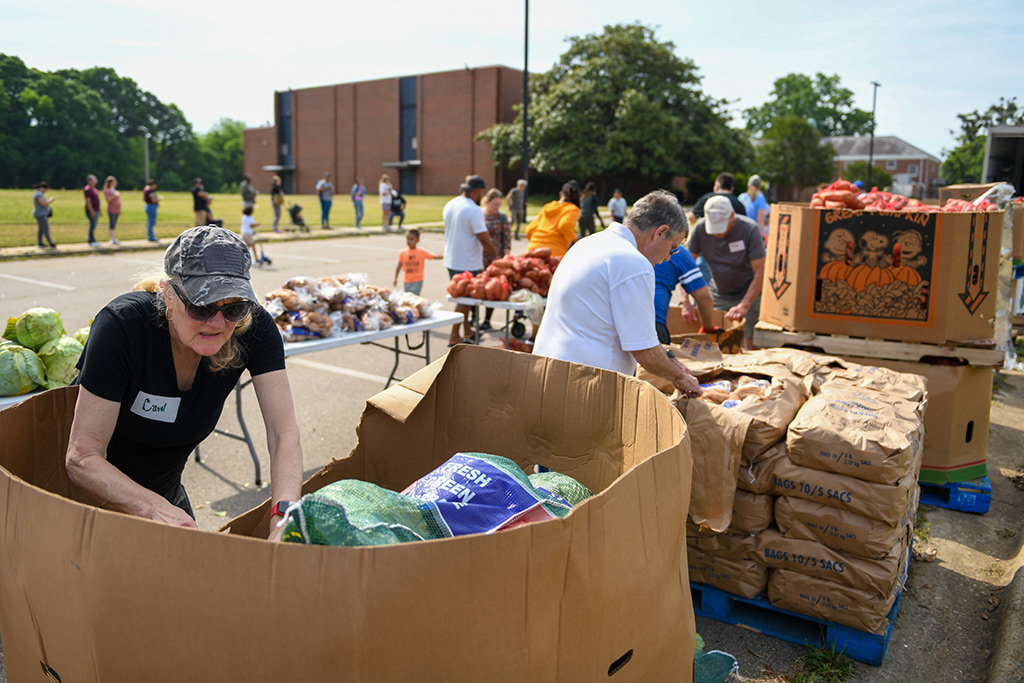
We are one of the ten largest nonprofits in the country when measured by the value of the food we distribute. Alongside donations and charitable gifts, we also receive government support. Because of the scale, we have to make business decisions, often tough ones. We have eliminated some programs so we can focus more on immediate needs, for example. Our 2030 strategic plan focuses on a culture of doing better rather than doing more. That means using data to guide our decisions and ensuring that our neighbors help shape our strategies through ongoing feedback from the community.
We are also investing deeply in agricultural partnerships, including farmers who grow specifically for our food bank. One in North Carolina alone has three hundred acres dedicated exclusively to it. That allows us to help determine what is grown so we can fill the gaps that donated products might not cover.
Is access to such a large farm unusual for a food bank?
It is, but I think it is something we’ll see more of in the future. We certainly plan to keep investing in that area. In 2025, we lost out on the equivalent of about $7 million in direct food donations, along with around $5 million in government investment and several truckloads of food.
Because of that, we are thinking about how neighbors support neighbors. We’re looking closely at strengthening local food systems, growing philanthropy, and increasing advocacy and public policy work. There is also a real opportunity to partner with the business community on these issues.

What are some other drivers of food insecurity?
Access is a major factor—to resources and opportunity. Housing costs, childcare, healthcare, and grocery prices all contribute. Many families are just one emergency away, such as a missed paycheck, a broken car, or an appliance that needs replacing, from needing help.
For instance, I received an email from a father who worked at a federal prison. He told me he had never asked for help before, but after missing two paychecks he didn’t know how he would feed his five children. Situations like that highlight how quickly people can find themselves needing support.
Would you elaborate on your mission statement?
Our core mission remains the same: Hunger is unacceptable in our community. What has changed is how food banks operate. Years ago, people pictured warehouses filled with canned goods. Today, the model is very different. In 2025, about 63 percent of the food we distributed was fresh produce, protein, dairy, and eggs. The goal is not just providing calories but providing healthy calories.
We also invest in nutrition education. Our staff includes nutritionists who create recipes using foods people might receive from food banks or partner pantries. They conduct demonstrations and help families learn how to prepare those foods. We also focus on chronic disease prevention because food truly functions as medicine.
That idea has led to partnerships with healthcare providers. We work with about eighteen of them and sometimes use food as part of a medical prescription approach. These programs help address both hunger and health outcomes.
How important are partnerships to your efforts?
They are essential. Simply put, we do not open our doors without them. It takes about seven hundred partner organizations working directly with neighbors. It also takes thousands of business partners who support us through donations, food contributions, and volunteer hours.
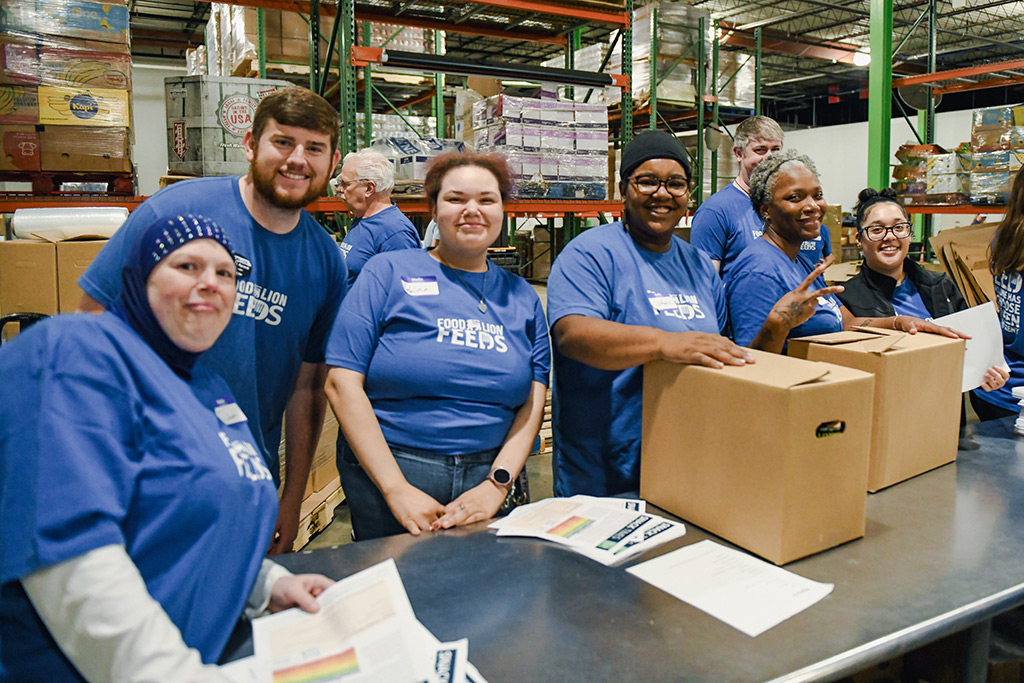
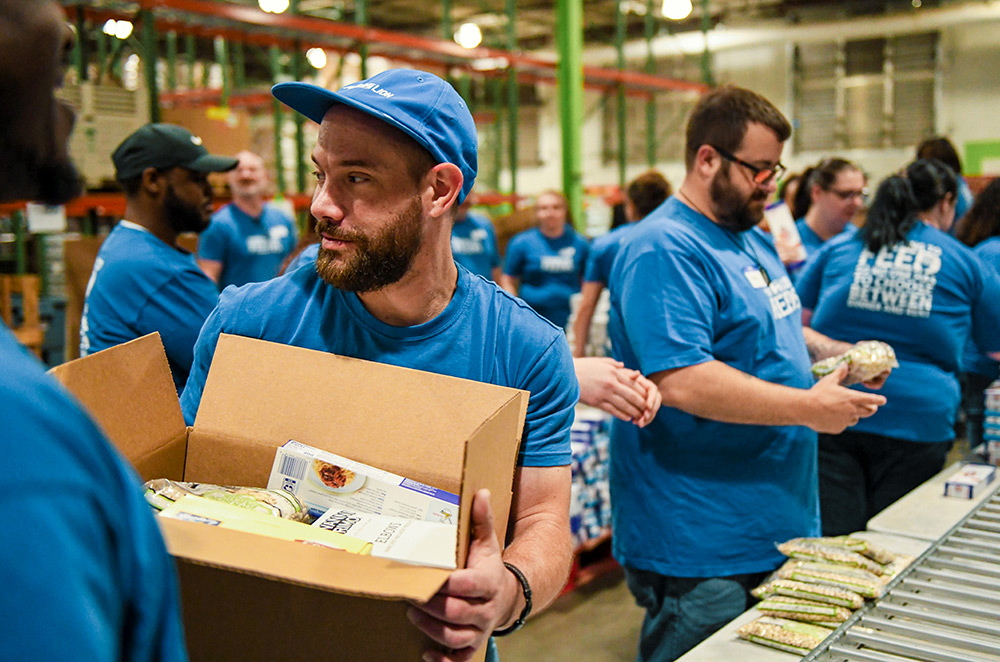
Each year, around 60,000 volunteers help us operate by sorting food, packaging it, and helping prepare distributions. If volunteers don’t show up, the food does not move into the community. That makes volunteer engagement truly business‑critical for us.
Logistics must be extremely complicated with so many counties involved.
Food banks are essentially large logistics organizations. Unlike many industries, however, we often work with incomplete information. Donations arrive unpredictably, and we don’t always know what types of food will arrive or when. At the same time, we must distribute those foods quickly because many are perishable.
Each of the counties we serve has different needs. Some areas are urban, while others are extremely rural. We use a fair‑share model that distributes food based on food‑insecurity rates so that rural areas receive equitable access rather than resources flowing only to major population centers.
How much do donations fluctuate throughout the year?
Like many nonprofits, we receive much of our annual revenue, about 40 percent, during the holiday season. Yet summer is when demand is highest because children are not receiving meals at school. That means we must carefully plan inventory and finances months in advance.
In your experience, do nonprofits compete for funding?
Fifteen years ago, I might have said yes. Today, I think about it differently. Our partner organizations rely on us for some resources but not all. If they don’t receive support from their own communities, they cannot stay open. We are only as strong as the partner network around us.
In fact, instead of competing with one another, several large partner organizations in Durham formed a coalition to fundraise together for hunger relief called End Hunger Durham. That type of collaboration may represent the future of nonprofit fundraising.
You also respond to disasters. How does that affect your operations?
Disaster response is a major responsibility. What used to be seasonal—such as hurricane season—now feels year‑round across the country. We maintain a reserve fund specifically for disaster response so we can act immediately when communities need help.
In Wilmington, for example, we operate a commercial kitchen designed to support disaster relief. It can function as a twenty-four‑hour response center, providing prepared meals during emergencies. We also partner with organizations such as World Central Kitchen during large‑scale disasters.
Would you share any stories that illustrate the impact of your work?
The farmer partner who has three hundred acres dedicated to our food bank told our board that working with us gave new purpose to his farming. He even said his family farm might not have survived without the partnership.
Another experience involved a grandmother raising her two teenage grandchildren after her son passed away. She received vouchers through a farmers market nutrition program and was so excited to take her grandchildren to choose fresh produce together. Moments like that remind us why the work matters.
What do people in your community say they need most?
Our strategic plan reflects four major themes we hear consistently. First is equitable access, especially in rural areas. Second is dignity. People want respectful treatment when asking for help. Third is healthier food, particularly fresh produce and protein. Surveys show that more than 80 percent of respondents want fresh food such as produce, eggs, and protein. And the fourth is advocacy to address policy issues that influence hunger.
What one misconception about hunger do you wish people understood better?
One of the most frustrating misconceptions is that people who need food assistance are unwilling to work. In reality, many use food banks only occasionally during difficult months. Hunger often results from unexpected circumstances, such as medical bills, job loss, or family emergencies.
When we say one in seven people experience food insecurity, those individuals may be your neighbors, coworkers, or parents of children in your child’s classroom. Hunger is often invisible because people feel stigma about asking for help.
How can business leaders support food banks?
Volunteering is incredibly valuable. Businesses can organize team volunteer days or offer employees paid time to volunteer. Advocacy also matters—business leaders can help raise awareness about the connections between food security, public health, and economic stability. And businesses can share their expertise with nonprofits to help strengthen operations and strategy.
For more info, visit foodbankcenc.org