
How to Improve Basic Workouts

For many people looking to get in shape, it can be an achievement simply to fit in a workout. But how you exercise is just as important as what you do to exercise. Working out with the proper form and effort rewards you with even greater health benefits, like a reduced risk of heart disease and stronger bones and muscles. However, working out the wrong way means less-productive exercise and more potential for doing harm.
Even if you’re a dedicated gym junkie, reviewing the basics will help you master your technique when enduring advanced workouts—and even prevent issues like cramps or joint pain. Check out these steps to correctly perform five common foundational exercises.
Jogging

Though one of the most basic yet productive exercises, jogging can take a toll on your body if you don’t proceed with good form. Before you begin, stand up straight with your head, neck, shoulders, and pelvis all in alignment.
While you jog, hold your chin level and look straight ahead. Keep your arms bent against your body with your hands at waist level, leaving them relaxed. Avoid bouncing or slouching as you step. Maintain an even stride, and try to land softly on your feet (i.e., don’t “slap” them onto the ground). Remember to breathe evenly; your breath fuels your workout.
Push-ups

For the perfect push-up, get into a plank position with your hands next to your chest and your feet together behind you. Squeeze your core muscles and glutes, then pin your shoulder blades back, as if you’re trying to make them touch. Make sure your lower back is completely straight.
Lower at any speed you’d like, keeping your forearms pointing straight at the floor. Get as low as possible without your stomach or hips touching the ground. Then press back up with your arms into the plank position. Recheck your plank form before lowering again. Is your back still straight? Are your shoulder blades still pinned together? Repeat until you can’t sustain intact form—also known as the “failure” point.
Crunches
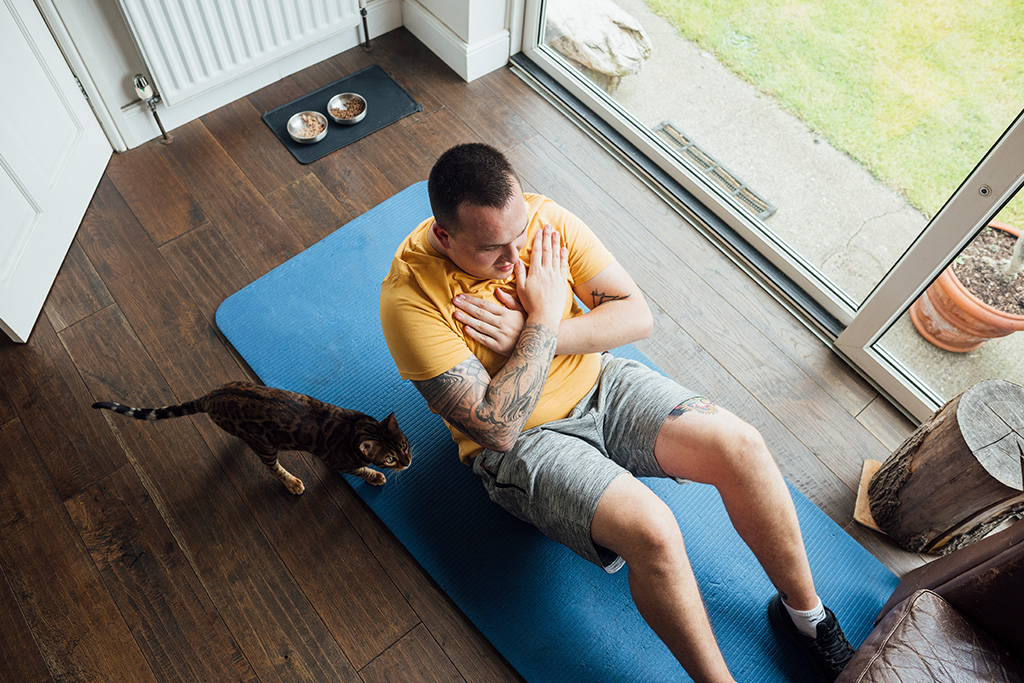
This mainstay core-muscle workout can put unnecessary strain on your neck, back, and hips if you don’t use the proper form. To begin, lie on your back, bend your knees, and plant your feet flat and hip-distance apart. Place your hands across your chest like a mummy.
Clench your core, inhale, and lift from your ribs, not your head, as if pulling them toward your pelvis. Keep your chin facing up rather than tucking it in toward your stomach. Lift as high as you can, then pause. Exhale, and lower your back to the ground. Don’t relax your core until the set is complete.
Squats

To protect your knees, back, and other joints, study proper squat form. Ensure that it’s second nature to you before adding heavy weights to your routine. First, set your feet hip-distance apart on the ground and line up your knees with your feet. Keep your back straight to protect your spine.
Consider these myths busted: you should not splay your knees out at an angle, nor should you dip your hips down to the ground. Rather, lower your hips until your thighs are just parallel to the floor, keeping your gaze forward and your back as straight as possible. Be careful not to let your knees protrude over your toes. Return to the standing position.
Bench presses
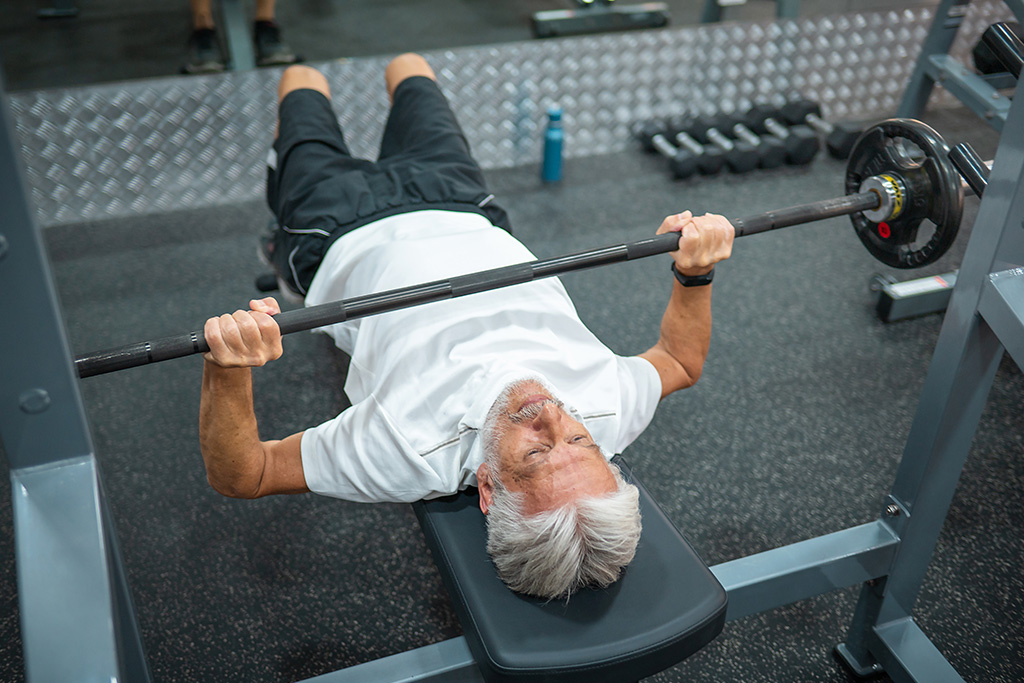
This classic weightlifting exercise is a favorite of powerlifters eager to test their limits, but bench presses can be beneficial for just about anyone. However, this is the only exercise in this guide that needs specific equipment, such as a pair of dumbbells or a barbell with plate weights. To perform bench presses safely, use a flat bench with a bench press rack, or enlist a spotter to assist you.
Lie on the bench with the weights or rack at eye level. Keep your spine flat, not arched, and your feet on the ground, if possible. Roll your shoulders back to engage your upper back, then reach up to clench the weights with your thumbs facing away from you. Suspend the weights above your body, and pause to ensure you can handle the weight level. If not, rerack the weights immediately or have your spotter help them to the ground.
Once you’re holding the weights above you, slowly lower them to your chest, keeping your elbows straight out to your sides and your upper back engaged. Continue to press up and down, exhaling as you raise the weights and inhaling as you lower them to chest level.
Final tips
Remember to warm up for at least five minutes before each of these exercises to protect your joints and prevent muscle strain. Consider asking a friend, relative, or trainer to observe you as you work out, checking your form against these tips. Allow them to correct your form when necessary. Don’t be surprised if any of these five exercises suddenly feels more difficult; that may be a sign that you’re challenging your body at a different level. This will ensure a more intense and ultimately beneficial workout every time you practice.
Talk to your doctor or a trainer for more personalized exercise advice.
Download the Basic Workouts PDF