
How to Clean Wooden Kitchen Tools


From serving spoons to cutting boards to rolling pins, wooden utensils are not only functional tools in the kitchen but also elegant decor that brings a touch of natural beauty to your culinary space. However, proper maintenance is essential to ensure their longevity and cleanliness. Whether your precious pieces are made from maple, walnut, cherry, or even bamboo (not technically a wood but still a popular option), the following tips can help you make them last for years.
Hand-wash only
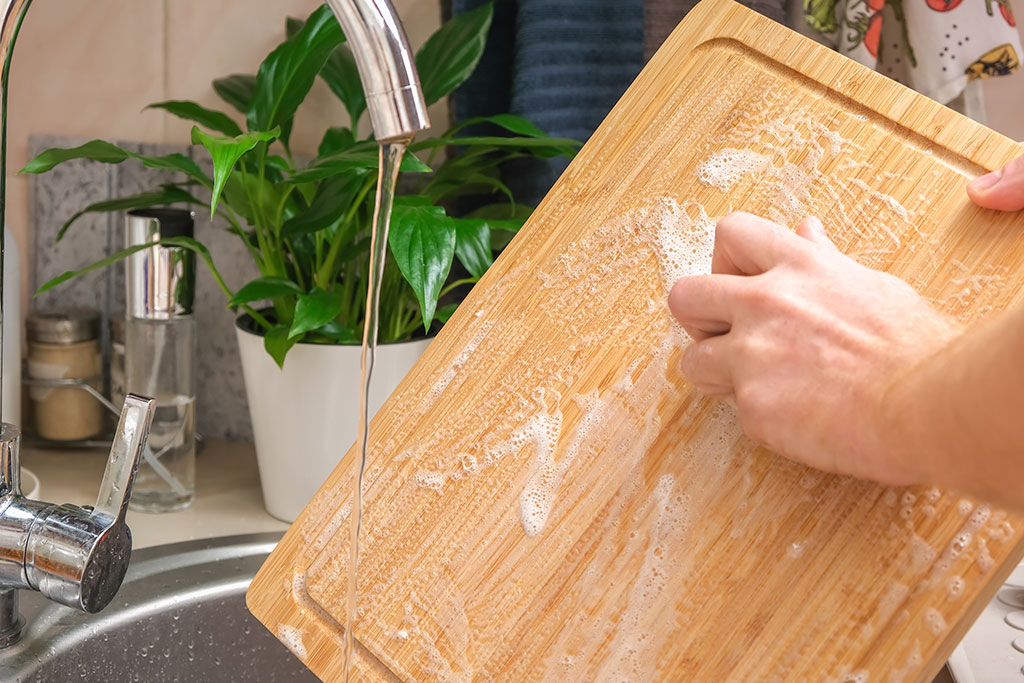
First and foremost, never put these items in the dishwasher. The harsh detergents and high heat can strip the wood of its natural oil and cause it to warp and crack, which can create space for bacteria to grow and potentially damage the material beyond repair. Excess water poses similar threats, so also make sure not to let anything soak in the sink before cleaning it.
Instead, always wash your wooden kitchen tools by hand immediately after use, before food residue has time to absorb or dry on the surface. Utilize mild dish soap and warm water as well as a washcloth, sponge, or brush to give them a gentle scrub. Just stay away from anything abrasive, such as steel wool or a brush with metal bristles, to avoid scratching the wood.
Another option for bigger pieces that are difficult to bring to the sink, such as butcher blocks, is a specially made cleaner. Featuring natural ingredients that are gentle on wood, all you need to do is spray it over the surface and wipe with a cloth for a good clean.
Dry thoroughly
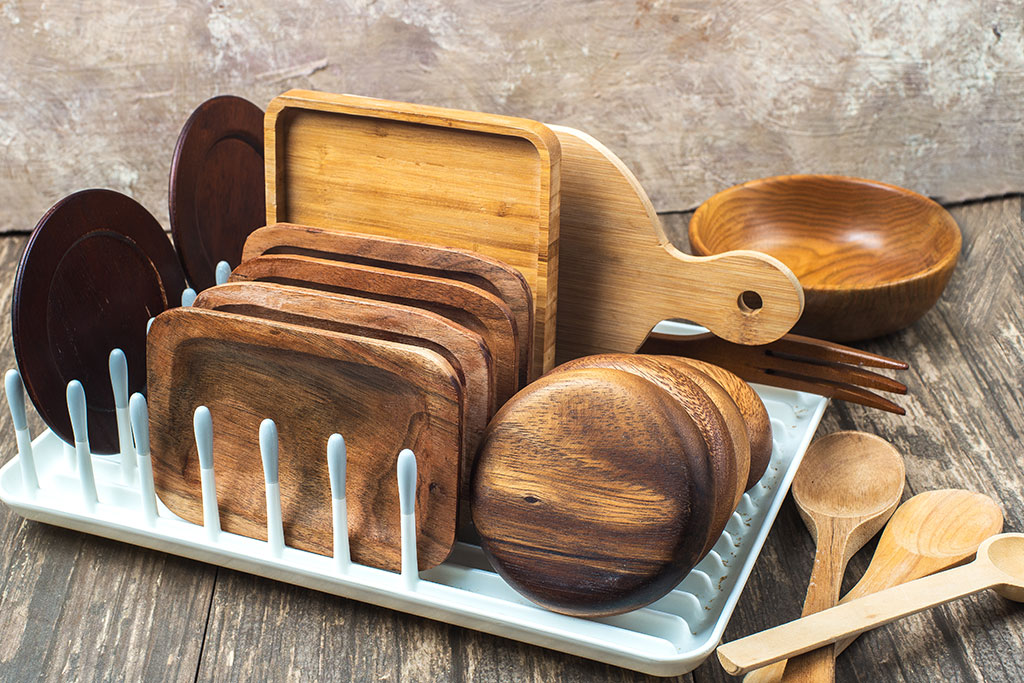
After washing your utensils, make sure to rinse off all the soap residue under running water, pat them with a clean towel, and prop them up to dry. Keep them away from sunny windows, however, since this could lead the wood to splinter. Then make sure to store them carefully, putting everything in a cool, dry area and leaving cutting boards upright so that moisture can’t get trapped underneath.
Sanitize them routinely
In addition to cleaning your tools, consider sanitizing them periodically to kill any lingering bacteria. There is no clear consensus on a recommended frequency, though many sources advise treating cutting boards specifically after every use since their knife scratches give germs more places to hide. Combine one part hydrogen peroxide or white vinegar with four parts water, and soak your wooden items for five to ten minutes before rinsing. To make the process simpler, you could also purchase a disinfectant spray, which you can cover your items with and let dry.
Oil them regularly
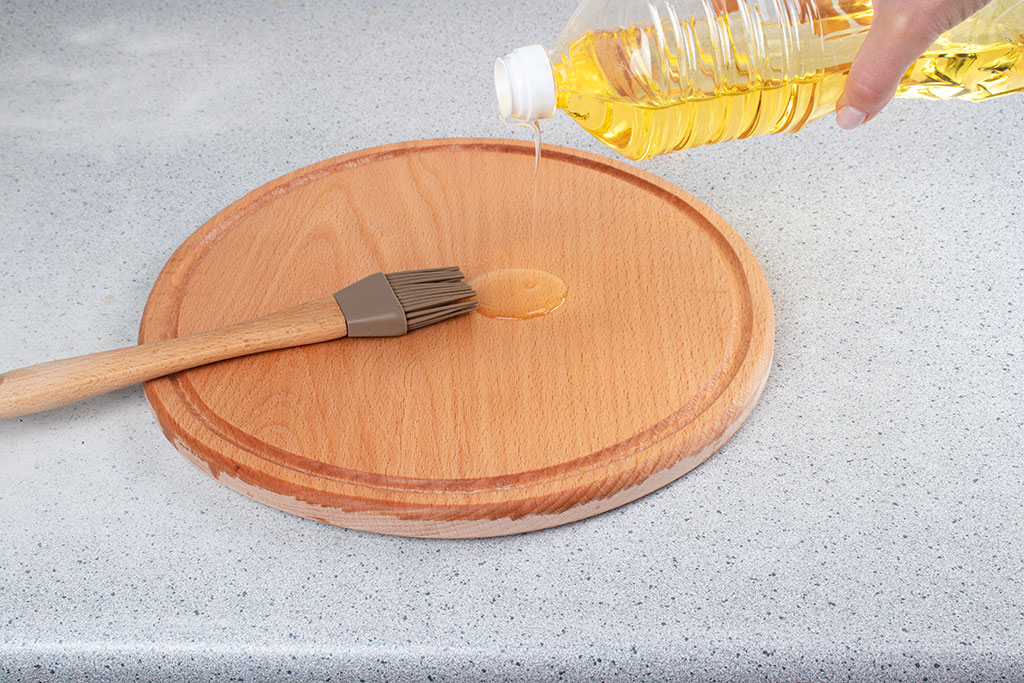
To maintain the moisture content and protect the material, periodically apply food-safe mineral oil or beeswax conditioner to these utensils and cutting boards. Always make sure to follow the product’s instructions, but as a general rule, you’ll use a clean cloth to rub a small amount of it into the wood’s surface, allowing it to sit for several hours before wiping off any residue. You should repeat this process at least once a month; it is also good to do after sanitizing if you use hydrogen peroxide because the compound can dry the wood out.
Remove stains and odors

Despite regular washing, it’s inevitable that food particles will build up on your wooden pieces. Luckily, there are a variety of ways to remove the accompanying stains and odors. For instance, you can combine equal parts water and baking soda, scrub the offending item with the mixture, and let it sit for several minutes before rinsing it off. You could also sprinkle on some coarse salt and rub with the cut side of a lemon. As with the other option, leave it for a few minutes and then rinse thoroughly.
Even with proper care, wooden utensils and cutting boards have limited lifespans. If you notice deep cuts, cracks, or signs of mold or mildew, it may be time to replace them to ensure the safety of your food.