
A Glass Craftsman


Cleveland-based glass sculptor Michael Mikula discusses the artistic and architectural influences behind his one-of-a-kind pieces.

What drew you to being an artist?
I grew up in rural western New York in a family that worked in timbering and farming, but I knew early on that I wanted to be an artist. As the first in my family to head off to college, I relied heavily on my high-school art teacher, John Paul Wolfe, for guidance. He suggested the Cleveland Institute of Art, a smaller private art school. As someone coming from a small rural high school, I knew immediately that it was a good fit.
I enrolled thinking that industrial design would be my major. However, I realized that while I was a good designer, I wanted to be more hands-on. So I switched my major to glass, earned my undergraduate degree, and immediately began working out of the studio of my glass professor, Brent Kee Young. He taught me how to think deeper and has been a true mentor.
You call your art “architectural blown glass.” Would you elaborate?
I’ve always been fascinated by architecture and in high school briefly considered that profession. Now, whenever I travel for art fairs and exhibitions, I visit historic buildings and photograph architectural details. My current body of work is heavily inspired by this ongoing research.
In addition, several years ago I took a monthlong trip to Barcelona, London, Paris, and Nîmes, France. Seeing ancient structures like the Pont du Gard in France and the masterworks of architect Antoni Gaudí in Barcelona profoundly shaped me. In Europe, architectural history is integrated into daily life. That sense of continuity and scale also contributes to the evolution of my sculptural work.
Tell us about your studio and materials:
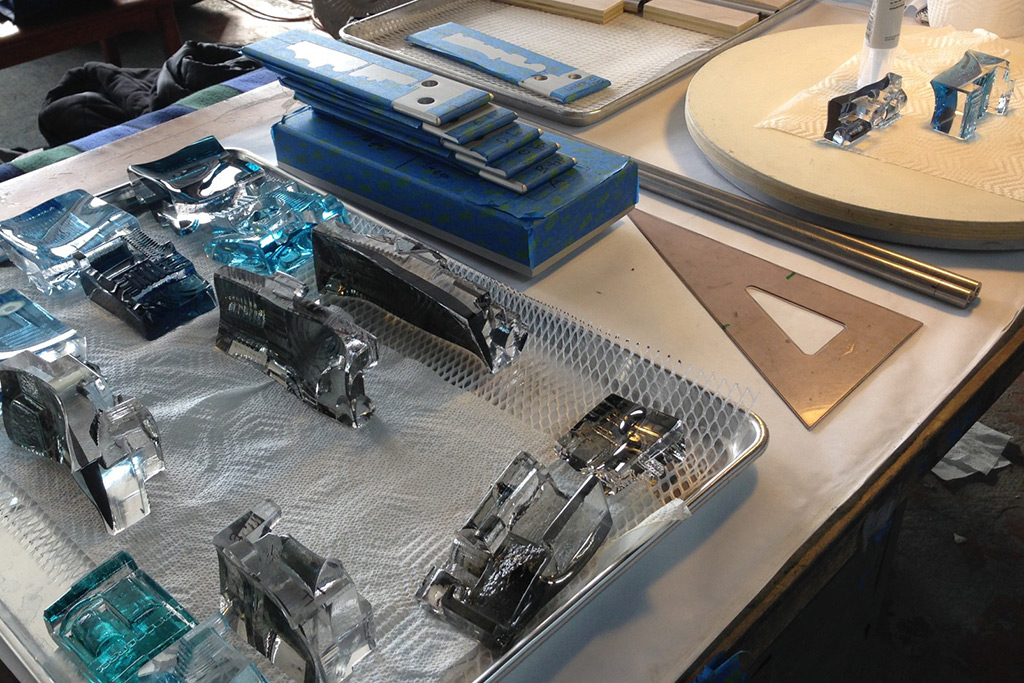
My studio is located in a former factory space in midtown Cleveland. I source graphite locally and shape it into molds. For glass, I use cullet—pre-melted glass—because it’s cleaner and more efficient to melt in my own glass furnace. To add color, I purchase bars of colored glass formulated to be compatible with the clear cullet. I think of it like a painter buying tubes of paint. Some of my sculptures incorporate many colors.
Is color secondary to form in your craft or vice versa?
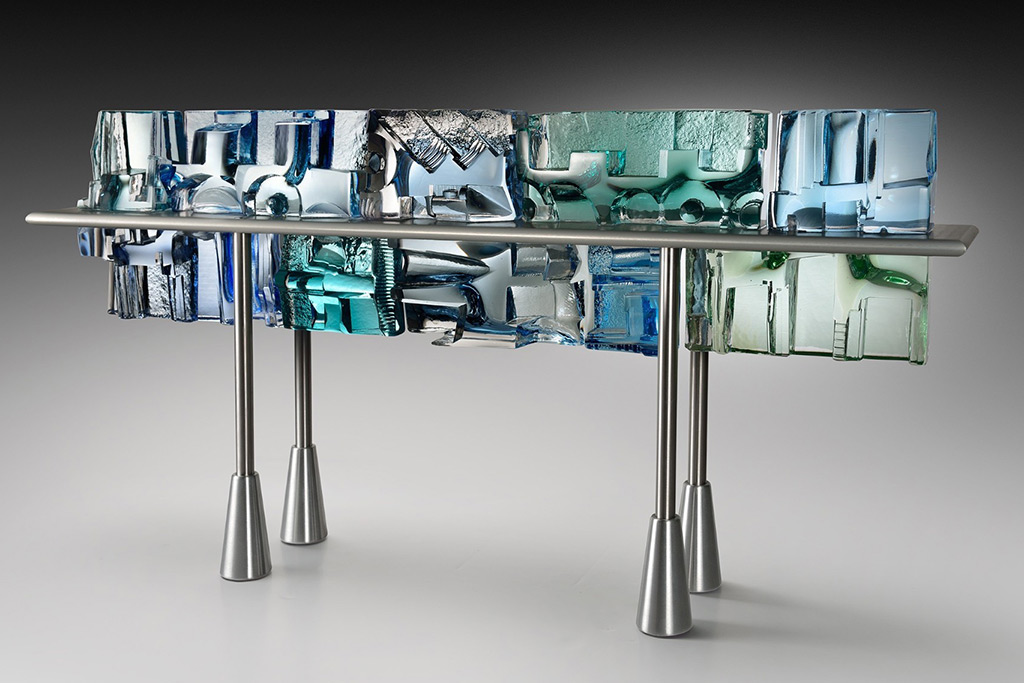
Color and form are inseparable in my work. Color draws people in; form sustains their attention. The graphite molds create intricate exterior geometry, while the interior of the blown form remains fluid and organic. Light transforms negative space into positive form, creating dynamic visual shifts.
What’s your process for creating the glass?
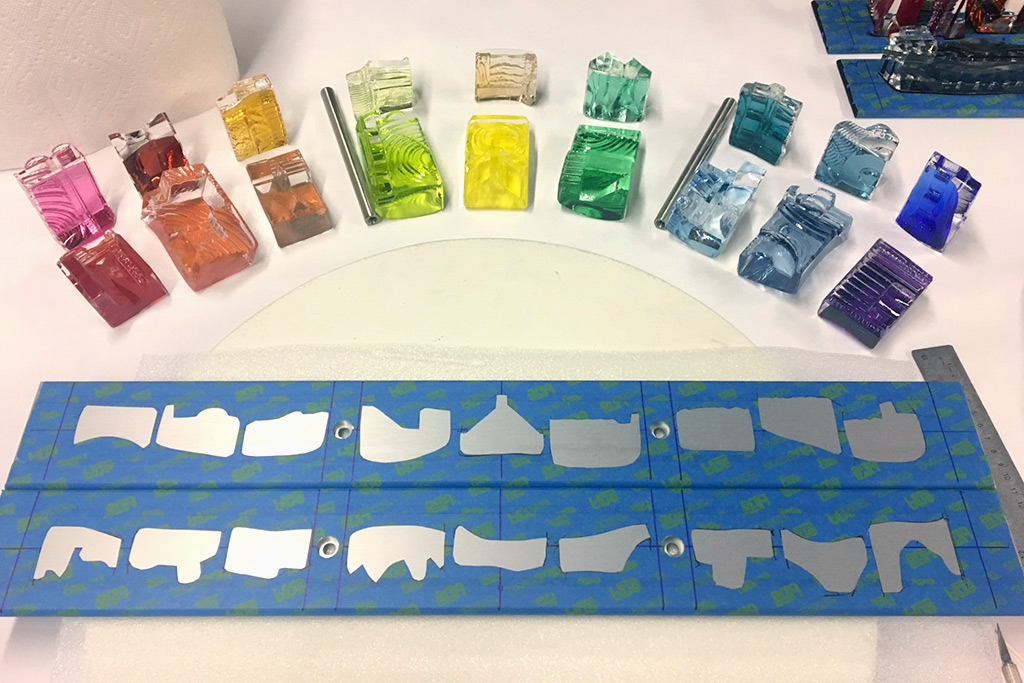
Once I have an idea, I make thumbnail sketches and work them into scale drawings. From there, I compose the graphite molds using various cutting, grinding, and sculpting tools. I then set the molds in place on the floor surrounded by concrete blocks, creating a frame to hold the mold parts in place.
Next is the glassblowing. A layer of colored glass is melted onto the end of the blowpipe, followed by adding successively thicker layers of clear glass, gathered out of the furnace at 2,100°F. Once I have the desired amount of glass, I quickly place it into the mold, inflating and expanding the molten glass into every crevice.
That blown form is then placed into a kiln to cool. Once it reaches room temperature, I cut it apart, grind and polish those individual elements, and recompose them into the sculptural design.

Do you do everything yourself?
I’m essentially a one-man operation, though I hire metal fabricators and assistants when blowing larger forms and later for polishing components. For some time now, I’ve been finishing work in my studio after blowing glass off-site, but I’m now installing my own furnaces again. That will give me greater creative control and flexibility.
How long does a piece take from start to finish?
From conception to completion, a sculpture or commissioned piece can take weeks or even months. I follow where the design process takes me, as needed.
What tools are essential to your work?
In addition to carved molds, I use traditional glassblowing hand tools, essentially unchanged for centuries, but also adapt tools from other trades: a brick saw fitted with a diamond blade and faceting tools used for decorative glass windows. I even use a thick pad of wet newspaper to hand-shape the molten glass.
How often do you travel to exhibit your sculptures?
In a typical year, I will exhibit in about a dozen fine art and fine craft fairs and special exhibitions. I’ve participated in over five hundred shows across the country since 1988. It requires enormous energy to pack, transport, set up, and break down displays. Lately, I’ve been intentionally shifting toward commissions, gallery representation, online sales, and fewer art fairs.
What do you wish the public knew more about artists?
I encourage people to reach out and meet artists directly and not be intimidated. Ask questions. Visiting us at exhibitions creates a human connection, making art more accessible and meaningful.
For more info, visit mikulaglass.com