
Boost Your Leadership by Prioritizing Self-Care


As a business leader, you very well may have experienced the effects of pushing yourself too hard. Decision quality usually shifts before motivation does. While the drive remains and the hours stay long, clarity changes. Fatigue affects how you think, not how hard you work.
The impact rarely shows up as a single failure. It appears gradually: decisions take longer and difficult conversations get delayed. Strategic risks feel heavier than they should. Over time, leaders default to what’s known, even when the business would benefit from a different move.
Because this erosion is subtle, consistency is easily mistaken for effectiveness. From the outside, it still looks like dedication. Inside the business, momentum quietly slows.
Self-care is not about comfort or balance for its own sake. It is about preserving the mental and physical capacity required to make clear decisions when pressure is constant and tradeoffs compound. Burnout can seriously impact not only your business and employees but also your personal relationships, especially your family.
Fatigue weakens leadership

At times, running a business means making decisions with incomplete information and absorbing uncertainty as a daily condition. Determination can carry you through intense stretches, but it does not scale indefinitely or protect judgment on its own.
When you’re depleted, the work only you can do begins to slip. You may still be “showing up,” but the quality of your presence declines. Often, it simply feels like everything takes more effort than it should.
As a founder or owner, you are a big part of the system that keeps your business running. When your energy drops, the organization feels it through delayed decisions, uneven leadership signals, and lost momentum, often without anyone being able to name the cause.
Recovery helps your business
Rest works only when it is treated as a requirement rather than something earned after exhaustion. Vague intentions do not survive operational pressure, especially in environments that reward constant availability.
To prioritize this necessity, choose one activity that reliably improves your clarity or focus the next day and schedule it with the same seriousness as a customer meeting, being sure to protect it. Measure it by the outcome at both home and work. If you find yourself recovering faster, having steadier attention, and making better decisions, you’ve found your winning formula for rest.
The activity itself is secondary. Exercise, uninterrupted reading, device-free evenings, or protected time with family all work when they restore capacity. Just remember, though, that occasional recovery cannot offset daily depletion.
Define boundaries
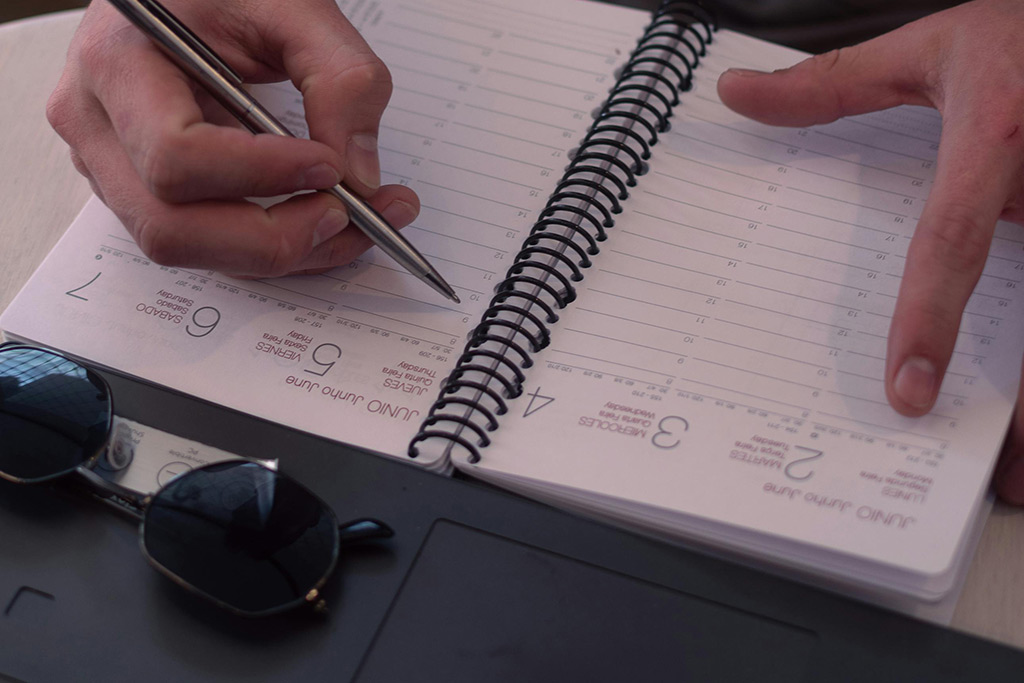
Boundaries conserve decision-making energy. They reduce context switching and constant low-level vigilance. When stepping back feels impossible, delegation is usually the constraint, not workload.
The truth is that total disconnection is unrealistic for most entrepreneurs. What is realistic is defining at least one protected window each day when you are unavailable and treating it as fixed rather than conditional. For example, take a short walk without your phone or schedule a blackout time each night for work communication.
Clear ownership matters. Assign responsibility for specific decisions, and allow others to carry them through without constant oversight. Reinsert yourself only when the outcome truly depends on you. Done well, delegation lowers cognitive load and strengthens your organization. Done poorly, it concentrates pressure at the top and accelerates burnout.
Boundaries are not about disengaging from the business. They are about preventing leadership capacity from being consumed by everything except the work that matters most.
Align personal goals with energy
Your development should expand your capacity, not increase strain. When growth is framed as constant accumulation—more habits, more output, and more expectations—it competes with recovery and eventually wins.
Focus instead on personal goals that restore your energy or remove friction, such as taking up a hobby or walking for thirty minutes. Simplifying routines or resolving a long-ignored constraint often produces more impact than abstract self-improvement. Less drag creates more room for good judgment.
Relationships matter here as well. Time with other entrepreneurs can reduce isolation and normalize challenges. The same goes for friends, family, and loved ones; spend time with people who restore you. The right environments offer perspective and clarity, not performance theater or pressure to “do more.”
Learn to simplify

Learning remains important, but selectivity matters. Information that increases complexity without improving execution adds mental load and slows judgment. It needn’t only be business development; you can take a painting class or bird-watch.
Prioritize education that simplifies decisions: systems that reduce repetition while providing clearer delegation, better financial visibility, and stronger communication. The goal is fewer decisions made with more confidence, not more ideas competing for attention. If learning makes you clearer, it’s working. If it leaves you overwhelmed, it isn’t.
Protecting your health and energy is not a personal indulgence. It is a leadership strategy. Clear thinking, emotional control, and steady judgment come from operating within self-imposed limits you set. Strong leadership shows up as consistency over time, not endurance at any cost.
When you protect your capacity to recover and decide under pressure, your business benefits directly.
TAKE ACTION:
Block thirty minutes this week for a noncancelable activity that can reliably improve your leadership focus the next day.