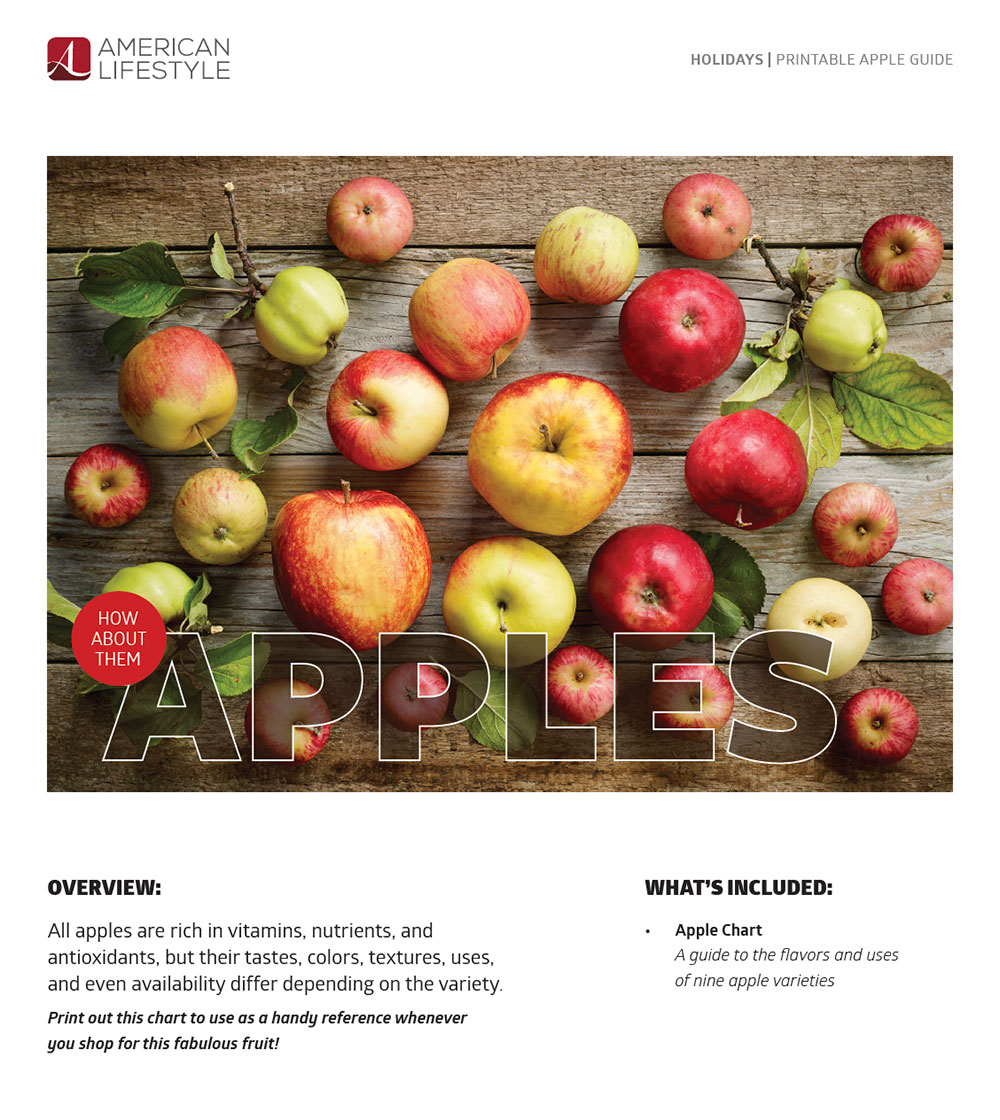
Apples A to Z


A quintessentially healthy and delicious food, apples make for an ideal snack, dessert filling, or addition to a sweet and savory dish. And with fall around the corner, they’ll soon be in peak season, making it the perfect time to incorporate them in your recipes. Given the broad array of colors, textures, and flavors, however, deciding on the optimal choice can be perplexing. Peruse this guide to discover which apples to select for what purpose and how to better ensure that they’re at their freshest.
Choose your apple
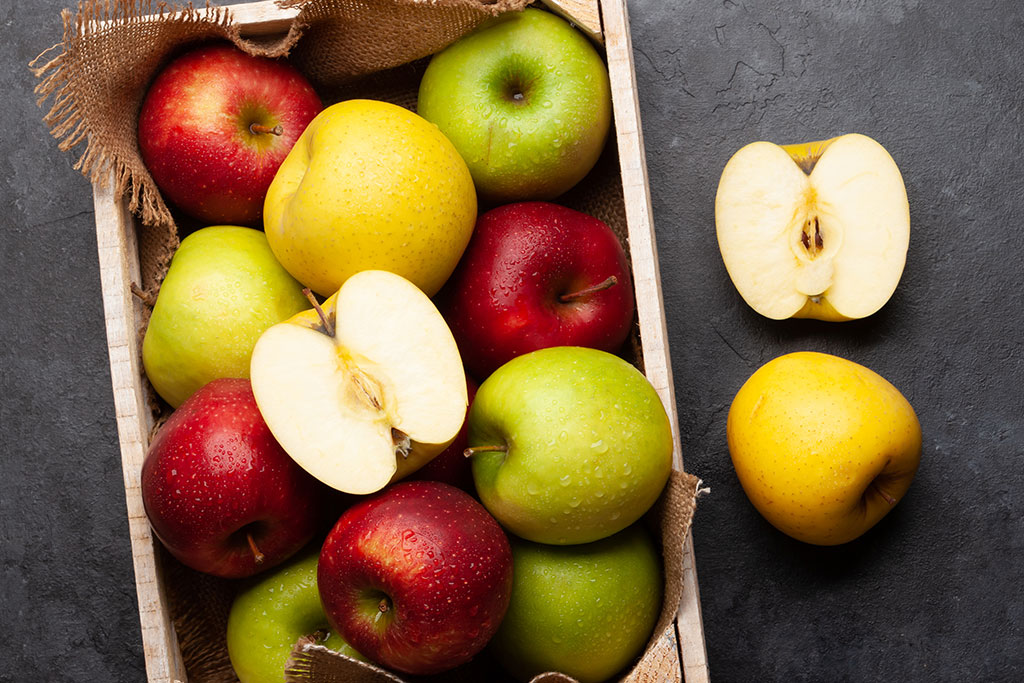
While there are more than one hundred different kinds of apples grown in the United States, here are some of the most popular ones along with their best uses.
Empire
Developed at Cornell University in the 1940s from McIntosh and Red Delicious apples, Empires are typically deep red in color, crisp, and sweet. Resistant to bruising, they make a great lunch box choice and can be tasty in salads and pies.
Fuji
Anyone with a sweet tooth may adore this variety, which was bred in Japan and named for its famous mountain peak. A cross between Red Delicious and Ralls Janet apples, the Fuji is red with hints of yellow and can be wonderful as a snack or in recipes such as salads.
Gala
This golden-yellow and red variety from New Zealand is a hybrid of Golden Delicious and Kidd’s Orange Red apples. It makes for a simple and delicately sweet dessert when topped with a little sea salt and is also great for applesauce and cider.
Golden Delicious
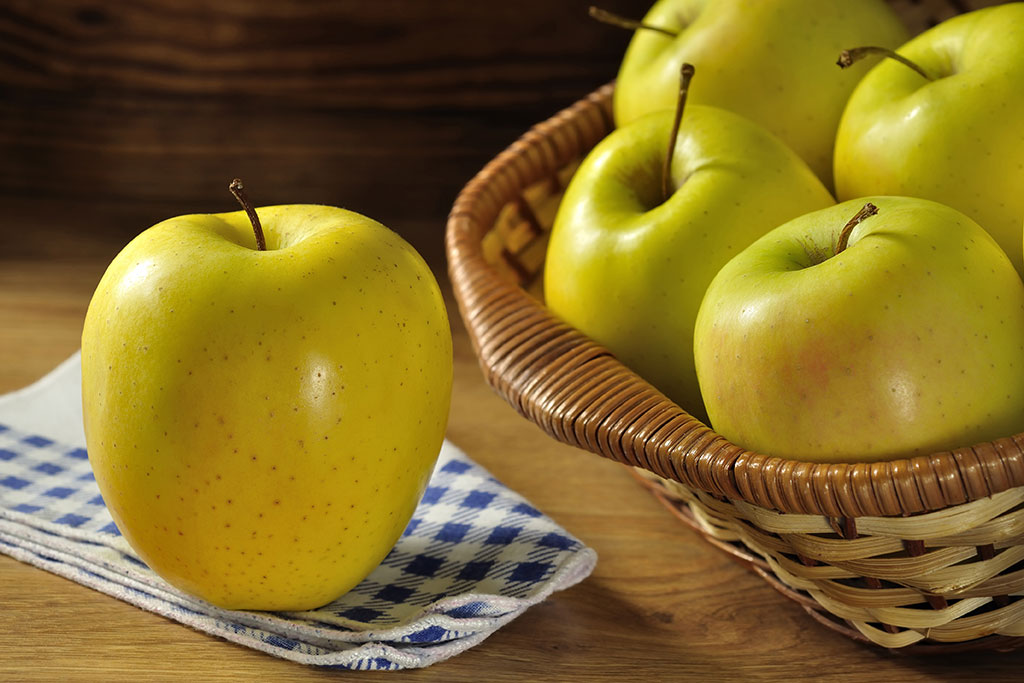
Discovered growing by accident on a family farm in West Virginia, the Golden Delicious is mildly sweet and sports a yellow hue. It’s an all-purpose apple that works well in salads, sauces, and baking.
Granny Smith
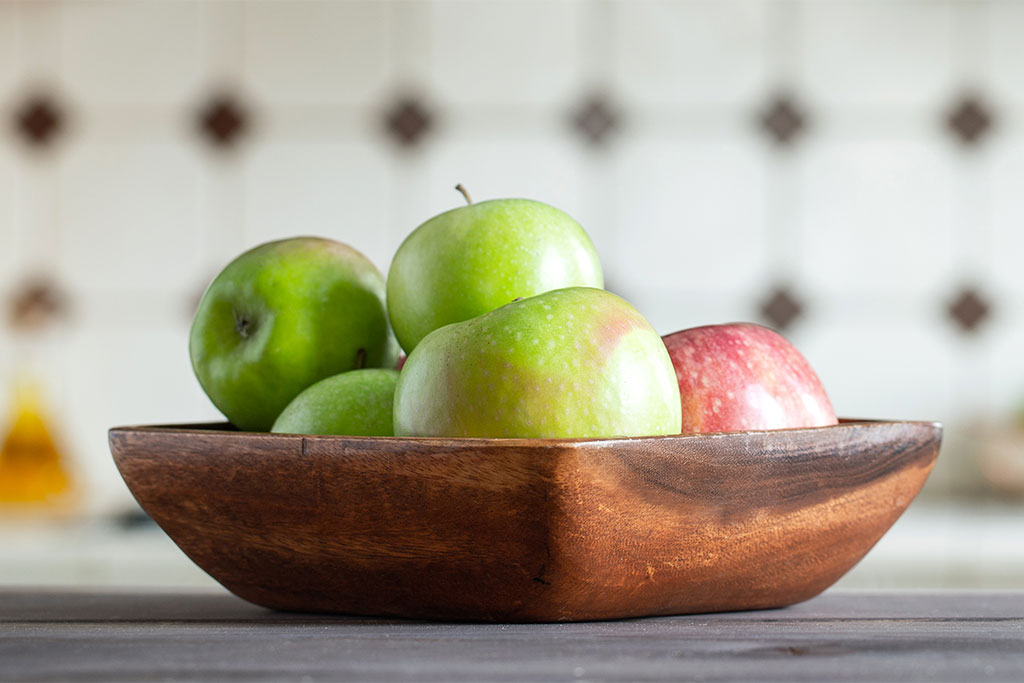
This eye-catching, bright-green apple, originally from Australia, is beloved for its tart flavor and crisp, firm texture. Perhaps the most typical choice for apple pies, it’s also excellent as a snack or in cake.
Honeycrisp
Featuring a mottled red skin with specks of yellow, these extra crispy and juicy apples originated at the University of Minnesota and are delightful on their own or in sweet and savory recipes. They can be kept for up to seven months in refrigerated storage, allowing you to enjoy them all year.
Jazz
Unlike their musical counterpart, Jazz apples got their start not in New Orleans but in New Zealand. Firm and crunchy with a mix of red, yellow, and orange coloring, they are amazing in cobblers, crumbles, and stuffing.

McIntosh
John McIntosh found the first sapling for this crimson variety on his farm in Canada in the early nineteenth century. They are crunchy and sweet but slightly acidic, and you can eat them fresh, in applesauce, or in pies.
Pink Lady
Named for its slightly pink skin, the Pink Lady was first made by crossing Golden Delicious and Lady Williams apples in the 1970s. This cultivar is refreshing despite its slightly tart flavor and is resistant to browning, making it ideal for fruit plates and salads.
Rome
These deep-red, round apples, developed from a seedling found in Rome, Ohio, are good as-is but are primarily chosen for baking and applesauce. Because they can hold their shape when hollowed, stuffed, and cooked, they are often used to make baked apples.
Buying and storing your apples
Once you’ve narrowed down what kind of apple to buy, you’ll want to make sure they’re as fresh as possible. When shopping, look for ones that are firm to the touch, have a pleasing aroma, and are free of bruises or nicks. After you get your apples home, you can keep them on your countertop for one or two weeks, but they will last longer, around six to eight weeks, when stored in your refrigerator’s crisper drawer. If you put them in a bag for storage, be sure not to seal it—apples are big producers of ethylene gas, which can lead them to ripen faster. Also keep them away from other produce that is especially susceptible to this substance, such as avocados, lemons, and grapes.
The next time you head to your local orchard or produce section, you can use what you’ve learned in this guide to select apples you’ll adore—whether you choose to dip them in peanut butter, mix them into a cobbler, or bake them in an apple crisp.